

UMass Amherst researchers win NSF award to help re-envision the growing, selling and buying of coffee.
Coffee, that savior of the underslept, comes with enormous environmental and social costs, from the loss of forest habitats as woodlands are converted to crops, to the economic precarity of small-scale farmers whose livelihoods depend on the whims of international markets. Now, thanks to a National Science Foundation (NSF) grant of $979,720, Timothy Randhir, University of Massachusetts Amherst professor of environmental conservation, and David King, of the USDA Forest Service Northern Research Station, will embark upon a five-year effort to make Honduran coffee sustainable across environmental, economic and social fronts.
The research, which is part of a $3.4 million collaboration between UMass, Tulane University, the University of North Carolina Wilmington and Indiana University in Pennsylvania, centers around one question: “How can we make sustainable agriculture and forest conservation actually pay for itself?” asks King.
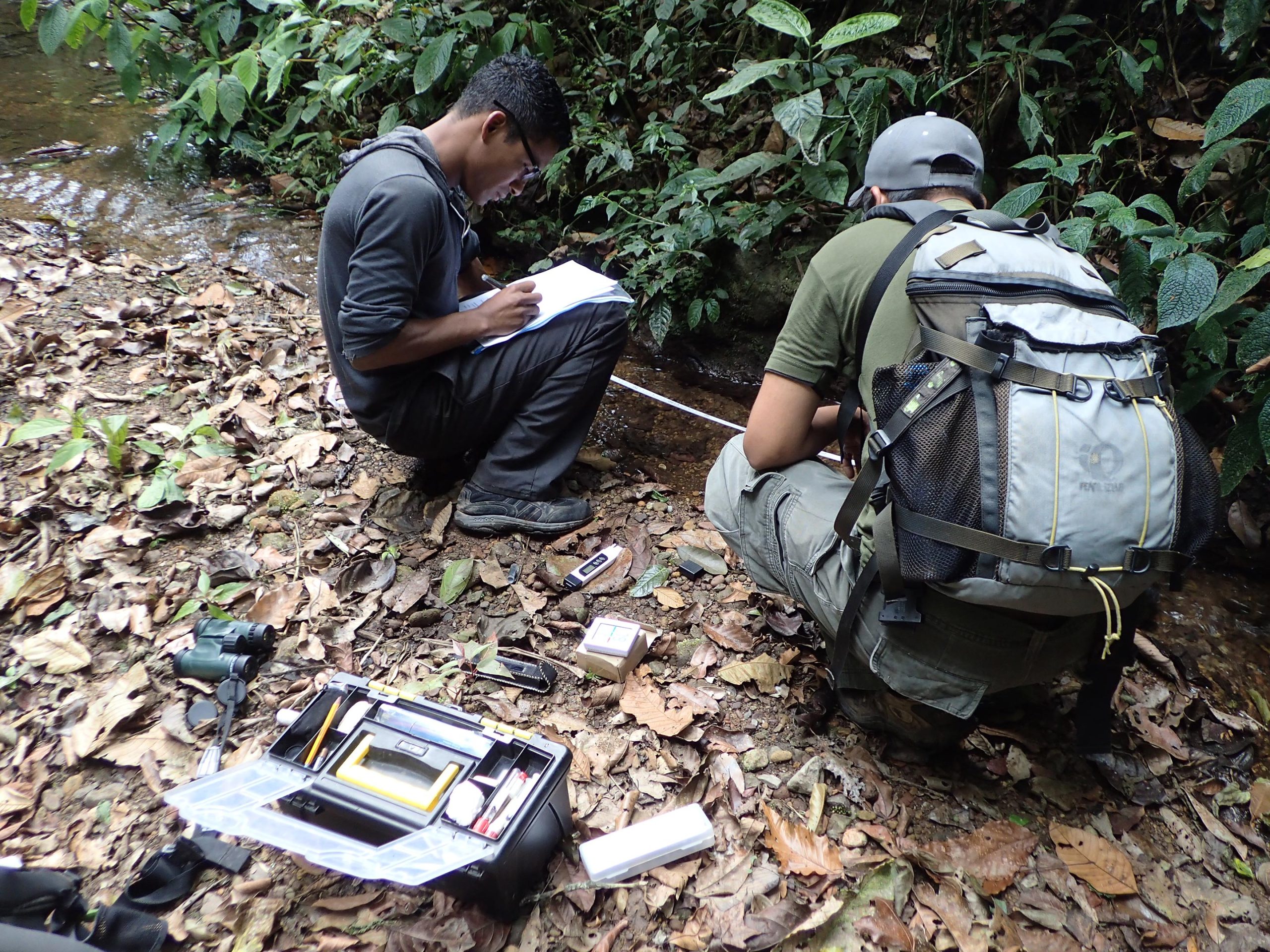
The answer lies in what Randhir has previously called “a convergence approach,” which is a way of tying the ultra-local—such as the work done by the small Honduran coffee planters with whom the team will work—to the global both socially, economically, and environmentally. About 70% of the world’s coffee is produced on working landscapes at high altitudes on formerly forested land, primarily by small-scale, family farms in low- and middle-income countries. In many of these places, coffee production is the principal source of economic activity, yet conventional methods of coffee production combined with yield and market volatility have resulted in interlinked problems of environmental degradation, economic hardship, and social crises.
Modeling Sustainability with Multi-Scale Ecosystem Frameworks
Randhir and his colleagues have developed a suite of extremely sensitive models, collectively referred to as the Multi-Scale Ecosystem Framework, to study the many interactions between humans, the environment, and global economies so that they can understand which interventions will have what effect, both on a local and global scale.
The trick the team will perform is to figure out how environmentally sustainable coffee-growing practices, which leverage the ecosystem services provided by rainforest, conserved on coffee farms, can yield higher and more stable incomes for local Honduran growers while also supplying the world’s coffee drinkers with a steady quantity of high-quality liquid caffeine. A major part of this research involves installing and studying the effects that a new generation of solar-powered industrial coffee dryers, which will replace older, wood-fired dryers, has on environmental and economic sustainability.
It’s no understatement to say that Randhir and King’s project will touch upon just about everything. “I got into this through my interest in songbird conservation,” says King. Most of the warblers here in Massachusetts, that we think of as “ours,” spend their winters in the tropics, including in Honduras. “Unless their winter habitat is secured,” says King, “we can’t support what we think of as our native birds.” Human migration, too, is affected by the coffee industry, notes Randhir. “As small farmers’ livelihoods start to deteriorate, they migrate. If we can figure out how to help sustain the farms themselves, then farmers can remain in their homes.”
The team is partnering with the Mesoamerican Development Institute, in Lowell, Mass., and the Honduran coffee producing organization “Birding Coffee.” The work will take place in the Yoro region of Honduras. Honduras is the fifth largest coffee producer in the world and the largest coffee producer in Central America; coffee is the principal source of income for more than 100,000 Honduran families and provides employment for about a million people. The team will focus their efforts on the 12,000 square-kilometer (4,600 square-mile) Yoro Biological Corridor as a test case to scale up their model, providing insights that the team anticipates will help inform global agricultural policy and practice.
“The biggest attraction of our research,” says Randhir, “is the way that the environmental, economic, and social all come together toward a sustainable approach to agriculture.”
Never miss a breakthrough: Join the SciTechDaily newsletter.
Follow us on Google and Google News.