
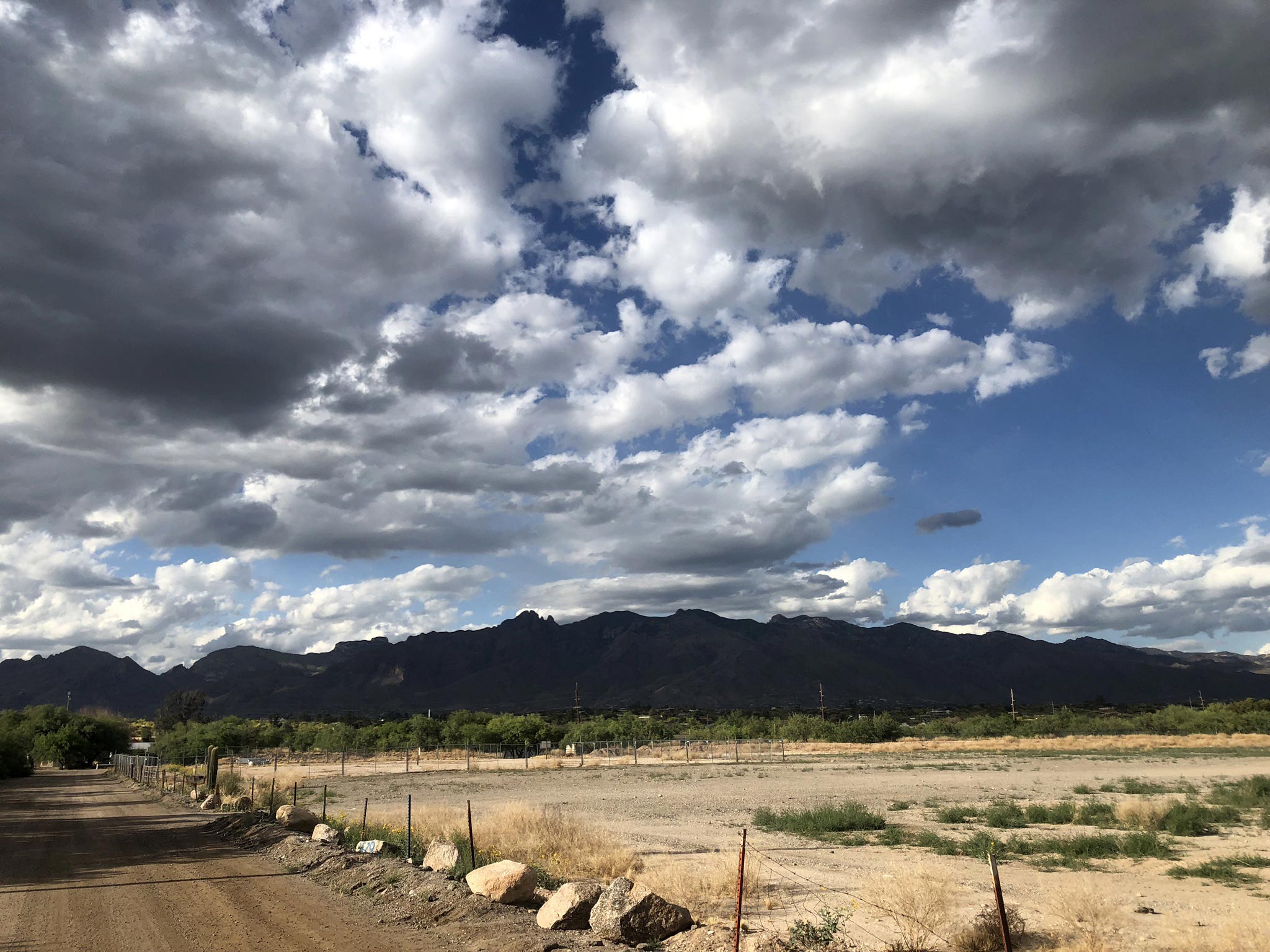
Drought intervals are lengthening and rainfall is more erratic in the western U.S., raising concerns for ecosystems and agriculture.
Dry periods between rainstorms have become longer and annual rainfall has become more erratic across most of the western United States during the past 50 years, according to a new study published by the U.S. Department of Agriculture’s Agricultural Research Service and the University of Arizona
Against the backdrop of steadily warming temperatures and decreasing total yearly rainfall, rain has been falling in fewer and sometimes larger storms, with longer dry intervals between. Total yearly rainfall has decreased by an average of four inches over the last half century, while the longest dry period in each year increased from 20 to 32 days across the West, explained co-senior author Joel Biederman, a research hydrologist with the ARS Southwest Watershed Research Center in Tucson, Arizona.
“The greatest changes in drought length have taken place in the desert Southwest. The average dry period between storms in the 1970s was about 30 days; now that has grown to 45 days,” Biederman said.
Extreme droughts are also occurring more often in the majority of the West according to historical weather data as there has been an increase in the year-to-year variation of both total rainfall amounts and the duration of dry periods.
Biederman emphasized the growing fluctuations in drought and rain patterns as the most significant change.
“Consistency of rainfall, or the lack of it, is often more important than the total amount of rain when it comes to forage continuing to grow for livestock and wildlife, for dryland farmers to produce crops, and for the mitigation of wildfire risks,” Biederman said.
Rainfall Variability Accelerating
The rate of increasing variability of rainfall within each year and between years also appears to be accelerating, with greater portions of the West showing longer drought intervals since 2000 compared to previous years.
Notable exceptions to these drought patterns were seen in Washington, Oregon and Idaho and the Northern Plains region of Montana, Wyoming, and the most western parts of North and South Dakota. In these regions, the researchers found some increases in total annual rainfall and decreases in drought intervals. Together, these changes support what models have predicted as a consequence of climate change: a northward shift in the mid-latitude jet stream, which brings moisture from the Pacific Ocean to the western United States, according to Biederman.
The Power of Raw Weather Station Data
A critical aspect of this study is the use of actual rainfall data from 337 weather stations spread across the western United States. Biederman contrasted this with the more common use of “gridded” data, which relies on interpolations between reporting stations and tends to smooth out some of the variability revealed by this work.
“Fangyue Zhang, lead author of the manuscript and a post-doctoral researcher on our team, did the hard, painstaking work of compiling and analyzing data from more than 300 weather stations with complete daily records to reveal these changing drought and rainfall patterns,” Biederman said.
“We were surprised to find widespread changes in precipitation have already occurred across large regions of the West. For regions such as the desert Southwest, where changes clearly indicate a trend towards longer, more erratic droughts, research is urgently needed to help mitigate detrimental impacts on ecosystem carbon uptake, forage availability, wildfire activity, and water availability for people,” said co-senior author William K. Smith, assistant professor, University of Arizona.
Reference: “Five Decades of Observed Daily Precipitation Reveal Longer and More Variable Drought Events Across Much of the Western United States” by Fangyue Zhang, Joel A. Biederman, Matthew P. Dannenberg, Dong Yan, Sasha C. Reed and William K. Smith, 6 April 2021, Geophysical Research Letters.
DOI: 10.1029/2020GL092293
Never miss a breakthrough: Join the SciTechDaily newsletter.
Follow us on Google and Google News.