
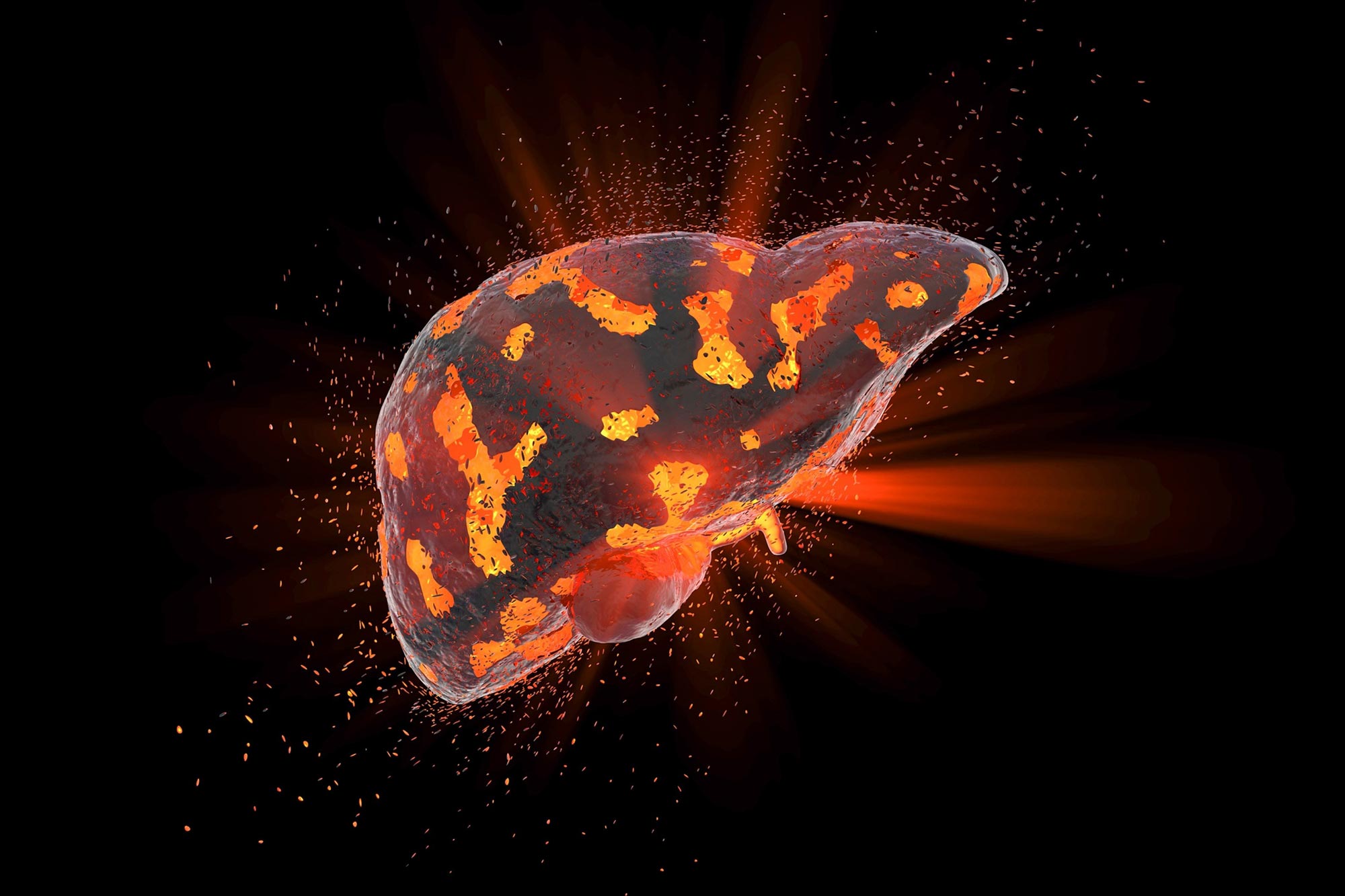
A study on mice offers promising results for millions suffering from non-alcoholic liver disease.
The liver, despite being one of the body’s most robust organs, remains susceptible to damage from stress and aging, which can lead to disease, significant scarring, and even organ failure. Researchers at Duke Health may have discovered a method to rejuvenate the liver. In their study, which involved mice and human liver tissue, the team discovered that aging triggers the death of specific liver cells. They successfully reversed this aging process in mice using an investigational drug.
“Our study demonstrates that aging is at least partially reversible. You are never too old to get better.” Anna Mae Diehl, M.D.
The finding, which appears in the journal Nature Aging, holds high promise for the millions of people who have some degree of liver damage – livers that are essentially old due to the metabolic stresses of high cholesterol, obesity, diabetes, or other factors.
“Our study demonstrates that aging is at least partially reversible,” said senior author Anna Mae Diehl, M.D., the Florence McAlister Distinguished Professor of Medicine at the Duke University School of Medicine. “You are never too old to get better.”
Understanding Cirrhosis and MASLD
Diehl and colleagues set out to understand how non-alcoholic liver disease develops into a severe condition called cirrhosis, in which scarring can lead to organ failure. Aging is a key risk factor for cirrhosis among those who have been diagnosed with non-alcoholic liver disease, known as metabolic dysfunction-associated steatotic liver disease, or MASLD. One in three adults worldwide has the disease.
Studying the livers of mice, the researchers identified a genetic signature distinct from old livers. Compared to young livers, the old organs had an abundance of genes that were activated to cause degeneration of hepatocytes, the main functioning cells of the liver.
“We found that aging promotes a type of programmed cell death in hepatocytes called ferroptosis, which is dependent on iron,” Diehl said. “Metabolic stressors amplify this death program, increasing liver damage.”
Armed with their genetic signature of old livers, the researchers analyzed human liver tissue and found that the livers of people diagnosed with obesity and MASLD carried the signature, and the worse their disease, the stronger the signal.
Importantly, key genes in the livers of people with MASLD were highly activated to promote cell death through ferroptosis. This gave the researchers a definitive target.
“There are things we can use to block that,” Diehl said.
Testing and Results With Ferrostatin-1
Again turning to mice, the researchers fed young and old mice diets that caused them to develop MASLD. They then gave half the animals a placebo drug and the other half a drug called Ferrostatin-1, which inhibits the cell death pathway.
Upon analysis after treatment, the livers of the animals given Ferrostatin-1 looked biologically like young, healthy livers — even in the old animals that were kept on the disease-inducing diet.
“This is hopeful for all of us,” Diehl said. “It’s like we had old mice eating hamburgers and fries, and we made their livers like those of young teenagers eating hamburgers and fries.”
Diehl said the team also looked at how the ferroptosis process in the liver impacts the function of other organs, which are often damaged as MASLD progresses. The genetic signature was able to differentiate between diseased and healthy hearts, kidneys, and pancreases, indicating that damaged livers amplify ferroptotic stress in other tissues.
“Together, we’ve shown that aging exacerbates non-alcoholic liver disease by creating ferroptic stress, and by reducing this impact, we can reverse the damage,” Diehl said.
Reference: “Aging promotes metabolic dysfunction-associated steatotic liver disease by inducing ferroptotic stress” by Kuo Du, Liuyang Wang, Ji Hye Jun, Rajesh K. Dutta, Raquel Maeso-Díaz, Seh Hoon Oh, Dennis C. Ko and Anna Mae Diehl, 25 June 2024, Nature Aging.
DOI: 10.1038/s43587-024-00652-w
In addition to Diehl, study authors include Kuo Du, Liuyang Wang, Ji Hye Jun, Rajesh K. Dutta, Raquel Maeso-Díaz, Seh Hoon Oh, and Dennis C. Ko.
The study received funding support from the 2021 AASLD Pinnacle Award, the National Institutes of Health (R01 AA010154, R01 DK077794, R56 DK134334); and Boehringer Ingelheim Pharmaceuticals, Inc.
Never miss a breakthrough: Join the SciTechDaily newsletter.
Follow us on Google and Google News.