

Scientists found living microbes in a 2-billion-year-old rock in South Africa, providing insights into early life on Earth and potentially aiding the search for life on Mars.
Researchers have discovered pockets of living microbes within a sealed fracture of a 2-billion-year-old rock from the Bushveld Igneous Complex in South Africa, an area known for its rich ore deposits. This is the oldest example of living microbes found within ancient rock to date.
To confirm that the microbes were indigenous to the ancient core sample and not caused by contamination during the retrieval and study process, the research team refined a technique they previously developed involving three types of imaging – infrared spectroscopy, electron microscopy, and fluorescent microscopy. These microbes could provide novel insights into the early evolution of life, and aid the search for extraterrestrial life in similarly aged rock samples brought back from Mars.
Unearthing Earth’s Oldest Microbes
Deep in the earth lies something ancient and alive. Colonies of microbes live in rocks far beneath the surface, somehow managing to survive for thousands, even millions of years. These tiny, resilient organisms appear to live life at a slower pace, scarcely evolving over geological periods, thus offering a chance to peek back in time. Now, researchers have found living microbes in a rock sample dated to be 2 billion years old.
Significance of Ancient Habitability
“We didn’t know if 2-billion-year-old rocks were habitable. Until now, the oldest geological layer in which living microorganisms had been found was a 100-million-year-old deposit beneath the ocean floor, so this is a very exciting discovery. By studying the DNA and genomes of microbes like these, we may be able to understand the evolution of very early life on Earth,” said Yohey Suzuki, lead author and associate professor from the Graduate School of Science at the University of Tokyo.
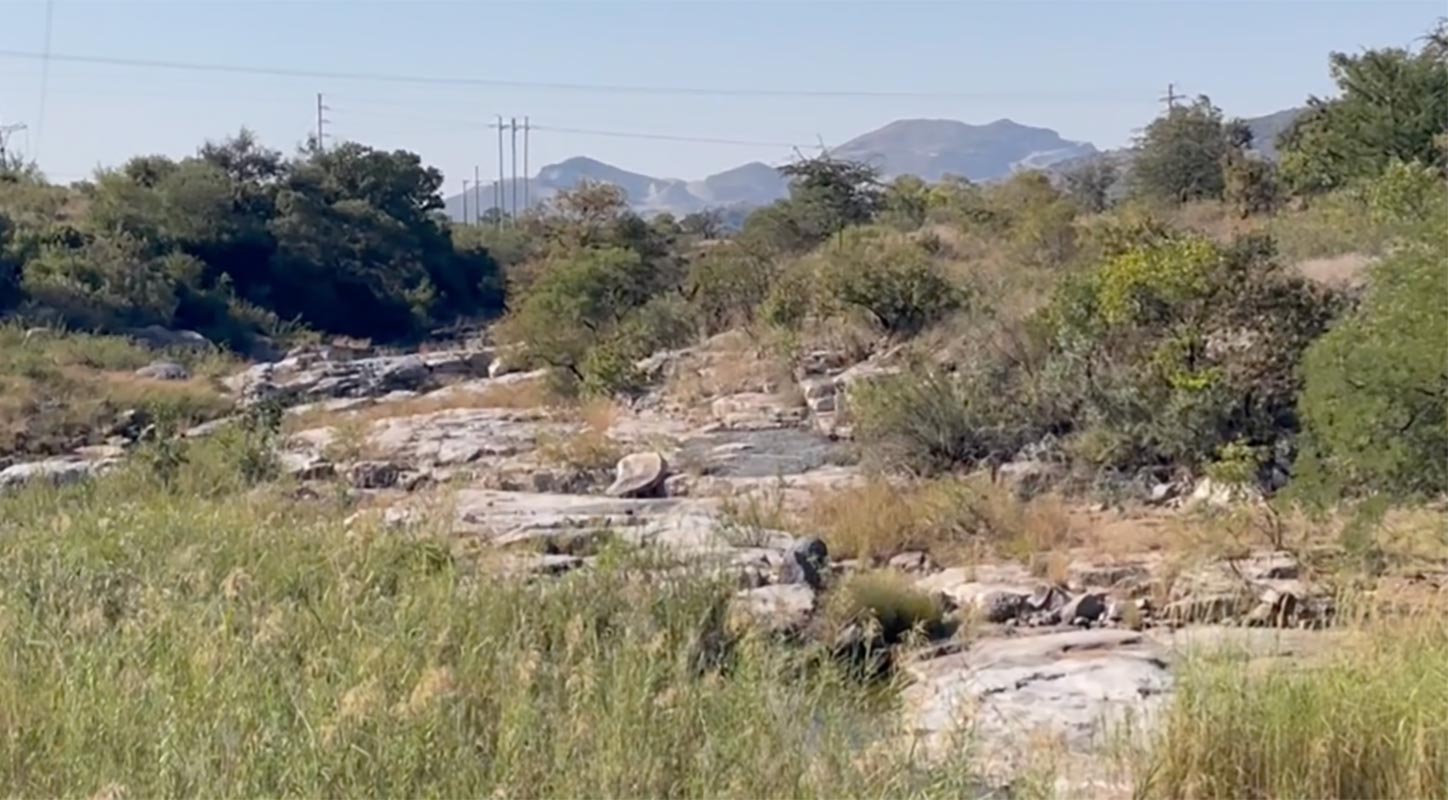
The rock sample was taken from the Bushveld Igneous Complex (BIC), a rocky intrusion in northeastern South Africa that formed when magma slowly cooled below the Earth’s surface. The BIC covers an area of approximately 66,000 square kilometers (roughly the size of Ireland), varies in thickness by up to 9 km, and contains some of the richest ore deposits on Earth including about 70% of the world’s mined platinum.
Due to the way it was formed and minimal deformation or change occurring to it since then, the BIC is believed to have provided a stable habitat for ancient microbial life to continue until today.
Techniques and Implications for Astrobiology
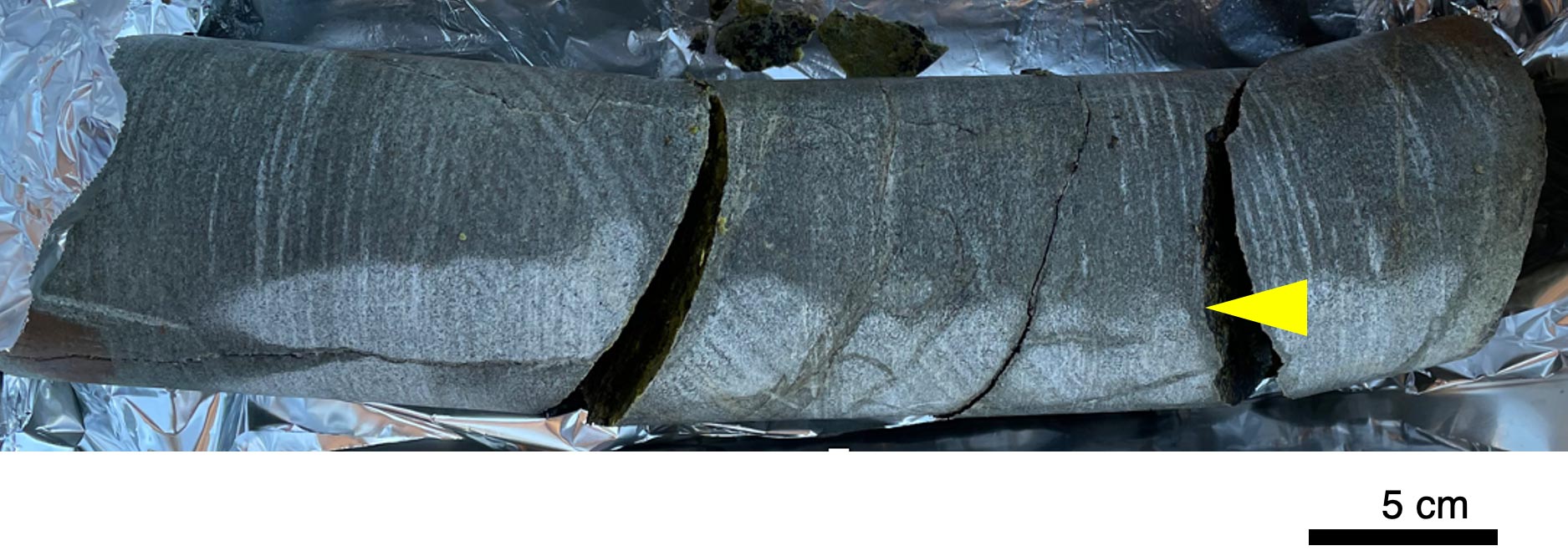
With the aid of the International Continental Scientific Drilling Program, a nonprofit organization that funds exploration at geological sites, the team obtained a 30-centimeter-long rock core sample from about 15 meters belowground. The rock was cut into thin slices and analyzed, which is when the team discovered living microbial cells densely packed into cracks in the rock. Any gaps near these cracks were clogged with clay, making it impossible for the organisms to leave or for other things to enter.
The team built on a technique they had previously developed to confirm that the microbes were native to the rock sample, and not due to contamination during the drilling or examination process. By staining the DNA of the microbial cells and using infrared spectroscopy to look at the proteins in the microbes and surrounding clay, the researchers could confirm that the microorganisms were both alive and not contaminated.
“I am very interested in the existence of subsurface microbes not only on Earth, but also the potential to find them on other planets,” said Suzuki. NASA’s Mars rover Perseverance is currently due to bring back rocks that are a similar age to those we used in this study. Finding microbial life in samples from Earth from 2 billion years ago and being able to accurately confirm their authenticity makes me excited for what we might be able to now find in samples from Mars.”
Reference: “Subsurface Microbial Colonization at Mineral-Filled Veins in 2-Billion-Year-Old Mafic Rock from the Bushveld Igneous Complex, South Africa” by Yohey Suzuki, Susan J. Webb, Mariko Kouduka, Hanae Kobayashi, Julio Castillo, Jens Kallmeyer, Kgabo Moganedi, Amy J. Allwright, Reiner Klemd, Frederick Roelofse, Mabatho Mapiloko, Stuart J. Hill, Lewis D. Ashwal and Robert B. Trumbull, 2 October 2024, Microbial Ecology.
DOI: 10.1007/s00248-024-02434-8
Never miss a breakthrough: Join the SciTechDaily newsletter.
Follow us on Google and Google News.
14 Comments
The 2 billion year old organisms found by the Tokyo University in Africa is wonderful news.
Clearly organisms cannot live 2 billion years… So how long ago are they saying the microbes inhabited the cracks?
The prokaryotic population got trapped 2 billion years ago, and somehow made a (slow) living on chemosynthesis. The individual cells are much younger of course, depending on how long time it took for parent cells to collect enough metabolic mass and energy to divide into daughter cells.
“Two billion tears ago?” what utter nonsense. Where were human beings “2 billion years ago?”, or did we only arrive 6000 years ago??
@Theo pieterse A simple Google will answer all your questions.
https://en.m.wikipedia.org/wiki/Human_history
All the sources and reasoning are referenced by numbers [1] and also included at the bottom of the page as usual with all Wikipedia pages. If there is something you are on the edge of them just see the proofs and evidence provided by the page.
15:10:24. If NASA and ESA unmanned Space Aircraft going to Jupiter Moon Europa will take 5 years plus to get to the Moon, that did not make any sense. You can see Jupiter from Earth with naked eyes and is going to take 5 years plus to get to the Moon. That’s not rights. NASA and ESA must have been taken wrong Route. Completely wrong Route. What you can see with your naked eyes into Space is not surposses to take you more than few days at most not years. What about planet you can’t see with your eyes or telescope, that’s will take for ever. NASA and ESA should rethink their route and their strategies. For example. If human beings want to travel to the Moon Europa, that’s the point right and you expect someone to sit on a space aircrafts for 5 years plus. That’s can happen. So rethink your strategies and the Route you are taken. Anyway the technology I am going to use to make the Jupiter Moon Europa to be Habitable or liveable is in Air. Or say in the Space. Braking News for NASA and ESA. CSA. RSA. JSA. And the rest Space Agencies. Technologies like Electricity, Internet and Telephone ETC. In our atmosphere. The moon is of no use for now. In the Future she be. Thanks. To be continued. M. Luke.
“The SLS option would have entailed a direct trajectory to Jupiter taking less than three years.[48][49][2] One alternative to the direct trajectory was identified as using a commercial rocket, with a longer 6-year cruise time involving gravity assist maneuvers at Venus, Earth and/or Mars. Additionally, a launch on a Delta IV Heavy with a gravity assist at Venus was considered.[111]
In July 2021 the decision was announced to launch on a Falcon Heavy rocket, in fully expendable configuration.[9] Three reasons were given: reasonable launch cost (ca. $178 million), questionable SLS availability, and possible damage to the payload due to strong vibrations caused by the solid boosters attached to the SLS launcher.[111] The move to Falcon Heavy saved an estimated US$2 billion in launch costs alone.[112][113] NASA was not sure an SLS would be available for the mission since the Artemis program would use SLS rockets extensively, and the SLS’s use of solid rocket boosters (SRBs) generates more vibrations in the payload than a launcher that does not use SRBs. The cost to redesign Europa Clipper for the SLS vibratory environment was estimated at US$1 billion.”
“Europa Clipper”, Wikipedia
I know, been there, done that Next please
I know, been there, done that Next please at least I’m honest
Honest you are not – this was a first.
Bloody robots, they are always persistent with the need for speed and information
There’s a possibility of these microbes existing for a great length of time, by metabolizing certain properties of the rock they seem to be trapped in. I do have to ask the question, are these microbes The same exact individuals that have been initially trapped? Or do they cannibalize those that die to continue their own life cycle? Fish in an aquarium will stop growing once the space is too small to allow more growth and more fish. So would this be the same with these microbes?
That being said, there are a lot of unknown ecosystems that will probably flabbergast science if they ever figure it out. I believe that scientists already disproved their entire theory of evolution, because these microbes absolutely would have evolved as they say, to produce life forms that could liberate themselves from being trapped in this rock.
There is also a possibility that the carbon dating system is faulty. The rate of radioactive decay would be feasible if everything was hermetically sealed. Although considering the discovery of radioactivity enlightening strikes, and, radioactivity being transported in the water cycle, the radioactive carbon can be replaced simply by having access to water. So that would prove carbon dating dubious at best.
As I noted earlier, the prokaryotic population got trapped 2 billion years ago, and somehow made a (slow) living on chemosynthesis. The individual cells are much younger of course, depending on how long time it took for parent cells to collect enough metabolic mass and energy to divide into daughter cells.
The metabolic mass must have carbon (and other elements), and if they don’t get that from rock dissolution over geological time they do eventually have access to the breakdown products of dead cells. It is unlikely predatory bacteria got trapped since the community was long term stable.
What is the obsession with carbon dating on the web!? Carbon dating can’t be used beyond 50,000 years back or on rocks, so while it is splendid for dating recent archeology finds you have to resort to other dating methods here:
“Abstract
The c. 2.06 Ga Bushveld Complex intrudes the Transvaal Supergroup, South Africa. Calcsilicate xenoliths within the mafic phase of the Bushveld Complex (Rustenburg Layered Suite, or RLS) preserve calcsilicate xenoliths with high-temperature (c. 1200°C) mineralogies that were later metasomatized by hydrous, retrograde (c. 600–700°C) fluids whose timing has been unconstrained. New U–Pb isotope data from newly grown titanite within a completely retrogressed xenolith indicates that retrogression occurred at 2058.9±0.8 Ma. This suggests that retrogression was due to hydrothermal circulation associated with the cooling RLS, and not slightly later Bushveld-related granites. The new data place a tight constraint on the minimum age of emplacement of the RLS.”
IAN S. BUICK, ROLAND MAAS, ROGER GIBSON; Precise U–Pb titanite age constraints on the emplacement of the Bushveld Complex, South Africa. Journal of the Geological Society 2001;; 158 (1):
Their contamination check with addition of fluorescent microspheres in the drilling fluid is ingenious.