
Close Menu
    Facebook X (Twitter) Instagram
    SciTechDaily
    • Biology
    • Chemistry
    • Earth
    • Health
    • Physics
    • Science
    • Space
    • Technology
    Facebook X (Twitter) Pinterest YouTube RSS
    SciTechDaily
    Home»Science»Elephant Bones Near Rome Reveal a Lost Chapter of Human Ingenuity
    Science

    Elephant Bones Near Rome Reveal a Lost Chapter of Human Ingenuity

    By PLOSOctober 23, 20252 Comments3 Mins Read
    Facebook Twitter Pinterest Telegram LinkedIn WhatsApp Email Reddit
    Share
    Facebook Twitter LinkedIn Pinterest Telegram Email Reddit
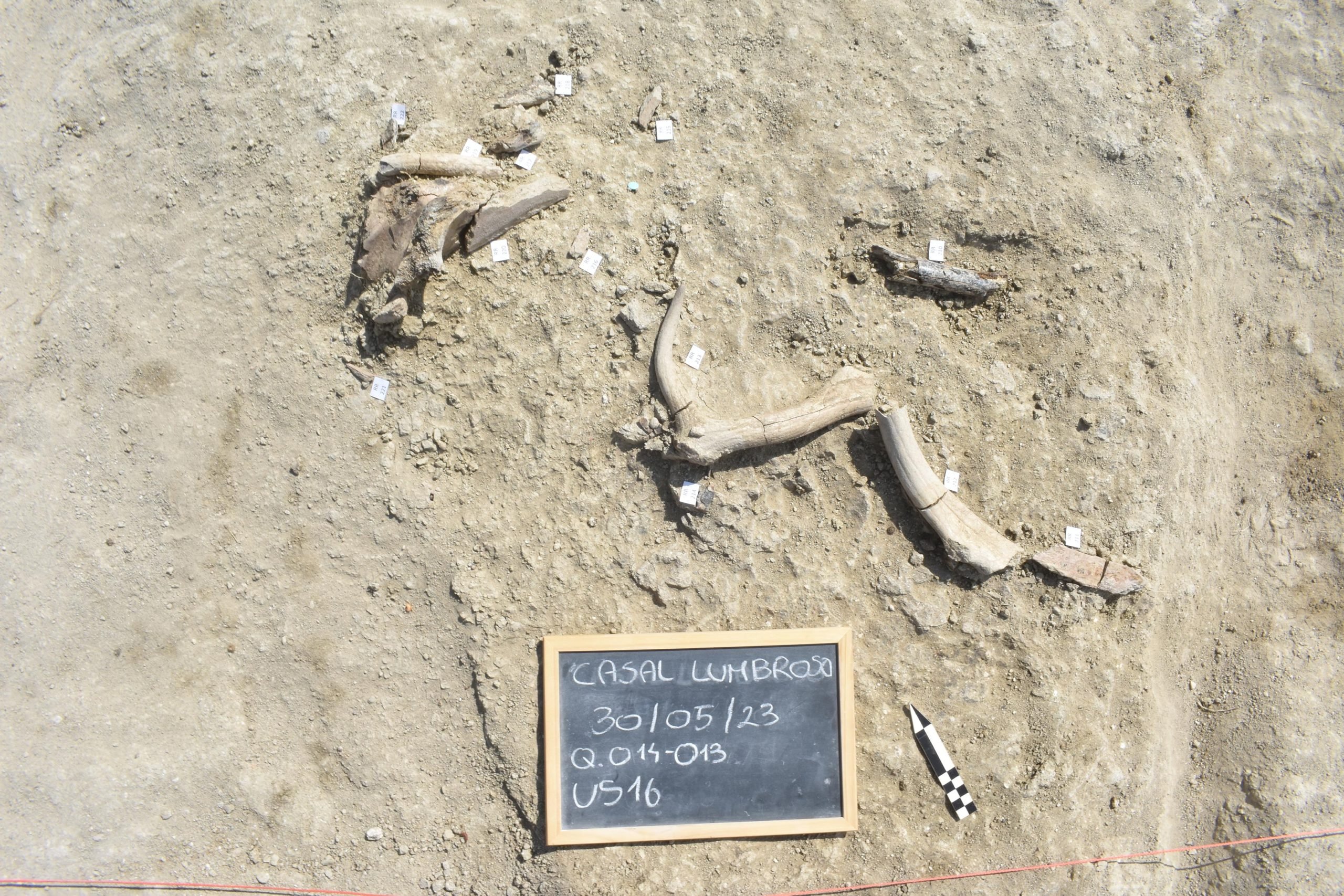
    Middle Pleistocene Elephant Butchery Site Casal Lumbroso
    Archaeologists uncover how early humans in Italy butchered elephants and forged survival from their bones 400,000 years ago. (Excavation at Casal Lumbroso.) Credit: Beniamino Mecozzi, CC-BY 4.0

    Archaeologists in Rome have discovered a 404,000-year-old site where early humans butchered an elephant using small stone tools.

    The remains, found alongside over 500 artifacts, reveal that people not only used elephants for food but also turned their bones into tools. These findings suggest a sophisticated and consistent survival strategy among ancient humans in central Italy during a warm Pleistocene period.

    Early Humans in Italy Butchered Elephants for Survival

    During a warm phase of the Middle Pleistocene, early humans living in what is now Italy regularly butchered elephants for food and materials, according to research published October 8, 2025, in the open-access journal PLOS One by Beniamino Mecozzi of Sapienza University of Rome (Italy) and colleagues.

    Ancient Evidence from Casal Lumbroso

    While prehistoric humans often used animal carcasses as vital resources, clear traces of butchery are rare and difficult to identify in the archaeological record. Mecozzi and his team examined the remains of a large elephant found at the Casal Lumbroso site in northwest Rome. Analysis of surrounding ash deposits showed that the remains date back about 404,000 years, a time marked by warmer environmental conditions during the Middle Pleistocene Epoch.
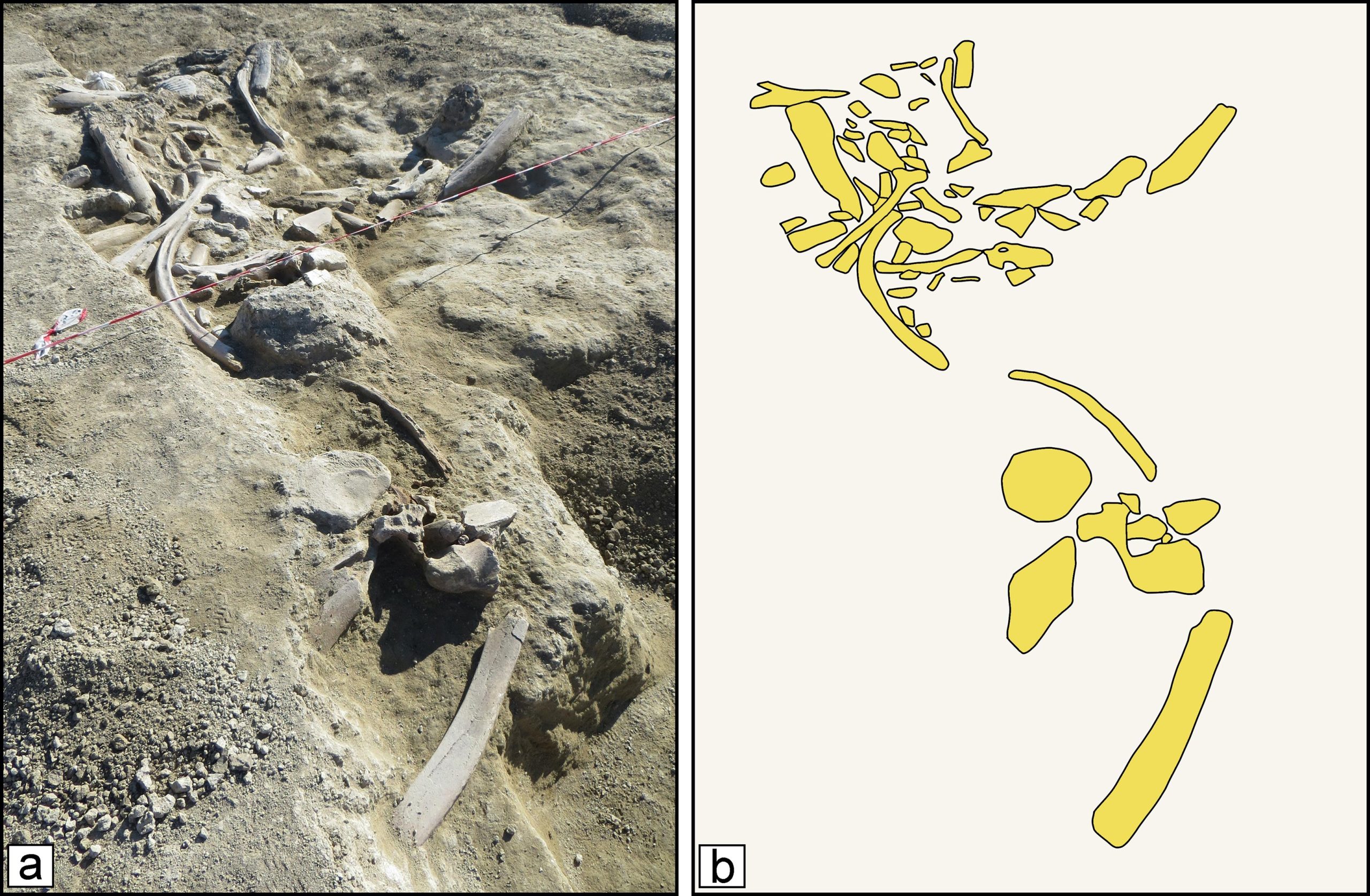
    Archaeological and Paleontological Deposit of Casal Lumbroso
    Archaeological and paleontological deposit of Casal Lumbroso (a) and the drawing of the large mammal bones exposed in the main surface (b). Credit: Mecozzi et al., 2025, PLOS One, CC-BY 4.0

    Hundreds of Bones and Tools Uncovered

    Researchers uncovered more than 300 bones belonging to a single straight-tusked elephant (Palaeoloxodon) together with over 500 stone tools. Many bones displayed fresh breaks created soon after the animal’s death, each accompanied by impact marks that indicate the use of blunt force to crack them open. The absence of clear cut marks suggests that small tools were used to slice soft tissue. Most stone implements measured under 30mm, possibly because larger stones were scarce. Several elephant bones were later shaped into tools themselves.

    The characteristics of the Casal Lumbroso site resemble several other Middle Pleistocene sites in central Italy that also contain butchered elephant remains, modified bones, and small stone tools. This pattern points to a recurring survival strategy among early hominins during mild climate periods and identifies central Italy as a key region for studying how ancient humans secured food and raw materials in Europe.

    Bringing the Distant Past to Life

    The researchers explain: “Our study shows how, 400,000 years ago in the area of Rome, human groups were able to exploit an extraordinary resource like the elephant—not only for food, but also by transforming its bones into tools.”

    “Reconstructing these events means bringing to life ancient and vanished scenarios, revealing a world where humans, animals, and ecosystems interacted in ways that still surprise and fascinate us today.”

    Reference: “From meat to raw material: the Middle Pleistocene elephant butchery site of Casal Lumbroso (Rome, central Italy)” by Beniamino Mecozzi, Ivana Fiore, Biagio Giaccio, Francesca Giustini, Stefano Mercurio, Lorenzo Monaco, Alessia Argento, Francesco Bucci Casari degli Atti di Sassoferrato, Isabella Caricola, Cristina Lemorini, Francesco Lucchini, Ilaria Mazzini, Maria Rita Palombo, Raffaele Sardella, Andrea Sposato, Enza Elena Spinapolice and Francesca Alhaique, 8 October 2025, PLOS ONE.
    DOI: 10.1371/journal.pone.0328840

    Never miss a breakthrough: Join the SciTechDaily newsletter.
    Follow us on Google and Google News.

    Anthropology Archaeology Elephants Paleontology PLOS
    Share. Facebook Twitter Pinterest LinkedIn Email Reddit

    Related Articles

    Archaeologists Discover That Ancient Islamic Tombs Cluster Like Galaxies

    First Tales of the Earliest Domesticated Goats Revealed by 10,000-Year-Old DNA

    Crystals Reveal Early Humans in the Kalahari 105,000 Years Ago Were As Innovative as Their Coastal Neighbors

    Indiscriminate Killing Revealed in Genetic Analysis of Ancient Massacre

    DNA of Bones Found in Cave Reveals Major Cultural Transition in Europe Took Place Earlier Than Thought

    Deformed Skulls Discovered in an Ancient Cemetery Reveal a Remarkably Diverse Community

    Neandertals Dove Underwater to Collect Clam Shells to Use as Tools

    Earliest Interbreeding Between Ancient Human Populations Discovered – Evolutionary Puzzle Solved

    New Evidence Shows Humans Mastered Fire Earlier Than Thought

    2 Comments

    1. Boba on October 26, 2025 8:17 am

      So the elephants were having it rough ever since people turned up.

      Reply
      • Nadezhda on October 27, 2025 11:07 am

        Truer words never spoken.

        Reply
    Leave A Reply Cancel Reply

    • Facebook
    • Twitter
    • Pinterest
    • YouTube

    Don't Miss a Discovery

    Subscribe for the Latest in Science & Tech!

    Trending News

    Scientists Uncover Potential Brain Risks of Popular Fish Oil Supplements

    Scientists Discover a Surprising Way To Make Bread Healthier and More Nutritious

    After 60 Years, Scientists Uncover Unexpected Brain Effects of Popular Diabetes Drug Metformin

    New Research Uncovers Hidden Side Effects of Popular Weight-Loss Drugs

    Scientists Rethink Extreme Warming After Surprising Ocean Discovery

    Landmark Study Links Never Marrying to Significantly Higher Cancer Risk

    Researchers Discover Unknown Beetle Species Just Steps From Their Lab

    Largest-Ever Study Finds Medicinal Cannabis Ineffective for Anxiety, Depression, PTSD

    Follow SciTechDaily
    • Facebook
    • Twitter
    • YouTube
    • Pinterest
    • Newsletter
    • RSS
    SciTech News
    • Biology News
    • Chemistry News
    • Earth News
    • Health News
    • Physics News
    • Science News
    • Space News
    • Technology News
    Recent Posts
    • Early Warning Signals of Esophageal Cancer May Be Hiding in Plain Sight
    • Researchers Have Discovered a THC-Free Cannabis Compound That May Replace Opioids
    • Common Blood Pressure Drug Shows Surprising Power Against Deadly Antibiotic-Resistant Superbug
    • Students Build Dark Matter Detector and Set New Experimental Limits
    • Scientists Discover Caffeine Can Repair Key Memory Circuits After Sleep Loss
    Copyright © 1998 - 2026 SciTechDaily. All Rights Reserved.
    • Science News
    • About
    • Contact
    • Editorial Board
    • Privacy Policy
    • Terms of Use

    Type above and press Enter to search. Press Esc to cancel.