
Neutrons “See” Internal Stress in Components From Additive Manufacturing
3D printing has opened up a completely new range of possibilities. One example is the production of novel turbine buckets. However, the 3D printing process often induces internal stress in the components which can in the worst case lead to cracks. Now a research team has succeeded in using neutrons from the Technical University of Munich (TUM) research neutron source reactor for non-destructive detection of this internal stress – a key achievement for the improvement of the production processes.
Gas turbine buckets have to withstand extreme conditions: They are exposed to tremendous centrifugal forces under high pressure and at high temperatures. In order to further maximize energy yields, the buckets have to hold up to temperatures that are actually higher than the melting point of the material. This is made possible using hollow turbine buckets which are air-cooled from the inside.
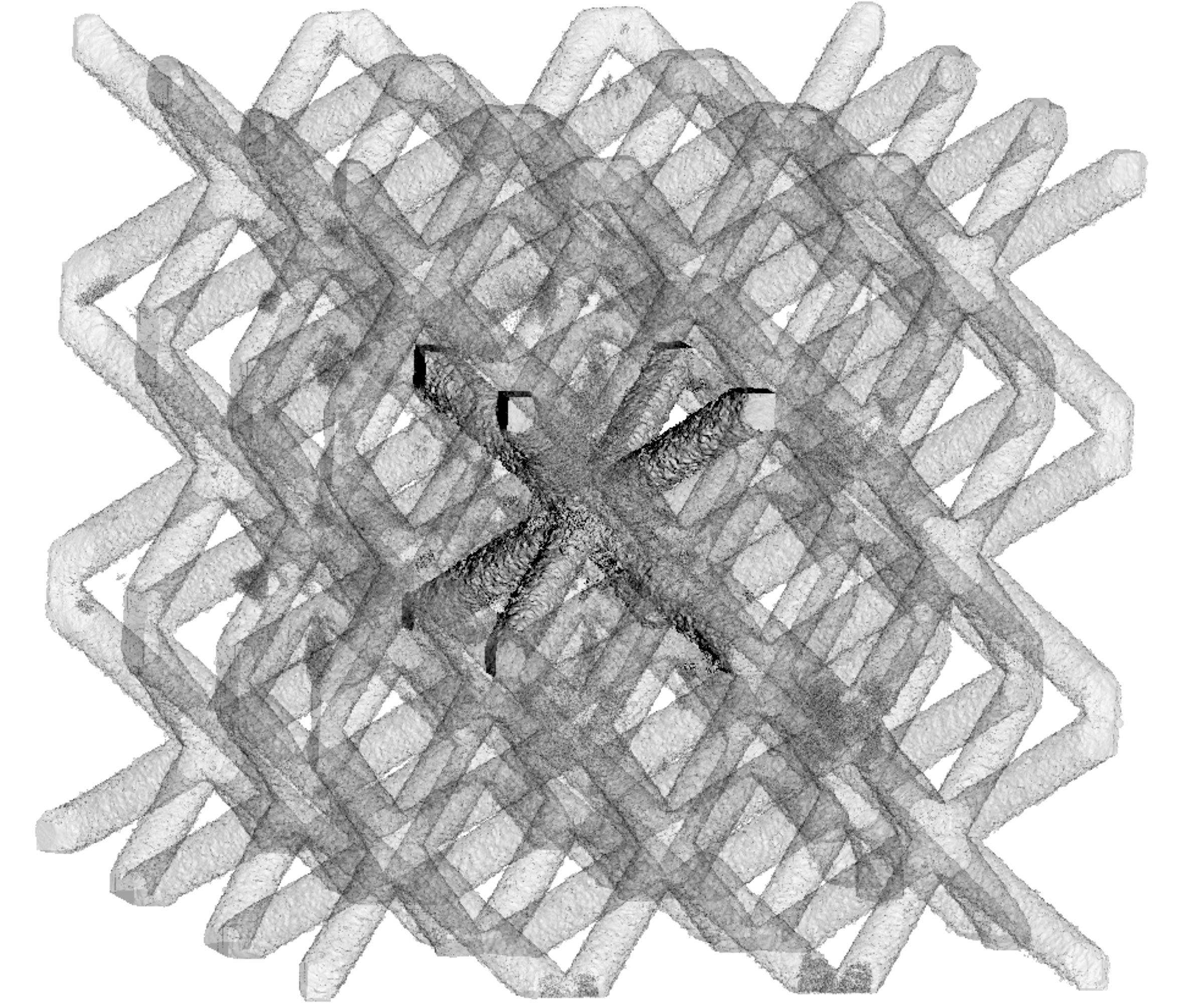
These turbine buckets can be made using Laser Powder Bed Fusion, an additive manufacturing technology: Here the starter material in powder form is built up layer by layer by selective melting with a laser. Following the example of avian bones, intricate lattice structures inside the hollow turbine buckets provide the part with the necessary stability.
Manufacturing Process Creates Internal Stress in the Material
“Complex components with such intricate structures would be impossible to make using conventional manufacturing methods like casting or milling,” says Dr. Tobias Fritsch of the German Federal Institute for Materials Research and Testing (BAM).
But the laser’s highly localized heat input and the rapid cooling of the melt pool lead to residual stress in the material. Manufacturers usually eliminate such stress in a downstream heat-treatment step, which however takes time and thus costs money.
Unfortunately, these stresses can also damage the components as early as during the production process and up until post-processing takes place. “The stress can result in deformations and in the worst cases lead to cracks,” says Tobias Fritsch.
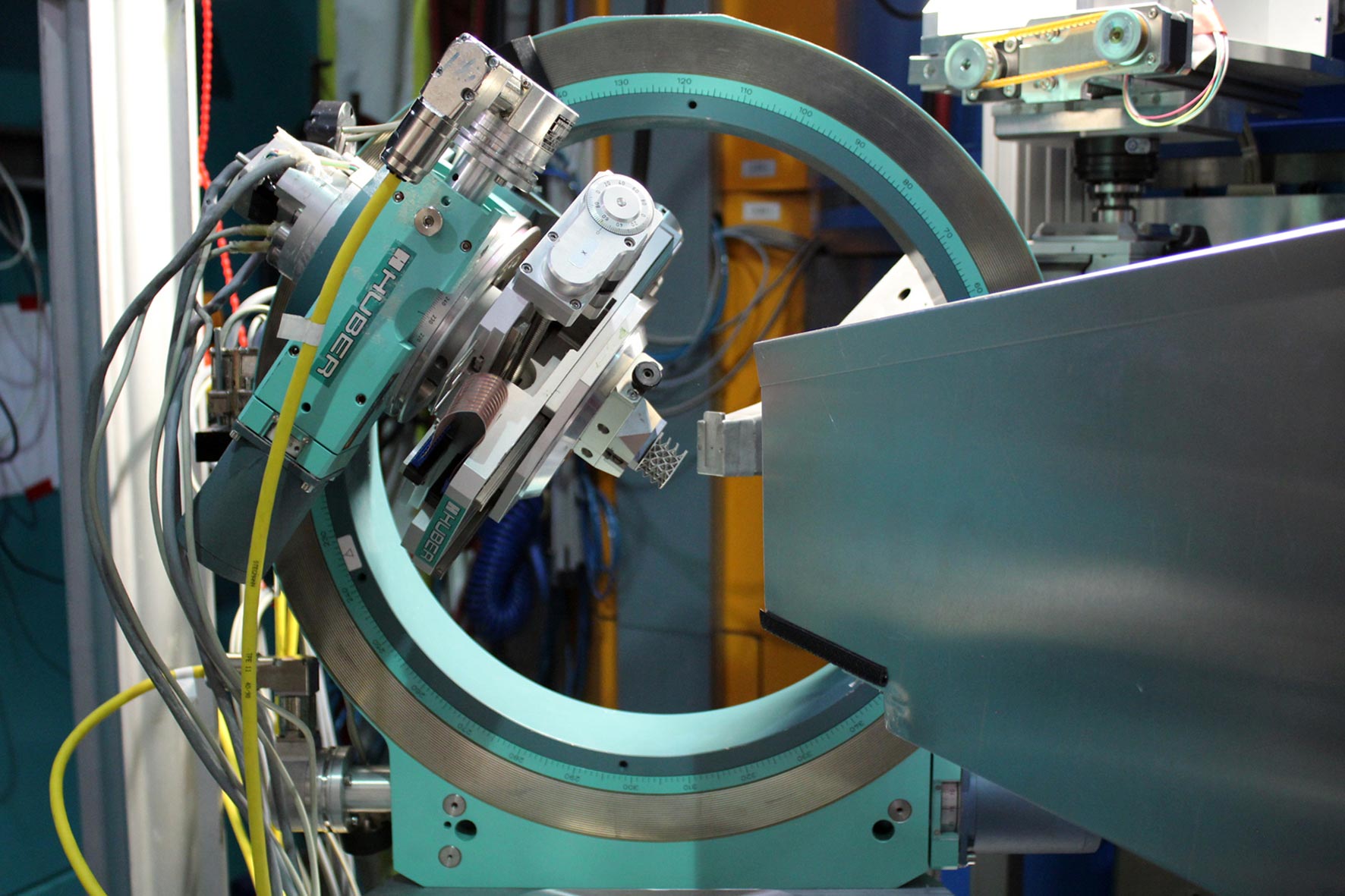
Therefore, he investigated a gas turbine component for internal stress using neutrons from the Research Neutron Source Heinz Maier-Leibnitz (FRM II). The component was made using additive production processes by gas turbine manufacturer Siemens Energy.
Post-Processing Intentionally Omitted
For the neutron experiment at the FRM II, Siemens Energy printed a lattice structure only a few millimeters in size using a nickel-chrome alloy typical of those used for gas turbine components. The usual heat-treatment after production was intentionally omitted.
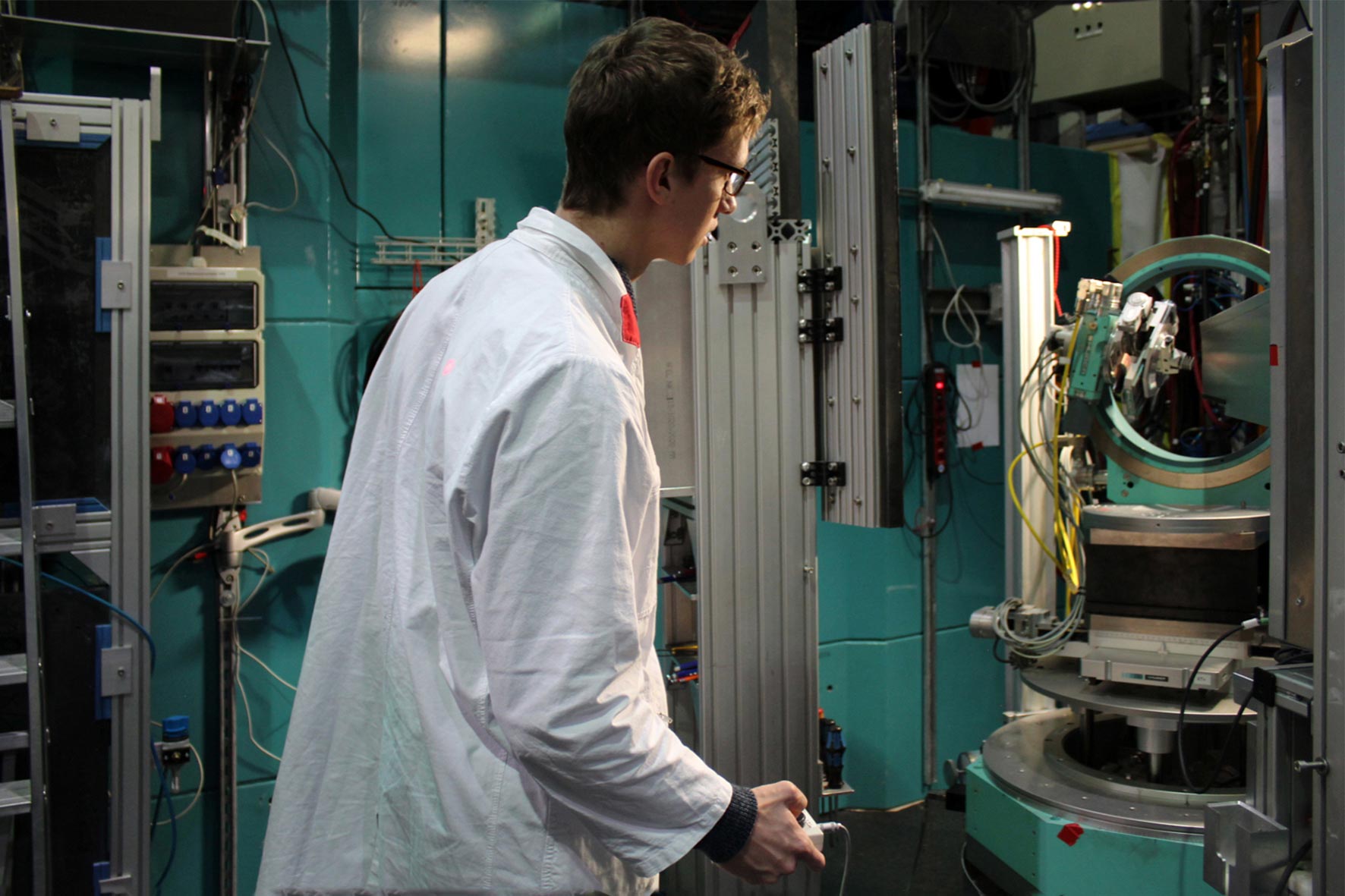
“We wanted to see whether or not we could use neutrons to detect internal stresses in this complex component,” explains Tobias Fritsch. He had already gained experience with neutron measurements at the Berlin research reactor BER II, which however was shut down in late 2019.
“We are very glad to be able to make measurements in the Heinz Maier-Leibnitz Zentrum in Garching; with the equipment provided by STRESS-SPEC we were even able to resolve internal stress in lattice structures as intricate and complex as these,” the physicist says.
Even Distribution of Heat During Printing
Now that the team has succeeded in detecting the internal stress within the component, the next step is to reduce this destructive stress. “We know that we have to modify the production process parameters and thus the way in which the component is built up during printing,” says Fritsch. Here the crucial factor is the heat input over time when building up the individual layers. “The more localized the heat application is during the melting process, the more internal stress results.”
For as long as the printer’s laser is aimed at a given point, the heat of the point rises relative to adjacent areas. This results in temperature gradients that lead to irregularities in the atomic lattice.
“So we have to distribute the heat as evenly as possible during the printing process,” says Fritsch. In the future the group will research the situation with new components and modified printing parameters. The team is already working together with Siemens to plan new measurements with the TUM neutron source in Garching.
Reference: “On the determination of residual stresses in additively manufactured lattice structures” by T. Fritsch, M. Sprengel, A. Evans, L. Farahbod-Sternahl, R. Saliwan-Neumann, M. Hofmann and G. Bruno, Journal of Applied Crystallography.
DOI: 10.1107/S1600576720015344
Never miss a breakthrough: Join the SciTechDaily newsletter.
Follow us on Google and Google News.