
Close Menu
    Facebook X (Twitter) Instagram
    SciTechDaily
    • Biology
    • Chemistry
    • Earth
    • Health
    • Physics
    • Science
    • Space
    • Technology
    Facebook X (Twitter) Pinterest YouTube RSS
    SciTechDaily
    Home»Technology»ESA Opens Oxygen Plant – Making Breathable Air Out of Moondust
    Technology

    ESA Opens Oxygen Plant – Making Breathable Air Out of Moondust

    By ESA (European Space Agency)January 17, 20201 Comment5 Mins Read
    Facebook Twitter Pinterest Telegram LinkedIn WhatsApp Email Reddit
    Share
    Facebook Twitter LinkedIn Pinterest Telegram Email Reddit
    Artist Impression Moon Base
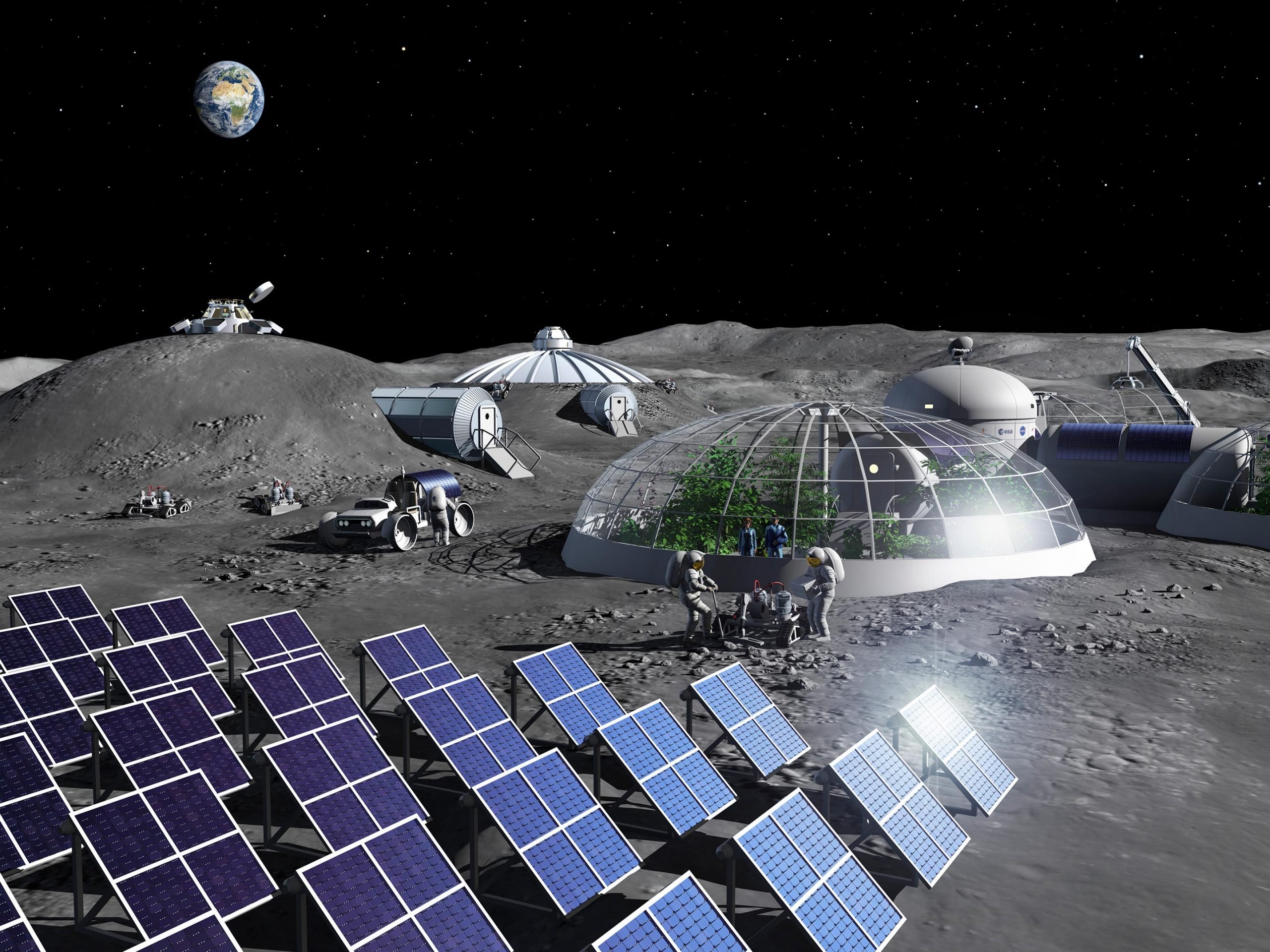
    Artist impression of activities in a Moon Base. Power generation from solar cells, food production in greenhouses, and construction using mobile 3D printer-rovers. Credit: ESA – P. Carril

    ESA’s technical heart has begun to produce oxygen out of simulated moondust.

    A prototype oxygen plant has been set up in the Materials and Electrical Components Laboratory of the European Space Research and Technology Centre, ESTEC, based in Noordwijk in the Netherlands.
    Making Oxygen Out of Moondust
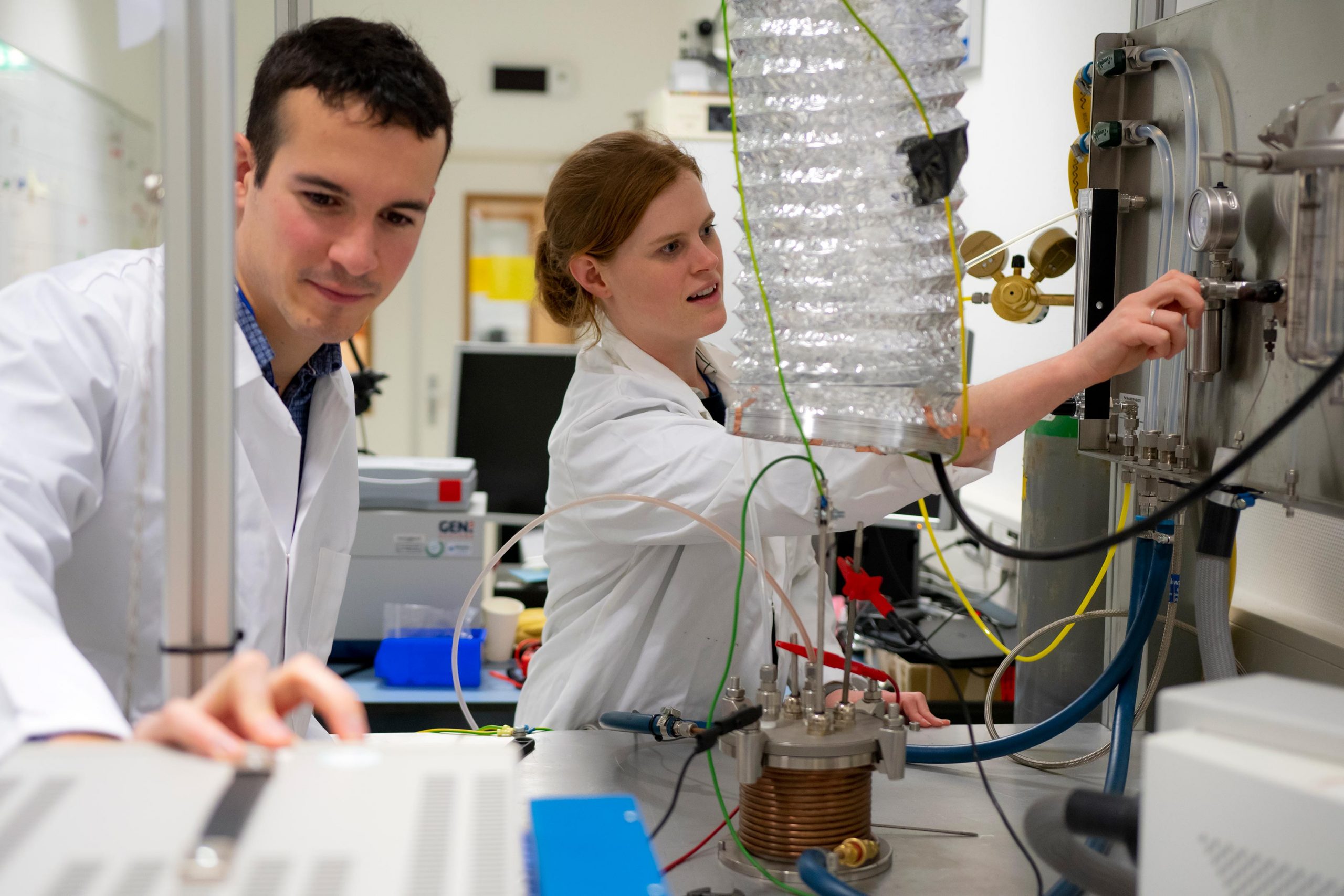
    ESA research fellow Alexandre Meurisse and Beth Lomax of the University of Glasgow producing oxygen and metal out of simulated moondust inside ESA’s Materials and Electrical Components Laboratory. Credit: ESA–A. Conigili

    “Having our own facility allows us to focus on oxygen production, measuring it with a mass spectrometer as it is extracted from the regolith simulant,” Beth Lomax of the University of Glasgow, whose Ph.D. work is being supported through ESA’s Networking and Partnering Initiative, harnessing advanced academic research for space applications.

    “Being able to acquire oxygen from resources found on the Moon would obviously be hugely useful for future lunar settlers, both for breathing and in the local production of rocket fuel.”
    Oxygen and Metal From Lunar Regolith
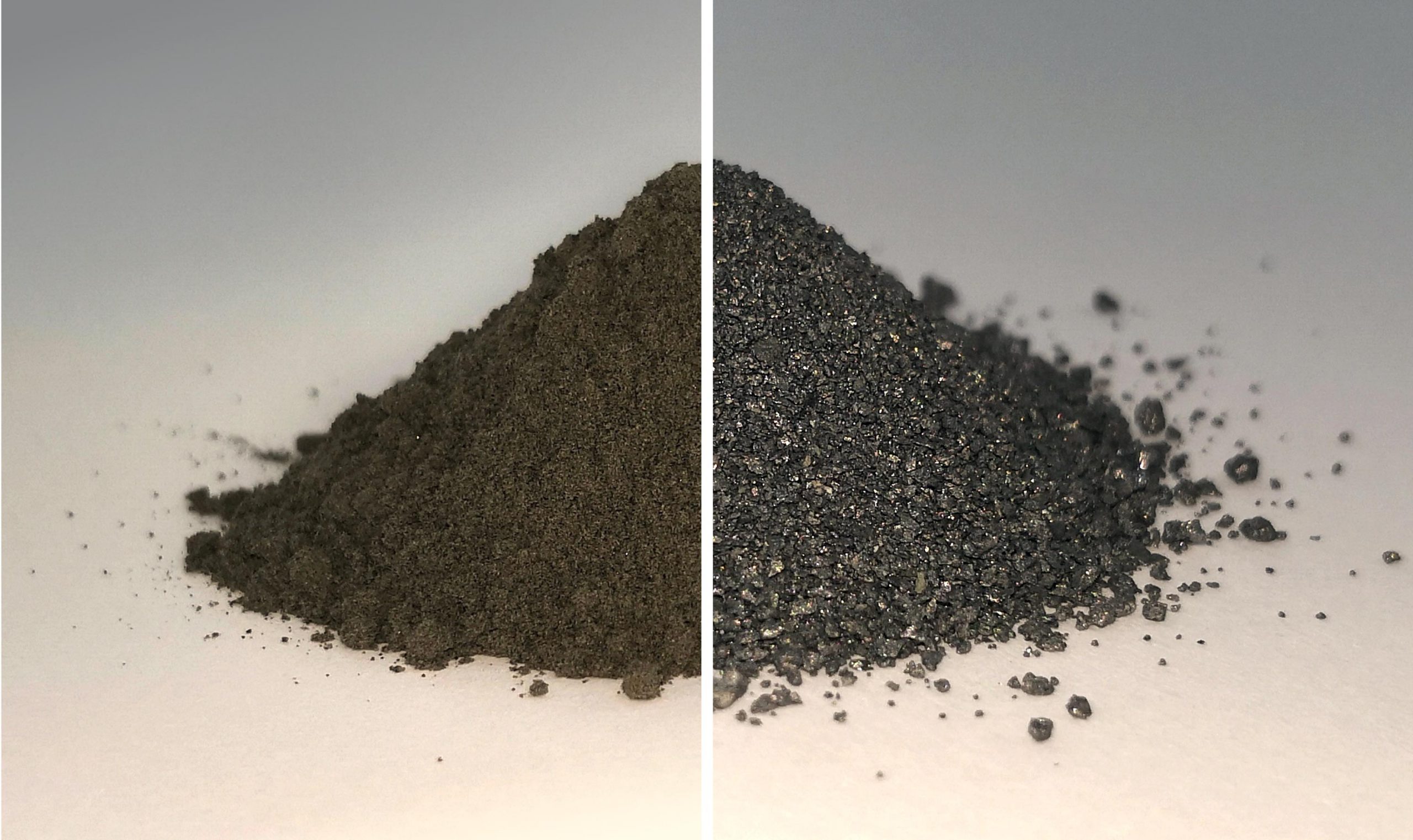
    On the left side of this before and after image is a pile of simulated lunar soil, or regolith; on the right is the same pile after essentially all the oxygen has been extracted from it, leaving a mixture of metal alloys. Both the oxygen and metal could be used in the future by settlers on the Moon. Credit: Beth Lomax – University of Glasgow

    ESA research fellow Alexandre Meurisse adds: “And now we have the facility in operation we can look into fine-tuning it, for instance by reducing the operating temperature, eventually designing a version of this system that could one day fly to the Moon to be operated there.”

    Samples returned from the lunar surface confirm that lunar regolith is made up of 40–45% percent oxygen by weight, its single most abundant element. But this oxygen is bound up chemically as oxides in the form of minerals or glass, so is unavailable for immediate use.
    Microscopic Image Moondust Simulant

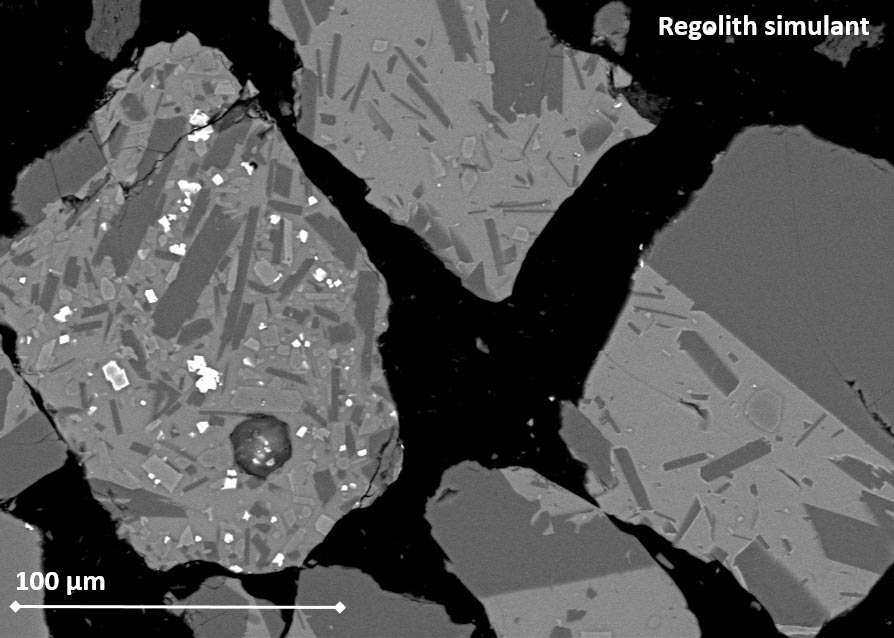
    Scanning electron microscope view of lunar simulant particles before the oxygen extraction process. Credit: Beth Lomax / University of Glasgow

    ESTEC’s oxygen extraction is taking place using a method called molten salt electrolysis, involving placing regolith in a metal basket with molten calcium chloride salt to serve as an electrolyte, heated to 950°C. At this temperature, the regolith remains solid.

    But passing a current through it causes the oxygen to be extracted from the regolith and migrate across the salt to be collected at an anode. As a bonus, this process also converts the regolith into usable metal alloys.
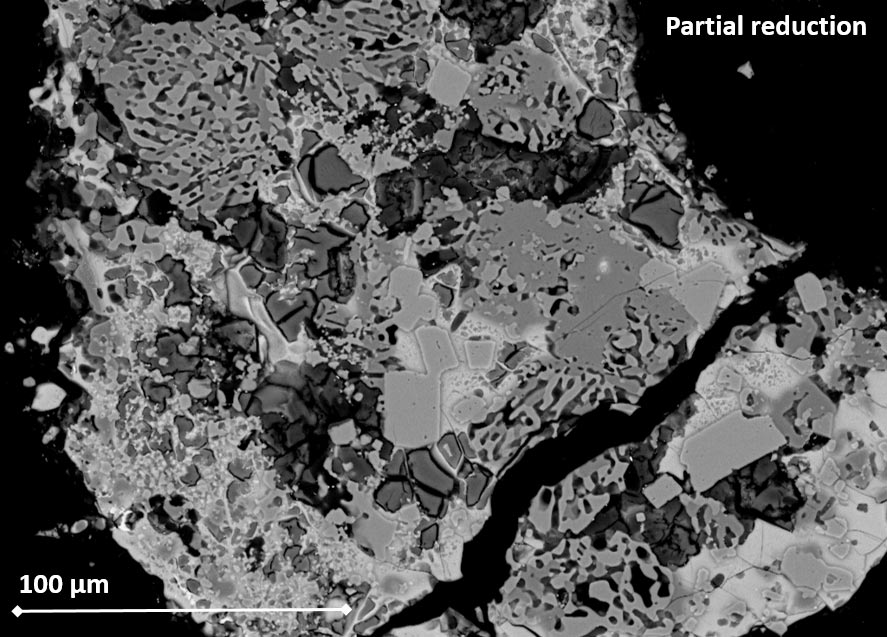
    Moondust Simulant Oxygen Extraction
    Moondust simulant undergoing oxygen extraction. Credit: Beth Lomax / University of Glasgow

    In fact this molten salt electrolysis method was developed by UK company Metalysis for commercial metal and alloy production. Beth’s Ph.D. involved working at the company to study the process before recreating it at ESTEC.

    “At Metalysis, oxygen produced by the process is an unwanted by-product and is instead released as carbon dioxide and carbon monoxide, which means the reactors are not designed to withstand oxygen gas itself,” explains Beth. “So we had to redesign the ESTEC version to be able to have the oxygen available to measure. The lab team was very helpful in getting it installed and operating safely.”
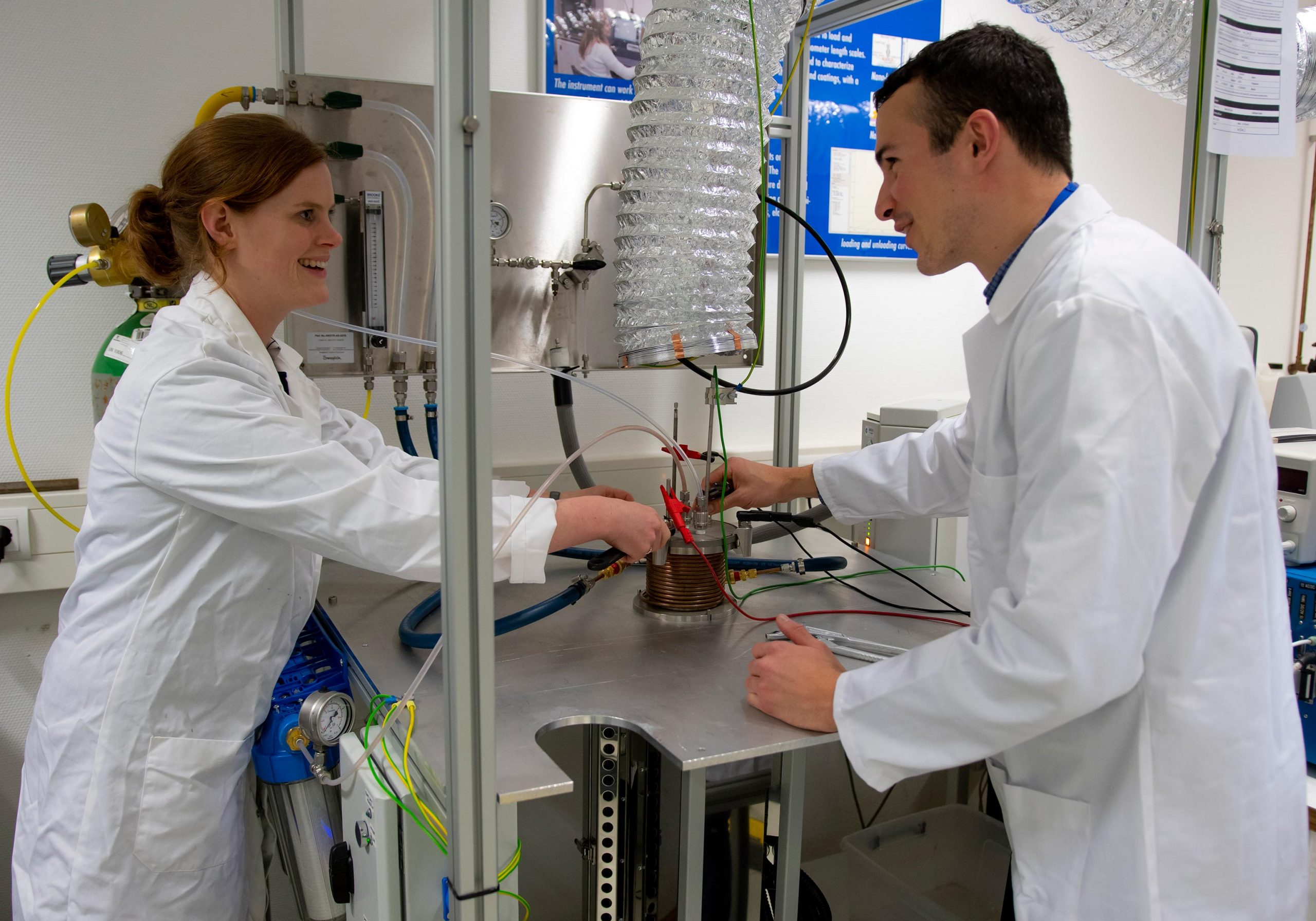
    Moon Oxygen Test Run
    ESA research fellow Alexandre Meurisse and Beth Lomax of the University of Glasgow preparing to make oxygen and metal out of simulated moondust inside ESA’s Materials and Electrical Components Laboratory. Credit: ESA–A. Conigili

    The oxygen plant runs silently, with the oxygen produced in the process is vented into an exhaust pipe for now, but will be stored after future upgrades of the system.

    “The production process leaves behind a tangle of different metals,” adds Alexandre, “and this is another useful line of research, to see what are the most useful alloys that could be produced from them, and what kind of applications could they be put to.

    “Could they be 3D printed directly, for example, or would they require refining? The precise combination of metals will depend on where on the Moon the regolith is acquired from – there would be significant regional differences.”
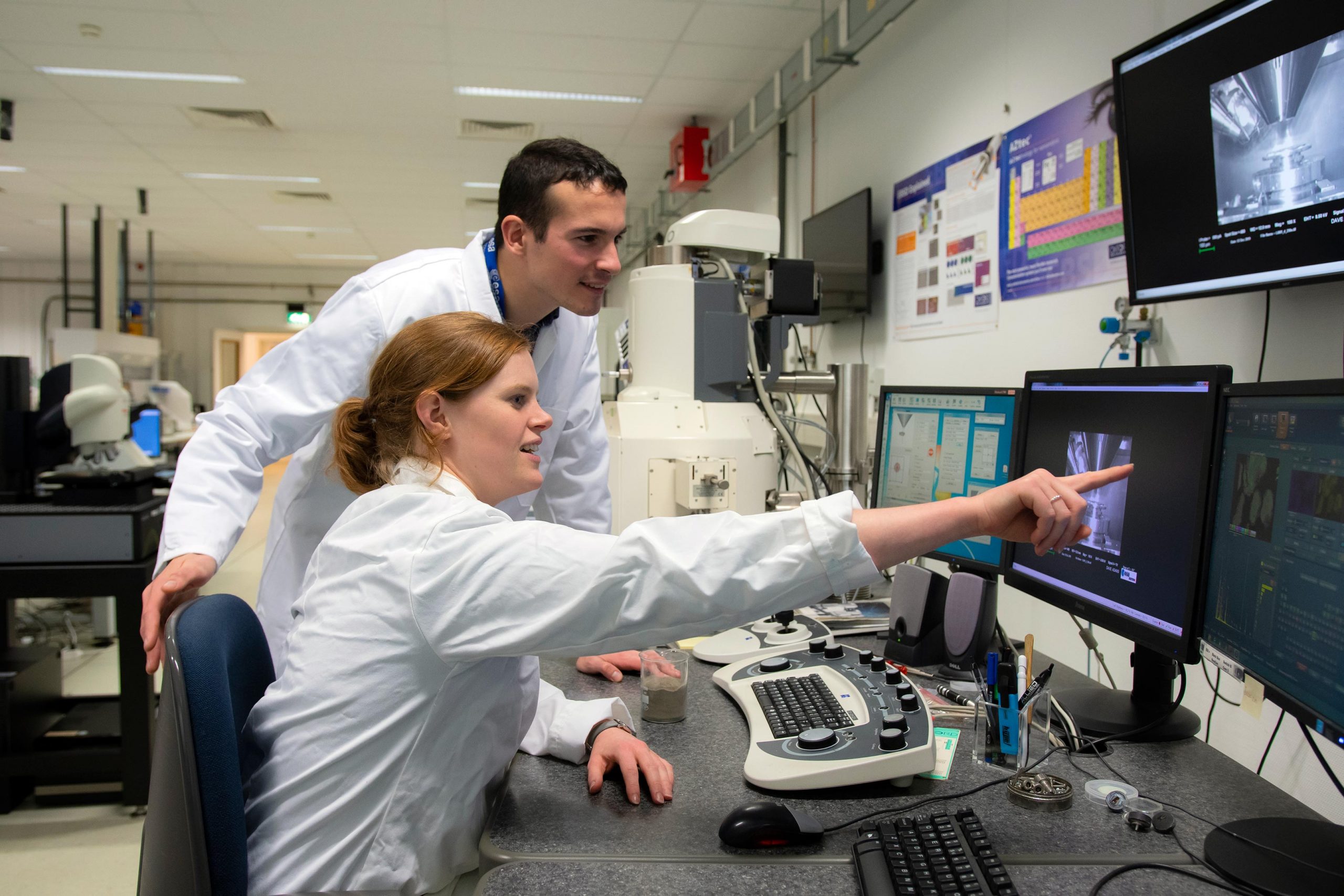
    Analyzing Oxygen Moondust Results
    ESA research fellow Alexandre Meurisse and Beth Lomax of the University of Glasgow producing oxygen and metal out of simulated moondust inside ESA’s Materials and Electrical Components Laboratory. Credit: ESA–A. Conigili

    The ultimate aim would be to design a ‘pilot plant’ that could operate sustainably on the Moon, with the first technology demonstration targeted for the mid-2020s.

    “ESA and NASA are heading back to the Moon with crewed missions, this time with a view towards staying,” says Tommaso Ghidini, Head of ESA’s Structures, Mechanisms and Materials Division.

    “Accordingly we’re shifting our engineering approach to a systematic use of lunar resources in-situ. We are working with our colleagues in the Human and Robotics Exploration Directorate, European industry and academia to provide top class scientific approaches and key enabling technologies like this one, towards a sustained human presence on the Moon and maybe one day Mars.”

    Never miss a breakthrough: Join the SciTechDaily newsletter.
    Follow us on Google and Google News.

    European Space Agency Moon Popular
    Share. Facebook Twitter Pinterest LinkedIn Email Reddit

    Related Articles

    European Space Agency Plans Mission to Explore Caves on the Moon

    Metal Fuels – One of the Most Promising Fuels for the Future?

    Turning Lunar Dust Into Oxygen – And Using the Leftovers to 3D Print a Moon Base

    Hubble Uses Moon As “Mirror” to Study Earth’s Atmosphere – Proxy in Search of Potentially Habitable Planets Around Other Stars

    Laser-Powered Rover Will Explore the Moon’s Dark Shadows

    Building a Moon Base Using Astronaut Waste in Lunar Concrete

    Lunar Gateway Orbital Outpost Experiment Will Monitor Radiation in Deep Space

    Flexible, Thinner-Than-Paper Solar Cells for Future Satellites

    Mining the Moon: Preparing a Lunar Drill and Sample Analysis Package

    1 Comment

    1. Amada on January 22, 2020 7:56 am

      I think this is cool. It would be super helpful if we could breathe off the earth.

      Reply
    Leave A Reply Cancel Reply

    • Facebook
    • Twitter
    • Pinterest
    • YouTube

    Don't Miss a Discovery

    Subscribe for the Latest in Science & Tech!

    Trending News

    New Pill Lowers Stubborn Blood Pressure and Protects the Kidneys

    Humans May Have Hidden Regenerative Powers, New Study Suggests

    Scientists Just Solved the Mystery of Why Crabs Walk Sideways

    Doctors Are Surprised by What This Vaccine Is Doing to the Heart

    This Popular Supplement May Boost Your Brain, Not Just Your Muscles

    Scientists Say This Simple Supplement May Actually Reverse Heart Disease

    Warming Oceans Could Trigger a Dangerous Methane Surge

    This Simple Movement Could Be Secretly Cleaning Your Brain

    Follow SciTechDaily
    • Facebook
    • Twitter
    • YouTube
    • Pinterest
    • Newsletter
    • RSS
    SciTech News
    • Biology News
    • Chemistry News
    • Earth News
    • Health News
    • Physics News
    • Science News
    • Space News
    • Technology News
    Recent Posts
    • Your Blood Pressure Reading Could Be Wrong Because of One Simple Mistake
    • Scientists Discover Cheap Material That Kills Deadly Superbugs
    • This Magnetic Field Trick Creates Entirely New Forms of Matter
    • Astronomers Stunned by Ancient Galaxy With No Spin
    • Physicists May Be on the Verge of Discovering “New Physics” at CERN
    Copyright © 1998 - 2026 SciTechDaily. All Rights Reserved.
    • Science News
    • About
    • Contact
    • Editorial Board
    • Privacy Policy
    • Terms of Use

    Type above and press Enter to search. Press Esc to cancel.