
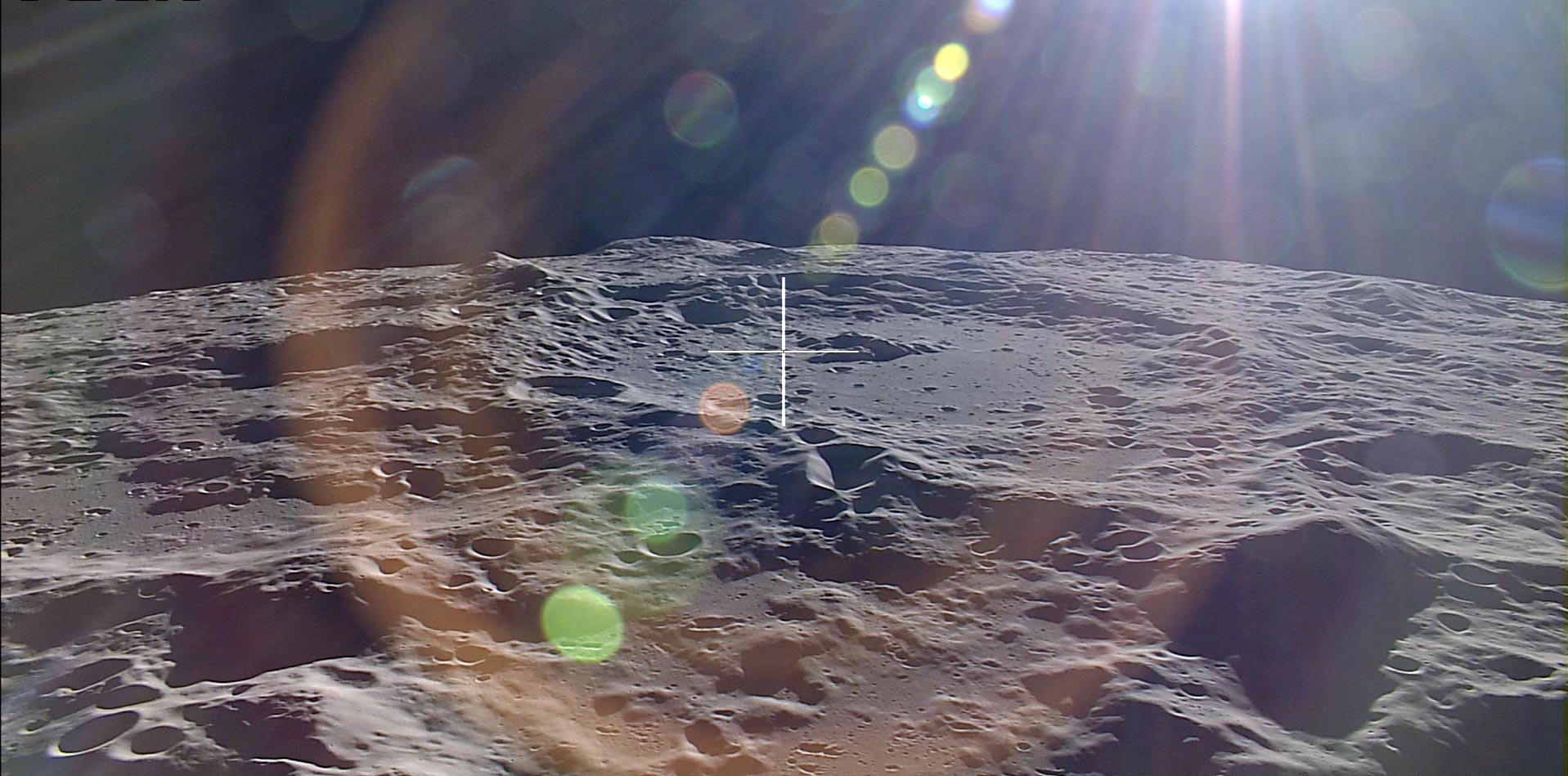
The first European device to land on the Moon this decade will be a drill and sample analysis package, and the teams behind it are one step closer to flight as part of Russia’s Luna-27 mission.
The main goal of the Luna-27 lander is to study the composition of the soil near the lunar south pole. Water is a key target: there may be concentrations of frozen water at or below the surface.
A major European contribution to the mission is Prospect, a robotic drill and a miniature laboratory with a suite of scientific instruments designed to penetrate the Moon’s soil to depths of up to one meter, acquire lunar samples, and deliver them to the mini labs hosted by the lander.
There are vast unexplored regions on the Moon. “Prospect will allow scientists to better understand the terrain and prepare missions in which lunar soil can be used to create oxygen or fuel for example,” said ESA’s Director of Human and Robotic Exploration David Parker.
Answering questions such as how much water is present and how accessible it is will help plan future missions involving the use of local resources.
“Prospect is part of a pioneering new wave of lunar science and exploration,” says Richard Fisackerly, Prospect project manager, after completion of the preliminary design phase.
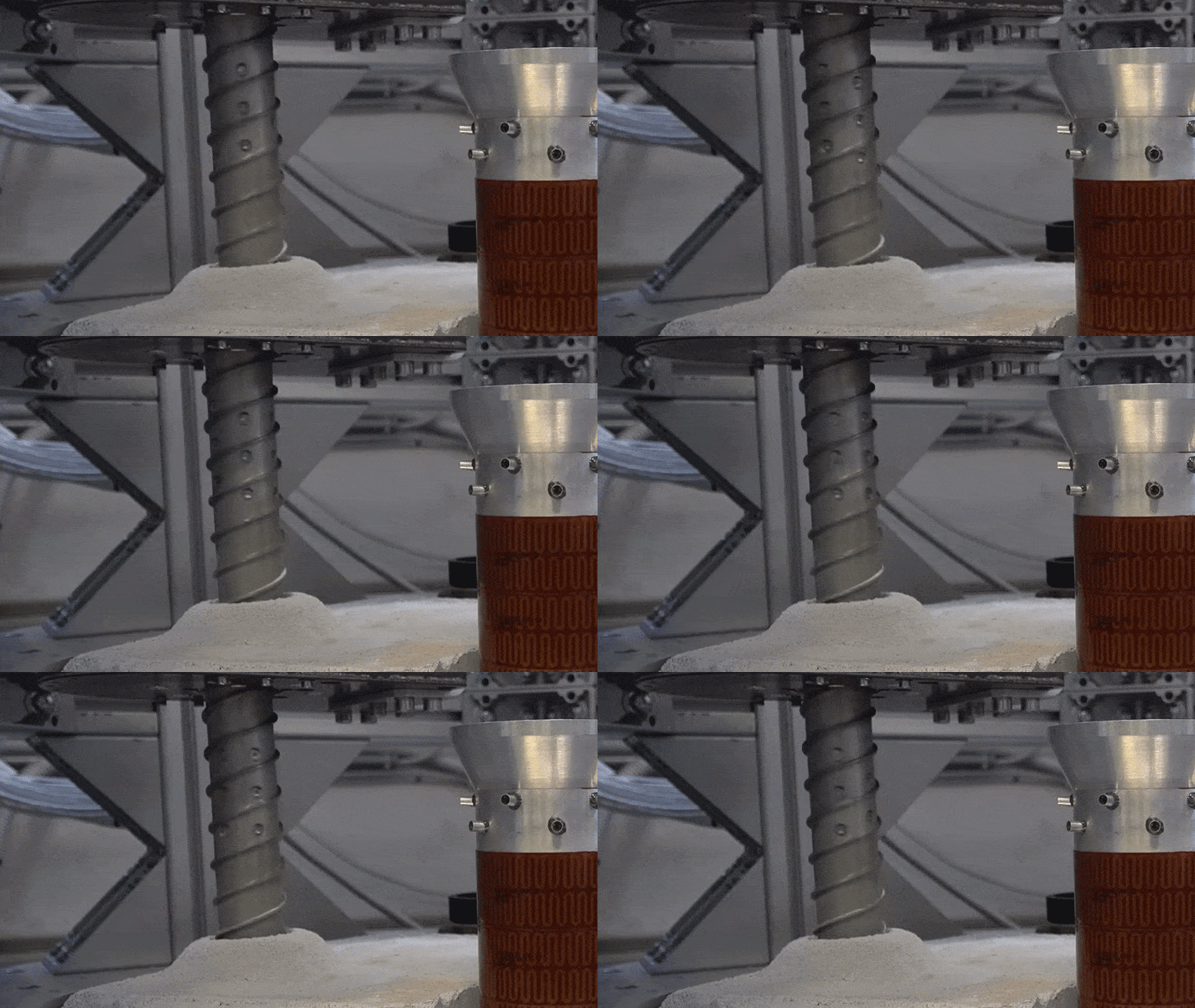
His confidence was reaffirmed yesterday following the signature of a €31.5 million contract with European industry that paves the way for ESA to start working on the detailed design, further tests, and final integration of the drill and instrument package that will fly to the Moon on the Russian spacecraft.

“This signature opens up the path to the delivery of the drill to Russia and operations on the lunar surface,” adds Richard. The signing took place on January 30, 2020, at the Leonardo premises in Milan, Italy.
Luna-27 will land on the Moon using a European system called Pilot to support its main navigation system for high accuracy landing and hazard avoidance.
Lunar milestones on Earth
Extracting oxygen directly from lunar rocks and soil could be an efficient and sustainable way to support human life or spacecraft propulsion.
All the tests were conducted at very low temperatures, similar to those expected in the Moon’s subsurface –approximately -150 °C (-238 °F), under low pressure and with lunar simulant.
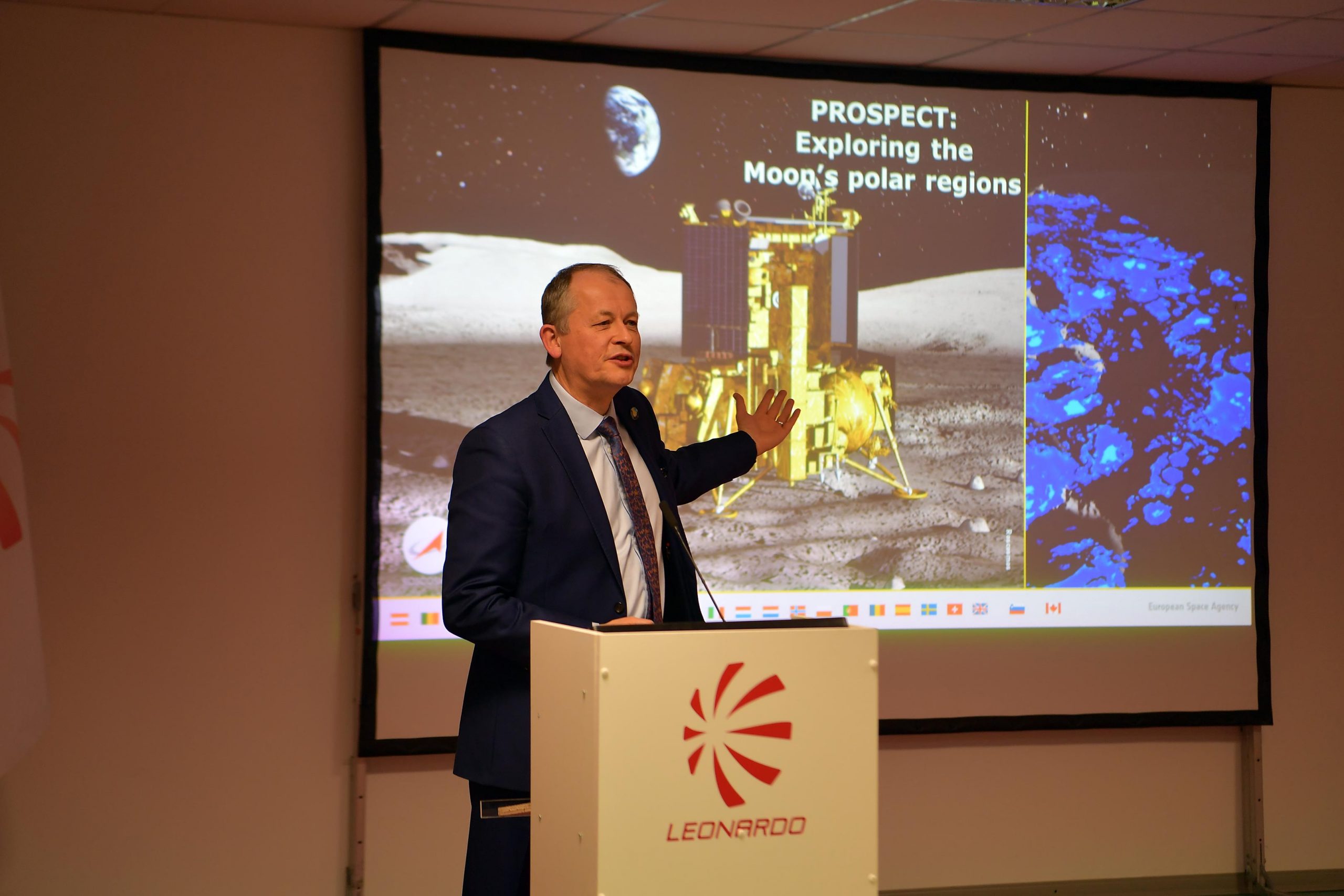
The drill has been put to the test in the past few months to collect samples and transfer them to the ProSPA lab and Russian robotic arm. The tests were conducted at very low temperatures, similar to those expected in the Moon’s subsurface – approximately -150 °C (-238 °F), under low pressure and with lunar simulant, both at the Leonardo laboratories in Nerviano, and at CISAS premises within University of Padova.
“The drill proved to be powerful enough to dig deep into hard material and collect very fine dust. We are very happy to move on to the next phase and work on accommodating Prospect on the lander,” explained Igor Mitrofanov, Luna-27 mission scientist from the Space Research Institute of the Russian Academy of Sciences (IKI).
Whereas the drill tests have crushed rocks – from gravel to fine dust – frozen with varying water ice content for the drill tests, the ProSPA lab has been put through its paces using real meteorites as dummy samples.
ProSPA is a very powerful and flexible scientific tool that contains equipment similar to what one would find in a laboratory on Earth specializing in studying lunar samples or meteorites. “The difference is that the lab is taken to the sample, not the other way around,” explains Simeon Barber, ProSPA project lead at The Open University in the UK.
“We have taken state-of-the-art analytical techniques, and crammed them into an automated miniaturized laboratory to provide scientists and engineers with an amazing tool they can use to study fresh lunar samples collected by the drill,” he adds.
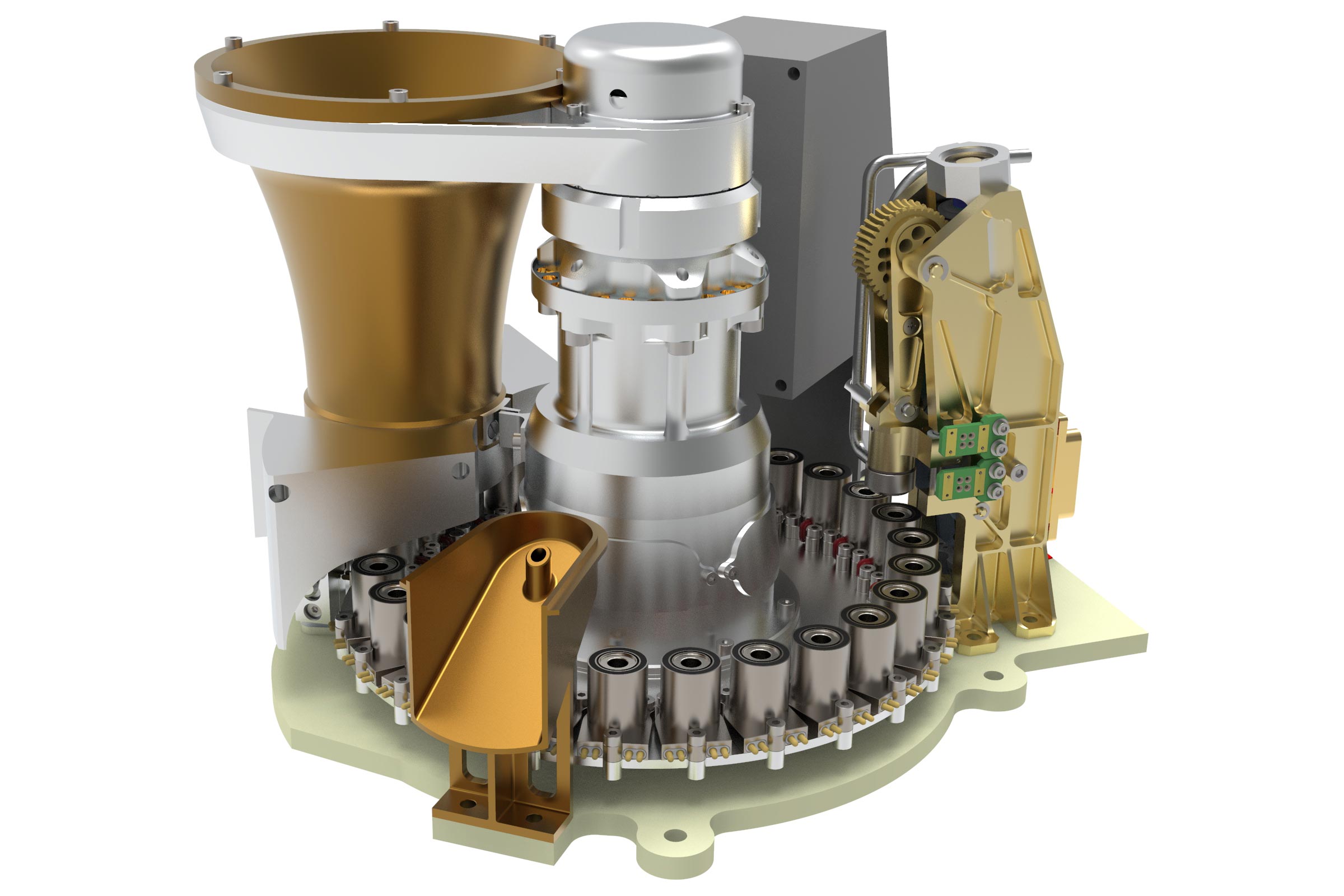
ProSPA is a very powerful and flexible scientific tool that contains equipment similar to what one would find in a laboratory on Earth specializing in studying lunar samples or meteorites. The Open University in the UK has taken state-of-the-art analytical techniques, and crammed them into an automated miniaturized laboratory to provide scientists and engineers with a tool they can use to study fresh lunar samples collected by the drill. Credit: The Open University
This space lab measures the nature and abundance of lunar volatile material, water ice for example, to better understand its history and the potential of those volatiles as resources.
Next stop: the Moon
Mission success depends not only on the scientific instruments, but also on the landing site. Some areas of the lunar south pole are illuminated by the Sun for about four weeks.
Science teams will now start the process of selecting a shaded and scientifically attractive landing site for Luna-27. “From an engineering and scientific point of view, the inputs from the Prospect team are very valuable to us,” says Igor Mitrofanov.
Never miss a breakthrough: Join the SciTechDaily newsletter.
Follow us on Google and Google News.
2 Comments
What about helium-3 what will we be doing with those rocks
Wouldn’t it be wise to put our scientific knowledge and money into protecting and preserving the integrity and necessity of planet Earth,rather than compromising another planet or moon? Space is indeed a frontier to be explored,but to whose expense?Mother Earth needs healing,when we learn?