
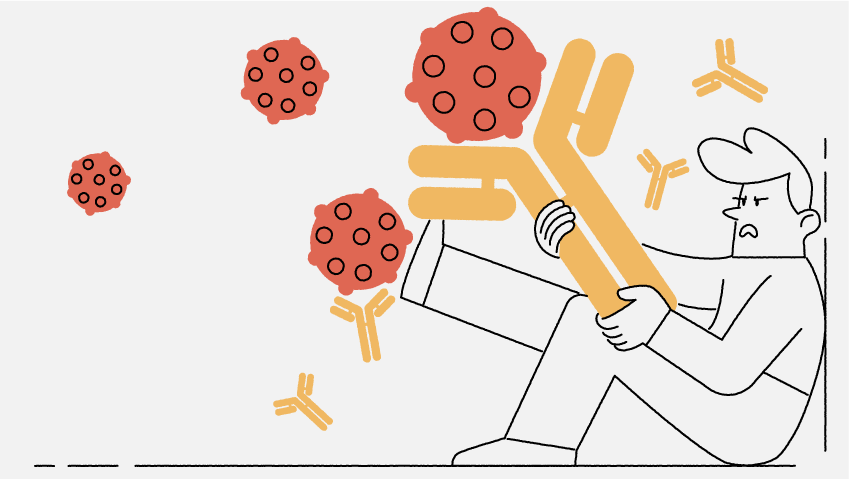
The antibodies’ ability to neutralize COVID-19 did not differ significantly over the six-month period.
A Michigan Medicine study found that most patients with mild COVID-19 infections produce antibodies that persist and protect them from reinfection for up to six months.
Researchers analyzed nearly 130 subjects with PCR-confirmed COVID-19 illness between three and six months after initial infection. Three patients were hospitalized while the rest were treated as outpatients and experienced mild infection, with symptoms including headaches, chills, and loss of taste or smell.
The results, published in Microbiology Spectrum, reveal approximately 90% of participants produced spike and nucleocapsid antibody responses, and all but one had persistent antibody levels at follow up.
“Previously, there was a lot of concern that only those with severe COVID-19 produced strong antibody responses to infection,” said Charles Schuler, M.D., lead author of the paper and clinical assistant professor of allergy and immunology at Michigan Medicine. “We’re showing that people with mild bouts of COVID-19 did really well after their infection, made antibodies, and kept them.”
“Achieving natural immunity by deferring vaccination in favor of infection is not worth going through the discomfort, risk to yourself and risk to others.”
Charles Schuler, M.D.
The prospective study’s participants were either Michigan Medicine health care workers or patients with a high risk of exposure to COVID-19. Most subjects took part in the same research team’s previous study, which found that COVID antibody tests are effective at predicting prior infection.
During the observation period, none of the subjects who produced antibodies were re-infected, compared to 15 antibody-negative patients. Schuler’s team also found that the antibodies’ ability to neutralize COVID-19 did not differ significantly from the first visit, which occurred three months after infection, to the second visit at the six-month mark.
“While some studies have suggested antibodies against COVID-19 wane over time, these findings provide strong prospective evidence for longer-term immunity for those who produce an immune response to mild infection,” said James Baker Jr., M.D., senior author of the paper and founding director of the Mary H. Weiser Food Allergy Center at Michigan Medicine. “To our knowledge, this is the first prospective study that demonstrates such a risk reduction for clinical reinfection in this specific type of population.”
Impact on COVID Vaccination
The team of researchers is now analyzing samples of this subject group taken up to a year after infection to further evaluate antibody responses. Meanwhile, they concluded that individuals with COVID-19 can delay vaccination for 90 days after infection ends. The Centers for Disease Control and Prevention recommends those treated with monoclonal antibodies or convalescent plasma wait 90 days after receiving treatment before getting vaccinated, and others should wait until they have recovered from COVID-19 and “have met the criteria to discontinue isolation.”
A study conducted in Kentucky found that unvaccinated people who already had COVID-19 were 2.34 times more likely than fully vaccinated people to be infected again, suggesting “vaccination provides additional protection against reinfection.”
Additionally, the research was conducted between March 2020 and February 2021, months before the highly transmissible Delta variant became the dominant strain of COVID in the United States.
Amid rising cases and hospitalizations, Schuler said, remaining unvaccinated comes with “a high price” for immunity.
“These results are encouraging for those who have already run the gauntlet of COVID-19 infection,” he said. “However, I do not recommend citing this study as a reason not to be vaccinated for those never previously infected. Vaccination decreases infectiousness, the risk of hospitalization and deaths from COVID-19, without having the actual infection. Achieving natural immunity by deferring vaccination in favor of infection is not worth going through the discomfort, risk to yourself and risk to others.”
Reference: “Mild SARS-CoV-2 Illness Is Not Associated with Reinfections and Provides Persistent Spike, Nucleocapsid, and Virus-Neutralizing Antibodies” by Charles F. Schuler, IV, Carmen Gherasim, Kelly O’Shea, David M. Manthei, Jesse Chen, Cristyn Zettel, Jonathan P. Troost, Andrew A. Kennedy, Andrew W. Tai, Donald A. Giacherio, Riccardo Valdez, James L. Baldwin and James R. Baker, Jr, 1 September 2021, Microbiology Spectrum.
DOI: 10.1128/Spectrum.00087-21
Funding: University of Michigan Institutional Funding, COVID-19 Innovation Grant
Never miss a breakthrough: Join the SciTechDaily newsletter.
Follow us on Google and Google News.