
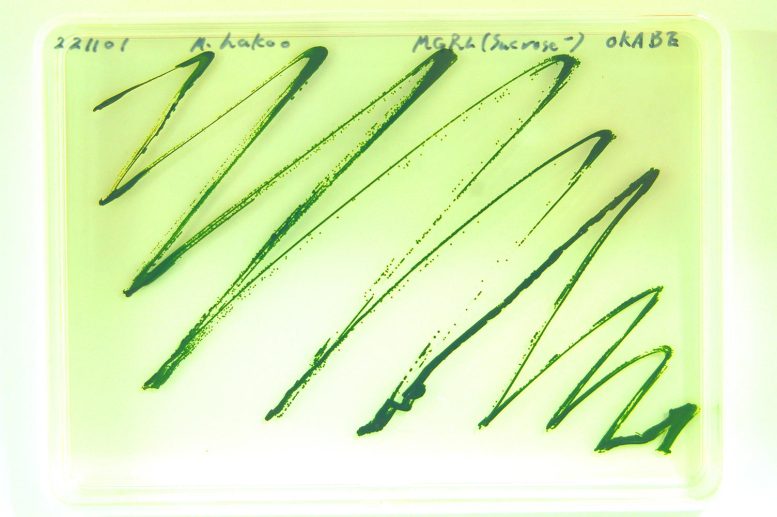
The discovery of ultrasmall microalgae in a home aquarium could have multiple useful applications.
Researchers from the University of Tokyo have uncovered a new species of microalgae, named Medakamo hakoo, during a DNA analysis of water from a home aquarium. With its unique DNA sequence not found in any previous records, this species stands out as the smallest known freshwater green algae. Its remarkable ability to be stably cultivated at high densities opens up exciting possibilities for its use in producing valuable products for both food and industrial purposes.
If you have ever encountered seaweed, navigated through vegetation in a stream, or cleared a murky green aquarium, you are familiar with algae. These diverse aquatic organisms, which come in various shapes, colors, and sizes, thrive on water, light, and nutrients. Microalgae, a type of algae that is ultrasmall and invisible to the naked eye, play a crucial role in the Earth’s ecosystem as they serve as the foundation of all aquatic food chains.
They have attracted particular attention from researchers and businesses for their ability to capture carbon dioxide, their use as a biofuel, as an alternative source of protein, and more. There are tens of thousands of types of microalgae, which continue to thrive in unexpected places.
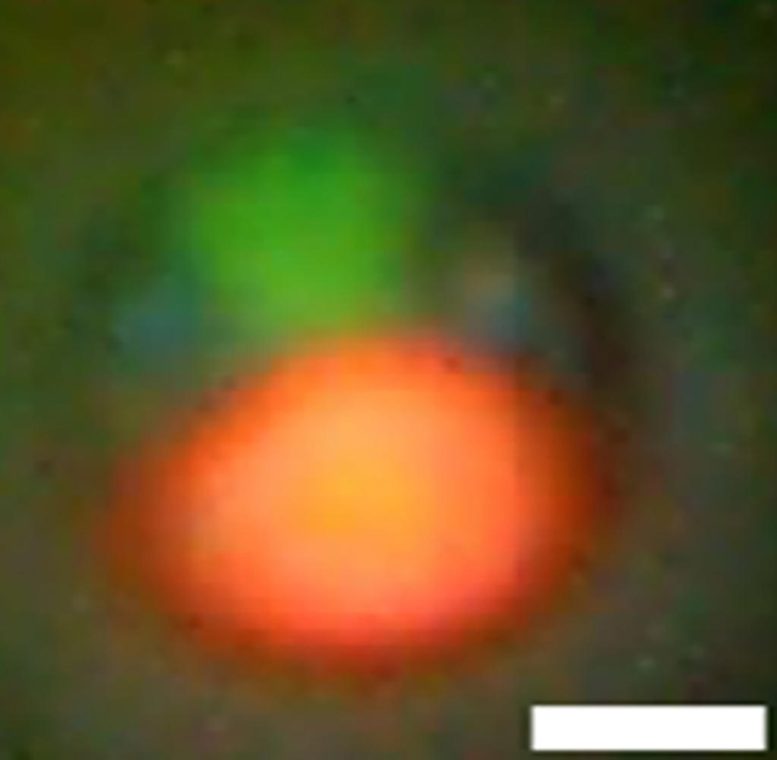
“We were very surprised to discover a new species of microalgae in just a regular home aquarium,” said Professor Sachihiro Matsunaga from the Graduate School of Frontier Sciences. “Alga were taken from the water and cultured one by one. The DNA of the alga was fluorescently stained and microscopically observed to find the one with the least amount of DNA per cell. We then sequenced the DNA of that alga and compared it to the DNA of other algae. The results did not match the DNA of any previously reported algae, indicating that it was a new species, and we named it Medakamo hakoo (M. hakoo).”
Simplified Structure and Genetic Insights
Microalgae are made up of relatively few genes, and this uncomplicated form makes them useful for researchers trying to identify what roles different genes play and how they could be used. Of the tens of thousands of known microalgae, many remain uncharacterized. Thanks to this latest study, we now know that not only is this a new species, but it also has the smallest known genome of any freshwater algae, as well as other useful qualities.
“M. hakoo contains only one mitochondrion (for producing energy) and one chloroplast (which contains chlorophyll and creates food through photosynthesis), whereas normal plant cells contain multiple mitochondria and chloroplasts. This indicates that it is a green alga with an extremely simple cell structure,” explained Matsunaga. “From our research, we have also speculated that it has an unprecedented DNA structure and a new gene regulatory system. Its cell cycle is also strongly synchronized with the day and night cycle, which is key to effective, stable bioproduction. Due to these inherent qualities and extremely small size, M. hakoo can be effectively cultured at high cell density, making it possible to mass produce substances such as highly functional foods, cosmetics, and bio-fuel at a low cost.”
The researchers plan to continue to explore the potential applications for M. hakoo, both in the lab and the wider world. “Aquatic green algae are the originating organisms of today’s land plants. Thanks to this research, we can better understand the minimum number of genes required for an organism to evolve and thrive in diverse environments, which we will continue to study,” said Matsunaga. “In the future, I would like to find ways to collaborate and create useful substances from the mass cultivation of M. hakoo.”
Reference: “Genomic analysis of an ultrasmall freshwater green alga, Medakamo hakoo” by Shoichi Kato, Osami Misumi, Shinichiro Maruyama, Hisayoshi Nozaki, Yayoi Tsujimoto-Inui, Mari Takusagawa, Shigekatsu Suzuki, Keiko Kuwata, Saki Noda, Nanami Ito, Yoji Okabe, Takuya Sakamoto, Fumi Yagisawa, Tomoko M. Matsunaga, Yoshikatsu Matsubayashi, Haruyo Yamaguchi, Masanobu Kawachi, Haruko Kuroiwa, Tsuneyoshi Kuroiwa and Sachihiro Matsunaga, 23 January 2023, Communications Biology.
DOI: 10.1038/s42003-022-04367-9
Funding: MXT/JSPS KAKENHI funding, JST-CREST and JST-OPERA grants.
Never miss a breakthrough: Join the SciTechDaily newsletter.
Follow us on Google and Google News.