
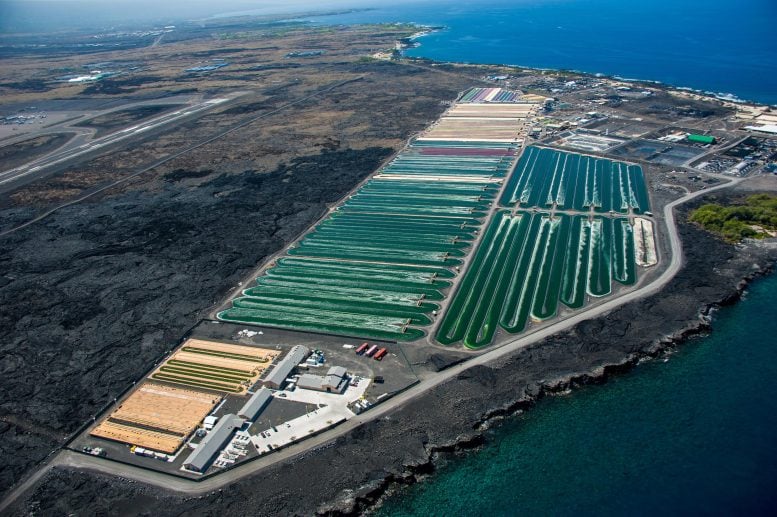
A new article proposes algae aquaculture as an eco-friendly alternative to traditional farming. Rich in nutrients, microalgae could meet food demands sustainably, though it faces economic challenges without government aid.
Terrestrial agriculture provides the backbone of the world’s food production system. A new opinion article published in the open-access journal PLOS Biology makes the case for increased investment in algae aquaculture systems as a means of meeting nutritional needs while reducing the ecological footprint of food production. Authored by Charles H. Greene at University of Washington, Friday Harbor, Washington, and Celina M. Scott-Buechler at Stanford University, Palo Alto, California, the article was published on October 17.
Detrimental impacts on climate, land use, freshwater resources, and biodiversity would result from increasing agriculture and fisheries production to meet consumer demand. In their article, the authors argue for shifting the focus of marine aquaculture down the food chain to algae. This could potentially supply the growing demand for nutritious food in addition to reducing the current food system’s ecological footprint.

Nutritional Potential of Microalgae
Microalgae could provide high amounts of nutritional protein and essential amino acids, in addition to other micronutrients, such as vitamins and antioxidants. Moreover, a marine microalgae-based aquaculture industry would not require arable land and freshwater, or pollute freshwater and marine ecosystems through fertilizer runoff. The article does not address the potential for a new algae-based aquaculture industry to be culturally responsive, how large-scale microalgae production would affect local foodways, or how algae tastes.
According to the authors, “The financial headwinds faced by a new marine microalgae-based aquaculture industry will be stiff because it must challenge incumbent industries for market share before its technologies are completely mature and it can achieve the full benefits of scale. Financial investments and market incentives provided by state and federal governments can help reduce this green premium until the playing field is level. The future role of algae-based solutions in achieving global food security and environmental sustainability will depend on the actions taken by governments today.”
Greene adds, “Agriculture provides the backbone of today’s global food production system; however, its potential to meet the world’s nutritional demands by 2050 is limited. Marine microalgae can help fill the projected nutritional gap while simultaneously improving overall environmental sustainability and ocean health.”
Interview with Associate Director for Research and Strategic Planning Dr. Charles H. Greene
What first drew you to study microalgae and sustainability?
About a dozen years ago, I came to the conclusion that too many Earth scientists were focusing only on the impacts of climate change and not looking for solutions to the problem. A colleague of mine, Dr. Mark Huntley, invited me to join his team investigating the potential of marine microalgae in the production of biofuels. Over time, our thinking evolved, and we realized that marine microalgae have tremendous potential for addressing the global challenges of food and water security, climate change, and many other aspects of environmental sustainability.
What are the key findings you collected in your paper?
By taking an integrated, circular economy approach to cultivating marine microalgae, we can close the gap in human nutrition projected for 2050 and simultaneously reduce many of the negative impacts our current food production system has on climate and the global environment.
What most surprised or interested you about your findings?
We always knew that the high productivity of marine microalgae could help us reduce the carbon and land footprints of agriculture. However, what came as an unexpected surprise was just how much protein could potentially be produced from such a small footprint of non-arable, coastal land in the Global South. The implications of our results for sustainable development are profound.
What are the next steps for research on this topic?
As green venture capitalist John Doerr emphasizes in his recent book*, it’s all about speed and scale. Our window of time to solve these global challenges is narrow, and the solutions are on a scale that our policymakers have difficulty even imagining, let alone investing in. The future of algae-based solutions in achieving global food security and environmental sustainability will depend on the actions taken by the investment community and governments today.
*Speed & Scale: An Action Plan for Solving Our Climate Crisis Now
Reference: “Algal solutions: Transforming marine aquaculture from the bottom up for a sustainable future” by Charles H. Greene and Celina M. Scott-Buechler, 17 October 2022, PLOS Biology.
DOI: 10.1371/journal.pbio.3001824
Never miss a breakthrough: Join the SciTechDaily newsletter.
Follow us on Google and Google News.
2 Comments
We can call this potential food additive “Silent Green” (TM). It will probably taste fishy. So, it can be test marketed as green Fish Sticks on St. Patrick’s Day.
It would be a mistake to overlook cultural preferences for food. I remember reading many years ago about hunger in India when the Bay of Bengal had lots of fish, but most of them weren’t what Indians were used to eating. Apparently people will starve before eating things they aren’t used to.
I’m not sure why but I have a personal aversion to eating anything that is the color green & I have to persuade myself to eat it. Hence I tend to avoid greens. I try to compensate for that with other foods with equal vitamin content – beets, carrots etc and for some reason ‘white’ cabbage passes the test ! I take a vitamin supplement that contains sea veggies & juices & tastes like cranberry etc so it’s possible to add algae to our diets without any fishy flavors – I would buy it, just don’t add unnecessary chemicals & the market is ready for this !