
Close Menu
    Facebook X (Twitter) Instagram
    SciTechDaily
    • Biology
    • Chemistry
    • Earth
    • Health
    • Physics
    • Science
    • Space
    • Technology
    Facebook X (Twitter) Pinterest YouTube RSS
    SciTechDaily
    Home»Space»Explore Alien Exoplanets With New Multimedia Treats
    Space

    Explore Alien Exoplanets With New Multimedia Treats

    By Calla Cofield, Jet Propulsion LaboratoryFebruary 6, 20191 Comment4 Mins Read
    Facebook Twitter Pinterest Telegram LinkedIn WhatsApp Email Reddit
    Share
    Facebook Twitter LinkedIn Pinterest Telegram Email Reddit
    Tour Alien Exoplanets with New Multimedia Treats
    This Exoplanet Travel Bureau poster illustration shows futuristic explorers gliding in a protective bubble over the red-hot landscape of the exoplanet 55 Cancri e. Exoplanets are planets outside our solar system. Credit: NASA/JPL-Caltech

    Explore the plethora of planets outside our solar system with new multimedia experiences from NASA’s Exoplanet Exploration Program (ExEP). In addition to a new Exoplanet Travel Bureau poster celebrating a molten world called 55 Cancri e, space fans can enjoy a 360-degree visualization of the surface of the same planet, a multimedia journey into the life and death of planetary systems, and a major update to the popular Eyes on Exoplanets app.

    Lava Life

    Designed in the style of vintage travel posters, ExEP’s popular Exoplanet Travel Bureau poster series imagines what it might be like to visit known planets outside our solar system, or exoplanets. Focusing on 55 Cancri e, a planet that may be covered in a lava ocean, the newest poster shows futuristic explorers gliding over the red-hot landscape in a protective bubble.

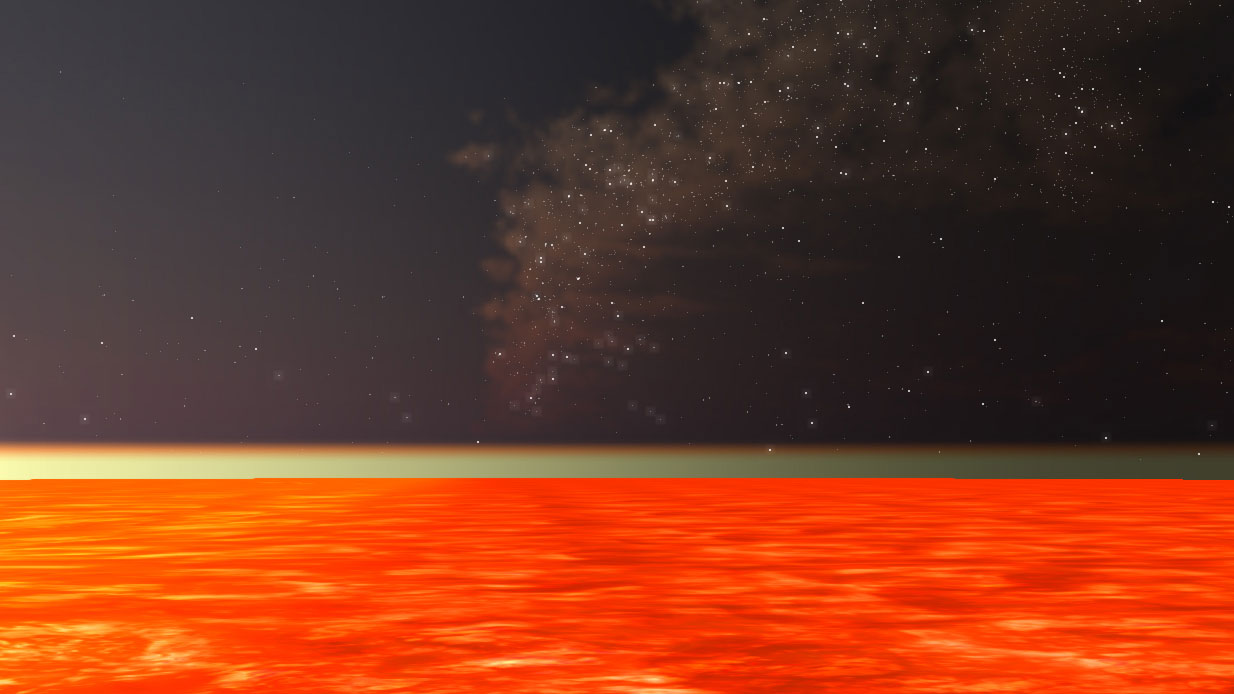
    55 Cancri e is also now part of the Exoplanet Travel Bureau’s 360-degree visualization tool, which enables you to take a virtual tour of what the planet’s surface might look like, based on the limited data available (no photos of the planet exist). Seen as a massive fiery orb on the horizon, the planet’s star is 65 times closer to 55 Cancri e than the Sun is to Earth. On the planet’s cooler nightside, silicate vapor in the atmosphere may condense into sparkling clouds that reflect the lava below.
    Tour Alien Exoplanets with New Multimedia
    This artist’s illustration from the Exoplanet Travel Bureau’s 360-degree visualization tool reveals what the surface of exoplanet 55 Cancri e might look like, based on the limited data available. This exoplanet (a planet outside our solar system) is thought to be covered entirely in molten lava. Credit: NASA/JPL-Caltech

    All of the 360-degree visualizations are viewable on desktop computers, mobile devices and through virtual reality headsets that work with smartphones.

    Life and Death of a Solar System

    How did we get here? How do stars and planets come into being, and what fate awaits planets after their stars die? The interactive web feature “Life and Death of a Planetary System” brings readers on an in-depth journey through the formation, evolution, and eventual demise of a solar system. This multichapter story offers insight into how the planet we call home formed and what will happen to it when the Sun dies.

    Planet Bonanza

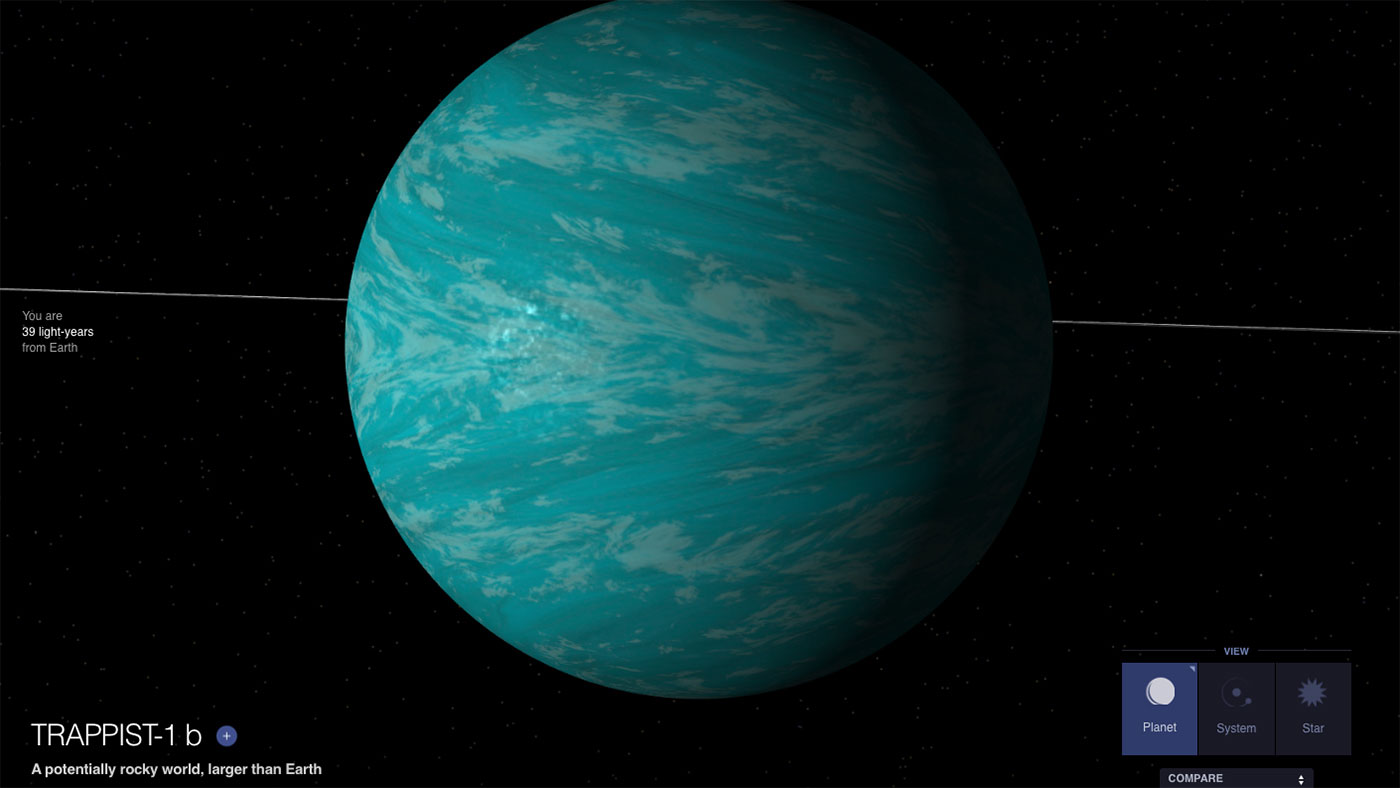
    Explore thousands of new worlds, both strange and strangely familiar, with NASA’s Eyes on Exoplanets 2.0. Users can fly through the galaxy and virtually visit any of the nearly 4,000 known exoplanets, all visualized in 3-D. Interstellar ports of call include the TRAPPIST-1 system of seven Earth-sized planets, the potentially molten-lava-covered 55 Cancri e, the egg-shaped WASP-12b, and Kepler-16b, the first world discovered orbiting two stars.

    Among other features, the searchable Eyes on Exoplanets 2.0 lets users compare an exoplanet’s size to that of Earth or Jupiter; determine how long it would take to travel to a given planet by car, jet, or light-speed starship; and interact with virtual models of NASA space telescopes, such as Hubble, Spitzer, Kepler and the newly launched Transiting Exoplanet Survey Satellite (TESS).
    Tour Alien Exoplanets
    This artist’s illustration of a planet in the TRAPPIST-1 system can be found in NASA’s Eyes on Exoplanets 2.0. The web-based program lets users virtually fly through the galaxy and visit any of the nearly 4,000 known exoplanets, all visualized in 3-D. Credit: NASA/JPL-Caltech

    Eyes on Exoplanets 2.0 is powered by data from NASA’s Exoplanet Archive, the official database used by scientists researching exoplanets. Available for use on desktop computers as well as most smartphones and tablets, this next-generation, browser-based version of the popular app requires no software download.  

    The Exoplanet Travel Bureau was developed by NASA’s Exoplanet Exploration Program communications team and program chief scientists. Based at the agency’s Jet Propulsion Laboratory in Pasadena, California, which is a division of Caltech, the program leads NASA’s search for habitable planets and life beyond our solar system. The program develops technology and mission concepts, maintains exoplanet data archives, and conducts ground-based exoplanet science for NASA missions.

    Never miss a breakthrough: Join the SciTechDaily newsletter.
    Follow us on Google and Google News.

    Astronomy Exoplanet Planetary Science
    Share. Facebook Twitter Pinterest LinkedIn Email Reddit

    Related Articles

    Mysterious “Soot Planets” May Be Hiding in Plain Sight Among the Stars

    Planetary Collisions Could Hold the Key to Alien Habitability

    This Earth-Sized Exoplanet Is Racing Toward Its Own Destruction

    Astronomers Discover Potentially Habitable Earth-Like Planet Just 35 Light-Years Away

    Cosmic Death Spiral: Astronomers Catch Planet in Final Orbit Before Destruction

    A Super-Earth Stripped Bare: Astronomers Uncover One of the Densest Planets Ever Found

    “Truly Remarkable” – Scientists Discover Record-Breaking Super-Earth That Is As Dense as Lead

    Astronomers Uncover Vast Array of Strange Alien Worlds

    International Planet Hunters Discover Dozens of Strange New Worlds

    1 Comment

    1. Brett O Smith on February 7, 2019 10:29 am

      I love the imagery, or, interpretation of the data received from all forms of space exploration i.e: probes,telescopes,hubble etc.

      Reply
    Leave A Reply Cancel Reply

    • Facebook
    • Twitter
    • Pinterest
    • YouTube

    Don't Miss a Discovery

    Subscribe for the Latest in Science & Tech!

    Trending News

    Largest-Ever Study Finds Medicinal Cannabis Ineffective for Anxiety, Depression, PTSD

    250-Million-Year-Old Egg Solves One of Evolution’s Biggest Mysteries

    Living With Roommates Might Be Changing Your Gut Microbiome Without You Knowing

    Century-Old Cleaning Chemical Linked to 500% Increased Risk of Parkinson’s Disease

    What if Your Memories Never Happened? Physicists Take a New Look at the Boltzmann Brain Paradox

    One of the Universe’s Largest Stars May Be Getting Ready To Explode

    Scientists Discover Enzyme That Could Supercharge Ozempic-Like Weight Loss Drugs

    Popular Sweetener Linked to DNA Damage – “It’s Something You Should Not Be Eating”

    Follow SciTechDaily
    • Facebook
    • Twitter
    • YouTube
    • Pinterest
    • Newsletter
    • RSS
    SciTech News
    • Biology News
    • Chemistry News
    • Earth News
    • Health News
    • Physics News
    • Science News
    • Space News
    • Technology News
    Recent Posts
    • Want Less Stress? Landmark Study Points to a Simple Habit
    • Scientists Reveal Eating Fruits and Vegetables May Increase Your Risk of Lung Cancer
    • AI Reveals Explosive Growth of Floating Algae Across the World’s Oceans
    • 5.5 Million Bees Discovered Living Beneath a New York Cemetery
    • Scientists Reverse Brain Aging With Simple Nasal Spray
    Copyright © 1998 - 2026 SciTechDaily. All Rights Reserved.
    • Science News
    • About
    • Contact
    • Editorial Board
    • Privacy Policy
    • Terms of Use

    Type above and press Enter to search. Press Esc to cancel.