
Close Menu
    Facebook X (Twitter) Instagram
    SciTechDaily
    • Biology
    • Chemistry
    • Earth
    • Health
    • Physics
    • Science
    • Space
    • Technology
    Facebook X (Twitter) Pinterest YouTube RSS
    SciTechDaily
    Home»Earth»Fiery Tundras and Plump Bears: Autumn’s Majesty on Alaska’s Kodiak Island
    Earth

    Fiery Tundras and Plump Bears: Autumn’s Majesty on Alaska’s Kodiak Island

    By Lindsey Doermann, NASA Earth ObservatoryOctober 15, 2023No Comments3 Mins Read
    Facebook Twitter Pinterest Telegram LinkedIn WhatsApp Email Reddit
    Share
    Facebook Twitter LinkedIn Pinterest Telegram Email Reddit
    Kodiak Island National Wildlife Refuge 2023 Annotated
    Satellite image of fall colors blanketing Kodiak Island captured on October 3, 2023, by the Operational Land Imager-2 on Landsat 9.

    The Alaskan tundra puts on a fleeting display of color before the snows fall and bears hibernate.

    As summer turns to fall in Alaska, days of abundant sunlight give way to rapidly encroaching darkness. Bears plump up for hibernation, while tundra plants harden themselves for the long, cold winter. Humans delight in all of this splendor, much of it from afar: watching brown bears nab salmon out of the river and grow into rotund beasts, and—if the clouds clear—catching a glimpse from space of autumn reds and golds.

    Landsat 9’s OLI-2 (Operational Land Imager-2) captured this image of fall colors blanketing Kodiak Island, the second-largest island in the United States and home of Kodiak National Wildlife Refuge, on October 3, 2023. The island’s terrain ranges from rugged coastline to spruce forest to snowy peaks. However, the southwestern part of Kodiak along the Shelikof Strait, shown here, is colder and drier than the maritime eastern side, and a tundra ecosystem predominates.

    The vegetation on this part of Kodiak Island includes sedges, mosses, heaths, and grasses. Trees are generally absent, save for the occasional Sitka spruce. Moist peatlands fill in the bottoms of the valleys.
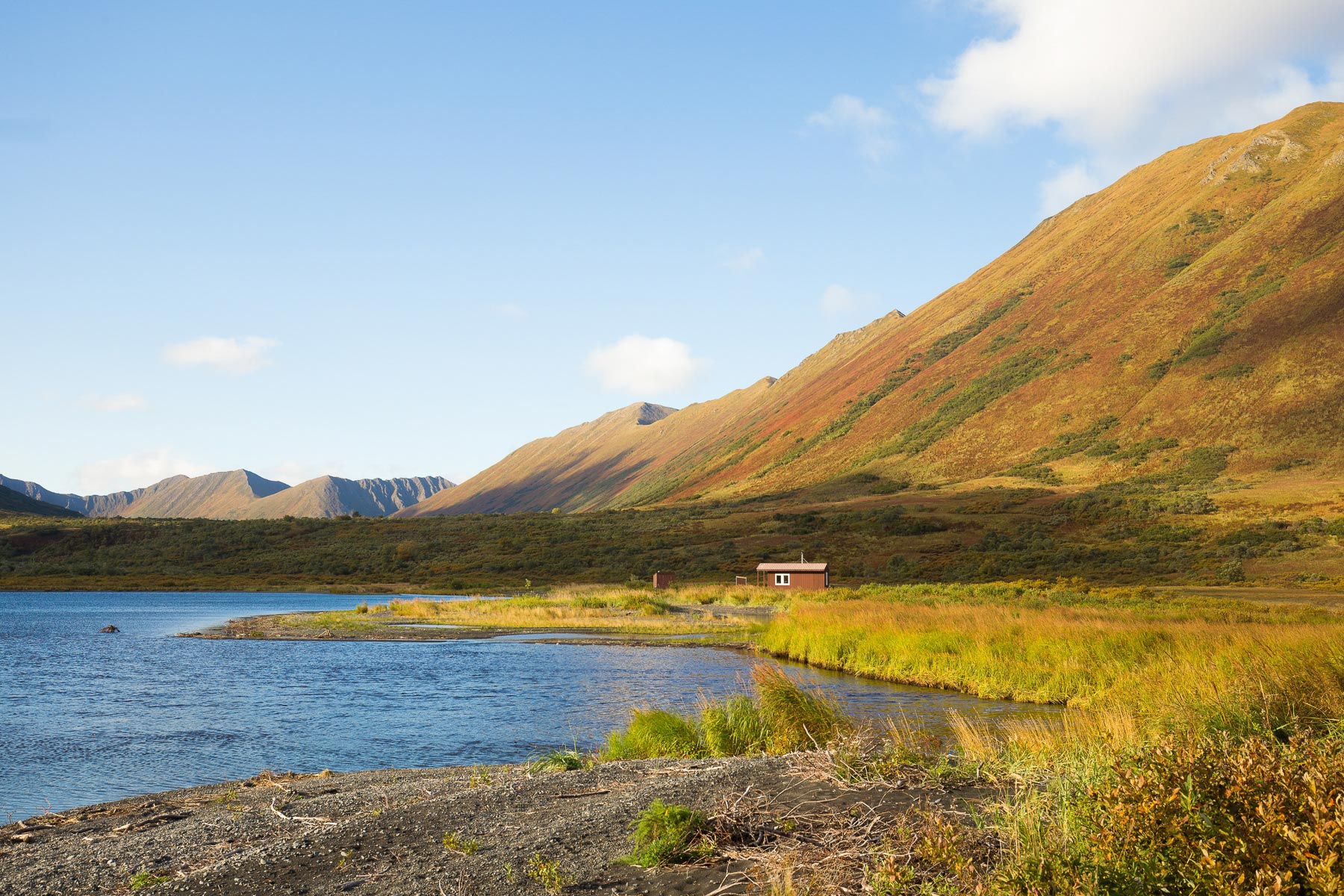
    Frazer Lake in Kodiak National Wildlife Refuge
    Photo taken on September 12, 2015, showing fall colors on the tundra at the north end of Frazer Lake in Kodiak National Wildlife Refuge.

    Fall colors on the tundra are on display in the photo (above), taken in September 2015 at the north end of Frazer Lake in Kodiak National Wildlife Refuge. In the short growing season of this harsh environment, plants spend as much time as possible on growth and reproduction while still allowing enough time to build up frost hardiness. Sunlight levels, snow conditions, and temperature are some of the factors thought to affect when tundra plants lose chlorophyll and reabsorb nutrients each year. However, those winter preparations in tundra ecosystems are not well understood.

    Across the Shelikof Strait, bears preparing for hibernation in Katmai National Park (northwest of this image) spent time in the spotlight during the annual Fat Bear Week competition. (In 2023, Chunk and Grazer squared off in the finals.) Not to be outdone, an estimated 3,500 Kodiak brown bears (Ursus arctos middendorffi) roam the mountains, forests, and tundra on the islands of the Kodiak Archipelago. Kodiak brown bears can weigh twice as much as interior brown bears, better known as grizzlies. Females can reach 700 pounds (320 kilograms), and males can top out at 1,400 pounds (640 kilograms).

    On Kodiak, the bears have access to a bounty of food sources, foraging among the salmonberry and elderberry patches and fishing in the streams. The Karluk River, for example, boasts one of the most famous sockeye salmon runs in Alaska, with the fish sometimes numbering in the millions. The river also supports a native stock of Chinook salmon and populations of several other salmon and trout species.

    NASA Earth Observatory image by Wanmei Liang, using Landsat data from the U.S. Geological Survey. Photo by Lisa Hupp, courtesy of the Alaska Region U.S. Fish & Wildlife Service.

    Never miss a breakthrough: Join the SciTechDaily newsletter.
    Follow us on Google and Google News.

    Geography Landsat 9 NASA NASA Earth Observatory
    Share. Facebook Twitter Pinterest LinkedIn Email Reddit

    Related Articles

    A Super View of Los Angeles – From New NASA Satellite

    Coloring the Great Salt Lake – Astronaut Takes Beautiful Photograph From Space Station

    Sea Ice in Denmark Strait – Drifted More Than 1,000 Km (600 Miles) From the Arctic Ocean

    NASA Scientists Map Beirut Blast Damage – Devastating Explosion Rocked Port Area

    NASA Advanced Rapid Imaging Satellite Maps Blast Damage: Beirut Explosion Aftermath

    NASA/NOAA Satellites Observe Surprisingly Rapid Increase in Scale and Intensity of Fires in Siberia

    Mars Terraforming: Cultivating Ideas for Mars on Earth

    Meandering Mississippi River: Photo Taken by Astronaut on Space Station Shows Divergence From State Boundaries

    Incredible Rare Peek at Patagonia in Winter

    Leave A Reply Cancel Reply

    • Facebook
    • Twitter
    • Pinterest
    • YouTube

    Don't Miss a Discovery

    Subscribe for the Latest in Science & Tech!

    Trending News

    Scientists Warn That This Common Pet Fish Can Wreck Entire Ecosystems

    Scientists Make Breakthrough in Turning Plastic Trash Into Clean Fuel Using Sunlight

    This Popular Supplement May Interfere With Cancer Treatment, Scientists Warn

    Scientists Finally Solved One of Water’s Biggest Mysteries

    Could This New Weight-Loss Pill Disrupt the Entire Market? Here’s What You Should Know About Orforglipron

    Earth’s Crust Is Tearing Open in Africa, and It Could Form a New Ocean

    Breakthrough Bowel Cancer Trial Leaves Patients Cancer-Free for Nearly 3 Years

    Natural Compound Shows Powerful Potential Against Rheumatoid Arthritis

    Follow SciTechDaily
    • Facebook
    • Twitter
    • YouTube
    • Pinterest
    • Newsletter
    • RSS
    SciTech News
    • Biology News
    • Chemistry News
    • Earth News
    • Health News
    • Physics News
    • Science News
    • Space News
    • Technology News
    Recent Posts
    • Kratom Use Explodes in the US, With Life-Changing Consequences
    • Scientists Uncover Fatal Weakness in “Zombie Cells” Linked to Cancer
    • World-First Study Reveals Human Hearts Can Regenerate After a Heart Attack
    • Why Your Dreams Feel So Real Sometimes and So Strange Other Times
    • Scientists Debunk 100-Year-Old Belief About Brain Cells, Rewriting Textbooks
    Copyright © 1998 - 2026 SciTechDaily. All Rights Reserved.
    • Science News
    • About
    • Contact
    • Editorial Board
    • Privacy Policy
    • Terms of Use

    Type above and press Enter to search. Press Esc to cancel.