
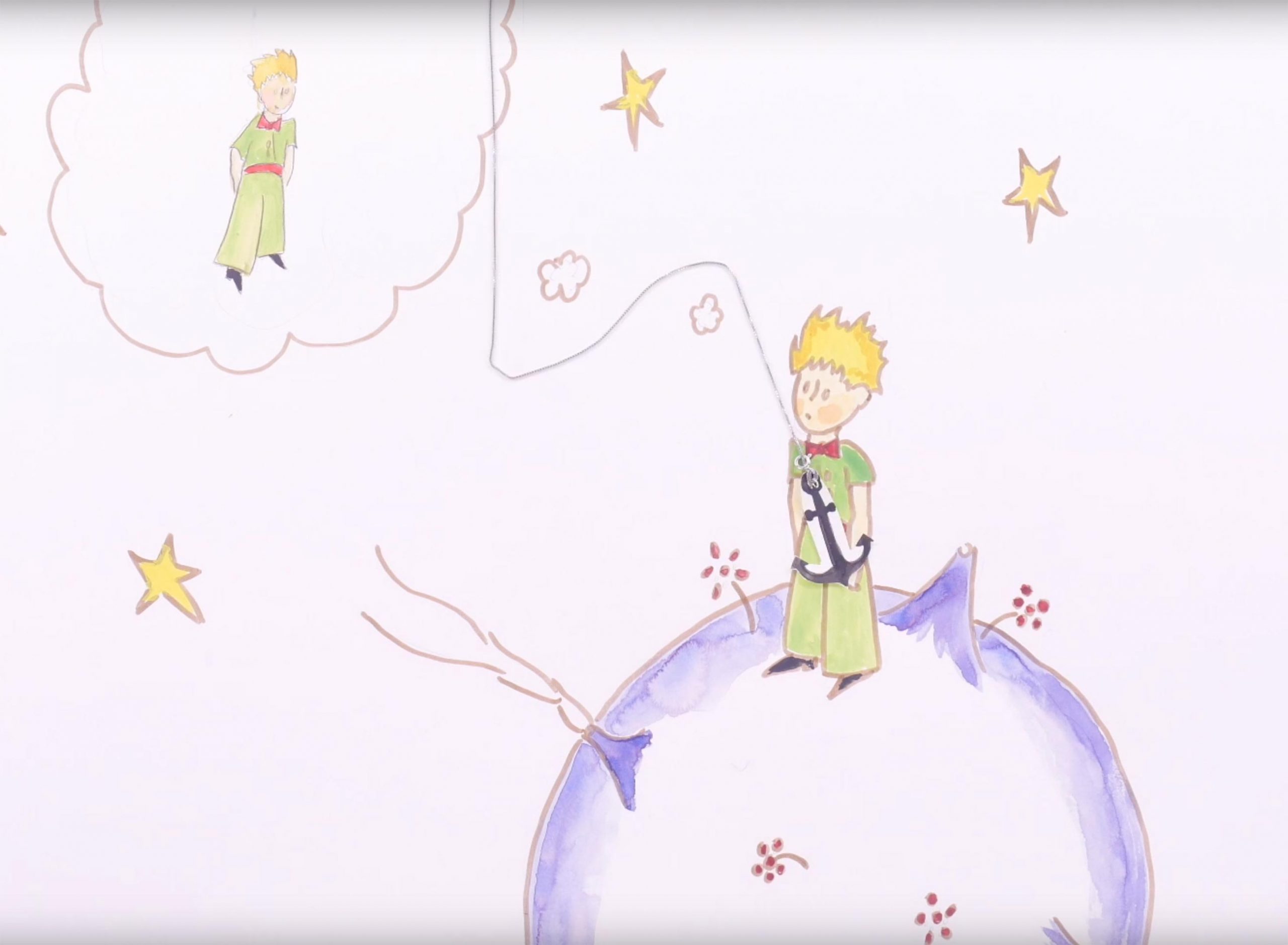
Do you think that you are clicking on that button when your mind decides to do so? Think again!
Have you ever gone ahead and eaten that piece of chocolate, despite yourself?
Do you inadvertently make decisions because you are hungry or cold? In other words, does the brain’s processing of internal bodily signals interfere with your ability to act freely?
This line of thinking is at the heart of research that questions our ability to act on thoughts of free will. We already know that inner body signals, like the heartbeat, affect our mental states, can be used to reduce the perception of pain and are of fundamental importance for bodily self-consciousness.
Thanks to a new discovery, it turns out that these inner body signals do indeed affect acts of volition.
Scientists at EPFL in Switzerland have shown that you are more likely to initiate a voluntary decision as you exhale. Published in today’s issue of Nature Communications, these findings propose a new angle on an almost 60-year-old neuroscientific debate about free will and the involvement of the human brain.
“We show that voluntary action is indeed linked to your body’s inner state, especially with breathing and expiration but not with some other bodily signals, such as the heartbeat,” explains Olaf Blanke, EPFL’s Foundation Bertarelli Chair in Cognitive Neuroprosthetics and senior author.
At the center of these results is the readiness potential (RP), a signal of brain activity observed in the human cortex that appears not only before voluntary muscle movement, but also before one becomes aware of the intention to move. The RP is the signature of voluntary action since it consistently appears in brain activity measurements right before acts of free will (like being aware that one wants to reach for the chocolate).
Interpretations of the RP have been debated for decades. Some interpret the RP to show that free will is an illusion, since the RP precedes the conscious experience of free will. It seems to show that the brain commits to a decision (chocolate) before we are even consciously aware of having made that decision. [See The readiness potential and interpretations below.]
More recently, it was suggested that the RP could be an artifact of measurement, potentially putting free will back into our command.
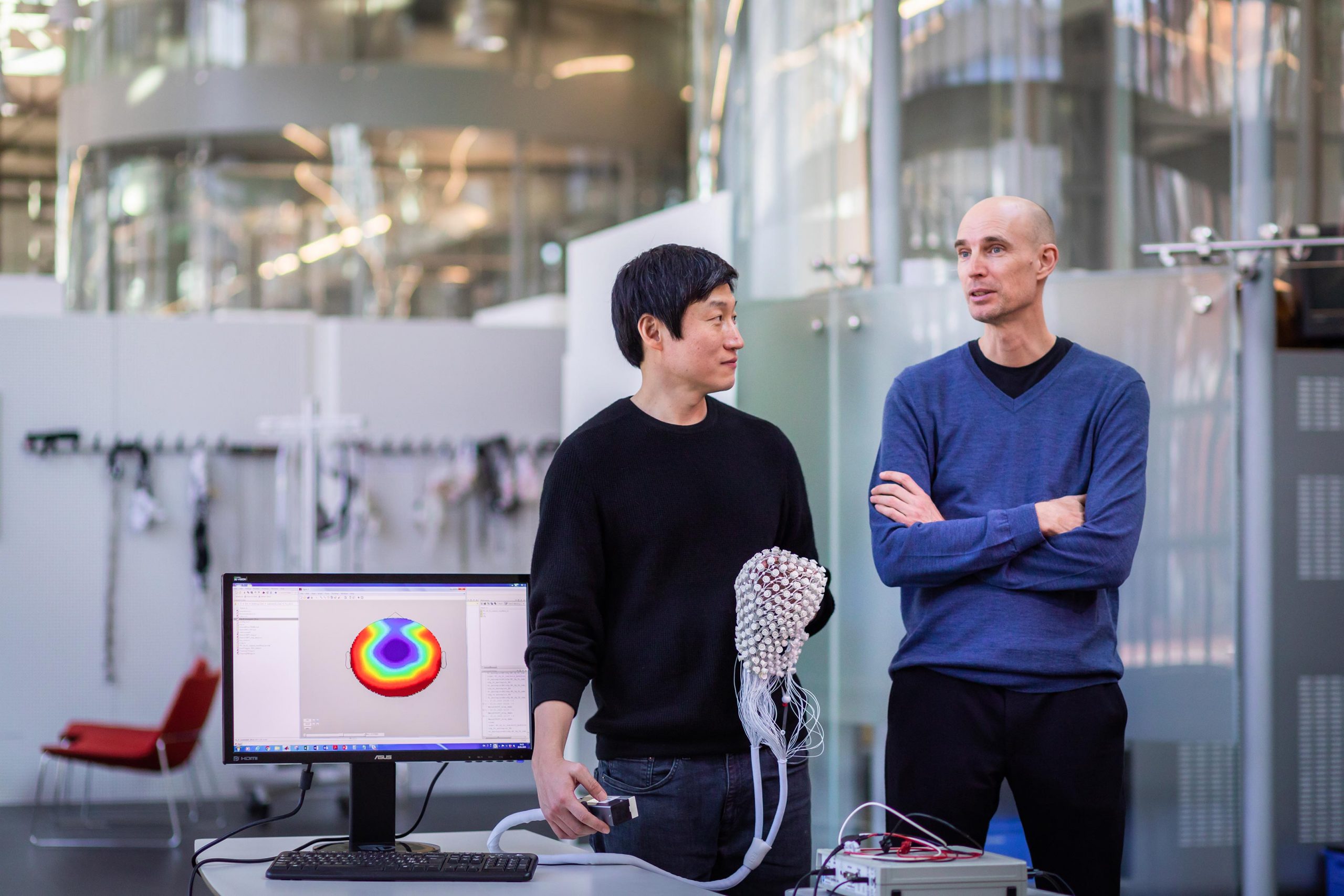
But if we take on the view that our conscious decisions arise from a cascade of firing neurons, then the origin of the RP may actually provide insight into the mechanisms that lead to voluntary action and free will. The way the brain’s neurons work together to come to a decision is still poorly understood. Our conscious experience of free will, our ability to make decisions freely, may then be intricately wired to the rest of our body. [See Acts of free will and inner states of the body below.]
The EPFL results suggest that the origin of the RP is linked to breathing, providing a new perspective on experiences of free will: the regular cycle of breathing is part of the mechanism that leads to conscious decision-making and acts of free will. Moreover, we are more likely to initiate voluntary movements as we exhale. (Did you reach for that piece of chocolate during an exhale?)
These findings suggest that the breathing pattern may be used to predict ‘when’ people begin voluntary action. Your breathing patterns could also be used to predict consumer behavior, like when you click on that button. Medical devices that use brain-computer interfaces could be tuned and improved according to breathing. The breathing-action coupling could be used in research and diagnostic tools for patients with deficits in voluntary action control, like obsessive-compulsive disorders, Parkinson’s disease, and Tourette syndromes. Blanke and Hyeong-Dong Park, first author of this research, have filed a patent based on these findings.
Free will hijacked by interoceptive signals?
More generally, the EPFL findings suggest that acts of free will are affected by signals from other systems of the body. Succumbing to that urge to eat chocolate may depend more on your body’s internal signals than you may realize!
Blanke elaborates, “That voluntary action, an internally or self-generated action, is coupled with an interoceptive signal, breathing, maybe just one example of how acts of free will are hostage to a host of inner body states and the brain’s processing of these internal signals. Interestingly, such signals have also been shown to be of relevance for self-consciousness.”
You may be tempted to blame acts of chocolate binging on interoceptive electrical signals hijacking your free will. The gut-mind connection is an active field of research and interoceptive messages sent to the brain certainly impact food cravings. For now, this latest EPFL research only improves predictions of when you will indulge in that craving, and not what you actually crave.
Acts of free will and inner states of the body
The prevailing view in neuroscience is that consciousness is an emergent phenomenon of the brain. Firing of the brain’s neurons leads to consciousness and the feeling of free will or voluntary action. By belonging to the physical universe, the brain’s electrical activity within the constraints of anatomy, is subject to the laws of physics. In this sense, brain signals encoding the body, lungs, and heart might naturally affect the brain’s cognitive states too and therefore influence acts of free will.
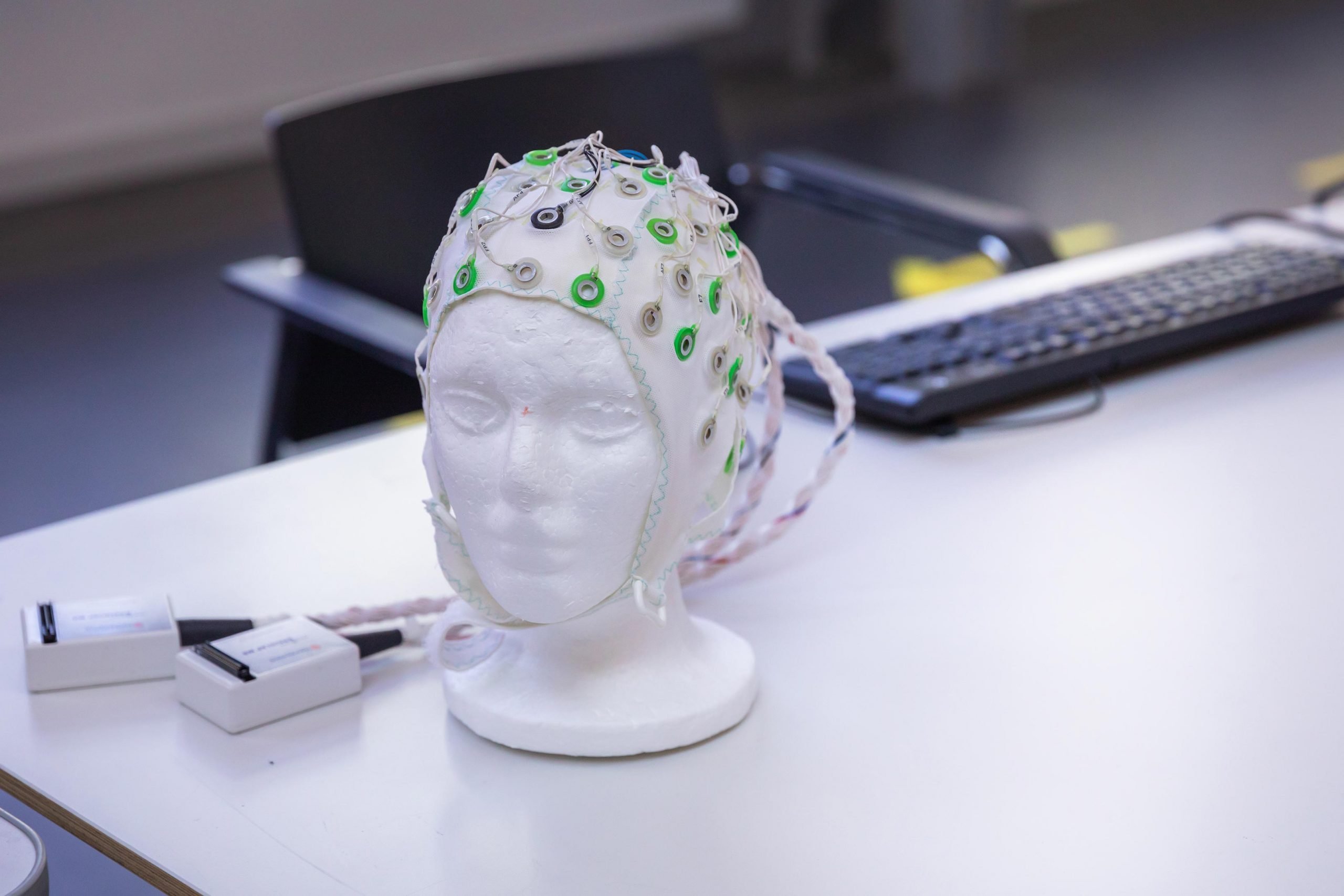
To test whether the RP depends on the body’s inner state and the brain’s representation thereof, Blanke and colleagues asked 52 subjects to press a button at will at Campus Biotech in Geneva. EEGs monitored brain activity, a belt around the chest measured breathing activity, and cardiac activity was recorded.
The scientists found that the RP and voluntary action (pressing the button) is linked to the body’s inner state – the regular breathing cycle – but not to the heartbeat. Participants initiated voluntary movements more frequently during an exhale than an inhale and were completely unaware of this breathing-action coupling. The RP was also modulated depending on the breathing cycle.
EPFL scientist and first author of the study Hyeong-Dong Park explains, “The RP no longer corresponds only to cortical activity ‘unconsciously preparing’ voluntary action. The RP, at least partly, reflects respiration-related cortical processing that is coupled to voluntary action. More generally, it further suggests that higher-level motor control, such as voluntary action, is shaped or affected by the involuntary and cyclic motor act of our internal body organs, in particular the lungs. Still the precise neural activity that controls breathing remains to be mapped.”
The readiness potential and interpretations
Philosophers, psychologists, and more recently neuroscientists have long debated our ability to act freely. The meaning of the readiness potential (RP) has been questioned ever since its discovery by neuroscientists Hans Helmut Kornhuber and Lüder Deecke in 1965, and later regarding its relation to free will in neuroscientist Benjamin Libet’s experiments.
The entire brain consists of approximately 100 billion neurons, and each individual neuron transmits electrical signals as the brain works. Electrodes placed on the head can measure the collective electrical activity of the brain’s neurons, seen as wavy lines called an electroencephalogram (EEG).
In 1965, neuroscientists Hans Helmut Kornhuber and Lüder Deecke conducted a seminal experiment to test voluntary action and discovered a recurring pattern of brain activity. They placed EEG electrodes on top of the subject’s head, and asked the subject to press a button at will. Kornhuber and Deecke discovered that the EEG consistently exhibited a rising slope of wavy lines, the readiness potential, 1 second or more before voluntary movement.
In the early 1980s, neuroscientist Benjamin Libet further tested the relationship between the RP and conscious awareness or intention of voluntary action. His highly influential results showed that approximately 200ms before his subjects pressed the button, they were aware of an urge or the intention to act, something Libet referred to as the W time, and yet the RP consistently preceded W time.
Libet suggested that these findings showed that even before we make a conscious decision of voluntary action, the brain was already unconsciously activated and involved in planning the action.
Some have interpreted the relation between the RP and W time as an indication that human free will might be an illusion. The RP is viewed as the brain committing to a decision (to press the button) before the subject is even aware of having made that decision. If commitment to a decision is being made before we are even aware of it, then what mechanism is making the decision for us?
For the neuroscientist who considers consciousness to arise from brain activity (versus brain activity arising from consciousness), Libet’s results may not be surprising, since the conscious experience of free will is viewed as an emergent phenomenon of brain activity.
Yet, Libet’s results are in conflict with the notion of free will and voluntary action in philosophy of the mind, in folk psychology, in culture, and in legal matters.
Reference: “Breathing is coupled with voluntary action and the cortical readiness potential” by Hyeong-Dong Park, Coline Barnoud, Henri Trang, Oliver A. Kannape, Karl Schaller and Olaf Blanke, 6 February 2020, Nature Communications.
DOI: 10.1038/s41467-019-13967-9
Never miss a breakthrough: Join the SciTechDaily newsletter.
Follow us on Google and Google News.
5 Comments
Well, if it’s breathing, then I suggest that deep breathing was the default setting of humans which most of us have lost and the breath trigger of action is because of the loss of deep breathing.
Free will is an illusion. Everything is determined by prior states of the brain.
Can you ever know what your next thought or feeling will be, before it actually shows up in your consciousness? Think about it…
That would be a “no.” That means we are not consciously creating our next thought or feeling. If the next desire that arises is strong enough, it will cause you to do something. But, you will only take credit for that, if you don’t understand this. And, the idea you have that “you” can “override” a desire, is simply just another, but stronger desire, arising in that moment.
In order to get a good visceral understanding of this, you need to get in touch with the “Big Four:” Consciousness, Perception, the Present Moment, and the Ego. Understanding them and how they work together, reflect each other, and come together, helps tremendously to elucidate our lives and free us from the silly belief systems we were conditioned with as children, as in, “You have Free Will.”
The way out of this confusion and into the truth, is to set up a new, focused connection between the subconscious and the conscious minds. This is surprisingly and very competently accomplished by simply talking out loud to yourself about what you are feeling in the present moment (no therapist or friend needed.) Google in advanced search: “talking out loud” and “benefits,” for a current take on the elementary research going on right now in this regard. You will be shocked at how many hits you get.
Coming out of your mouth (the subconscious – you are not consciously picking and choosing your words) and into your ears (the conscious,) is the syncing up of a feedback loop that performs similarly to the amplifying affect of a mic and speaker feedback loop. The result is to specify, magnify, and intensify whatever is coming up, and then the comments on that, and then the comments on that, etc., until what begins to be seen is the arising of Truth from within. I know this is true. I’ve been doing it for years.
As a child I was able to control both my heart beat and breathing, same I suspect as all hibernating animals can, but what I found most intriguing about this article was my cat that hated flea treatments; I thought that l was giving my cat subliminal clues; but no, before I even thought about getting up quitely to get her the flea treatment, she jumped she bolted from wherever she was and hid; the cat apparently was able to read my mind even from 40 feet away and out of sight; so, this article pretty much explains how the cat knew before I did that I was going to get up to get the flea treatment.
I suspect most people are ironically uncomfortable with “free will” being a choice that definitively arises out of reasons and causes. That means it MUST be predetermined. What else could it be? If free will were random, it would be out of our control and not random. If not random, then choices MUST have causes that lead to them. Those causes predetermine a choice. One can’t escape it. In fact, the universe could not exist without predeterminism. Structure and order would not emerge without causal relationships. So, why are most humans so radically uncomfortable with the idea our choices are predetermined? No matter how our brains do it, they MUST have predetermined choices, otherwise they would not be determined at all (or determined after the choice, which would violate the time-order of causality itself).