
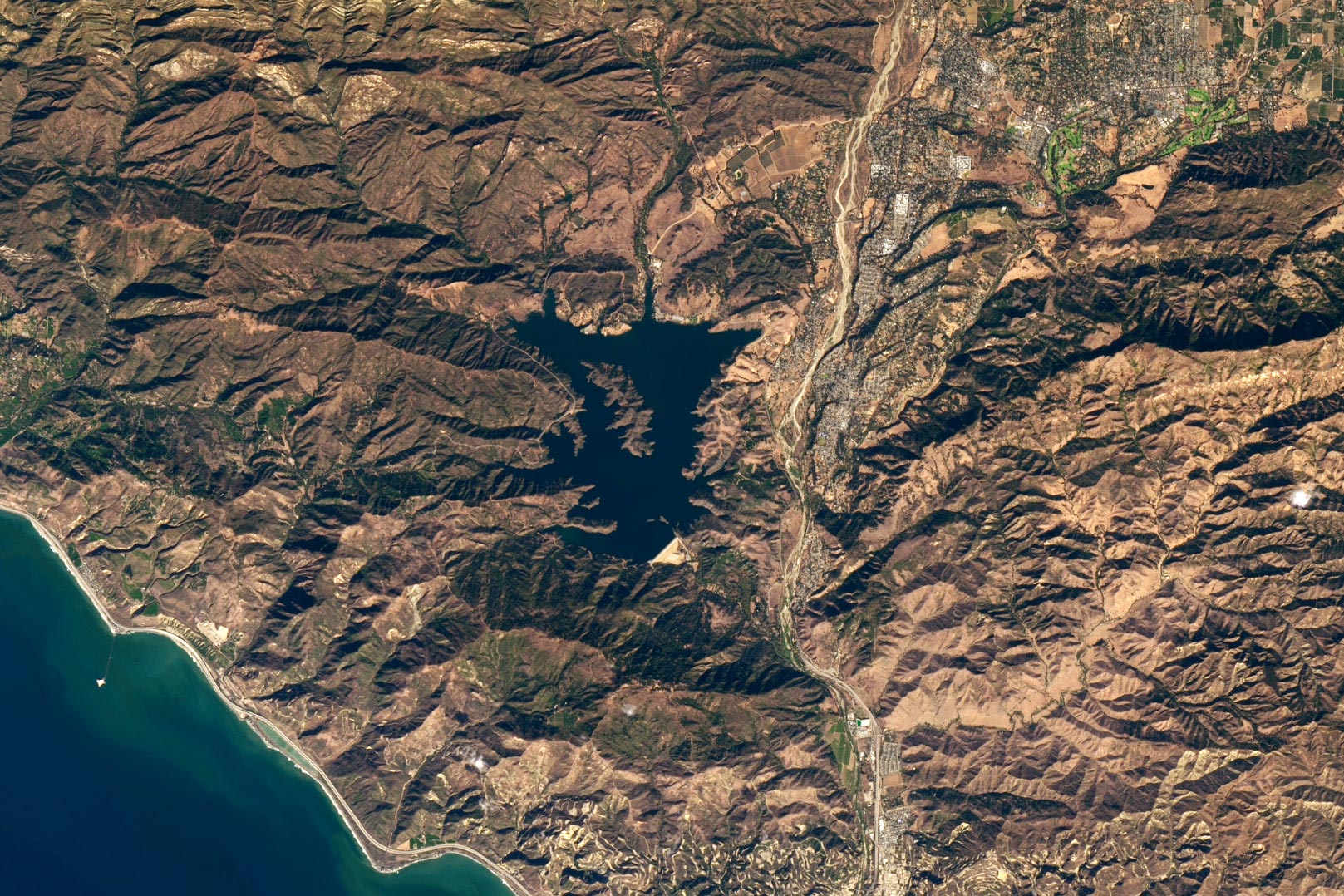
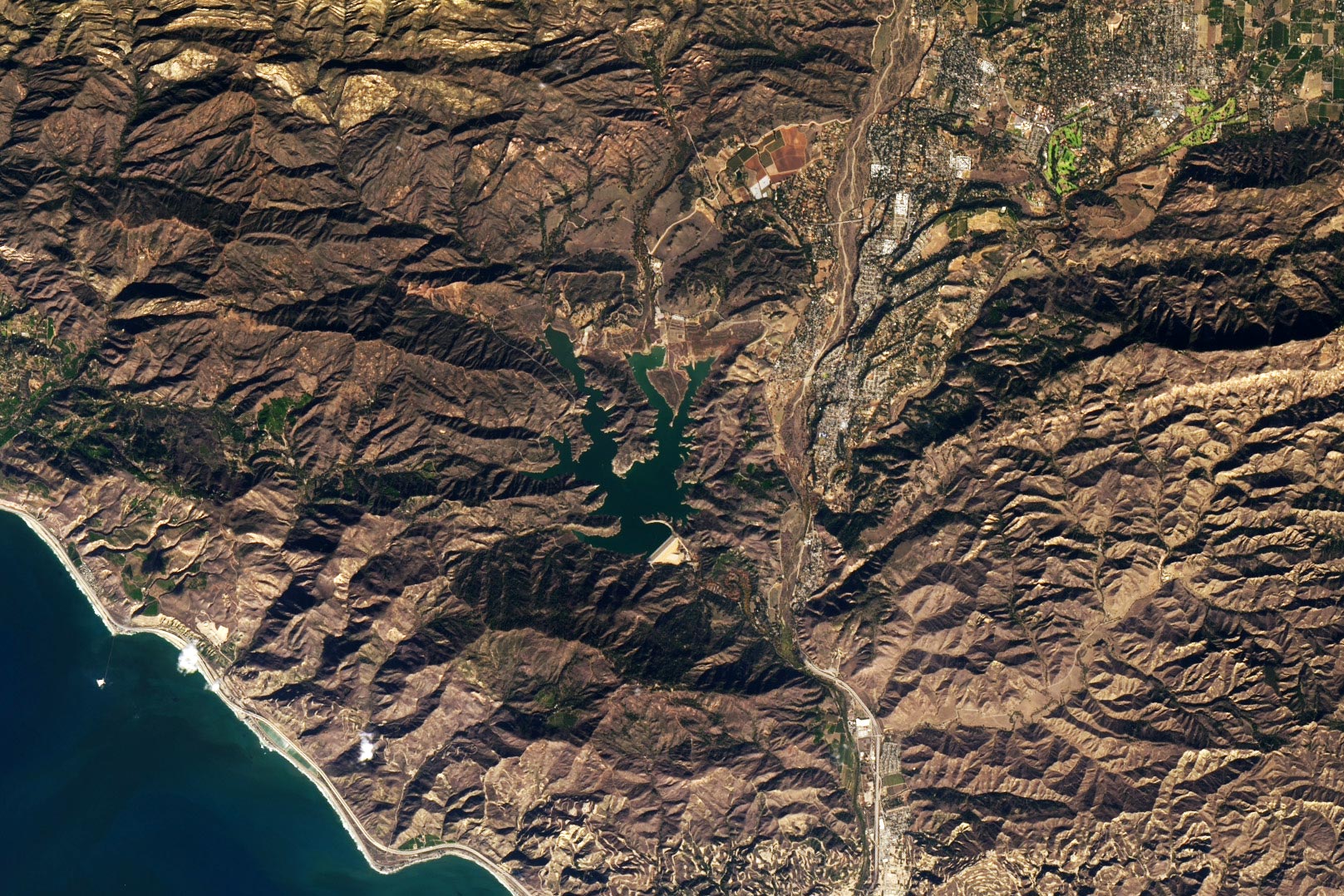
Lake Casitas in Southern California has dramatically recovered from near-record low levels to full capacity within two years, marking the fastest rebound in its history.
This resurgence followed two wet winters and the easing of longstanding water use restrictions, reflecting a statewide improvement in water reservoir levels.
Lake Casitas’ Remarkable Recovery
After more than 15 years of declining water levels, Lake Casitas in Southern California has made a remarkable recovery. By November 2022, the lake had dropped to historic lows due to several multi-year droughts. However, two wetter-than-average winters triggered a rapid resurgence.
In April 2024, the reservoir reached full capacity for the first time since 2006, with water flowing over the dam’s spillway — a milestone not seen since 1998. Serving tens of thousands of residents and hundreds of farms in Ventura County, Lake Casitas is a vital water source. As the lake refilled, long-standing water use restrictions were eased, offering relief to the community.
Visual Evidence of Transformation
These images show Lake Casitas before and after its recovery. In November 2022 (left), the lake’s capacity had dropped below 30 percent, one of the lowest levels since 1970. Two years later, on November 18, 2024 (right), the reservoir held 96 percent of its capacity, or 126 percent of its historical average for that date. The images were acquired by the OLI-2 (Operational Land Imager-2) on Landsat 9.
Historic Rebounds and Future Prospects
The dramatic change follows prolonged stretches of drought conditions in California since 2013 and mandatory water conservation measures in the Casitas Municipal Water District starting in 2015, according to news reports. The situation began to improve with a series of storms during the winter of 2022–2023. Lake Casitas filled to 70 percent capacity in April 2023, allowing use restrictions to be eased. The rainfall total for that water year was more than double the 1957–1992 average.
The winter of 2023–2024 also delivered consistent rain, water managers said, with 150 percent of the normal total falling during that water year. On April 23, 2024, water in Lake Casitas reached the level of the spillway. The Casitas General Manager told news outlets this was the “fastest rebound in the lake’s history.”
The lake’s trajectory mirrors that of others in the state. Big Bear Lake in the San Bernardino Mountains went from its lowest level in recent history in 2018 to the highest in a decade in May 2024. In Northern California, the state’s two largest reservoirs, Shasta Lake and Lake Oroville, reached full capacity in 2023 and 2024 after drought conditions left them low in previous years. Both reservoirs stood at above-average capacity in early December 2024, helped in part by a strong atmospheric river that lashed Northern California in late November.
NASA Earth Observatory images by Wanmei Liang, using Landsat data from the U.S. Geological Survey.
Never miss a breakthrough: Join the SciTechDaily newsletter.
Follow us on Google and Google News.
6 Comments
Why are you posting articles from 2 years ago?
It is a disinformation campaign to stop people from noticing, that every lake and reservoir in the southwest US is full or overflowing, except Lakes Mead and Powell. They have been sending excess water from these downstream, saying that the Colorado River is too warm, and needs extra water.
Thus these two reservoirs have not recovered due to the loony tunes in charge of them. Who wish to maintain drought type conditions as this allows them to control peoples water usage. And leverage that into changing land use and eliminate cattle ranching which they oppose.
The drought is nonsense and is intentionally created…. Water is being diverted intentionally into many underground storage container to further cause panic and increase people’s need in the government which means more increase in government control over us all…
Is anybody who reads this stuff NOT a conspiracy theorist?
Do you believe everything our government tells you? Lol
Many things to say about Western droughts. Colorado River system affected by all of the water projects built upstream for storage in last decades. California has wet dry/cycles that last 20 years or more. Lakes dry up and then refill. It is the nature of things. There is no doubt that earth is warming quickly though. How bad will things get?