
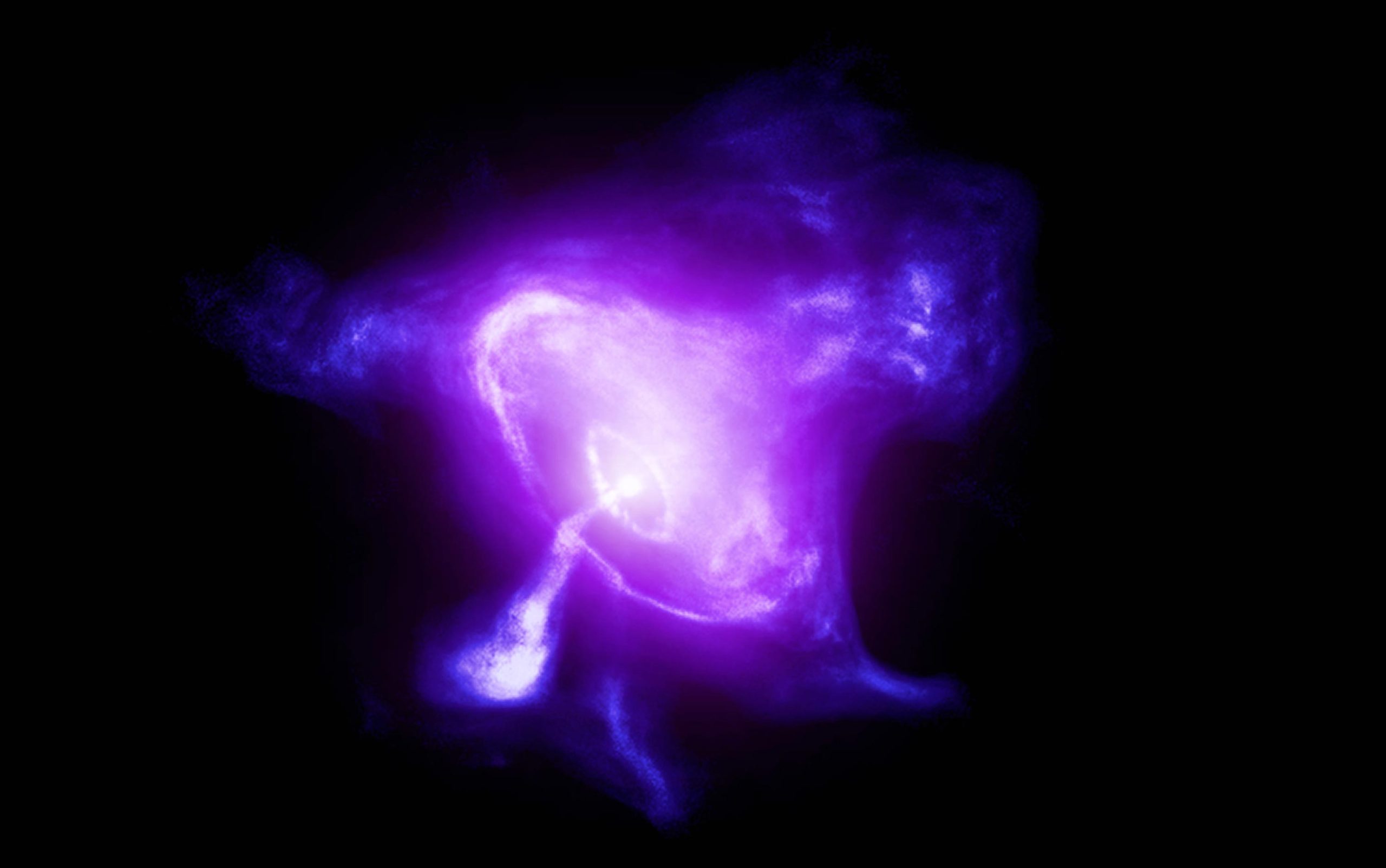
NASA’s IXPE has created a detailed map of the Crab Nebula’s magnetic field, revealing its complex geometry and turbulence, and refining the angle of polarization across the object. The findings suggest X-rays originate in the outer magnetic field region, or “wind” region.
On February 22, 1971, a sounding rocket lifted off from Wallops Island, Virginia, with specialized sensors aimed at the Crab Nebula, a bright cosmic object 6,500 light-years away. In those days, before recovering physical tapes from the experiment, scientists first received scientific data on a strip chart recorder, a device that printed signals on paper. Astronomer Martin Weisskopf and his colleagues began their analysis on launch day by measuring the distance between signals using a ruler and pencil.
“What makes science so beautiful and exciting is that for those few moments, you’re seeing something that no one has ever seen before,” said Weisskopf, now an emeritus astronomer at NASA’s Marshall Space Flight Center in Huntsville, Alabama.
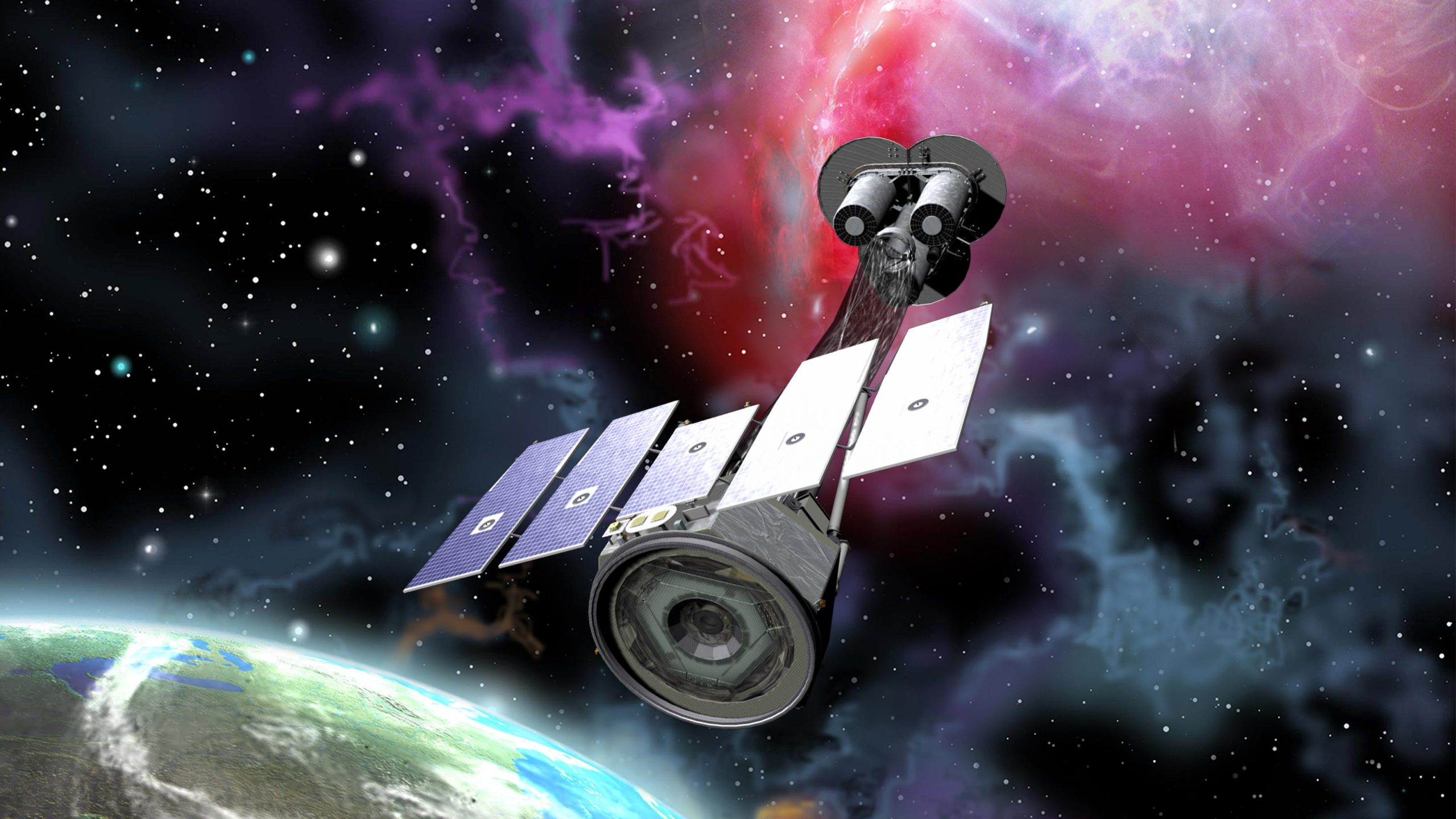
Decades later, Weisskopf proposed the development of an Earth-orbiting satellite with powerful instruments that could gather much more detailed measurements of the same kind about the Crab Nebula and other mysterious cosmic objects. That satellite became NASA’s Imaging X-ray Polarimetry Explorer (IXPE), which launched on December 9, 2021.
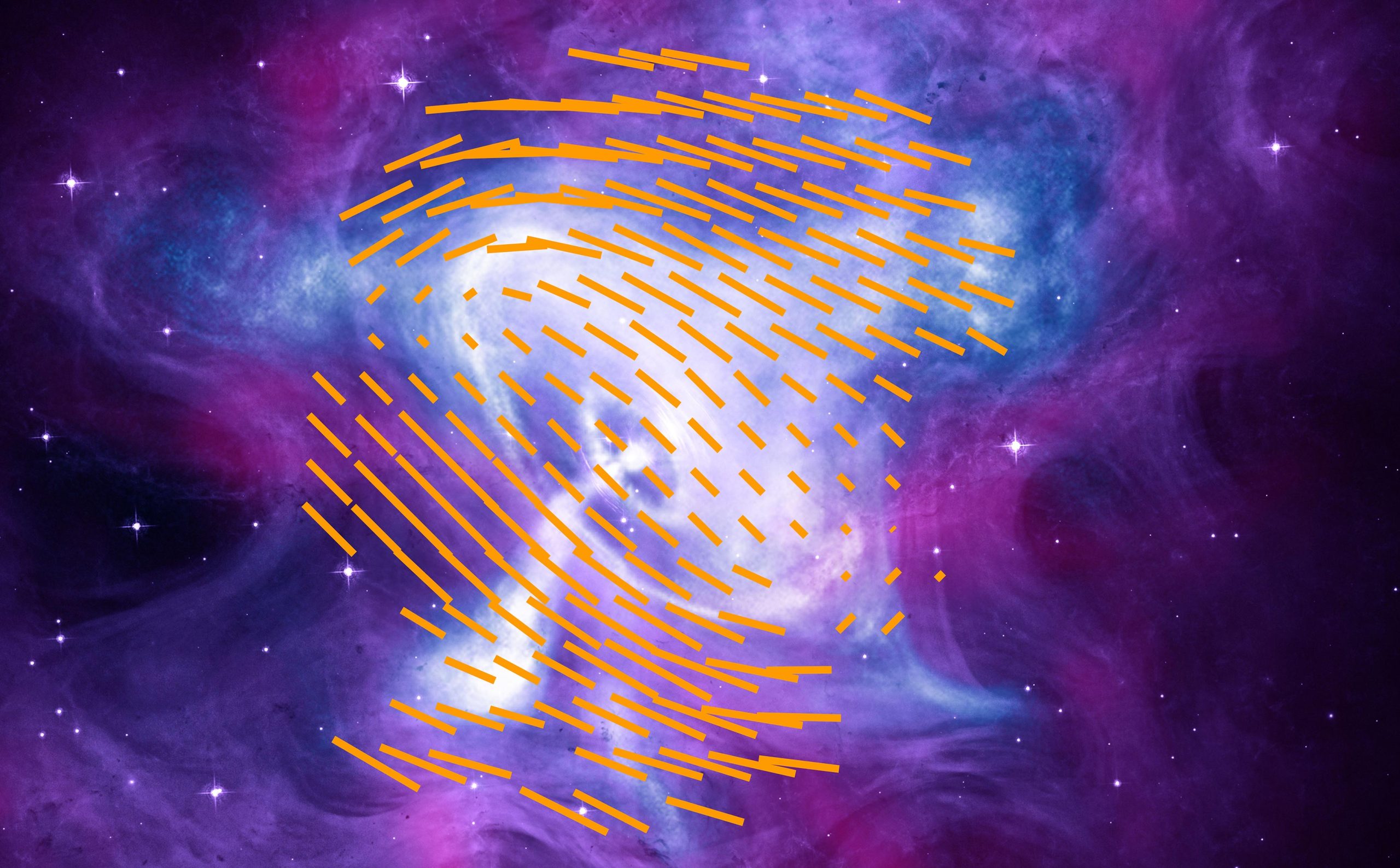
Now, more than 50 years after the sounding rocket experiment, scientists have used IXPE to create a detailed, nuanced map of the Crab Nebula’s magnetic field, revealing more of its inner workings than ever before. The new results, published in the journal Nature Astronomy, help resolve longstanding mysteries about the well-studied Crab Nebula and open new questions for future study.
IXPE data show that the Crab Nebula’s magnetic field resembles that of the Vela Pulsar Wind Nebula, which is also donut-shaped. But at the Crab, scientists were surprised that areas of magnetic field turbulence were more patchy and asymmetrical than expected.
“This is a clear indication that even the more complex models developed in the past, with the use of advanced numerical techniques, do not fully capture the complexity of this object,” said Niccolò Bucciantini, lead author of the study and astronomer at the INAF Arcetri Observatory in Florence, Italy.
The Mysterious Crab Nebula and Its Pulsar
A favorite object of study among astronomers, the Crab Nebula resulted from a supernova documented in the year 1054. The explosion left behind a dense object called the Crab Pulsar, about the diameter of Huntsville, Alabama or the length of Manhattan, but with as much mass as about two Suns. The chaotic mess of gases, shock waves, magnetic fields and high-energy light and particles coming from the rotating pulsar is collectively called a “pulsar wind nebula.” These extreme conditions make for a bizarre environment that is not yet thoroughly understood.
Weisskopf and colleagues were hoping to understand this extreme environment in a new way by measuring the polarization of X-rays from the Crab Nebula, which shines brightly in X-rays. X-ray polarization gives scientists clues to the direction where the magnetic field points in different parts of a cosmic object, as well as how well ordered the magnetic field is. The magnetic field’s geometry and turbulence determines how particles get catapulted toward the speed of light.
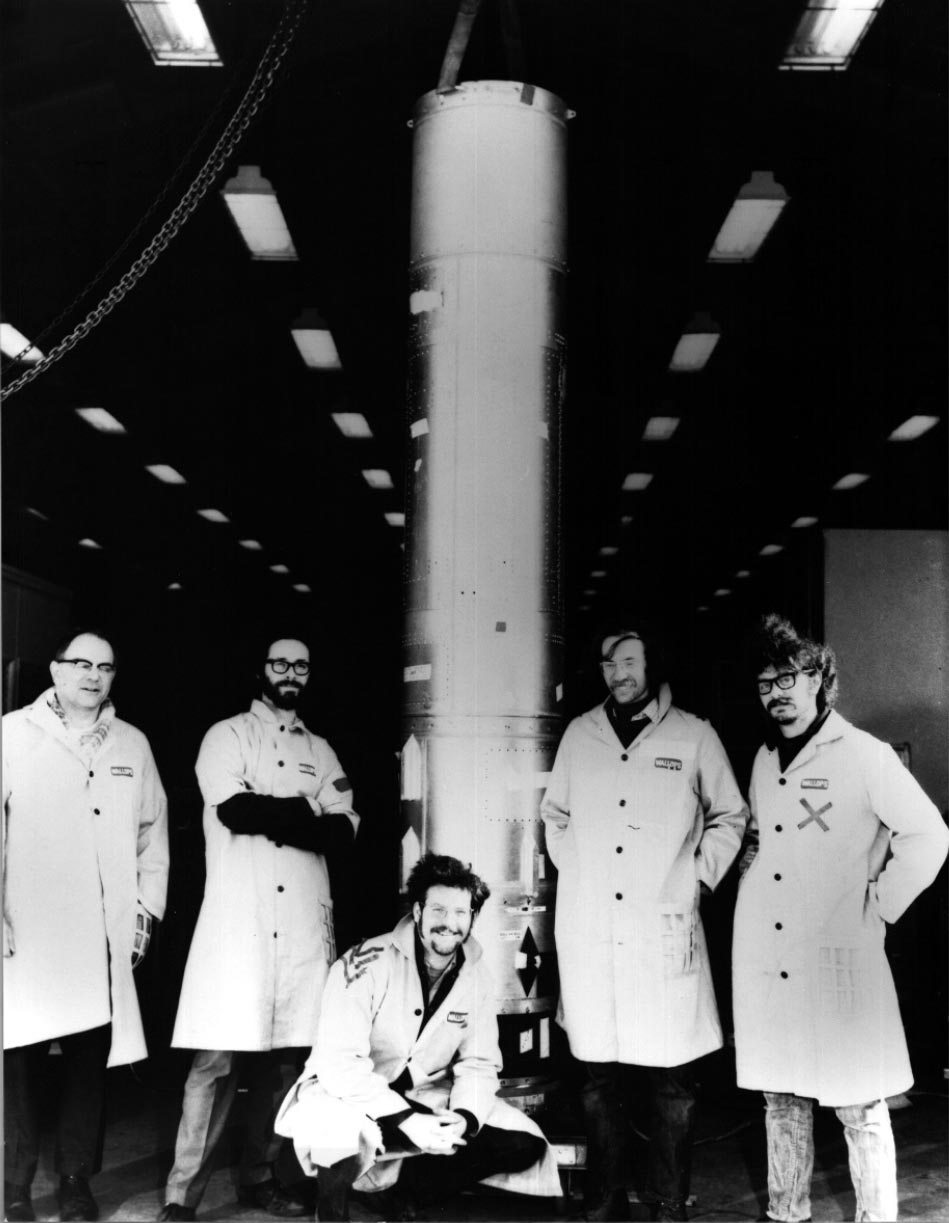
In the five minutes that the 1971 sounding rocket experiment spent above Earth’s atmosphere, it produced the world’s first X-ray polarization measurements.
Scientists followed up with a satellite called OSO-8 in 1975, which also measured the X-ray polarization of the Crab Nebula. The rocket and the satellite produced generally the same result: That the Crab Nebula has an average polarization of about 20%.
As project scientist of NASA’s Chandra X-Ray Observatory, which launched in 1999, Weisskopf continued his exploration of the Crab Nebula in new ways. With Chandra, “we took beautiful images of the nebula and pulsar, and we could see the jets and the various structures,” he said. Chandra’s X-ray imaging revealed wisp-like structures that move in the nebula, and helped scientists to further understand the relationship between the pulsar’s energy and X-ray emissions.
Nearly every recent large telescope has pointed to the Crab Nebula to better understand this mysterious supernova remnant. But only IXPE can study X-rays from Crab in terms of polarization, a measure of the organization of electromagnetic fields.
“The Crab is one of the most-studied high-energy astrophysical objects in the sky. So it is extremely exciting that we could learn something new about this system by looking through IXPE’s ‘polarized lenses,’” said Michela Negro, a research scientist at NASA Goddard Space Flight Center affiliated with the University of Maryland, Baltimore, and a co-author of the study.
Across the entire nebula, IXPE found about the same average polarization as Weisskopf and colleagues did in the 1970s. But with more sophisticated instruments, IXPE was able to refine the angle of polarization and examine the differences in polarization across the entire object. Scientists see areas of much polarization in the outer regions of the nebula, light-years away from the pulsar, where polarization is lower.
Unraveling the Pulsar Wind’s X-rays
This enabled scientists to investigate not just X-rays from the Crab Nebula but also those coming from the pulsar itself, or the sphere of magnetic fields around it. The findings suggest that those X-rays originate in the outer magnetic field region, called the “wind” region, although exactly where and how is still unknown. Within the magnetic field, shocks generated by the pulsar’s “wind” are propelling particles close to the speed of light.
“I’m very proud of everybody associated with IXPE,” said Weisskopf, who was the mission’s first principal investigator. “Everybody has worked so hard, and it works as advertised.” Reflecting on his work on the 1971 experiment that laid the groundwork for the new results, Weisskopf says, “It’s like somebody said to me, ‘Martin, you did good.’”
About the IXPE mission:
IXPE, which is part of NASA’s Small Explorer mission series, launched on a Falcon 9 rocket from NASA’s Kennedy Space Center in Florida in December 2021. It now orbits 370 miles, or roughly 595 kilometers, above Earth’s equator. The mission is a partnership between NASA and the Italian Space Agency, with partners and science collaborators in 13 countries. Ball Aerospace, headquartered in Broomfield, Colorado, manages spacecraft operations.
Never miss a breakthrough: Join the SciTechDaily newsletter.
Follow us on Google and Google News.