
Close Menu
    Facebook X (Twitter) Instagram
    SciTechDaily
    • Biology
    • Chemistry
    • Earth
    • Health
    • Physics
    • Science
    • Space
    • Technology
    Facebook X (Twitter) Pinterest YouTube RSS
    SciTechDaily
    Home»Space»See the First Stunning Image From NASA’s New X-Ray Observatory
    Space

    See the First Stunning Image From NASA’s New X-Ray Observatory

    By Nancy Atkinson, Universe TodayFebruary 20, 2022No Comments4 Mins Read
    Facebook Twitter Pinterest Telegram LinkedIn WhatsApp Email Reddit
    Share
    Facebook Twitter LinkedIn Pinterest Telegram Email Reddit
    IXPE Chandra Cassiopeia A
    This image of the supernova remnant Cassiopeia A combines some of the first X-ray data collected by NASA’s Imaging X-ray Polarimetry Explorer, shown in magenta, with high-energy X-ray data from NASA’s Chandra X-Ray Observatory, in blue. Credit: NASA/CXC/SAO/IXPE

    IXPE’s first image focuses on Cassiopeia A, blending data with Chandra to enhance analysis of X-ray polarization and cosmic ray acceleration.

    It’s the first light for one of the newest space observatories! The Imaging X-Ray Polarimetry Explorer team has released their first image, taken after a month-long commissioning phase for the spacecraft. And it’s a beauty.

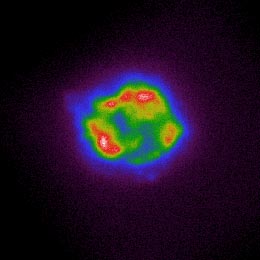
    IXPE looked at a favorite target among space observatories, the supernova remnant Cassiopeia A. While X-rays are invisible to human eyes, the amount of magenta color in this image corresponds to the intensity of X-ray light observed. Needless to say, it’s intense with high-energy X-rays.  

    Combining IXPE and Chandra Data for Enhanced Detail

    For contrast, the team overlaid observations by another x-ray observatory, the Chandra X-Ray Observatory, which shows up as the veins of blue throughout the image. Chandra and IXPE have different types of detectors, and therefore capture different levels of angular resolution, or sharpness. Together, they can produce more complete and detailed data on high energy sources in the Universe.

    The image is also a nod to the venerable Chandra observatory, as Cas A was Chandra’s first light image, as well. That mission launched in 1999 as NASA’s flagship mission for X-ray astronomy, and is still operating in a high Earth orbit.
    IXPE Cassiopeia A
    This image from NASA’s Imaging X-ray Polarimetry Explorer maps the intensity of X-rays coming from the observatory’s first target, the supernova remnant Cassiopeia A. Colors ranging from cool purple and blue to red and hot white correspond with the increasing brightness of the X-rays. The image was created using X-ray data collected by IXPE between January 11-18. Credit: NASA

    Since Earth’s atmosphere absorbs the vast majority of X-rays, they are not detectable from Earth-based telescopes. Space-based X-ray telescopes have allowed for new discoveries and new understandings of our cosmos.

    This new image from IXPE contains data collected from January 11-18. The mission launched on December 9, 2021, on board a SpaceX Falcon 9 rocket from NASA’s Kennedy Space Center in Florida. IXPE was placed in an orbit around Earth’s equator at an altitude of approximately 372 miles (600 kilometers).

    Joint Effort Between NASA and Italian Space Agency

    IXPE is a joint effort between NASA and the Italian Space Agency, and is the first space observatory dedicated to measuring the polarization of X-rays from some of the most fascinating and dynamic objects in the universe.

    The team said all instruments are functioning well aboard the observatory, which is on a quest to study some of the most mysterious and extreme objects in the universe.
    NASA Imaging X ray Polarimetry Explorer (IXPE)
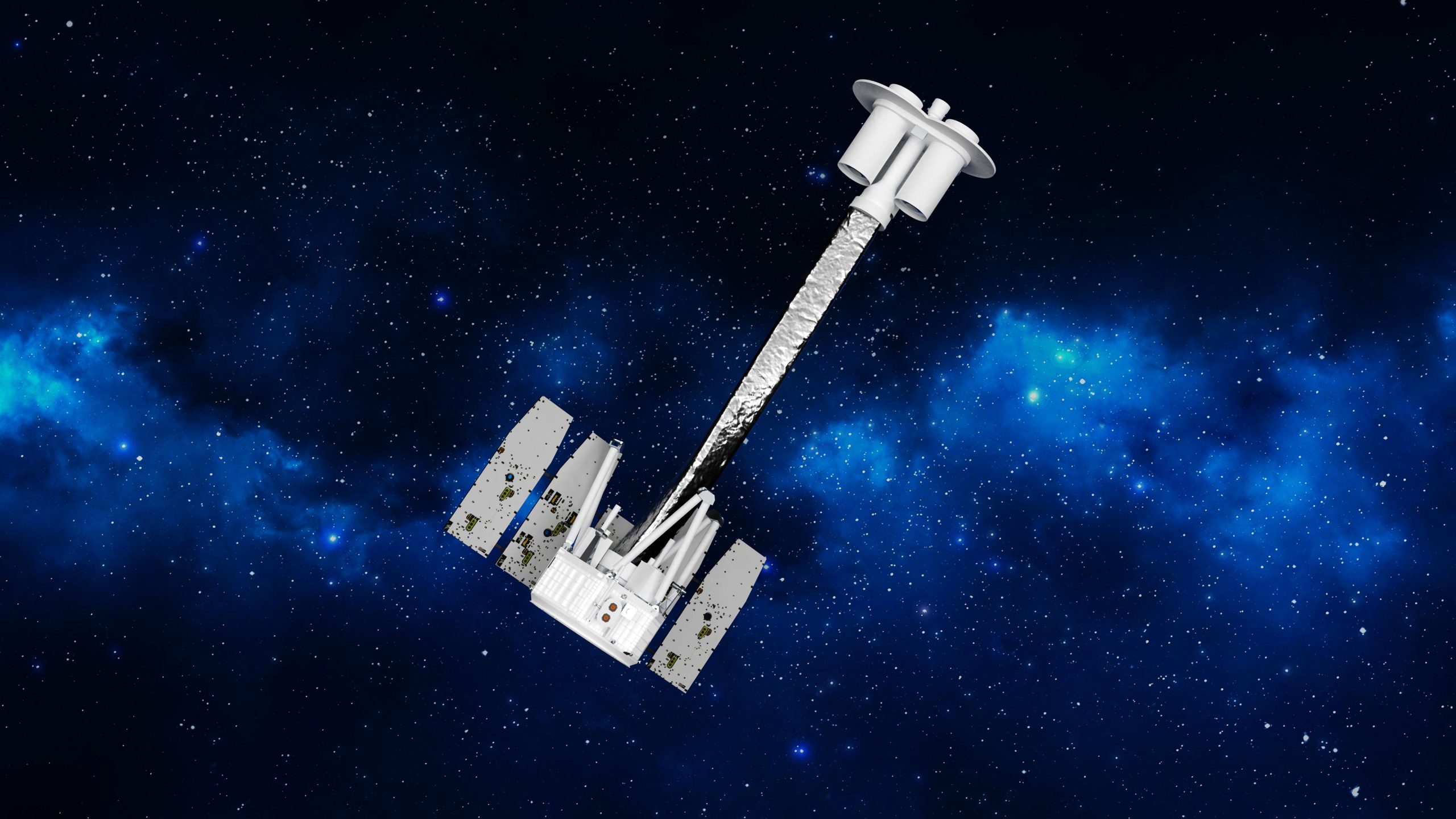
    NASA’s Imaging X-ray Polarimetry Explorer (IXPE) mission is the first satellite dedicated to measuring the polarization of X-rays from a variety of cosmic sources, such as black holes and neutron stars. Credit: NASA

    Cassiopeia A is the shredded remains of a star that exploded several thousand years ago. It is the youngest known supernova remnant in our Milky Way Galaxy and resides 10,000 light-years away in the constellation Cassiopeia, so the star actually blew up 10,000 years before the light reached Earth in the late 1600s.

    Exploring New Insights with Polarization Data

    The shock waves from the explosion have swept up surrounding gas, heating it to high temperatures and accelerating cosmic ray particles to make a cloud that glows in X-ray light. Other telescopes have studied Cassiopeia A before, but IXPE will allow researchers to examine it in a new way. The team is currently analyzing all the data to learn more, according to Martin C. Weisskopf, the IXPE principal investigator, in a press release.

    For example, IXPE will allow scientists to see, for the first time, how the amount of polarization varies across the supernova remnant, which is about 10 light-years in diameter.

    “IXPE’s future polarization images should unveil the mechanisms at the heart of this famous cosmic accelerator,” said Roger Romani, an IXPE co-investigator at Stanford University. “To fill in some of those details, we’ve developed a way to make IXPE’s measurements even more precise using machine learning techniques. We’re looking forward to what we’ll find as we analyze all the data.”

    Adapted from an article originally published on Universe Today.

    Never miss a breakthrough: Join the SciTechDaily newsletter.
    Follow us on Google and Google News.

    Astronomy Astrophysics IXPE NASA
    Share. Facebook Twitter Pinterest LinkedIn Email Reddit

    Related Articles

    NASA Cracks 30-Year X-ray Mystery With Blazing Black Hole Light Show

    NASA’s X-Ray Explorer Unveils Black Hole’s Hidden Layers

    Exploring the Invisible Sky With IXPE’s Revolutionary X-Ray Technology

    NASA’s IXPE Uses Vela Pulsar Wind Nebula as an Extreme Astrophysics Laboratory

    NASA’s Imaging X-Ray Polarimetry Explorer (IXPE) Celebrates 1 Year of Exploring the Cosmos

    Astrophysicists Solve 40-Year-Old Black Hole Jet Mystery With NASA’s IXPE

    Surprising Results From NASA’s IXPE Help Unlock the Secrets of Famous Exploded Star

    NASA’s IXPE Mission Checks Out X-Rays From Extreme Cosmic Objects

    NASA IXPE Observatory’s First Stunning Image: The Glowing Remains of an Exploded Star

    Leave A Reply Cancel Reply

    • Facebook
    • Twitter
    • Pinterest
    • YouTube

    Don't Miss a Discovery

    Subscribe for the Latest in Science & Tech!

    Trending News

    New Pill Lowers Stubborn Blood Pressure and Protects the Kidneys

    Humans May Have Hidden Regenerative Powers, New Study Suggests

    Scientists Just Solved the Mystery of Why Crabs Walk Sideways

    Doctors Are Surprised by What This Vaccine Is Doing to the Heart

    This Popular Supplement May Boost Your Brain, Not Just Your Muscles

    Scientists Say This Simple Supplement May Actually Reverse Heart Disease

    Warming Oceans Could Trigger a Dangerous Methane Surge

    This Simple Movement Could Be Secretly Cleaning Your Brain

    Follow SciTechDaily
    • Facebook
    • Twitter
    • YouTube
    • Pinterest
    • Newsletter
    • RSS
    SciTech News
    • Biology News
    • Chemistry News
    • Earth News
    • Health News
    • Physics News
    • Science News
    • Space News
    • Technology News
    Recent Posts
    • Hidden Heart Risk Found in 1 in 5 People, Study Warns
    • Scientists Say This Daily Walking Habit May Be the Secret to Keeping Weight Off After Dieting
    • New Therapy Rewires the Brain To Restore Joy in Depression Patients
    • Researchers Discover Efficient New Way To Split Hydrogen From Water for Energy
    • This Korean Skincare Ingredient Could Help Fight Deadly Superbugs
    Copyright © 1998 - 2026 SciTechDaily. All Rights Reserved.
    • Science News
    • About
    • Contact
    • Editorial Board
    • Privacy Policy
    • Terms of Use

    Type above and press Enter to search. Press Esc to cancel.