
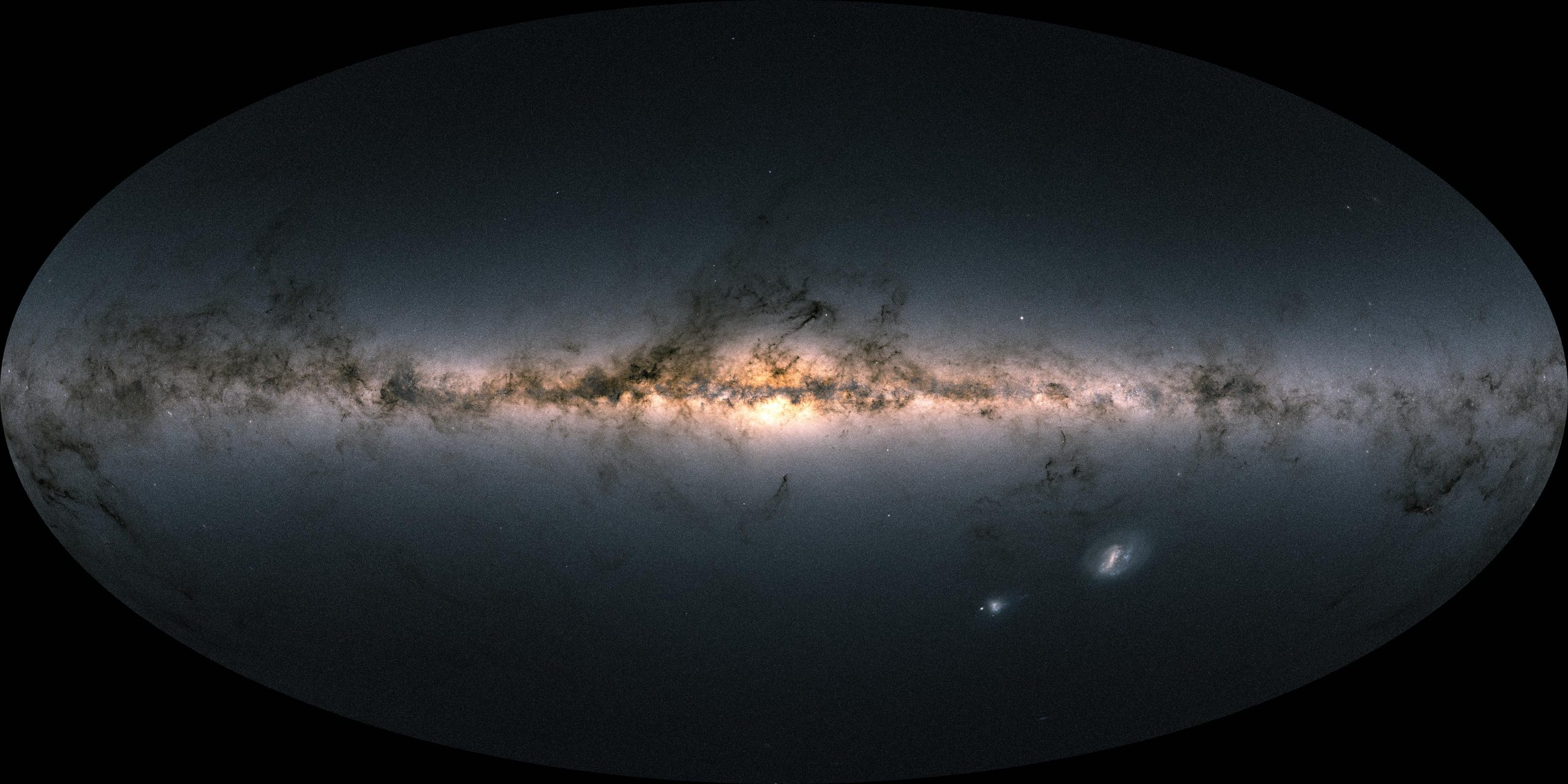
Using data from ESA’s Gaia mission, astronomers have shown that a part of the Milky Way known as the ‘thick disc’ began forming 13 billion years ago, around 2 billion years earlier than expected, and just 0.8 billion years after the Big Bang.
This surprising result comes from an analysis performed by Maosheng Xiang and Hans-Walter Rix, from the Max-Planck Institute for Astronomy, Heidelberg, Germany. They took brightness and positional data from Gaia’s Early Data Release 3 (EDR3) dataset and combined it with measurements of the stars’ chemical compositions, as given by data from China’s Large Sky Area Multi-Object Fiber Spectroscopic Telescope (LAMOST) for roughly 250,000 stars to derive their ages.
They chose to look at sub giant stars. In these stars, energy has stopped being generated in the star’s core and has moved into a shell around the core. The star itself is transforming into a red giant star. Because the sub giant phase is a relatively brief evolutionary phase in a star’s life, it permits its age to be determined with great accuracy, but it’s still a tricky calculation.
How Old Are the Stars?
The age of a star is one of the most difficult parameters to determine. It cannot be measured directly but must be inferred by comparing a star’s characteristics with computer models of stellar evolution. The compositional data helps with this. The Universe was born with almost exclusively hydrogen and helium. The other chemical elements, known collectively as metals to astronomers, are made inside stars, and exploded back into space at the end of a star’s life, where they can be incorporated into the next generation of stars. So, older stars have fewer metals and are said to have lower metallicity.
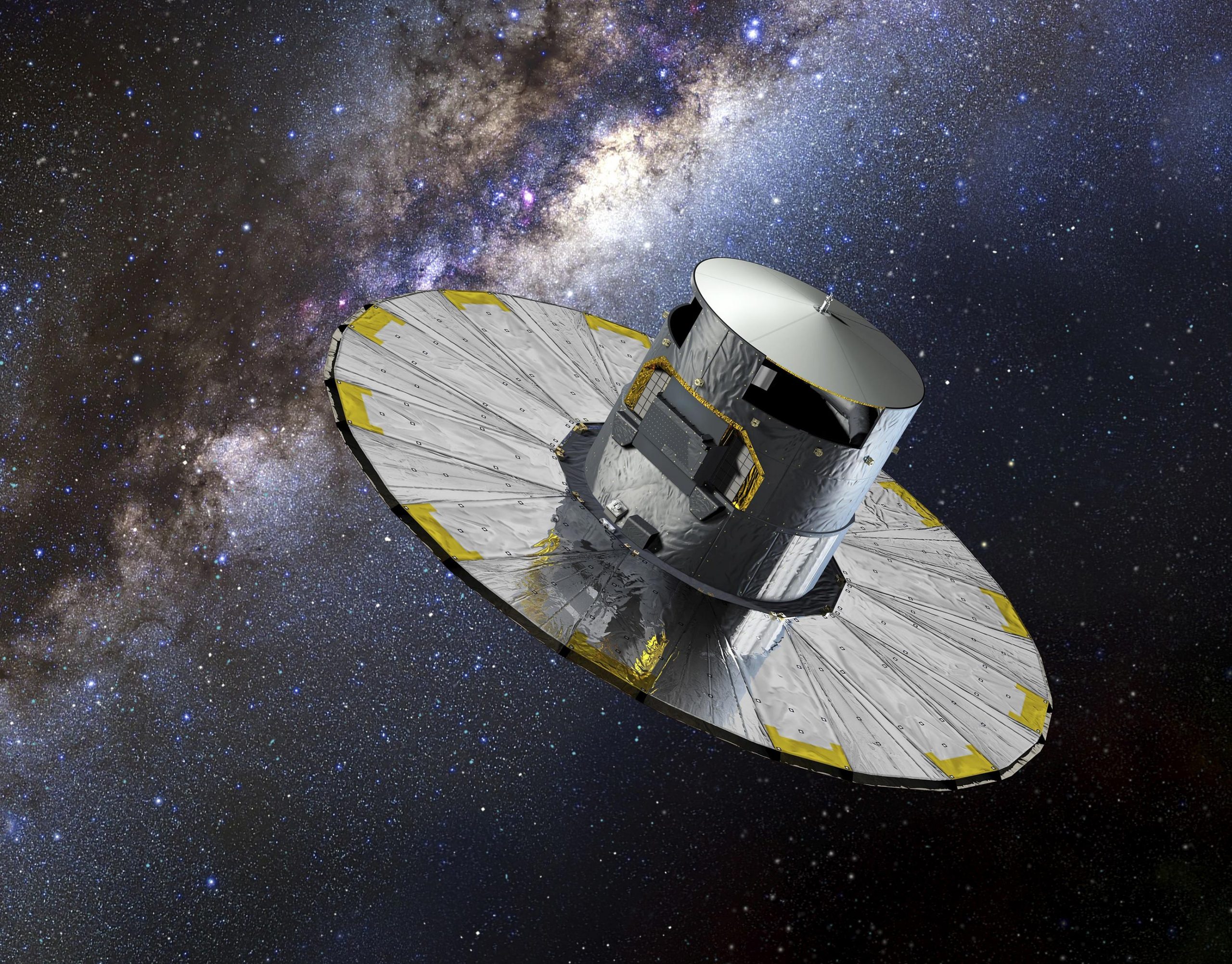
The LAMOST data gives the metallicity. Together, the brightness and metallicity allow astronomers to extract the star’s age from the computer models. Before Gaia, astronomers were routinely working with uncertainties of 20-40 percent, which could result in the determined ages being imprecise by a billion years or more.
Gaia’s EDR3 data release changes this. “With Gaia’s brightness data, we are able to determine the age of a sub giant star to a few percent,” says Maosheng. Armed with precise ages for a quarter of a million sub giant stars spread throughout the galaxy, Maosheng and Hans-Walter began the analysis.
Milky Way Anatomy
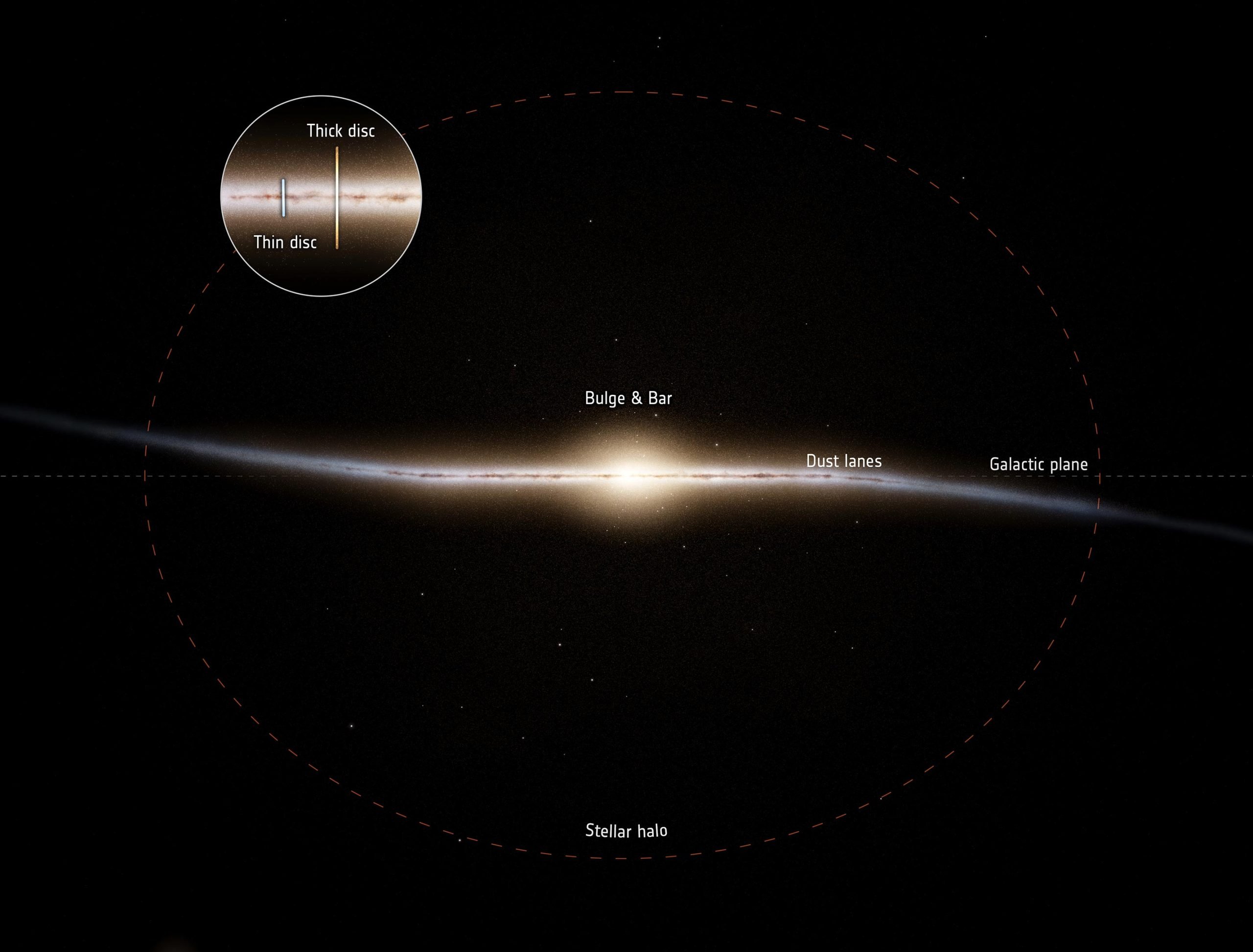
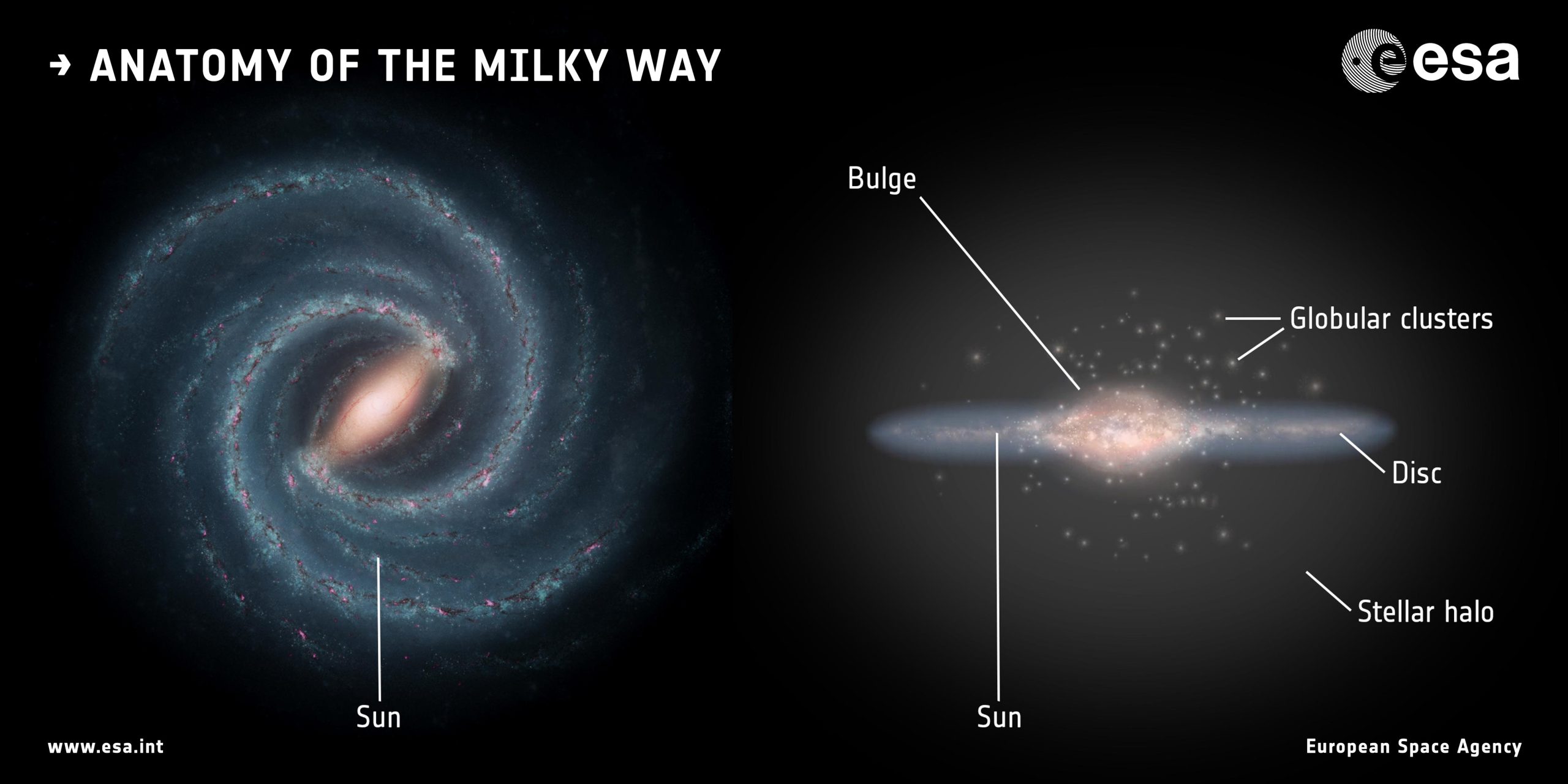
Our galaxy is made of different components. Broadly, these can be split into the halo and the disc. The halo is the spherical region surrounding the disc, and has traditionally been thought to be the oldest component of the galaxy. The disc is composed of two parts: the thin disc and the thick disc. The thin disc contains most of the stars that we see as the misty band of light in the night sky that we call the Milky Way. The thick disc is more than double the height of the thin disc but smaller in radius, containing only a few per cent of the Milky Way’s stars in the solar neighborhood.
By identifying sub giant stars in these different regions, the researchers were able to build a timeline of the Milky Way’s formation – and that’s when they got a surprise.
Two Phases in Milky Way History
The stellar ages clearly revealed that the formation of the Milky Way fell into two distinct phases. In the first phase, starting just 0.8 billion years after the Big Bang, the thick disc began forming stars. The inner parts of the halo may also have begun to come together at this stage, but the process rapidly accelerated to completion about two billion years later when a dwarf galaxy known as Gaia-Sausage-Enceladus merged with the Milky Way. It filled the halo with stars and, as clearly revealed by the new work, triggered the nascent thick disc to form the majority of its stars. The thin disc of stars which holds the Sun, was formed during the subsequent, second phase of the galaxy’s formation.
The analysis also shows that after the star-forming burst triggered by the merger with Gaia-Sausage-Enceladus, the thick disc continued to form stars until the gas was used up at around 6 billion years after the Big Bang. During this time, the metallicity of the thick disk grew by more than a factor of 10. But remarkably, the researchers see a very tight stellar age—metallicity relation, which indicates that throughout that period, the gas forming the stars was well-mixed across the whole disk. This implies that the early Milky Way’s disk regions must have been formed from highly turbulent gas that effectively spread the metals far and wide.
A Timeline Thanks to Gaia
The earlier formation age of the thick disc points to a different picture of our galaxy’s early history. “Since the discovery of the ancient merger with Gaia-Sausage-Enceladus, in 2018, astronomers have suspected that the Milky Way was already there before the halo formed, but we didn’t have a clear picture of what that Milky Way looked like. Our results provide exquisite details about that part of the Milky Way, such as its birthday, its star-formation rate, and metal enrichment history. Putting together these discoveries using Gaia data is revolutionizing our picture of when and how our galaxy was formed.” says Maosheng.
And we may not yet be looking far enough into the Universe to see similar galactic discs forming. An age of 13 billion years corresponds to a redshift of 7, where redshift is a measure of how far away a celestial object is, and so how long its light has taken to cross space and reach us.
New observations could come in the near future as the James Webb Space Telescope has been optimized to see the earliest Milky Way-like galaxies in the Universe. And on June 13 this year, Gaia will release its full third data release (Gaia DR3). This catalog will include spectra and derived information like ages and metallicity, making studies like Maosheng’s even easier to conduct.
“With each new analysis and data release, Gaia allows us to piece together the history of our galaxy in even more unprecedented detail. With the release of Gaia DR3 in June, astronomers will be able to enrich the story with even more details,” says Timo Prusti, Gaia Project Scientist for ESA.
Reference: “A time-resolved picture of our Milky Way’s early formation history” by Maosheng Xiang and Hans-Walter Rix, 23 March 2022, Nature.
DOI: 10.1038/s41586-022-04496-5
Never miss a breakthrough: Join the SciTechDaily newsletter.
Follow us on Google and Google News.
6 Comments
Its actually much younger coz time is relative. And you have lived your whole lives in the blink of my eye
Isn’t every atom in the universe the same age?
Garin is right. Every atom in your body was forged in a star over a long time. Then those atoms were released into the universe in a super nova explosion. That is why it is said that we are made of stardust.
Not all atoms are the same age. The heavier elements are produced by large stars which fuse lighter atoms into larger, heavier atoms. This process continues as we speak.
Almost all heavy elements are produced by large star collapse and supernova explosions because only energetic events of such intensity are capable of fusing the nuclei of lighter atoms.
Gud morning .daiy..Energey conseren.unsre brain.every time.new capital thinken.other.peopel Help kennen das my Herz .weisheit energy .Thanks fur alls