

Researchers found strong genetic similarities between cat and human cancers, identifying key mutations and potential treatment pathways.
In the first large-scale study of multiple feline cancer types, scientists identified genetic changes that could improve how cancer is treated in both animals and people.
By analyzing tumors from nearly 500 pet cats across five countries, teams from the Wellcome Sanger Institute, the Ontario Veterinary College in Canada, the University of Bern, and collaborators mapped the mutations that drive cancer in cats and found clear similarities with those seen in humans.
Cats face many of the same environmental cancer risks as their owners, suggesting some causes may overlap. Using DNA sequencing on tissue samples originally collected for diagnostic use, the study, published in Science, revealed that several genetic changes common in feline cancers closely match those in human cancers. For instance, feline mammary cancers show strong parallels to human breast cancer.
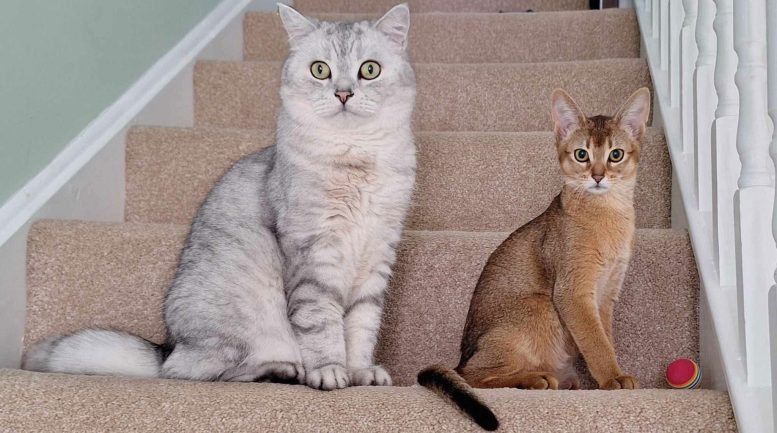
Shared Genetic Drivers Across Species
The findings indicate that multiple genetic alterations could be explored further through genomics research and clinical trials, with the goal of developing treatments that target these shared mutations in both cats and humans.
Cats are extremely common pets, with nearly a quarter of UK households owning at least one and more than 10 million cats living in the country. Cancer is a leading cause of illness and death in cats, yet its underlying biology has remained poorly understood.
This study marks the first time feline tumors have been genetically profiled at this scale, creating an open resource that can support future research in cat cancer genomics.
Large-Scale Study of Cat Tumors
Researchers examined around 1,000 genes linked to human cancers, comparing tumor and healthy tissue samples from nearly 500 cats across 13 cancer types. This allowed them to directly compare genetic changes in cats with those in humans and dogs.
For several cancer types, the genetic drivers in domestic cats closely matched those found in human cancers, reinforcing the idea that similar mechanisms are at work.
One example is mammary carcinoma, a common and aggressive cancer in cats. The study identified seven key driver genes, with FBXW7 being the most frequent. More than 50 percent of feline tumors carried mutations in this gene. In humans, FBXW7 mutations in breast cancer are associated with poorer outcomes, mirroring what is observed in cats.
Key Mutations and Treatment Insights
The research also found that certain chemotherapy drugs were more effective in cat mammary tumors with FBXW7 mutations. Although these results come from tissue studies and need further validation, they suggest a potential path for targeted treatments in both feline and human breast cancer.
Another major driver gene, PIK3CA, appeared in 47 percent of feline mammary tumors. This same mutation is well known in human breast cancer and is already targeted with PI3K inhibitors.
Similar mutation patterns were also observed in cancers affecting the blood, bone, lung, skin, gastrointestinal system, and central nervous system. Continued study of these shared genetic changes could lead to new insights and therapies across species.
One Medicine and Future Therapies
Researchers suggest that treatments proven effective in humans could be tested in cats, while data from veterinary clinical trials could also help guide human studies. This concept, known as the “One Medicine” approach, emphasizes the exchange of knowledge between human and veterinary medicine to benefit both.
Bailey Francis, co-first author at the Wellcome Sanger Institute, said, “By comparing cancer genomics across different species, we gain a greater understanding of what causes cancer. One of our major findings was that the genetic changes in cat cancer are similar to some that are seen in humans and dogs. This could help experts in the veterinary field as well as those studying cancer in humans, showing that when knowledge and data flows between different disciplines, we can all benefit.”
Professor Geoffrey Wood, co-senior author at the Ontario Veterinary College, Canada, said, “Despite domestic cats being common pets, there was very little known about the genetics of cancer in these animals until now. Our household pets share the same spaces as us, meaning that they are also exposed to the same environmental factors that we are. This can help us understand more about why cancer develops in cats and humans, how the world around us influences cancer risk, and possibly find new ways to prevent and treat it.”
Advancing Feline Oncology Research
Professor Sven Rottenberg, co-senior author at the University of Bern, Switzerland, said, “Having access to such a large set of donated tissues allowed us to assess drug responses across tumor types in a way that hasn’t been possible at this scale before. This is a powerful tool to help us identify potential novel therapeutic options that we hope will translate to the clinic one day, for both cats and humans.”
Dr. Louise Van Der Weyden, senior author at the Wellcome Sanger Institute, said, “This is one of the biggest ever developments in feline oncology and means the genetics of domestic cat tumors are no longer a ‘black box.’ We can now begin to take the next steps forward towards precision feline oncology, to catch up with the diagnostic and therapeutic options that are available for dogs with cancer, and ultimately, one day, humans.”
Reference: “The oncogenome of the domestic cat” by Bailey A. Francis, Latasha Ludwig, Chang He, Melanie Dobromylskyj, Christof A. Bertram, Heike Aupperle-Lellbach, Hannah Wong, Aiden P. Foster, Mark J. Arends, Alejandro Suárez-Bonnet, Simon L. Priestnall, Laetitia Tatiersky, Fernanda Castillo-Alcala, Angie Rupp, Arlene Khachadoorian, Eda Parlak, Marine Inglebert, Shevaniee Umamaheswaran, Saamin Cheema, Martin Del Castillo Velasco-Herrera, Kim Wong, Ian C. Vermes, Jamie Billington, Sven Rottenberg, Geoffrey A. Wood, David J. Adams and Louise van der Weyden, 19 February 2026, Science.
DOI: 10.1126/science.ady6651
This research was part-funded by EveryCat Health Foundation, the CVS Group, Wellcome Trust, the Natural Sciences and Engineering Research Council of Canada, and the Swiss National Science Foundation.
Never miss a breakthrough: Join the SciTechDaily newsletter.
Follow us on Google and Google News.
3 Comments
Now big budgets will supply career funding to torture kittens? The answer is yes.
But who’s more important, “science” – or cats?
Yeah, notice the researcher’s cats in the pictures were NOT part of the study…why could that be?
I hope this research at least will benefit cats as well rather than just sacrificing their lives to maybe improve ours.
I agree with Andria and Robert. My first thought was that this is going to be used to justify torturing and killing even more cats in studies/research/experiments to benefit humans.