
Close Menu
    Facebook X (Twitter) Instagram
    SciTechDaily
    • Biology
    • Chemistry
    • Earth
    • Health
    • Physics
    • Science
    • Space
    • Technology
    Facebook X (Twitter) Pinterest YouTube RSS
    SciTechDaily
    Home»Space»Galaxy Clusters Should Be Cold – XRISM Just Found Out Why They’re Not
    Space

    Galaxy Clusters Should Be Cold – XRISM Just Found Out Why They’re Not

    By Nagoya UniversityMay 20, 20251 Comment4 Mins Read
    Facebook Twitter Pinterest Telegram LinkedIn WhatsApp Email Reddit
    Share
    Facebook Twitter LinkedIn Pinterest Telegram Email Reddit
    Galaxy Cluster Heart Art
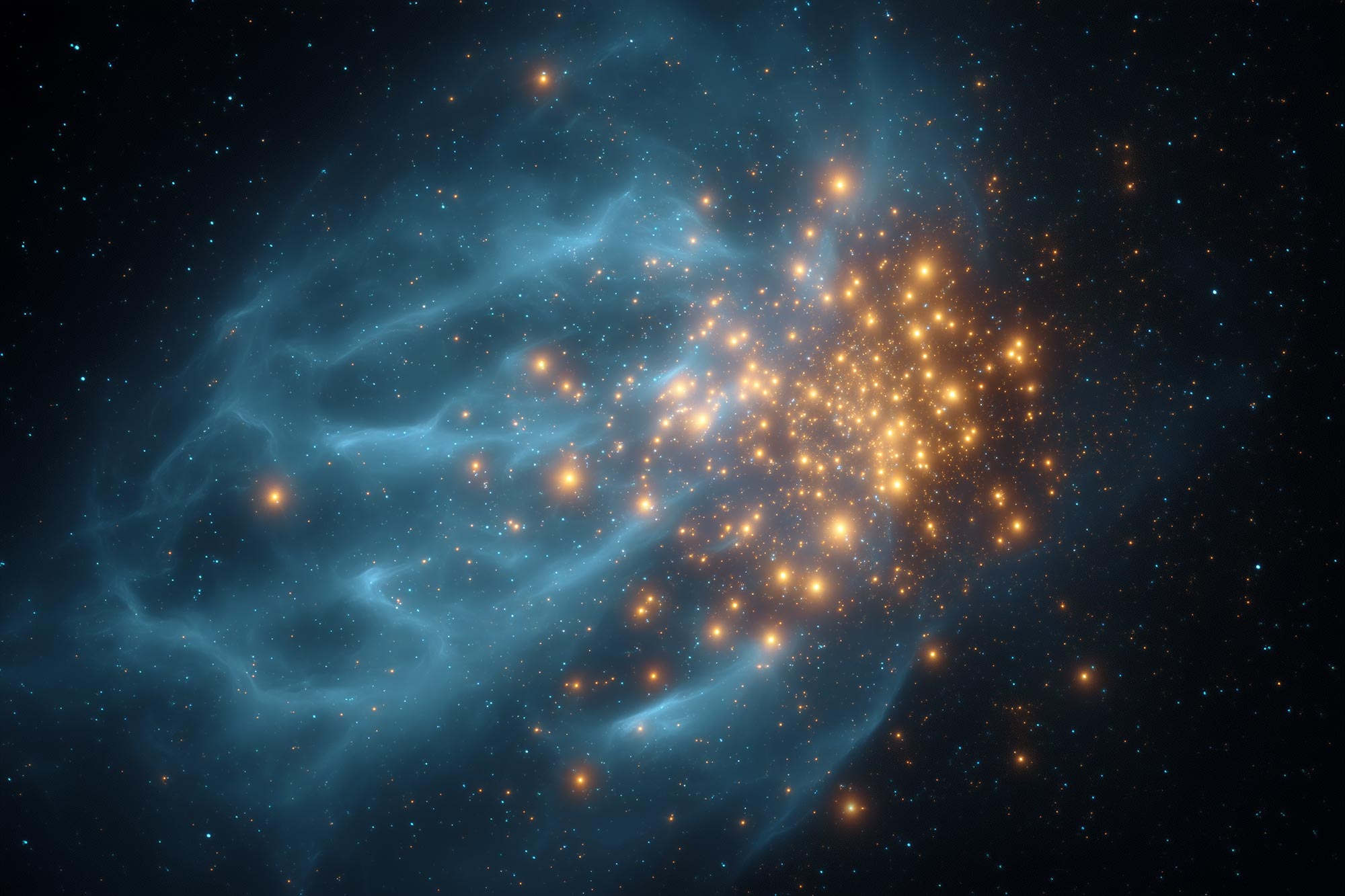
    A swirling stream of hot gas in a galaxy cluster may solve the mystery of why these cosmic giants don’t cool down. Thanks to XRISM, scientists now see that this “sloshing” motion may be stirring heat throughout the cluster’s core. (Artist’s concept.) Credit: SciTechDaily.com

    Astronomers may have finally cracked one of the universe’s long-standing puzzles: why galaxy clusters remain mysteriously warm despite constantly losing energy through X-rays.

    Using Japan’s XRISM satellite, scientists observed a fast, swirling flow of superheated gas in the Centaurus cluster. This gentle but powerful motion appears to redistribute heat throughout the cluster, acting like a cosmic stirrer and preventing it from cooling.

    Galaxy Clusters Stay Hot Despite Cooling X-rays

    Scientists using the XRISM satellite have uncovered a major clue to one of astronomy’s longstanding mysteries: why galaxy clusters stay hot, even though they constantly lose energy through X-ray emissions. These X-rays should cool the clusters over time, but that’s not what astronomers observe.

    By studying the Centaurus cluster, located about 150 million light-years from Earth, the XRISM science team, including members of Nagoya University, discovered a surprising phenomenon at its core. They found a fast-moving stream of superheated gas flowing through the center of the cluster. This energetic motion appears to be delivering heat and preventing the cluster from cooling down. Their results, published in Nature, offer a promising solution to what’s known as the “cooling flow problem.”

    Centaurus Galaxy Cluster Center
    Artist’s impression of the center of the Centaurus galaxy cluster. The bluish color indicates the flow of hot gas. The white indicates galaxies, and the reddish brown indicates cooler gas. Credit: JAXA

    A Mismatch Between Cooling and Star Formation

    Galaxy clusters are colossal structures made up of hundreds of galaxies. They are the largest known objects in the universe and play a key role in helping scientists understand how galaxies form, evolve, and interact on a cosmic scale.

    These clusters are wrapped in massive halos of dark matter, which pull in scorching-hot gas from the surrounding intergalactic space. As this gas falls inward, it gives off X-rays, much like steam rising from hot water. Naturally, this should lead to cooling, and as the gas cools, it’s expected to condense and form stars at the cluster’s center.

    But here’s the puzzle: not enough stars are forming, and the cores of these clusters are still hot. Something is offsetting the cooling, but until now, scientists weren’t sure what it was.

    XRISM’s Breakthrough Discovery

    To investigate, the team focused on the Centaurus cluster using XRISM’s cutting-edge instrument called Resolve, which can precisely measure the motion and temperature of X-ray-emitting gas. What they found was a clear flow of high-temperature gas moving rapidly through the cluster’s center. This “sloshing” motion acts like a cosmic stirrer, distributing energy and helping maintain the cluster’s overall heat.

    X-Ray Imaging and Spectroscopy Mission (XRISM) in Space
    X-ray Imaging and Spectroscopy Mission (XRISM) in space conceptual Illustration. Credit: JAXA

    Energy Transfer Through Gentle Stirring

    “We found little turbulence of the high-temperature gas in the galaxy cluster,” Professor Nakazawa said. “The mechanism, which stops the cooling of the hot gas of this cluster, is a general ‘stirring’ of the hot gas that supplies energy to the center from outside regions, thus maintaining the high temperature.”

    Computer simulations of the movement of hot gas after the merging of clusters of galaxies that happened during their growth process were used to explain these motions, which is called ‘gas sloshing.’

    Unlocking Cosmic Evolution

    “High-precision spectroscopy will also help us to better understand how the massive structure of galaxy clusters evolves,” Nakazawa said. “It deepens our understanding not only of galaxy clusters, but also of the formation and evolution of large-scale structures in the universe as a whole.”

    Reference: “The bulk motion of gas in the core of the Centaurus galaxy cluster” by XRISM collaboration, 12 February 2025, Nature.
    DOI: 10.1038/s41586-024-08561-z

    Never miss a breakthrough: Join the SciTechDaily newsletter.
    Follow us on Google and Google News.

    Astronomy Astrophysics Nagoya University
    Share. Facebook Twitter Pinterest LinkedIn Email Reddit

    Related Articles

    Scientists Have Uncovered When Jupiter Was Born, Solving a Longstanding Mystery

    Torn by Gravity: How a Cosmic Tug-of-War Is Pulling a Nearby Galaxy Apart

    How 400-Year-Old Sunspot Sketches Are Solving Modern Solar Puzzles

    Unleashing Cosmic Power: Energy Flow in the Universe’s Largest Shock Waves

    Further Back in Time Than Ever Before: Distribution of Dark Matter Around Galaxies 12 Billion Years Ago Revealed

    Unveiling a 100-Year-Old Astrophysics Mystery: Where the Milky Way’s Cosmic Rays Come From

    Star Formation Is Triggered by Collisions of Gas Clouds in Space

    Enormous Plasma Jets Reveal Monstrous Magnetic Fields Far, Far Away

    Astronomers Observe a Long-Hypothesized Mechanism for Coronal Heating

    1 Comment

    1. Юрис on May 21, 2025 11:48 pm

      рентгеновский спектр излучений вызывает перегрев ядра атомов, и расширение, создав поток, способной толкать массу против сил притяжения. как паровая машина. у всех процессов есть критическая масса.

      Reply
    Leave A Reply Cancel Reply

    • Facebook
    • Twitter
    • Pinterest
    • YouTube

    Don't Miss a Discovery

    Subscribe for the Latest in Science & Tech!

    Trending News

    The Universe Is Expanding Too Fast and Scientists Can’t Explain Why

    “Like Liquid Metal”: Scientists Create Strange Shape-Shifting Material

    Early Warning Signals of Esophageal Cancer May Be Hiding in Plain Sight

    Common Blood Pressure Drug Shows Surprising Power Against Deadly Antibiotic-Resistant Superbug

    Scientists Uncover Dangerous Connection Between Serotonin and Heart Valve Disease

    Scientists Discover a “Protector” Protein That Could Help Reverse Hair Loss

    Bone-Strengthening Discovery Could Reverse Osteoporosis

    Scientists Uncover Hidden Trigger Behind Stem Cell Aging

    Follow SciTechDaily
    • Facebook
    • Twitter
    • YouTube
    • Pinterest
    • Newsletter
    • RSS
    SciTech News
    • Biology News
    • Chemistry News
    • Earth News
    • Health News
    • Physics News
    • Science News
    • Space News
    • Technology News
    Recent Posts
    • The Simple Habit That Could Help Prevent Cancer
    • Forgotten Medicinal Plant Shows Promise in Fighting Dangerous Superbugs
    • Millions Take These IBS Drugs, But a New Study Finds Serious Risks
    • 5 Common Myths About Learning a New Language, Debunked
    • The Neanderthal “Love Story” Isn’t What It Seems
    Copyright © 1998 - 2026 SciTechDaily. All Rights Reserved.
    • Science News
    • About
    • Contact
    • Editorial Board
    • Privacy Policy
    • Terms of Use

    Type above and press Enter to search. Press Esc to cancel.