
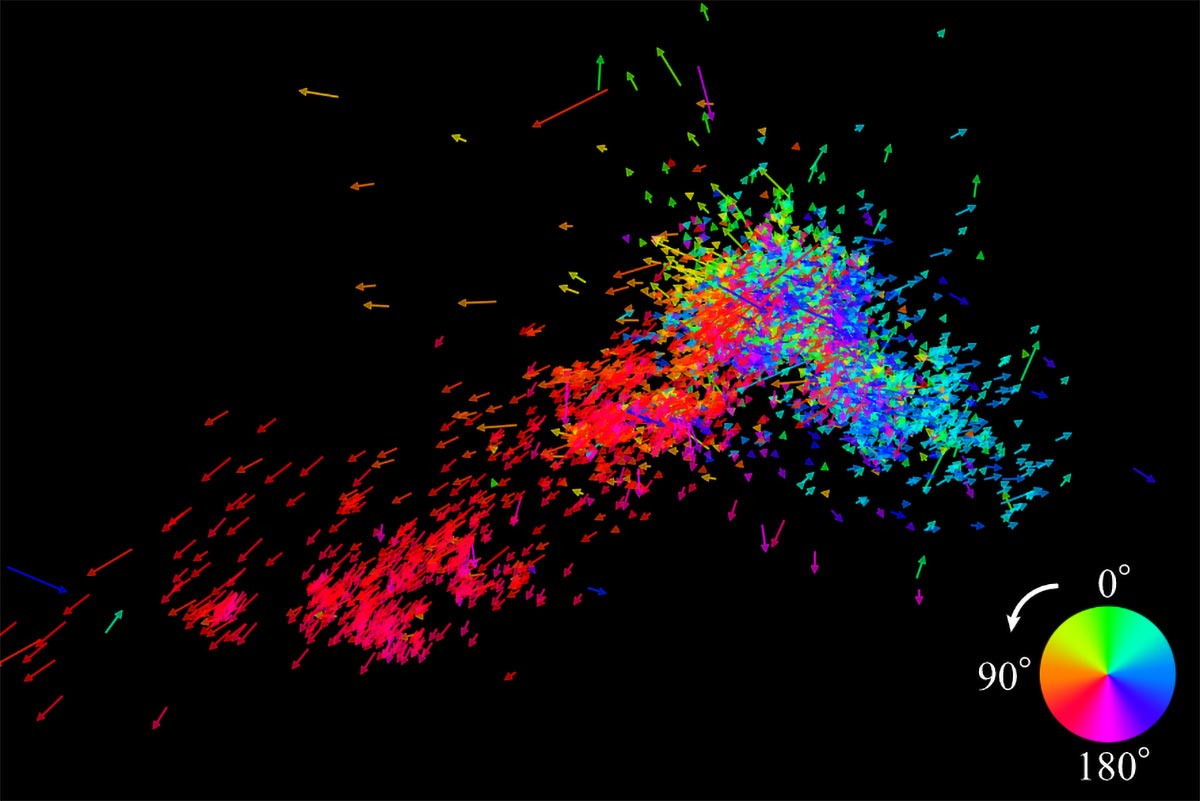
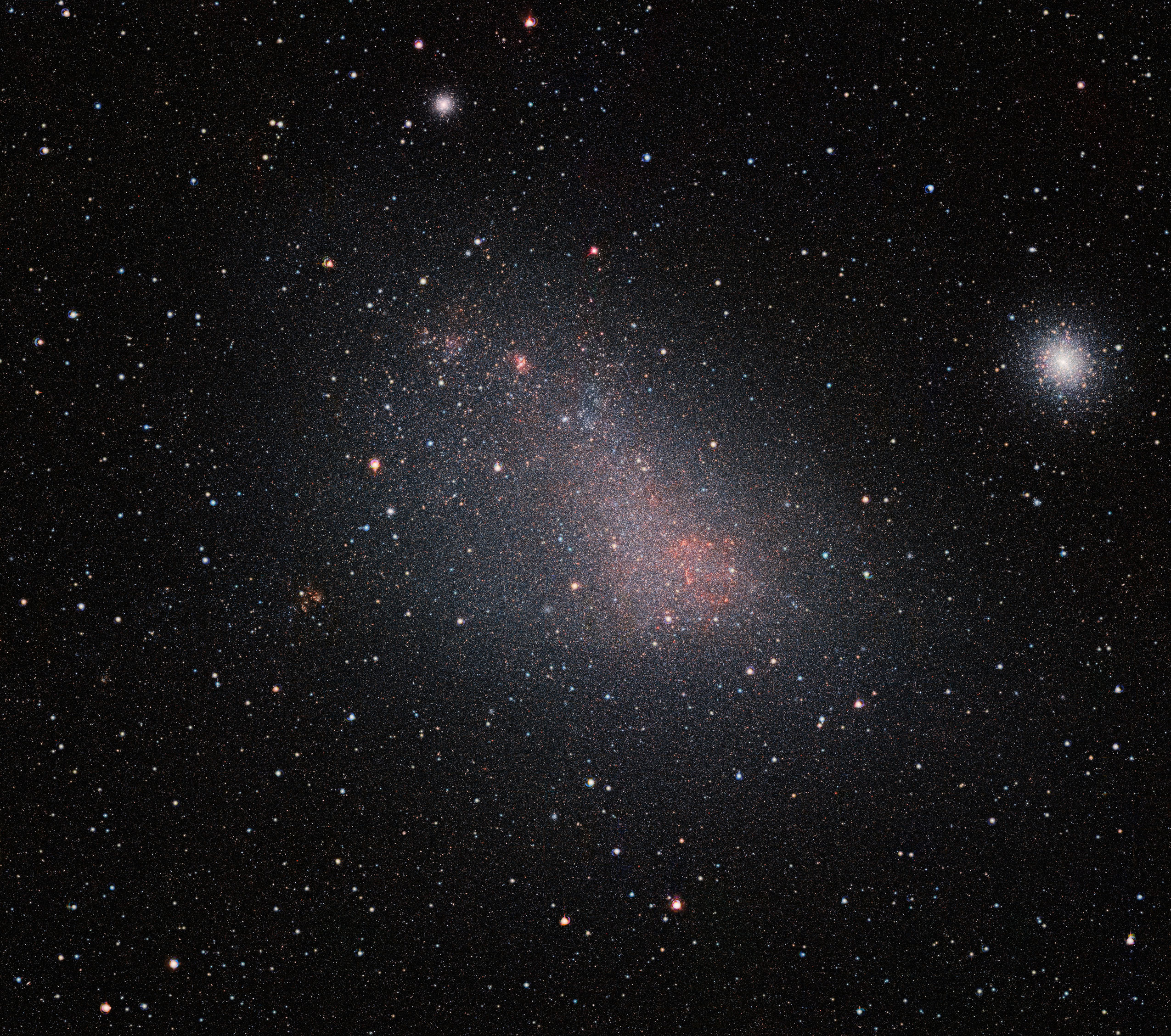
Astronomers have discovered that the Small Magellanic Cloud, a nearby dwarf galaxy, is being torn apart by the gravitational pull of its larger neighbor, the Large Magellanic Cloud.
By tracking thousands of massive stars, researchers found that the galaxy lacks rotational motion and shows signs of disruption, which could dramatically shift our understanding of how galaxies interact and evolve. This discovery offers a rare real-time look into the cosmic tug-of-war that may have shaped galaxies in the early universe.
Gravitational Tug-of-War Between Galaxies
Is the nearest galaxy to ours being torn apart? New research suggests so.
A team of astronomers led by Satoya Nakano and Kengo Tachihara at Nagoya University in Japan has uncovered new details about the motion of massive stars in the Small Magellanic Cloud (SMC), a dwarf galaxy that orbits near the Milky Way. Their findings suggest that the SMC is being stretched and disrupted by the gravitational pull of its larger companion, the Large Magellanic Cloud (LMC).
This discovery reveals an unexpected pattern in how stars are moving within the SMC, evidence that could reshape our understanding of how galaxies interact and evolve over time. The research was published in The Astrophysical Journal Supplement Series.
Surprising Findings Confirmed
“When we first got this result, we suspected that there might be an error in our method of analysis,” Tachihara said. “However, upon closer examination, the results are indisputable, and we were surprised.”
The SMC is one of the Milky Way’s closest galactic neighbors, making it an ideal target for detailed observation. Using this proximity to their advantage, the researchers tracked the movements of around 7,000 massive stars within the galaxy. These stars are more than eight times the mass of the Sun and have relatively short lifespans, typically lasting only a few million years before ending their lives as supernovae. Their presence marks areas rich in hydrogen gas, a key ingredient in star formation.
Stars Moving in Opposite Directions
“The stars in the SMC were moving in opposite directions on either side of the galaxy, as though they are being pulled apart,” Tachihara said. “Some of these stars are approaching the LMC, while others are moving away from it, suggesting the gravitational influence of the larger galaxy. This unexpected movement supports the hypothesis that the SMC is being disrupted by the LMC, leading to its gradual destruction.”
Another surprising finding was the absence of rotational movement among the massive stars. Unlike in our Milky Way where interstellar gas rotates along with the stars, the study revealed a distinct pattern. Typically, young massive stars move together with the interstellar gas from which they were born, as they have not yet had time to decouple from its motion. However, the massive stars in the SMC do not follow a rotational pattern, indicating that the interstellar gas itself is also not rotating.
Rethinking Galactic History
“If the SMC is indeed not rotating, previous estimates of its mass and its interaction history with the Milky Way and LMC might need to be revised,” Nakano, a collaborator on the study who also made a video explaining the findings (see below), explained. “This could potentially change our understanding of the history of the three-body interaction between the two Magellanic Clouds and the Milky Way.”
A Glimpse Into the Early Universe
The study has broader implications for understanding the dynamics of interactions between neighboring galaxies, particularly in the early universe. Astronomers consider the SMC to be an ideal model for studying the universe’s infancy because it shares many conditions with primordial galaxies, such as low metallicity and weak gravitational potential.
Therefore, the researchers’ discoveries about the SMC and LMC interacting may resemble processes that shaped galaxies billions of years ago, providing valuable insights into their evolution over cosmic time. The group’s findings could create a new understanding of these processes.
A Rare Window Into Stellar Motion
“We are unable to get a ‘bird’s-eye view’ of the galaxy in which we live,” Tachihara noted. “As a result, the SMC and the LMC are the only galaxies in which we can observe the details of stellar motion. This research is important because it allows us to study the process of star formation in connection with the motion of stars throughout the galaxy.”
Reference: “Evidence of Galactic Interaction in the Small Magellanic Cloud Probed by Gaia-selected Massive Star Candidates” by Satoya Nakano, Kengo Tachihara and Mao Tamashiro, 10 April 2025, The Astrophysical Journal Supplement Series.
DOI: 10.3847/1538-4365/adb8de
Never miss a breakthrough: Join the SciTechDaily newsletter.
Follow us on Google and Google News.