
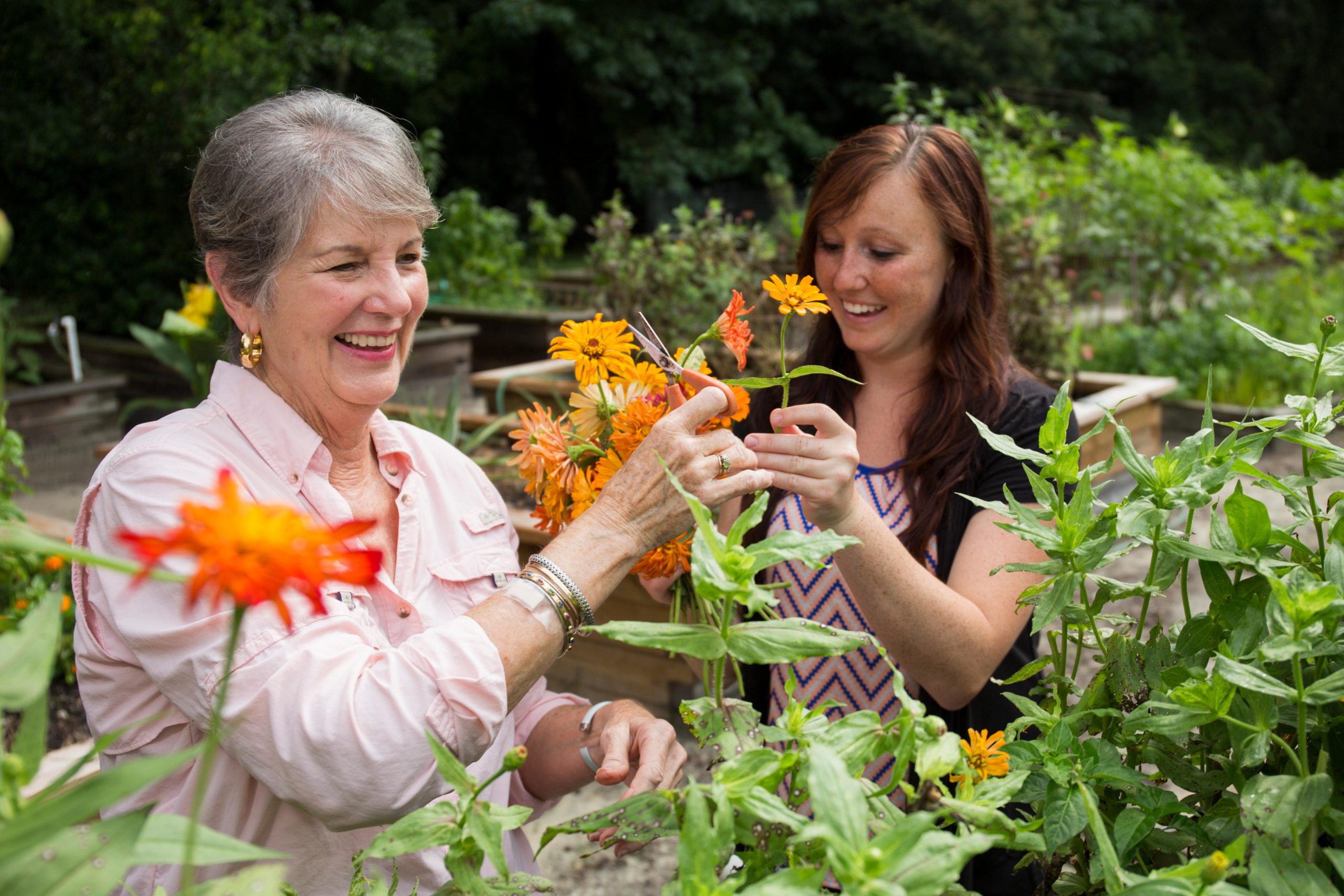
A Study Finds That Gardening Can Improve Your Mental Health
Many long-time gardeners will tell you that the garden is their happy place. According to a new study, many people may benefit from working with plants, even if they’ve never gardened before.
University of Florida researchers discovered that gardening activities reduced stress, anxiety, and sadness in healthy women who attended twice-weekly gardening lessons in a study published in the journal PLoS ONE. None of the research participants had ever gardened.
“Past studies have shown that gardening can help improve the mental health of people who have existing medical conditions or challenges. Our study shows that healthy people can also experience a boost in mental wellbeing through gardening,” said Charles Guy, principal investigator of the study and a professor emeritus in the UF/IFAS environmental horticulture department.
An interdisciplinary team of researchers from the environmental horticulture department, the UF College of Medicine, the UF Center for Arts in Medicine, and the UF Wilmot Botanical Gardens co-authored the paper. The study treatment sessions were hosted at the UF Wilmot Botanical Gardens.
Comparing Gardening and Art for Mental Health Benefits
The study included 32 women ranging in age from 26 to 49. All were in excellent health, which meant that they had been screened for characteristics including chronic health disorders, cigarette use, and drug misuse, and had been prescribed drugs for anxiety or depression. Gardening activities were allocated to half of the participants, while painting sessions were assigned to the other half. Both groups met twice a week for eight weeks. The art group served as a point of comparison with the gardening group.
“Both gardening and art activities involve learning, planning, creativity, and physical movement, and they are both used therapeutically in medical settings. This makes them more comparable, scientifically speaking, than, for example, gardening and bowling or gardening and reading,” Guy explained.
In the gardening sessions, participants learned how to compare and sow seeds, transplant different kinds of plants, and harvest and taste edible plants. Those in the art-making sessions learned techniques such as papermaking, printmaking, drawing, and collage.
Mental Health Improvements and Dosage Effects of Gardening
Participants completed a series of assessments measuring anxiety, depression, stress, and mood. The researchers found that the gardening and art-making groups experienced similar improvements in mental health over time, with gardeners reporting slightly less anxiety than art makers.
Given the relatively small number of participants and the length of the study, the researchers were still able to demonstrate evidence of what medical clinicians would call the dosage effects of gardening — that is, how much gardening someone has to do to see improvements in mental health.
“Larger-scale studies may reveal more about how gardening is correlated with changes in mental health,” Guy explained. “We believe this research shows promise for mental wellbeing, plants in healthcare and in public health. It would be great to see other researchers use our work as a basis for those kinds of studies.”
The idea of using gardening to promote better health and wellbeing — called therapeutic horticulture — has been around since the 19th century.
Gardening’s Deep Connection to Human Evolution
But why does being around plants make us feel good? The answer might be found in the important role of plants in human evolution and the rise of civilization, the study’s authors explain. As a species, we may be innately attracted to plants because we depend on them for food, shelter, and other means of our survival.
Whatever the deeper reasons might be, many of the study participants left the experiment with a newly discovered passion, the researchers noted.
“At the end of the experiment, many of the participants were saying not just how much they enjoyed the sessions but also how they planned to keep gardening,’” Guy said.
Reference: “A pilot randomized controlled trial of group-based indoor gardening and art activities demonstrates therapeutic benefits to healthy women” by Raymond Odeh, Elizabeth R. M. Diehl, Sara Jo Nixon, C. Craig Tisher, Dylan Klempner, Jill K. Sonke, Thomas A. Colquhoun, Qian Li, Maria Espinosa, Dianela Perdomo, Kaylee Rosario, Hannah Terzi and Charles L. Guy, 6 July 2022, PLoS ONE.
DOI: 10.1371/journal.pone.0269248
Never miss a breakthrough: Join the SciTechDaily newsletter.
Follow us on Google and Google News.