
Close Menu
    Facebook X (Twitter) Instagram
    SciTechDaily
    • Biology
    • Chemistry
    • Earth
    • Health
    • Physics
    • Science
    • Space
    • Technology
    Facebook X (Twitter) Pinterest YouTube RSS
    SciTechDaily
    Home»Biology»Genetic Mutations Add Up to Very High Blood Cancer Risk in Three Popular Dog Breeds
    Biology

    Genetic Mutations Add Up to Very High Blood Cancer Risk in Three Popular Dog Breeds

    By PLOSApril 1, 2021No Comments3 Mins Read
    Facebook Twitter Pinterest Telegram LinkedIn WhatsApp Email Reddit
    Share
    Facebook Twitter LinkedIn Pinterest Telegram Email Reddit
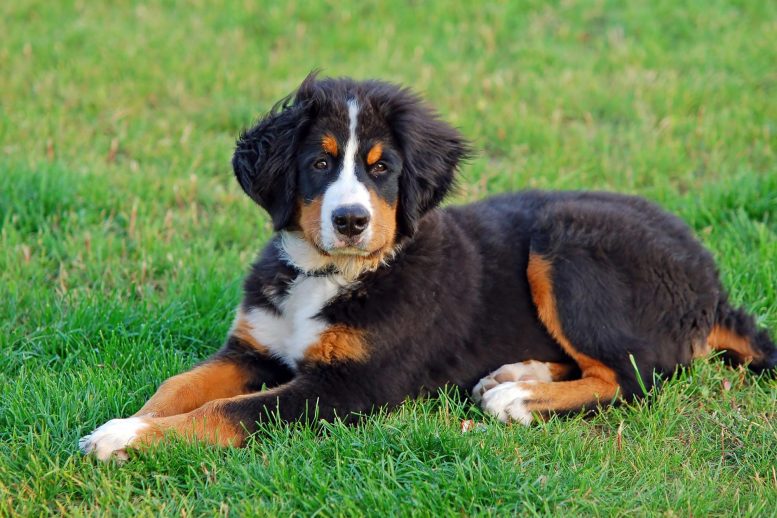
    Bernese Mountain Dog
    Researchers analyzed genomic DNA from blood samples of Bernese mountain dogs, Rottweilers, flat-coated retrievers, and golden retrievers, finding five chromosomal regions that cumulatively increased histiocytic sarcoma risk in these breeds.

    Genomic study finds cancer-linked variants in Bernese mountain dogs, Rottweilers, and retrievers.

    Six genetic variants add up to determine the risk of several blood cancers in pre-disposed dog breeds, according to a study by Benoît Hédan at the University of Rennes and colleagues, publishing on April 8th in the open-access journal PLOS Genetics. The results confirm a known tumor-suppressor gene as a risk factor for histiocytic sarcoma — a rare and aggressive blood cancer that affects both dogs and humans — as well as identifying four new genetic loci associated with the disease.

    The researchers sequenced genomic DNA extracted from blood samples from Bernese mountain dogs, Rottweilers, flat-coated retrievers, and golden retrievers, including 172 dogs diagnosed with histiocytic sarcoma (HS), and 128 unaffected dogs. A genome-wide associate analysis identified five chromosomal regions that cumulatively increased the risk of HS in the three breeds. Each of these regulatory regions accounted for 5-15% of cases, which may indirectly influence cancer risk.

    Cumulative Genetic Risk and Cancer Likelihood

    Dogs carrying five or more of these mutations had a very high risk of developing blood cancer during their lifetime. An expanded analysis including sequences from dogs diagnosed with two other blood cancers found that three of the five chromosomal regions associated with HS had multi-cancer effects, increasing the risk of lymphomas, osteosarcomas in Rottweilers, and mast cell tumors in Bernese mountain dogs and retrievers.
    Bernese Mountain Dogs Cancer Genetics
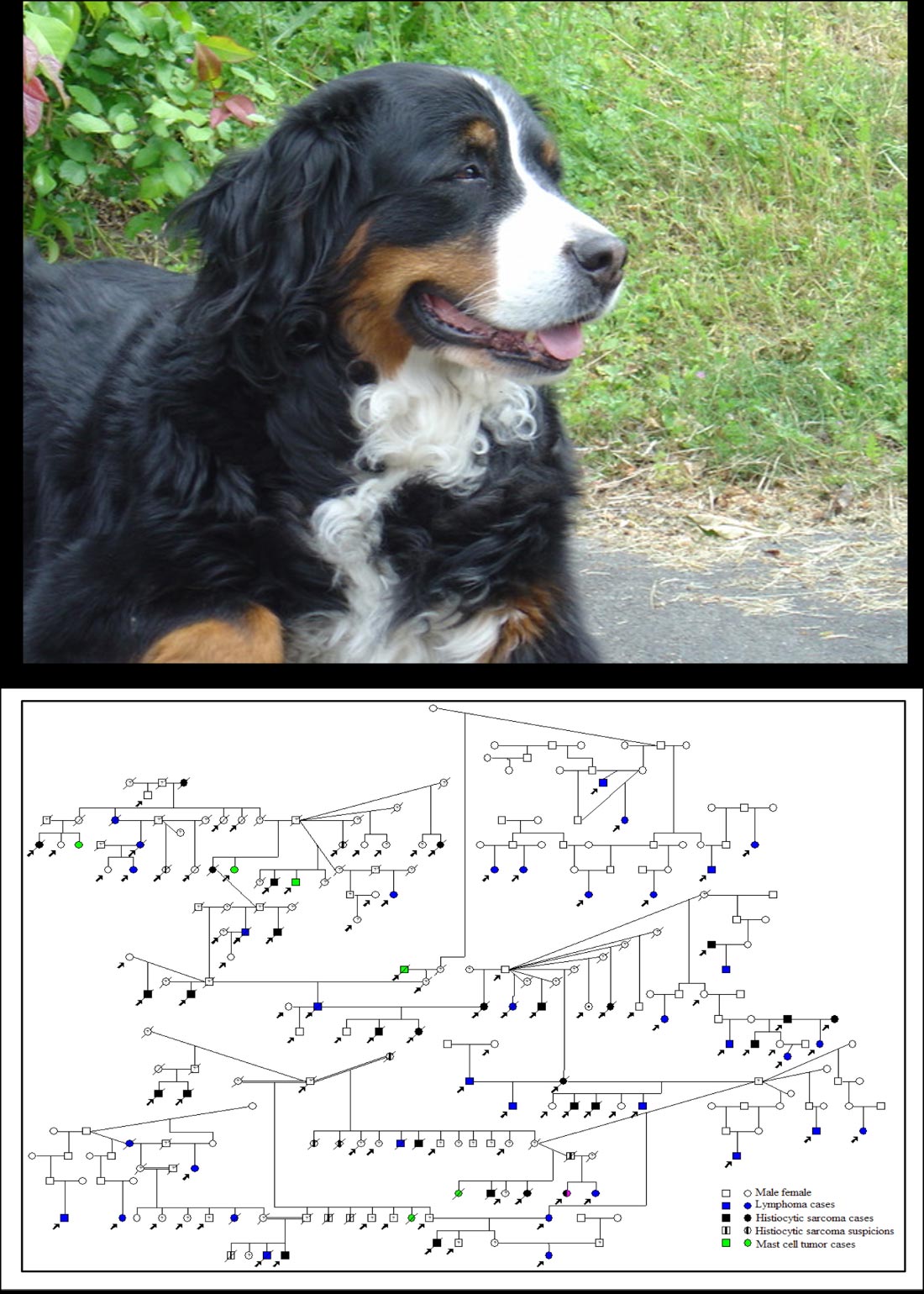
    Bernese mountain dogs present a high incidence of familial cancers: histiocytic sarcoma (in black), lymphoma (in blue), and mast cell tumor (in green). This breed represents a unique model to unravel the genetics of the corresponding human cancers, owing to strong cancer predispositions, due to founder effects and artificial selection applied by humans on dog breeds. Picture taken by Chantal Orellou. Credit: Hédan B et al., 2021, PLOS Genetics

    Canine Cancers Illuminate Human Disease

    Previous studies have used domestic dogs as a model to study the genetics of rare human cancers, but this is the largest multi-breed study of HS conducted to date. The authors hope the results can help inform our understanding of human HS, a cancer for which there are few diagnostic tools and limited clinical options. For example, several of the variants identified in the present study have previously been linked to cancer predisposition, immune system function, or allergies in humans.

    “This study took advantage of dog breed predispositions to decipher the genetic bases of histiocytic sarcoma, a rare human cancer,” the authors conclude. “We showed that the risk to develop this cancer results from the accumulation of genetic alterations from several chromosomal regions linked to immune system function and to different cancers predisposition, providing relevant candidate genes for the corresponding human cancers.”

    Reference: “Identification of common predisposing loci to hematopoietic cancers in four dog breeds” by Benoît Hédan, Édouard Cadieu, Maud Rimbault, Amaury Vaysse, Caroline Dufaure de Citres, Patrick Devauchelle, Nadine Botherel, Jérôme Abadie, Pascale Quignon, Thomas Derrien and Catherine André, 1 April 2021, PLOS Genetics.
    DOI: 10.1371/journal.pgen.1009395

    Funding: CA received fundings from INCa PLBio (Grant “canine rare tumours” funding (N° 2012-103; 2012-2016) and Aviesan (Grant MTS 2012-06) for the work described here. BH received fundings from American Kennel Club Canine Health fundation (Grant N 2446). This research is also funded by ANR (Grant ANR-11-INBS-0003). The funders had no role in study design, data collection and analysis, decision to publish, or preparation of the manuscript.

    Never miss a breakthrough: Join the SciTechDaily newsletter.
    Follow us on Google and Google News.

    Cancer Dogs Genetics PLOS Popular
    Share. Facebook Twitter Pinterest LinkedIn Email Reddit

    Related Articles

    The New Cancer Theory That Could Change Everything We Know

    Biologists Discover a Trigger for Cell Extrusion – Process for Eliminating Unneeded Cells

    Toxic Masculinity: DNA Repeats on Y Chromosome Contribute to a Shorter Lifespan in Male Flies

    Using CRISPR Genetic Technology to Catch Cancer in the Act

    How an Infectious Tumor in Endangered Tasmanian Devils Evolved As It Spread

    New Type of Multi-Tasking Taste Cells Discovered in Taste Buds

    Shocking Research Finds DNA From an Ancient, Unidentified Ancestor Was Passed Down to Humans Living Today

    BubR1 Protein Could Fight Cancer & Aging

    Cancer Cells May Grow More Easily than Thought

    Leave A Reply Cancel Reply

    • Facebook
    • Twitter
    • Pinterest
    • YouTube

    Don't Miss a Discovery

    Subscribe for the Latest in Science & Tech!

    Trending News

    Artificial Sweeteners May Harm Future Generations, Study Suggests

    Splashdown! NASA Artemis II Returns From Record-Breaking Moon Mission

    What If Consciousness Exists Beyond Your Brain

    Scientists Finally Crack the 100-Million-Year Evolutionary Mystery of Squid and Cuttlefish

    Beyond “Safe Levels”: Study Challenges What We Know About Pesticides and Cancer

    Researchers Have Found a Dietary Compound That Increases Longevity

    Scientists Baffled by Bizarre “Living Fossil” From 275 Million Years Ago

    Your IQ at 23 Could Predict Your Wealth at 27, Study Finds

    Follow SciTechDaily
    • Facebook
    • Twitter
    • YouTube
    • Pinterest
    • Newsletter
    • RSS
    SciTech News
    • Biology News
    • Chemistry News
    • Earth News
    • Health News
    • Physics News
    • Science News
    • Space News
    • Technology News
    Recent Posts
    • Geologists Reveal the Americas Collided Earlier Than We Thought
    • 20x Difference: Study Reveals True Source of Airborne Microplastics
    • Scientists Uncover Hidden Force Powering Yellowstone’s Supervolcano
    • This Metal Melts in Your Hand – and Scientists Just Discovered Something Strange
    • Why Losing Too Much Fat Can Be Just As Dangerous as Obesity
    Copyright © 1998 - 2026 SciTechDaily. All Rights Reserved.
    • Science News
    • About
    • Contact
    • Editorial Board
    • Privacy Policy
    • Terms of Use

    Type above and press Enter to search. Press Esc to cancel.