
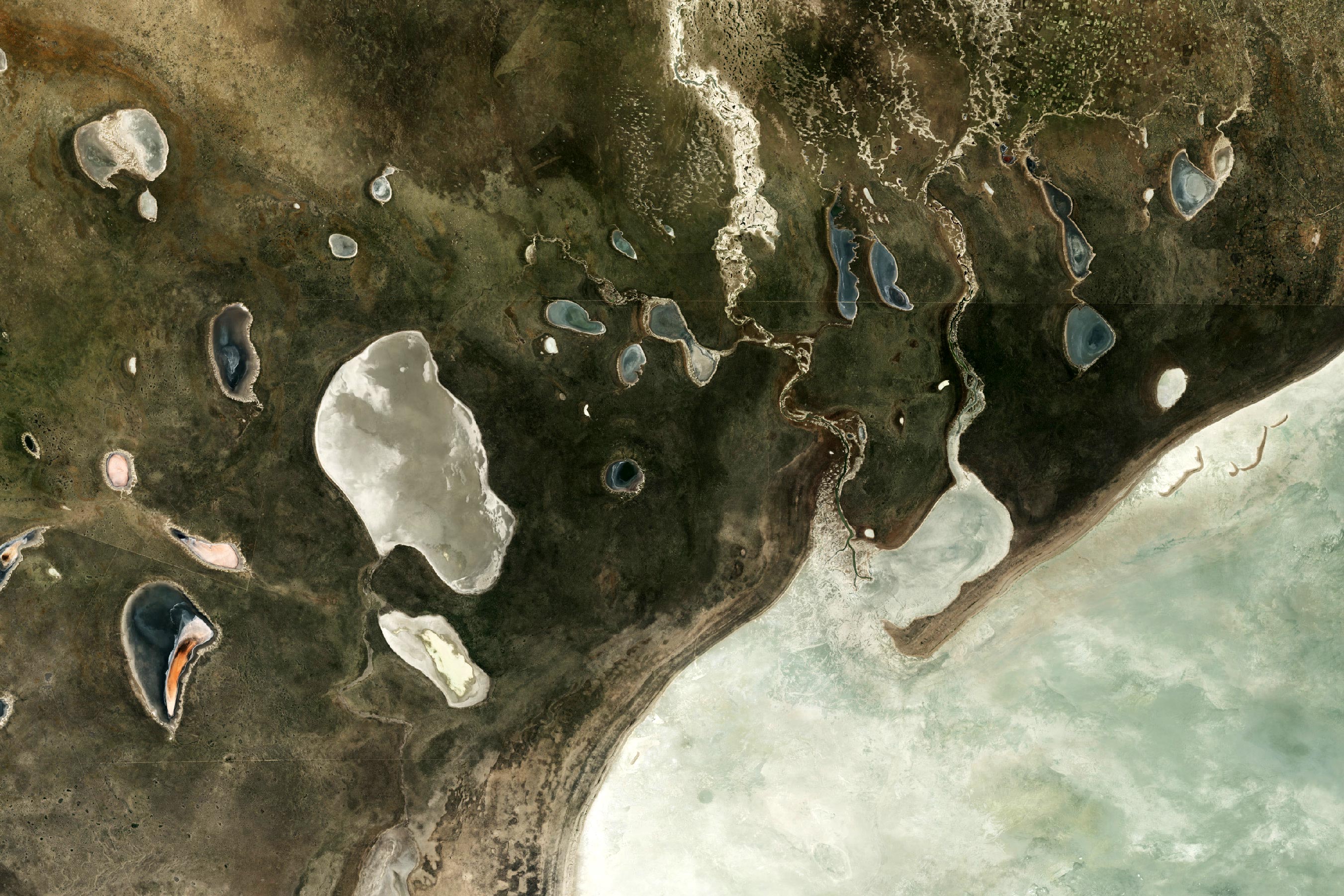

Satellite imagery and local data helped researchers assess how landscape features, such as watering holes and vegetation, influence elephant movement.
In northwestern Namibia, the survival of endangered African elephants hinges on conservation corridors linking habitats. Researchers utilized GPS and satellite data to analyze elephant movements within and between protected areas like Etosha National Park. They discovered key connective routes and the critical influence of water sources and vegetation on elephant migration patterns, highlighting gender-specific behaviors and the necessity for diverse conservation strategies.
Elephant Conservation in Namibia
The wide open, arid lands of northwestern Namibia are home to the world’s largest living land animal: the African elephant (Loxodonta africana). Like many large mammals, these iconic elephants are endangered, threatened by expanding agriculture, urbanization, human-elephant conflict, and poaching. As their populations continue to decline, researchers have turned to conservation corridors—links between habitats—as a key strategy to strengthen the population’s chance of survival.
In a new study, researchers used a combination of GPS tracking data and satellite imagery to map elephant movement throughout the landscape in northwestern Namibia. They found that elephants moved freely within the region’s protected areas, including Etosha National Park and community-managed lands in the neighboring Kunene region, but that there was little movement between each protected area. The study, led by Aung Chan of Colorado State University, was published recently in the journal Landscape Ecology.
Importance of Landscape Connectivity
Landscape connectivity matters from both an ecological and genetic perspective. Spanning more than 22,000 square kilometers (8,500 square miles), Etosha National Park is almost as big as New Hampshire. But a single park could never sustain a whole species. Small populations of mammals within an isolated landscape face higher risks of inbreeding or being wiped out by a single catastrophic environmental event.
Chan and colleagues used eight years of GPS tracking data to create a “movescape” that depicted not just where elephants were, but how long they stayed and how fast they moved on the landscape. The data revealed only three connective routes between Etosha National Park and protected lands in the Kunene region.
Key Influencers on Elephant Movements
Next, the researchers used satellite imagery and other local data to assess how landscape features influenced elephant movement. The presence of water was the most important factor determining how elephants moved. In the dry landscapes of Namibia, elephants ambled along rivers and gathered around watering holes. The image above (upper), acquired on March 7, 2024, with the OLI-2 (Operational Land Imager-2) on Landsat 9, shows several such watering holes and rivers within Etosha National Park and areas north. It includes several pans—depressions in the ground with deposits of salt—including a section of the Etosha Pan, the largest salt pan in Africa.

Beyond watering holes, elephants tend to stay in flatter areas, away from towns, and in areas with more available food. The researchers used NDVI (Landsat-derived Normalized Difference Vegetation Index) as a proxy for how much food was available, as NDVI measures the health and density of vegetation—the main diet for these large herbivores. The false-color image at the top of the article (lower) shows the area’s NDVI on March 7, 2024, during a time of year when vegetation is especially abundant.
Variability in Elephant Behavior
Importantly, not all elephants in the study moved the same. Some behavior was split across gendered lines; for example, NDVI influenced the female elephant movement far more than it did the male elephant movement. According to Chan, this makes ecological sense. Female elephants tend to stay with their family group, which includes calves and juveniles, and they need more resources to keep everyone fed. “Male elephants, in general, tend to disperse and take a lot more risk to achieve their reproductive and fitness goals than the family group,” Chan said.
There was also plenty of variation between individual African elephants. Chan said that being able to see the range of behaviors is important because it can help land managers triage their efforts to suit common behaviors (in this case, focusing on conserving areas with watering holes) while also accounting for rarer behaviors that may be critical for population health (in this case, marking the places where elephants moved between regions). According to Chan: “We wouldn’t have found those connective corridors between the two regions if our approach didn’t account for individual variations.”
Reference: “Identification of landscape features structuring movement connectivity for Namibian elephants” by A. N. Chan, P. Leimgruber, K. Werner, J. Stabach and G. Wittemyer, 6 August 2024, Landscape Ecology.
DOI: 10.1007/s10980-024-01957-2
NASA Earth Observatory images by Wanmei Liang, using Landsat data from the U.S. Geological Survey.
Never miss a breakthrough: Join the SciTechDaily newsletter.
Follow us on Google and Google News.