
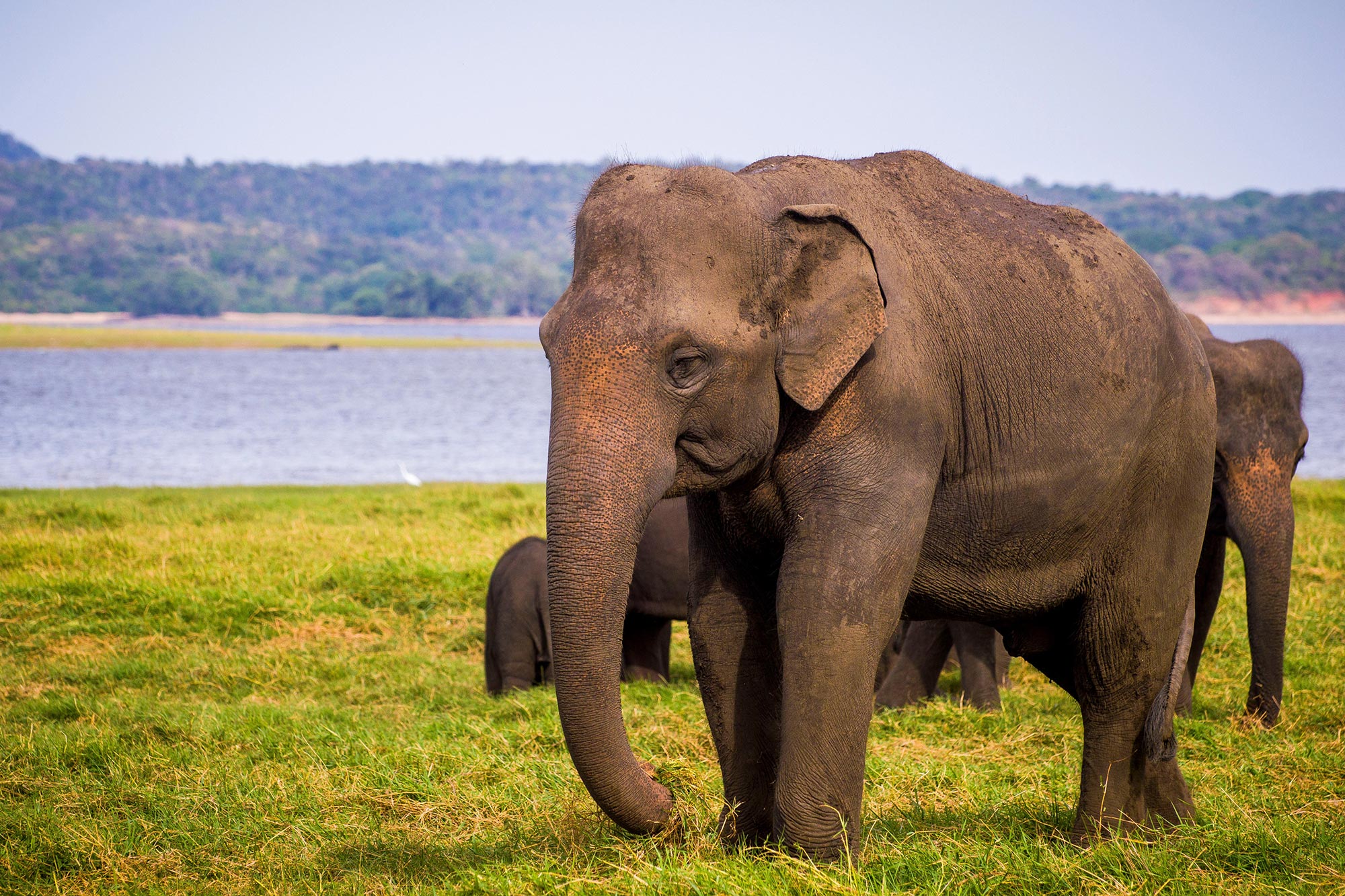
Study examining habitats across centuries reveals an urgent need for sustainable land use and conservation strategies to avoid dangers for wildlife and human communities.
The Asian elephant has lost over two-thirds of its historical habitat in the past 300 years due to human land-use practices such as farming and timber extraction, according to a study led by a University of California San Diego researcher. This loss, a major factor in present-day human-elephant conflicts, highlights the need for effective conservation strategies, as current protected areas might be insufficient for the remaining elephant populations.
More than 3 million square kilometers (116,000 square miles) of the Asian elephant’s historic habitat range has been lost in just three centuries, a new report from an international scientific team led by a University of California, San Diego (UCSD) researcher reveals. This dramatic decline may underlie present-day conflicts between elephants and people, the authors argue.
Developing new insights from a unique data set that models land-use change over 13 centuries, a research team led by new UCSD faculty member Shermin de Silva found that habitats suitable for Asian elephants have been cut by nearly two-thirds within the past 300 years.
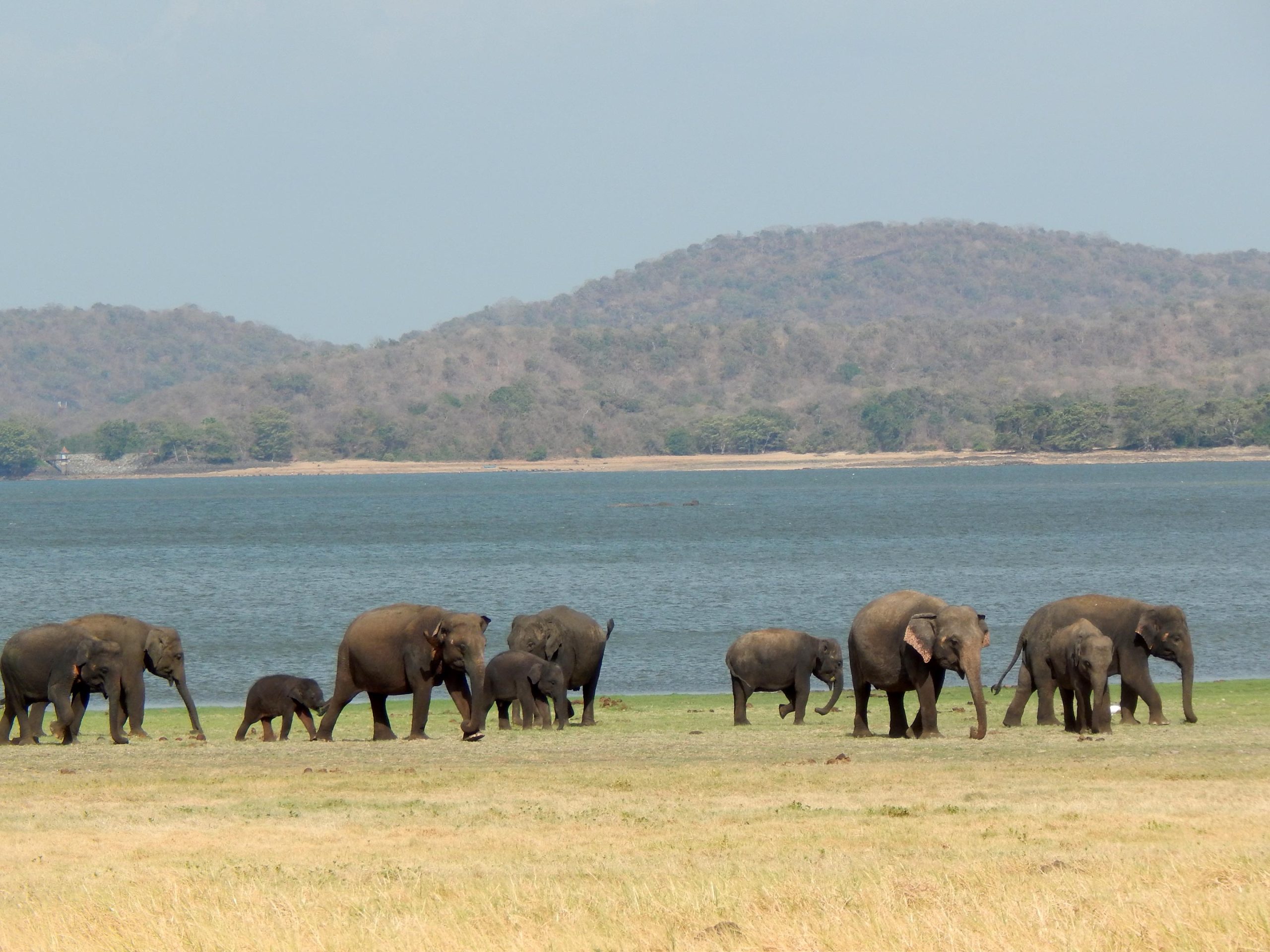
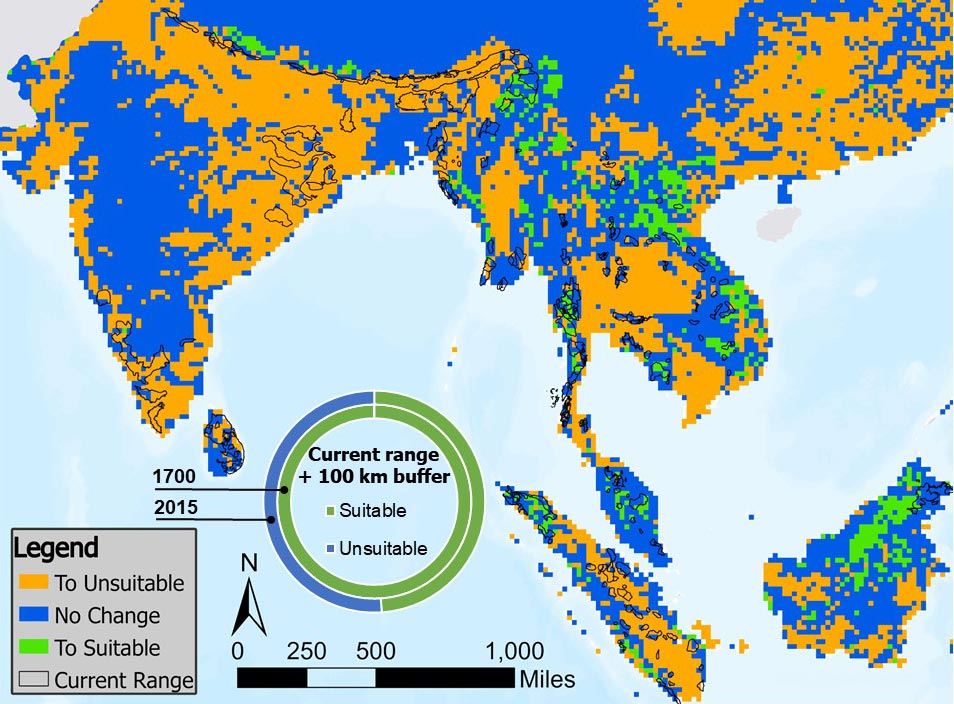
The largest living land animal in Asia, endangered Asian elephants inhabited grasslands and rainforest ecosystems that once spanned the breadth of the continent. Analyzing land-use data from the years 850 to 2015, the researchers describe in the journal Scientific Reports a troubling situation in which they estimate that more than 64% of historic suitable elephant habitat across Asia has been lost. While elephant habitats remained relatively stable prior to the 1700s, colonial-era land-use practices in Asia, including timber extraction, farming and agriculture, cut the average habitat patch size more than 80%, from 99,000 to 16,000 square kilometers (38,000 to 6,200 square miles).
Animation tracking the loss of suitable habitat for Asian elephants (yellow) between 1700-2015. A study published in Scientific Reports led by UCSD examining habitats across centuries reveals an urgent need for sustainable land-use and conservation strategies to avoid dangers for wildlife and human communities. Credit: Ashley Weaver
Shrinking Suitable Habitats and Rising Conflicts
The study also suggests that the remaining elephant populations today may not have adequate habitat areas. While 100% of the area within 100 kilometers (62 miles) of the current elephant range was considered suitable habitat in 1700, the proportion has since declined to less than 50% by 2015. This sets up a high potential for conflicts with people living in those areas as elephant populations alter their behavior and adjust to more human-dominated spaces.
“In the 1600s and 1700s there is evidence of a dramatic change in land use, not just in Asia, but globally,” said de Silva, an assistant professor in the School of Biological Sciences’ Department of Ecology, Behavior and Evolution, and founder of the nonprofit Trunks & Leaves. “Around the world, we see a really dramatic transformation that has consequences that persist even to this day.”
Also contributing to the study were researchers from across the globe, including Smithsonian’s National Zoo and Conservation Biology Institute, University of Nottingham Malaysia, Frankfurt Zoological Society, Vietnam National University of Forestry, Wild Earth Allies, Zoological Society of London, and Colby College.
“This study has important implications for our understanding of the history of elephant landscapes in Asia and it lays the groundwork for better understanding and modeling the potential future of elephant landscapes as well,” said Philip Nyhus, Professor of Environmental Studies at Colby College and one of the study co-authors.
In addition to Nyhus, three Colby undergraduate students contributed to the study. “This was a collaborative and multi-institutional effort,” added Nyhus, “and I was proud that Colby students contributed significantly to the models and analyses used in the study.”
Elephants as Indicators of Ecosystem Changes
Beyond the immediate impact on Asian elephants, the study offers the results as a mechanism to assess land-use practices and much-needed conservation strategies for all of the area’s inhabitants.
“We’re using elephants as indicators to look at the impact of land-use change on these diverse ecosystems over a longer time scale,” said de Silva.
Human impacts leading to reductions in the habitat ranges of several land-based mammal species have been well documented in the recent past. Climate change is also thought to have accelerated this decline over the past century. But assessing the impact of such changes on wildlife over the long term has been difficult to study due to the lack of historical records.
The newly published findings were based on information from the Land-Use Harmonization (LUH) data set, produced by researchers at the University of Maryland. The data set provides historical reconstructions of various types of land uses—including forests, crops, pastures, and other types—that reach back to the ninth century.
“We used present-day locations where we know there are elephants, together with the corresponding environmental features based on the LUH data sets, to infer where similar habitats existed in the past,” said de Silva. “In order for us to build a more just and sustainable society, we have to understand the history of how we got here. This study is one step toward that understanding.”
The research team notes that the historical range of elephants is likely to have extended well beyond protected areas, which are of insufficient size to support elephant populations in Asia. They included lands under traditional systems of management that were altered within the past three centuries. The loss of these traditional practices, the authors suggest, may be a major reason behind the loss of habitat.
Much more work, the authors argue, is needed to understand possible changes facing these habitats in the future. Considering the people—along with wildlife—at the frontiers of elephant-human conflict zones, the researchers caution that attempts at habitat restoration need to be guided under a reckoning of social and environmental justice for historically marginalized communities.
“Exploring the relationship between past land management practices and the distributions of elephant ecosystems would be a useful direction for future studies from the perspectives of both ecological and social policy,” they note in the report.
Reference: “Land‑use change is associated with multi‑century loss of elephant ecosystems in Asia” by Shermin de Silva, Tiffany Wu, Philip Nyhus, Ashley Weaver, Alison Thieme, Josiah Johnson, Jamie Wadey, Alexander Mossbrucker, Thinh Vu, Thy Neang, Becky Shu Chen, Melissa Songer and Peter Leimgruber, 27 April 2023, Scientific Reports.
DOI: 10.1038/s41598-023-30650-8
The full author list of the study includes: Shermin de Silva, Tiffany Wu, Philip Nyhus, Ashley Weaver, Alison Thieme, Josiah Johnson, Jamie Wadey, Alexander Mossbrucker, Thinh Vu, Thy Neang, Becky Shu Chen, Melissa Songer and Peter Leimgruber.
Never miss a breakthrough: Join the SciTechDaily newsletter.
Follow us on Google and Google News.