
Close Menu
    Facebook X (Twitter) Instagram
    SciTechDaily
    • Biology
    • Chemistry
    • Earth
    • Health
    • Physics
    • Science
    • Space
    • Technology
    Facebook X (Twitter) Pinterest YouTube RSS
    SciTechDaily
    Home»Earth»Group of Animals Fundamentally Changed Global Ecology and Environments
    Earth

    Group of Animals Fundamentally Changed Global Ecology and Environments

    By Bill Hathaway, Yale UniversityAugust 3, 2018No Comments2 Mins Read
    Facebook Twitter Pinterest Telegram LinkedIn WhatsApp Email Reddit
    Share
    Facebook Twitter LinkedIn Pinterest Telegram Email Reddit
    Group of Animals Fundamentally Changes Global Ecology
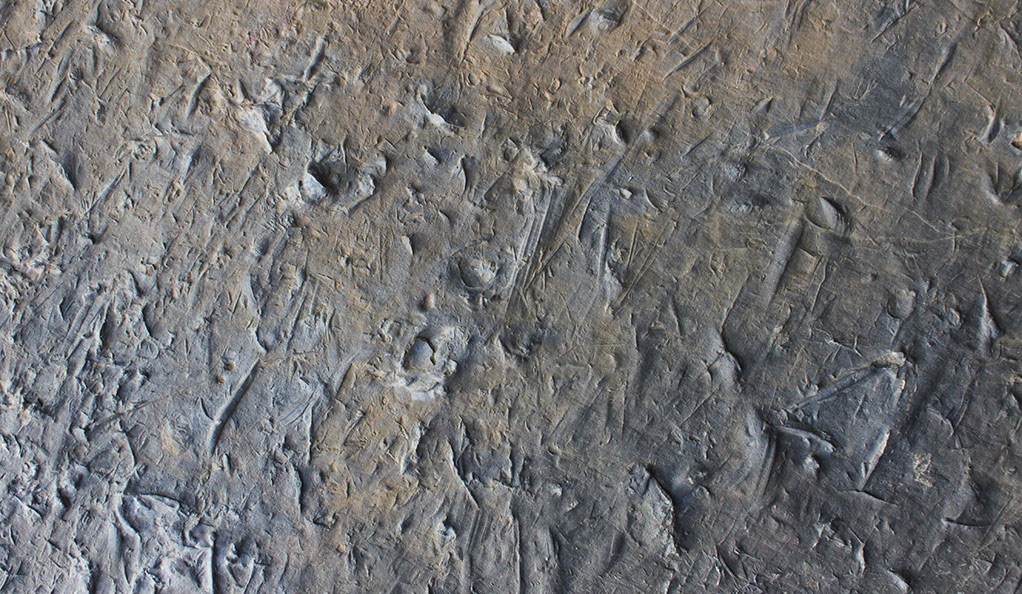
    Gouges formed in the seafloor by currents can only form when burrowing animals are scarce or fail to churn sediments efficiently. Credit: Lidya Tarhan

    On an ancient seafloor, burrowing animals appeared and churned up sediment as a sort of opening act for the Cambrian explosion, the rapid emergence and spread of animal species that began 540 million years ago.

    However, this diverse group of animals, which would fundamentally change global ecology and environments, was much slower to evolve and expand their range than their distant cousins living closer to the surface and swimming through the oceans, Yale geologist Lidya Tarhan reports on August 1 in the journal Geology.

    “The two events didn’t quite sync up in geological time,” Tarhan said.

    Today burrowing animals, by churning up sediment, dramatically shape the nature of the seafloor, the chemical composition of the seas, and the development of communities and hospitable environments. Over geological time, they have even affected the balance of oxygen and carbon in the atmosphere and influenced the world’s climate. These animals so profoundly modify global environments that scientists call them ecosystem engineers.

    Tarhan’s examination of fossilized seafloor, spanning the time of the Cambrian explosion to the present day, revealed both traces of the movements of animals and, equally important, characteristics of the seafloor that form only in sediments largely untouched by burrowing animals. This study shows that, although many animal species and ecologies did appear suddenly during the Cambrian explosion, there was no evolutionary “Big Bang” in the activity of burrowing animals, which, in contrast, increased gradually in numbers, range, and intensity over hundreds of millions of years.

    The work was funded by the National Science Foundation.

    Reference: “Phanerozoic shallow marine sole marks and substrate evolution” by Lidya G. Tarhan, 1 August 2018, Geology.
    DOI: 10.1130/G45055.1

    Never miss a breakthrough: Join the SciTechDaily newsletter.
    Follow us on Google and Google News.

    Ecology Geology Yale University
    Share. Facebook Twitter Pinterest LinkedIn Email Reddit

    Related Articles

    23 Stunning Specimens of California Gold on Display

    Yale Study Shows Geoengineering the Climate Could Have Dangerous Consequences

    Mongolian Microfossils Shed Light on the Rise of Animals

    Arctic Sea Ice Loss is Impacting Atlantic Ocean Water Circulation System

    Yale Researchers Find a Soft Spot in the Nazca Plate

    Temperature of Ancient Seas May Shape Global Climate

    Flat-Slab Subduction in South America Mirrors Formation of Rocky Mountains

    “Iron-Rich Blobs” Penetrate Deep Into Earth’s Mantle

    Evidence Suggests that Earth May Be Headed Toward an Irreversible Change in the Biosphere

    Leave A Reply Cancel Reply

    • Facebook
    • Twitter
    • Pinterest
    • YouTube

    Don't Miss a Discovery

    Subscribe for the Latest in Science & Tech!

    Trending News

    Scientists Uncover Promising New Strategy To Stop Parkinson’s in Its Tracks

    Experts Reveal the Surprising Cancer Link Behind a Common Vitamin

    This Strange “Golden Orb” Found 2 Miles Deep Stumped Scientists for Years

    Giant “Last Titan” Dinosaur Discovered in Thailand Was Bigger Than 9 Elephants

    This “Longevity Gene” May Protect the Brain From Aging and Dementia

    Common Cleaning Chemical Could Triple Your Risk of a Dangerous Liver Disease

    Scientists Discover Bizarre 100-Million-Year-Old Insect With Giant Claws

    Scientists Discover “Good” Gut Microbes That Could Protect Against Autism and ADHD

    Follow SciTechDaily
    • Facebook
    • Twitter
    • YouTube
    • Pinterest
    • Newsletter
    • RSS
    SciTech News
    • Biology News
    • Chemistry News
    • Earth News
    • Health News
    • Physics News
    • Science News
    • Space News
    • Technology News
    Recent Posts
    • Tea or Coffee? Your Daily Choice Could Affect Osteoporosis Risk
    • Scientists Discover Brain Pathway That May Slow Parkinson’s Disease – but Only in Women
    • Vitamin C May Fight Cancer in a Surprising Way
    • Light-Matter Particles Could Revolutionize AI Computing
    • Scientists Warn Many Insects May Not Survive a Warming World
    Copyright © 1998 - 2026 SciTechDaily. All Rights Reserved.
    • Science News
    • About
    • Contact
    • Editorial Board
    • Privacy Policy
    • Terms of Use

    Type above and press Enter to search. Press Esc to cancel.