
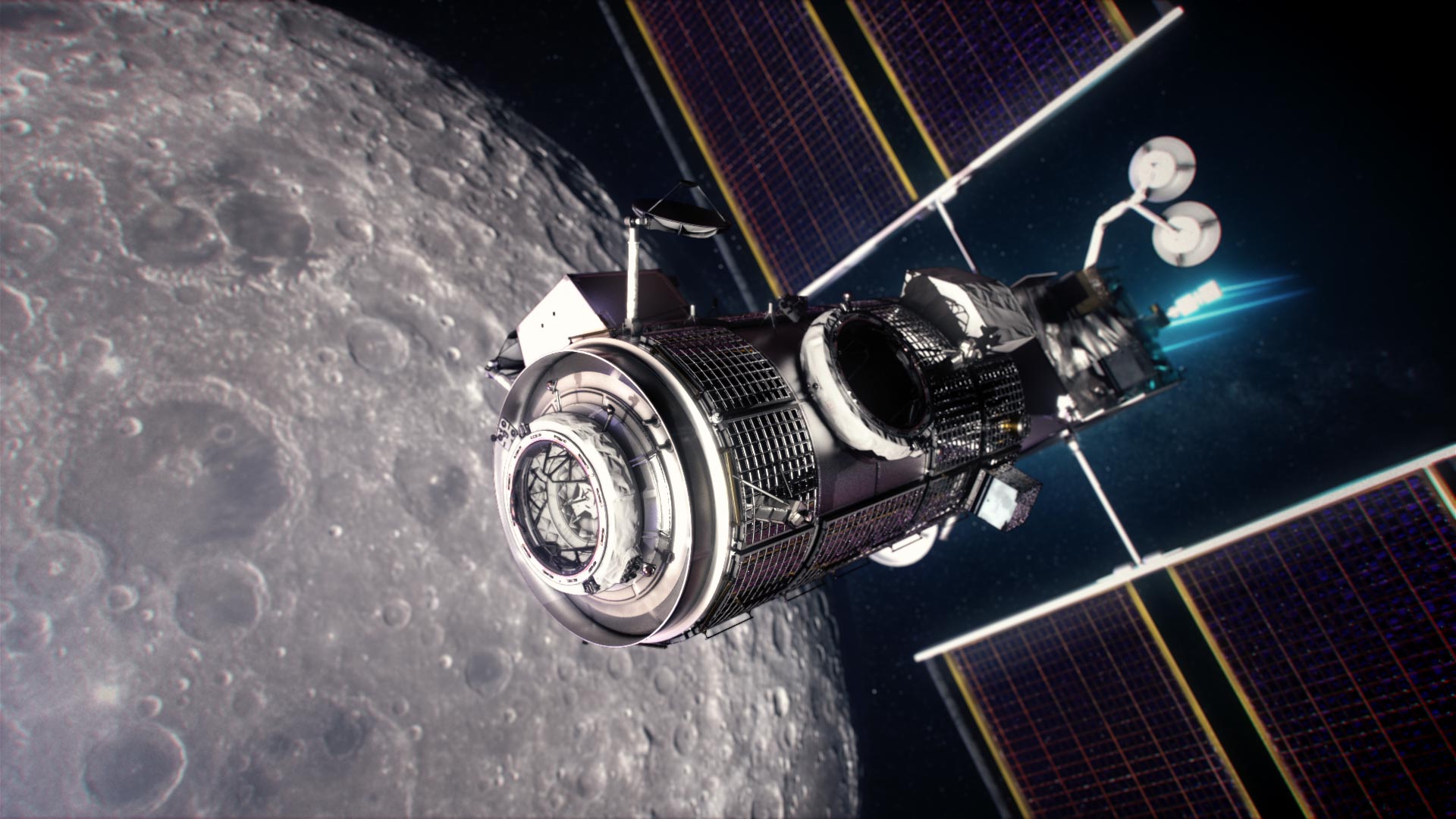
A key piece of NASA’s lunar future has landed in the U.S. – the HALO module, destined for the Moon’s orbit as part of Gateway, a small space station that will serve as a hub for Artemis missions.
Recently shipped from Italy to Arizona, HALO will be outfitted and later launched with its twin module on a SpaceX Falcon Heavy. Once in orbit, HALO will provide living space and vital systems for astronauts, acting as a control center, science lab, and link to Earth.
Gateway Arrives in the U.S.
A key part of Gateway, NASA’s planned space station that will orbit the Moon, has arrived in the United States, bringing the mission one step closer to launch. Once in lunar orbit, Gateway will support the Artemis program, which aims to return astronauts to the Moon and lay the groundwork for future human missions to Mars.

HALO Module Lands in Arizona
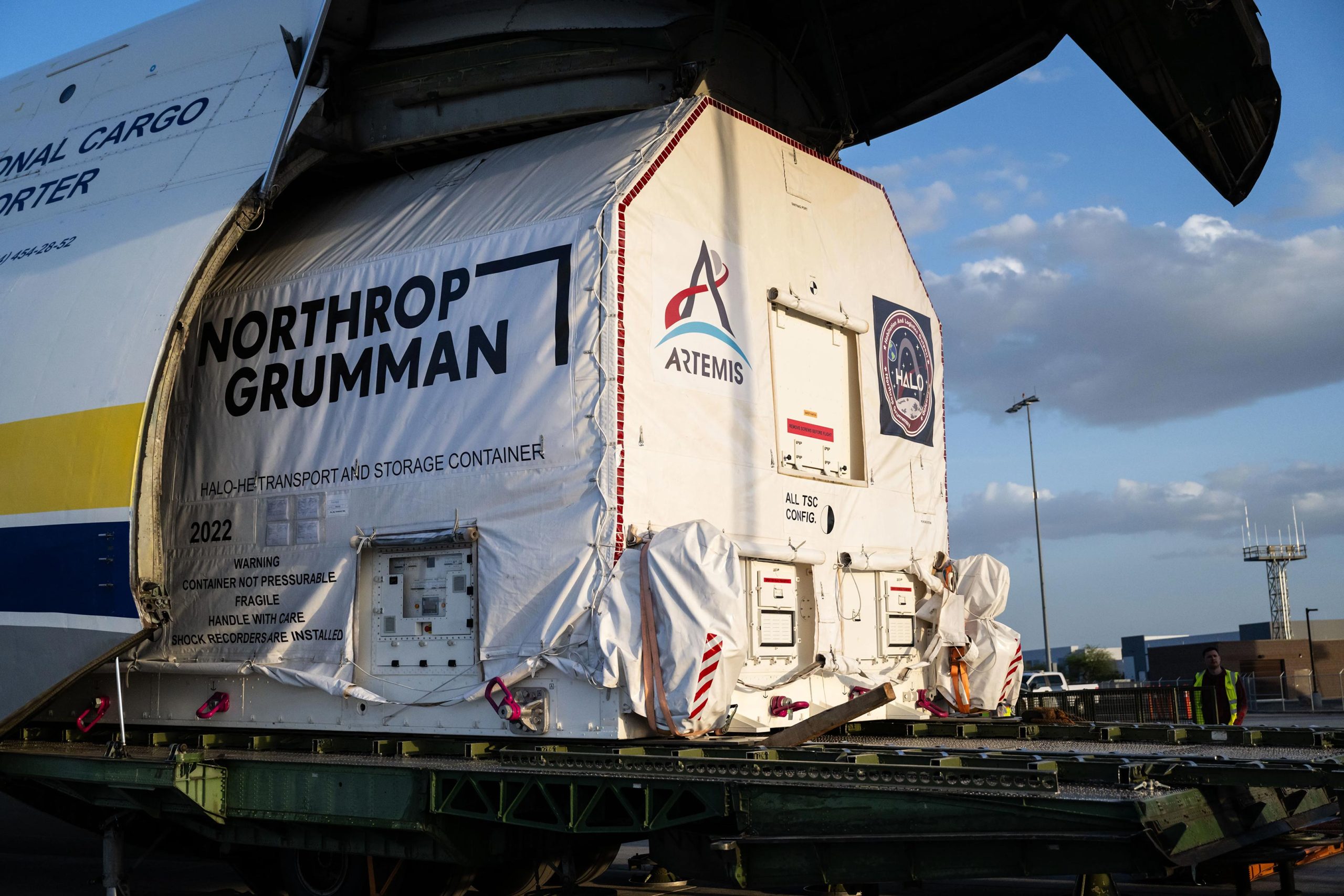
On April 1, HALO (Habitation and Logistics Outpost), Gateway’s first pressurized module and one of its two main building blocks, arrived in Arizona. After traveling from Thales Alenia Space in Turin, Italy, the module will now undergo final outfitting at Northrop Grumman’s integration and test facility in Gilbert. Once complete, HALO will be joined with Gateway’s Power and Propulsion Element at NASA’s Kennedy Space Center in Florida. The two modules are scheduled to launch together on a SpaceX Falcon Heavy rocket.
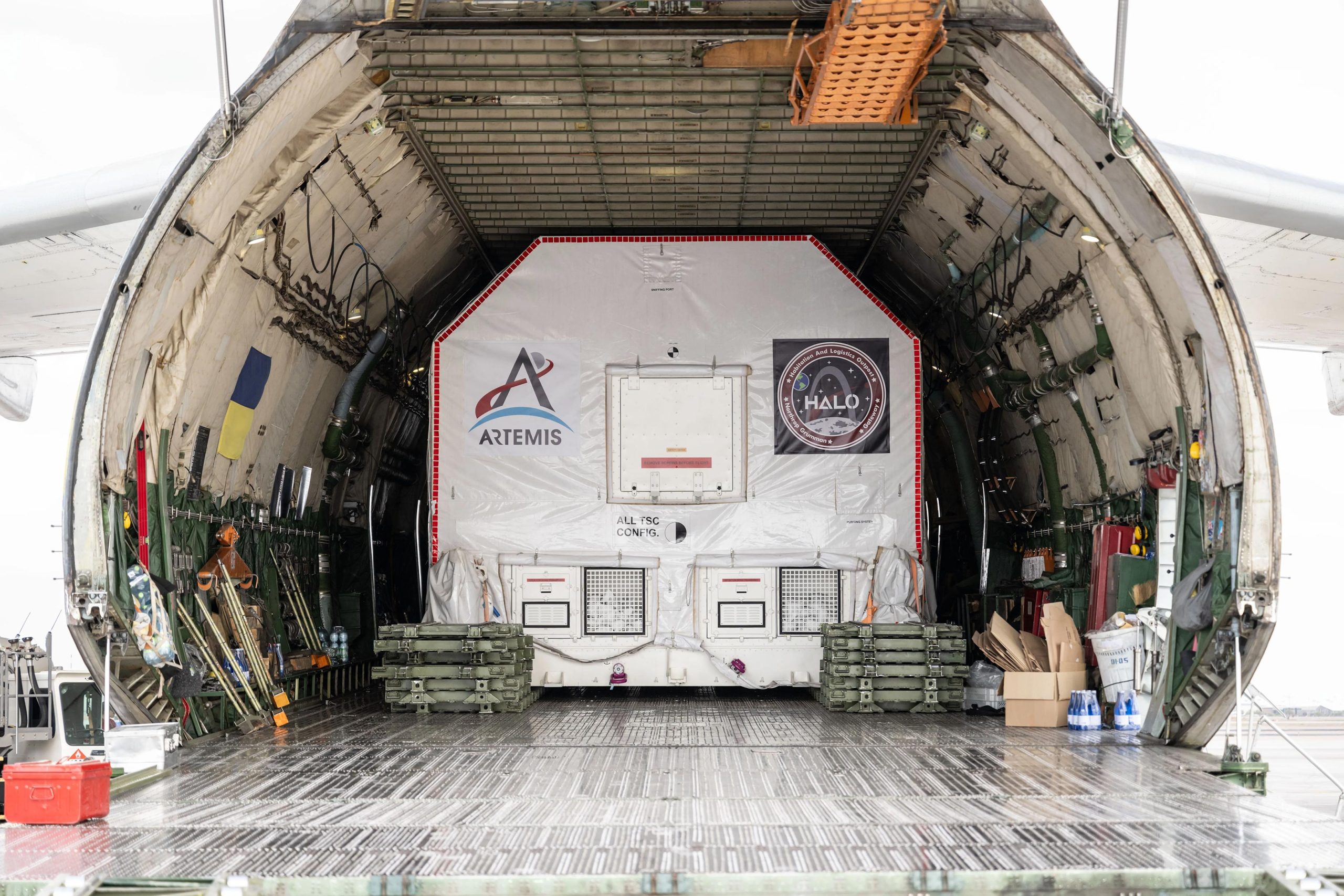
HALO’s Role in Artemis Missions
HALO will serve as living and working space for Artemis astronauts during their time in lunar orbit. It will provide essential systems including command and control, data handling, energy storage, power distribution, thermal regulation, and high-speed communication through ESA’s Lunar Link system. The module will also feature docking ports for visiting spacecraft such as NASA’s Orion, lunar landers, and supply modules. In addition, it will host internal and external science experiments, supporting research and technology testing in the challenging conditions of deep space.

Gateway’s Bigger Purpose
Gateway is a small, crewed space station that NASA is building in orbit around the Moon as part of the Artemis program. Developed in collaboration with international and industry partners, Gateway will serve as a critical outpost for sustained lunar exploration. It will provide living quarters, science labs, and docking ports for spacecraft, enabling astronauts to live and work in deep space as they prepare for surface missions on the Moon. The station will also facilitate regular cargo deliveries, crew rotations, and serve as a waypoint for missions venturing beyond the Moon.
Beyond its role in lunar exploration, Gateway is designed to be a long-term platform for science and international collaboration. Its unique position in lunar orbit will allow for continuous research in the deep space environment, where scientists can test technologies, study the effects of long-duration spaceflight, and develop systems for communication, power, and life support in preparation for future missions to Mars. As a proving ground for deep space exploration, Gateway will help pave the way for the next giant leap: sending humans to the Red Planet.
Never miss a breakthrough: Join the SciTechDaily newsletter.
Follow us on Google and Google News.