
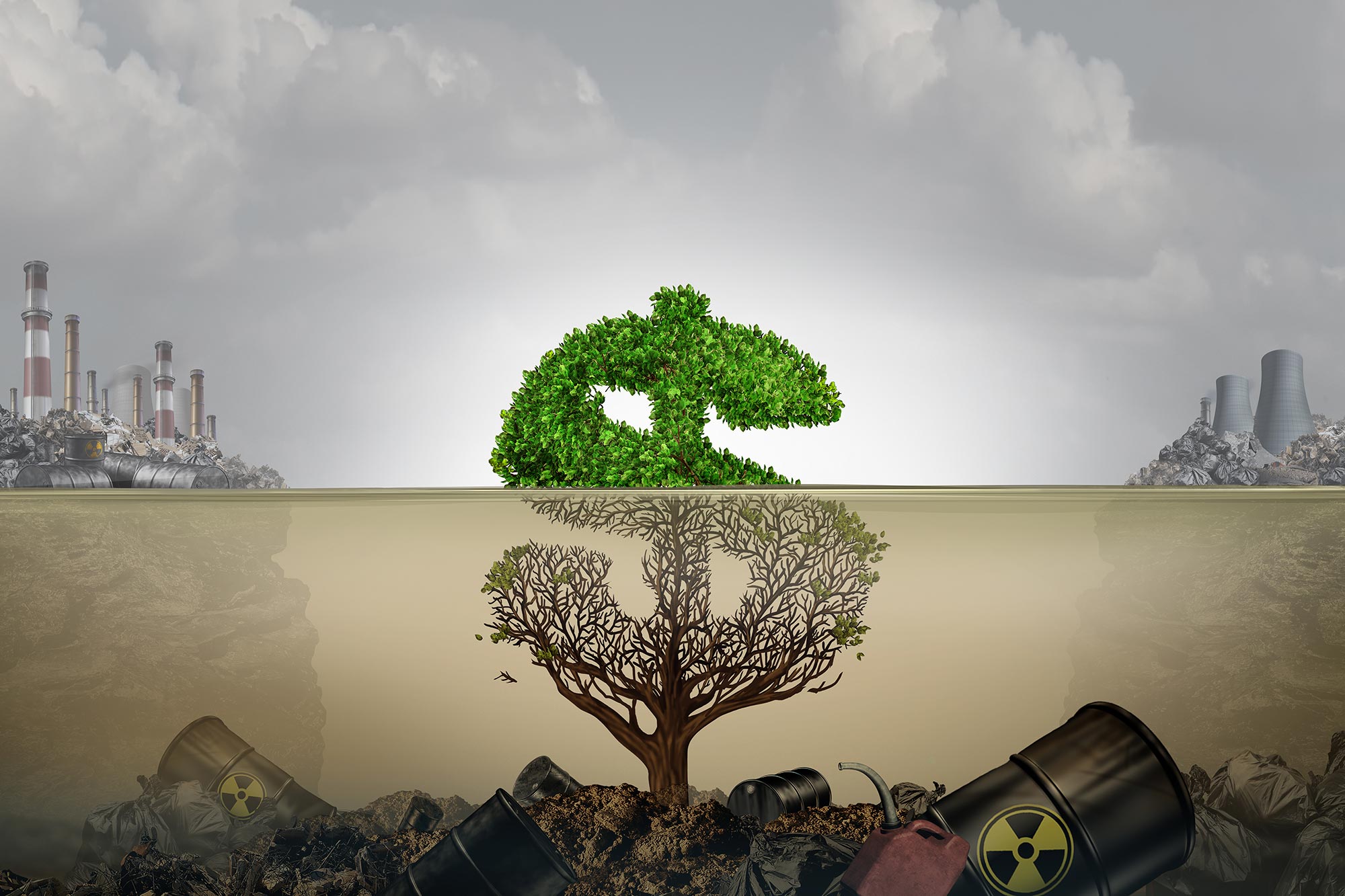
Scientists have uncovered a hidden bias in climate pledges that rewards big polluters and penalizes vulnerable nations.
Past calculations allowed high emitters to dodge responsibility and delay action. The new approach emphasizes historical responsibility, demanding steep cuts from wealthy countries and funding for poorer ones.
Climate Goals Under Scrutiny
Climate efforts are falling short of the Paris Agreement’s targets. To stay on track, each country is expected to contribute its ‘fair share’ of action. Yet researchers at Utrecht University uncovered a flaw in how fairness and ambition have been judged so far: “previous studies assessing countries climate ambition share a feature that rewards high emitters at the expense of the most vulnerable ones.” This discovery could have major consequences for global climate strategies. The study, led by Yann Robiou du Pont, appeared on September 3 in Nature Communications.
The team explains that past assessments were distorted because they relied on constantly moving baselines of rising emissions. Their new approach avoids postponing emission cuts and instead measures the immediate ambition gap that must be closed through stronger policies and financial support. With existing pledges still falling short, the findings highlight how courts are increasingly stepping in to ensure governments meet both climate and human rights duties. According to the study, the largest emitters, including the G7 nations, Russia, and China, bear far greater responsibility due to their historic contributions and greater financial resources.
Approach Based on Historical Responsibility Needed
Fair-share allocations divide the global carbon budget among nations according to principles such as historical responsibility, capacity, and development needs, providing each country with a proportional share of allowable emissions. Within the Paris Agreement framework, these allocations define what nations should commit to in order to keep global warming to 1.5°C and well below 2°C.
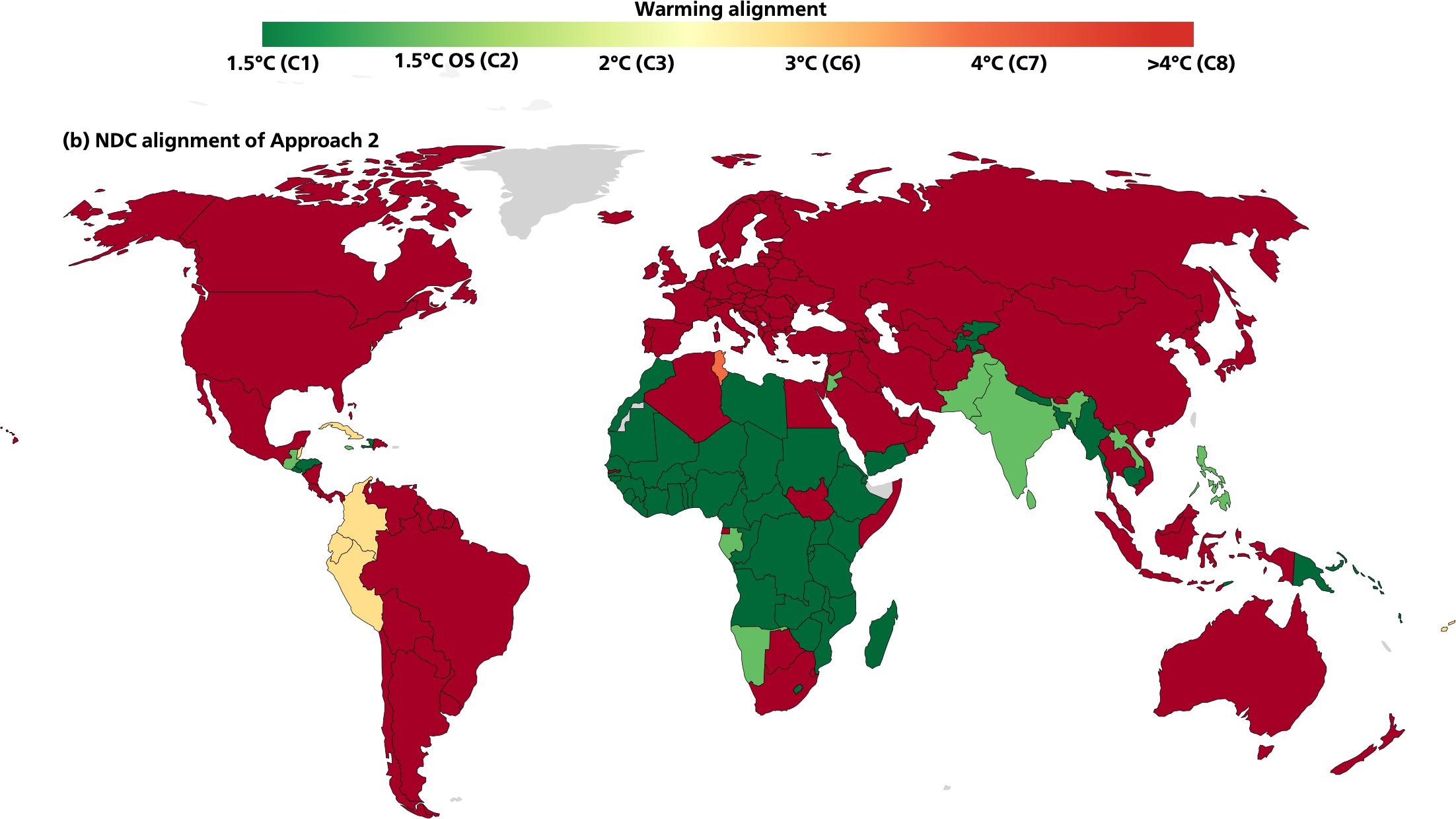
By calculating each ambition and fairness assessment from the present situation, we increasingly let major polluting countries off the hook. This pushes a heavier burden onto countries that have done the least to cause the crisis, or, more realistically, brings the world towards catastrophic levels of global warming. Therefore, the authors propose calculating fair-share emissions allocations immediately based on each country’s historical contributions to climate change and their capacity to act.
Accounting for immediate responsibilities sets a new baseline. It would cause some countries’ emission paths to suddenly and drastically change instead of following a smooth decline. This approach would demand steep, immediate cuts mostly from wealthier, high-emitting countries. Since the cuts needed from these countries are too large to achieve locally, it requires substantial financial support for additional mitigation in poorer countries.
Importantly, removing the systemic reward for inaction affects the ranking of countries’ gap between their current pledges and fair emissions allocations, even within the group of high-income countries. Then, the USA, Australia, Canada, the UAE, and Saudi Arabia have the greatest gap, requiring the most additional effort and finance. Much of the equity discussions is about developed versus developing countries, but this paper is particularly relevant for developed countries being rewarded for inaction compared to other and more ambitious developed countries.
Role in Climate Litigation
Fair-share studies like this one are increasingly used in climate litigation, such as the KlimaSeniorinnen case before the European Court of Human Rights. The court recognized that insufficient national climate action constitutes a breach of human rights and that countries must justify how their climate pledges are a fair and ambitious contribution to the global objectives.
Courts rely on these assessments to evaluate whether national emissions targets are sufficient and equitable. Biases in the assessments, therefore, have real-world impact: they can shape legal rulings, influence policy commitments, and inform public opinions. Courts are thus emerging as a key force in ensuring accountability and indirectly promoting cooperation when political and diplomatic negotiations fall short.
In a landmark advisory opinion issued on July 23, 2025, the International Court of Justice affirmed that countries have a legal obligation under international law to prevent significant harm to the climate system, emphasizing the duty to act collectively and urgently. “This strengthens and underscores the growing role of courts in enforcing climate justice,” says Robiou du Pont.
Paying the Debt
Solving the climate crisis is a moral imperative long identified by climate justice activists and scholars. Practically, we are observing that the lack of fair efforts by countries with the greatest capacity and responsibility to act and provide finance results in insufficient action globally. A fairer allocation of effort is likely to result in more ambitious outcomes globally. This study explains how immediate climate efforts and finance are key to align with international agreements to limit global warming.
Reference: “Effect of discontinuous fair-share emissions allocations immediately based on equity” by Yann Robiou du Pont, Mark Dekker, Detlef van Vuuren and Michiel Schaeffer, 3 September 2025, Nature Communications.
DOI: 10.1038/s41467-025-62947-9
Never miss a breakthrough: Join the SciTechDaily newsletter.
Follow us on Google and Google News.
7 Comments
Correct & Proper Resultant further-
‘Determination Ozone Stratosphere along with Ultraviolet Imagery’.
All math is rigged. It always comes out. Humans go in thinking some series of ideas that math will prove and so it does.
Once upon a time, someone thought: DDT kills mosquitos, therefore if we simply spray all the streams and ponds, we’ll eliminate Malaria! – And all of science (which have the bad habit of following along) went and did just that.
75 years later when we’d damaged all the birds and most the bees – some outsider had to demand people pay attention.
This is what’s going on with all the sciences right now.
Important to define, with actual statistics, who and what entity have profited by distortions in the supposedly accurate depictions of climate changes.
There are two separate overlapping heat sources… one is man, and the other one is the natural heating and cooling cycles…
Identifying which is which is almost impossible for two reasons-
The first one is political… it shuts down all intelligent discussions.
The second one is scientific, and would require that controversial science research in a scientifically unfriendly environment…
Based on the patterns of the last 10,000 years following the ice age, we’ve had several warming/ cooling cycles lasting 400 to 500 years each… we’re now about 175 years into the current warming period which started around 1850…
I’d ride a mule to work but the manure would become illegal. I’d cook with friction, too. This subject is just a loss of brain cells. We are here, we’re living, we’re outgassing, when we exhale, for example. The credibility gap with science is now a chasm. Wait, let me get a covid booster for my toxic masculinity
I incline to the view that coughing up blood because of Covid wrecking one’s lungs will certainly beat out any sign of toxic masculinity. Gaspimg for air after climbing about 9 nine steps in one’s staircase is most certainly a humbling experience.
Reading that umpteen billions of coal are going to be mined by such “developing”nations as PR China and India let alone anyone else for a good number of years and considering that yet more billions of gallons of oil are going to be produced, and that 2040 is a mere 16 years away…….I think I’ll be glad to be dead by then. I was born into the post-1945 generation of hope in the UK after WW2 had beaten out the stupidity that now seems natural to people and our politicians; I doubt if my grandchildren will be ggiven the same optimism.