
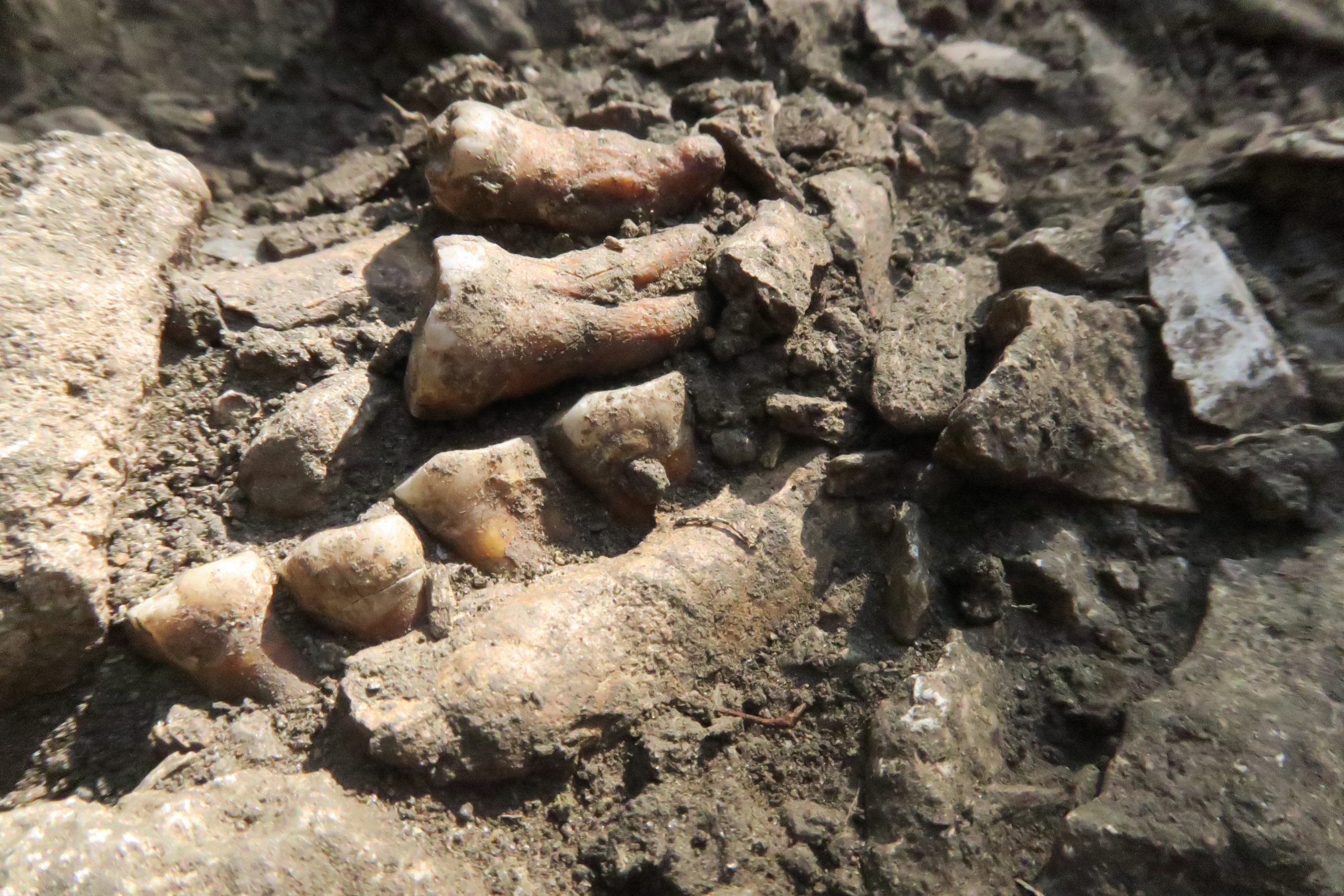
The discovery of a Neanderthal named Thorin reveals a previously unknown lineage that diverged from other Neanderthals 100,000 years ago and remained isolated. This finding suggests that Neanderthals were more genetically diverse than previously thought, and their isolation may have played a role in their extinction.
A fossilized Neanderthal unearthed in a cave system in France’s Rhône Valley belongs to an ancient, previously unknown lineage that split from other known Neanderthals approximately 100,000 years ago and remained genetically isolated for over 50,000 years. Genomic analysis reveals that this Neanderthal, dubbed “Thorin” after the Tolkien character, lived between 42,000 and 50,000 years ago in a small, isolated population.
The discovery, published in the Cell Press journal Cell Genomics, could shed light on the still-enigmatic reasons for the species’ extinction and suggests that late Neanderthals had more population structure than previously thought.
Genetic Isolation of Neanderthal Populations
“Until now, the story has been that at the time of the extinction there was just one Neanderthal population that was genetically homogeneous, but now we know that there were at least two populations present at that time,” says first author and population geneticist Tharsika Vimala of the University of Copenhagen.
“The Thorin population spent 50,000 years without exchanging genes with other Neanderthal populations,” says co-first author and discoverer of Thorin, Ludovic Slimak, CNRS researcher of Université Toulouse Paul Sabatier. “We thus have 50 millennia during which two Neanderthal populations, living about ten days’ walk from each other, coexisted while completely ignoring each other. This would be unimaginable for a Sapiens and reveals that Neanderthals must have biologically conceived our world very differently from us Sapiens.”
Thorin’s Discovery and Genomic Analysis
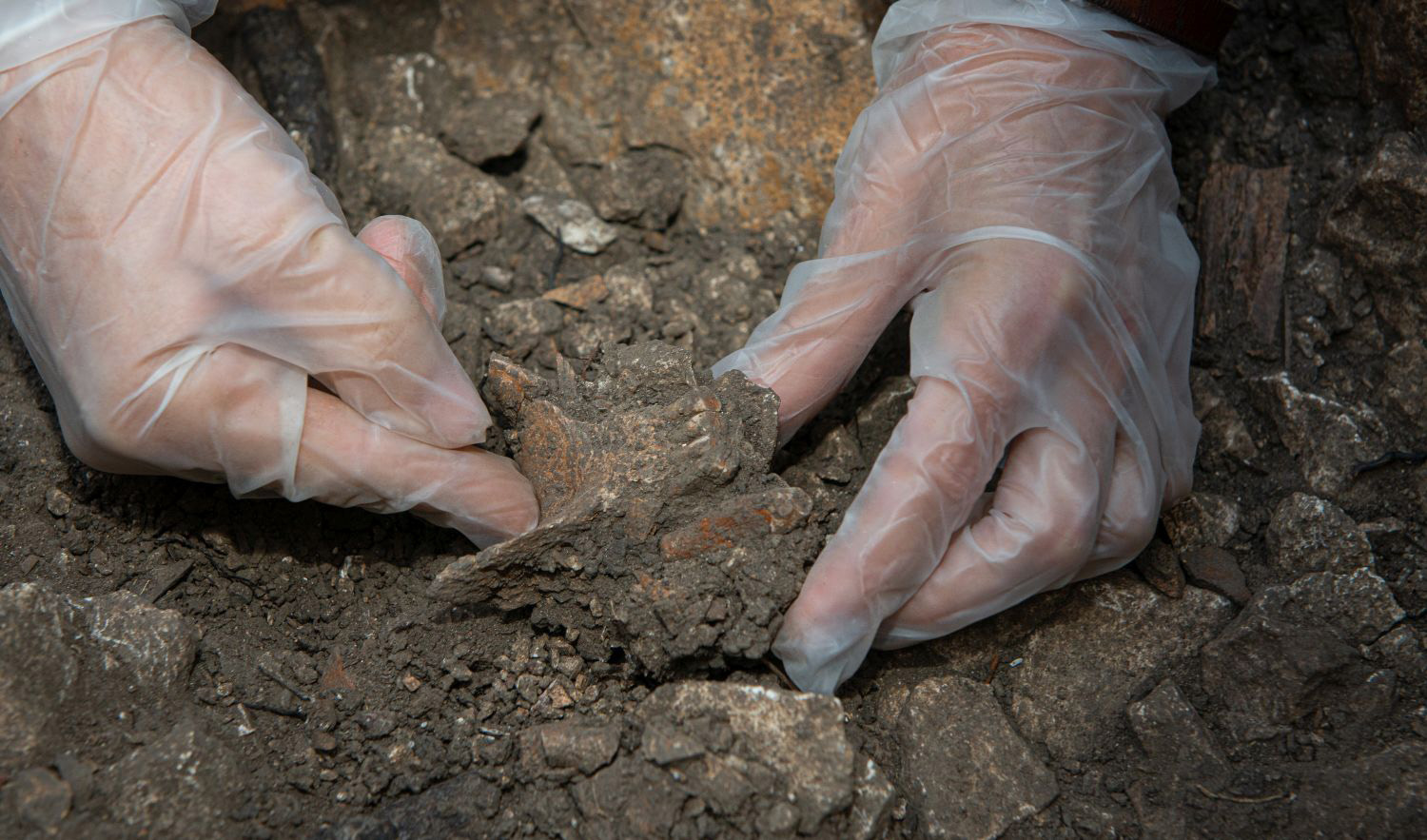
Thorin’s fossilized remains were first discovered in 2015 in Grotte Mandrin—a well-studied cave system that also housed early Homo sapiens, though not at the same time—and he is still being slowly excavated.
Based on Thorin’s location within the cave’s sediment, the team’s archeologists suspected that he lived around 40–45,000 years ago, making him a “late Neanderthal.” To determine his age and relationships with other Neanderthals, the team extracted DNA from his teeth and jaw and compared his full genome sequence to previously sequenced Neanderthal genomes.
Surprisingly, the initial genomic analysis suggested that Thorin was much older than the archeological age estimate because his genome was very distinct from other late Neanderthals and much more closely resembled the genomes of Neanderthals who lived more than 100,000 years ago.
“We worked for seven years to find out who was wrong—archeologists or genomicists,” says Slimak.
To solve this riddle, the researchers analyzed isotopes from Thorin’s bones and teeth to gain insight into what type of climate he lived in—late Neanderthals lived during the Ice Age, while early Neanderthals enjoyed a much warmer climate. The isotopic analysis showed that Thorin lived in a very cold climate, making him a late Neanderthal.
“This genome is a remnant of some of the earliest Neanderthal populations in Europe,” says population geneticist and senior author Martin Sikora of the University of Copenhagen. “The lineage leading to Thorin would have separated from the lineage leading to the other late Neanderthals around 105,000 years ago.”
A Mediterranean Migration?
Compared to previously sequenced Neanderthal genomes, Thorin’s genome most closely resembled an individual excavated in Gibraltar, and Slimak speculates that Thorin’s population migrated to France from Gibraltar.
“This means there was an unknown mediterranean population of Neanderthals whose population spanned from the most western tip of Europe all the way to the Rhône Valley in France,” says Slimak.
Knowing that Neanderthal communities were small and insular could be key to understanding their extinction because isolation is generally considered to be a disadvantage for population fitness.
“It’s always a good thing for a population to be in contact with other populations,” says Vimala. “When you are isolated for a long time, you limit the genetic variation that you have, which means you have less ability to adapt to changing climates and pathogens, and it also limits you socially because you’re not sharing knowledge or evolving as a population.”
However, to really understand how Neanderthal populations were structured and why they went extinct, the researchers say that more Neanderthal genomes need to be sequenced.
“I would guess that if we had more genomes from other regions during this similar time period, we would probably find other deeply structured populations,” says Sikora.
Reference: “Long genetic and social isolation in Neanderthals before their extinction” by Ludovic Slimak, Tharsika Vimala, Andaine Seguin-Orlando, Laure Metz, Clément Zanolli, Renaud Joannes-Boyau, Marine Frouin, Lee J. Arnold, Martina Demuro, Thibaut Devièse, Daniel Comeskey, Michael Buckley, Hubert Camus, Xavier Muth, Jason E. Lewis, Hervé Bocherens, Pascale Yvorra, Christophe Tenailleau, Benjamin Duployer, Hélène Coqueugniot, Olivier Dutour, Thomas Higham and Martin Sikora, 11 September 2024, Cell Genomics.
DOI: 10.1016/j.xgen.2024.100593
This research was supported by the Service Regional de l’Archeologie Auvergne Rhone-Alpes, the French CNRS, the city of Malataverne, the Lundbeck Foundation and the Danish National Research Foundation, the European Research Council, and the Australian Research Council.
Never miss a breakthrough: Join the SciTechDaily newsletter.
Follow us on Google and Google News.
1 Comment
Problem one: Neanderthals are 100,000 years old. Uniformitarian thinking…makes them older than a world wide flood, for which we do have evidence.