
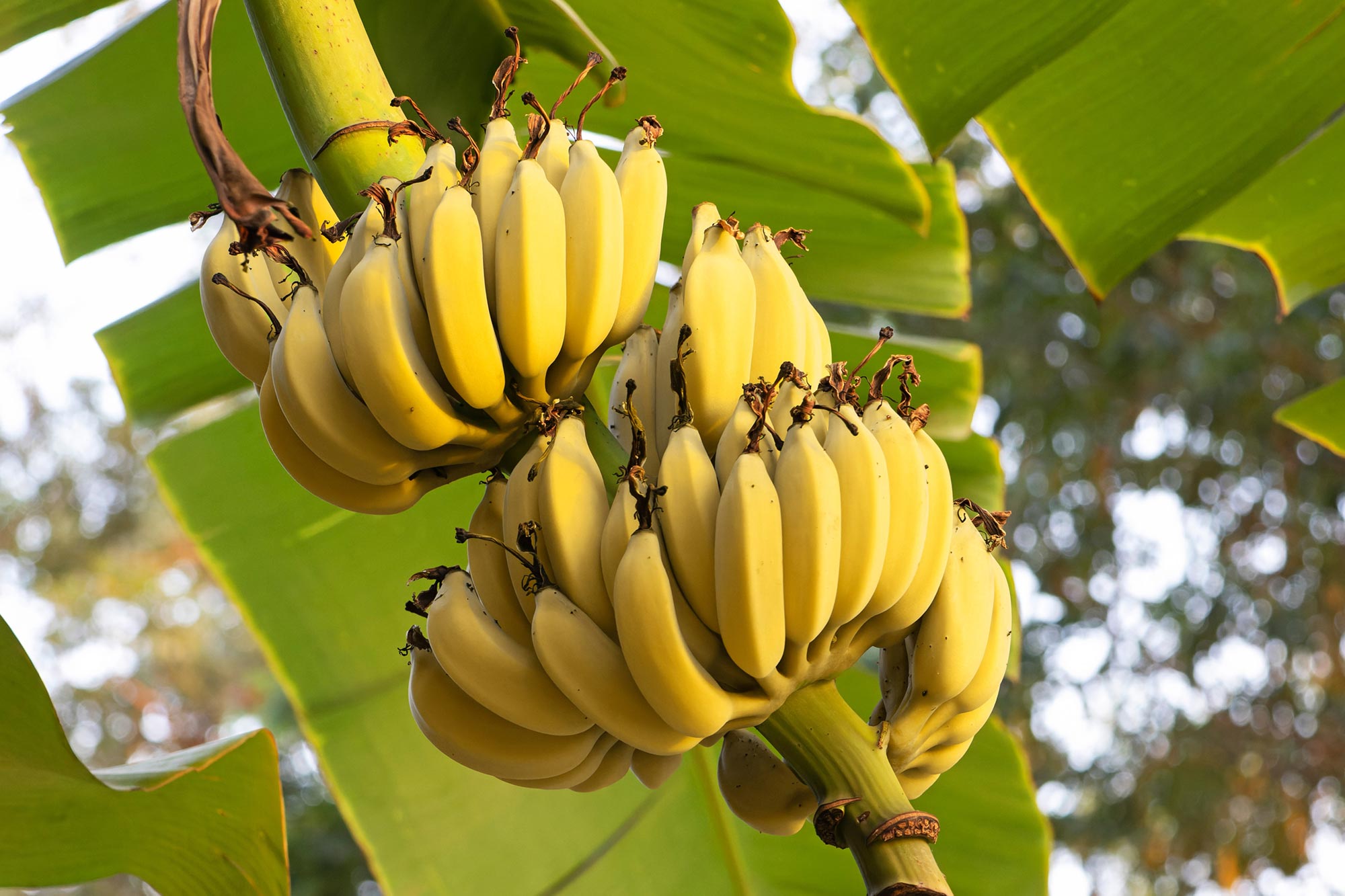
The study examined the potential health risks linked to consuming cocoa and cassava grown in Linhares, a municipality located in a region affected by the Fundão dam collapse in Minas Gerais, Brazil, ten years ago.
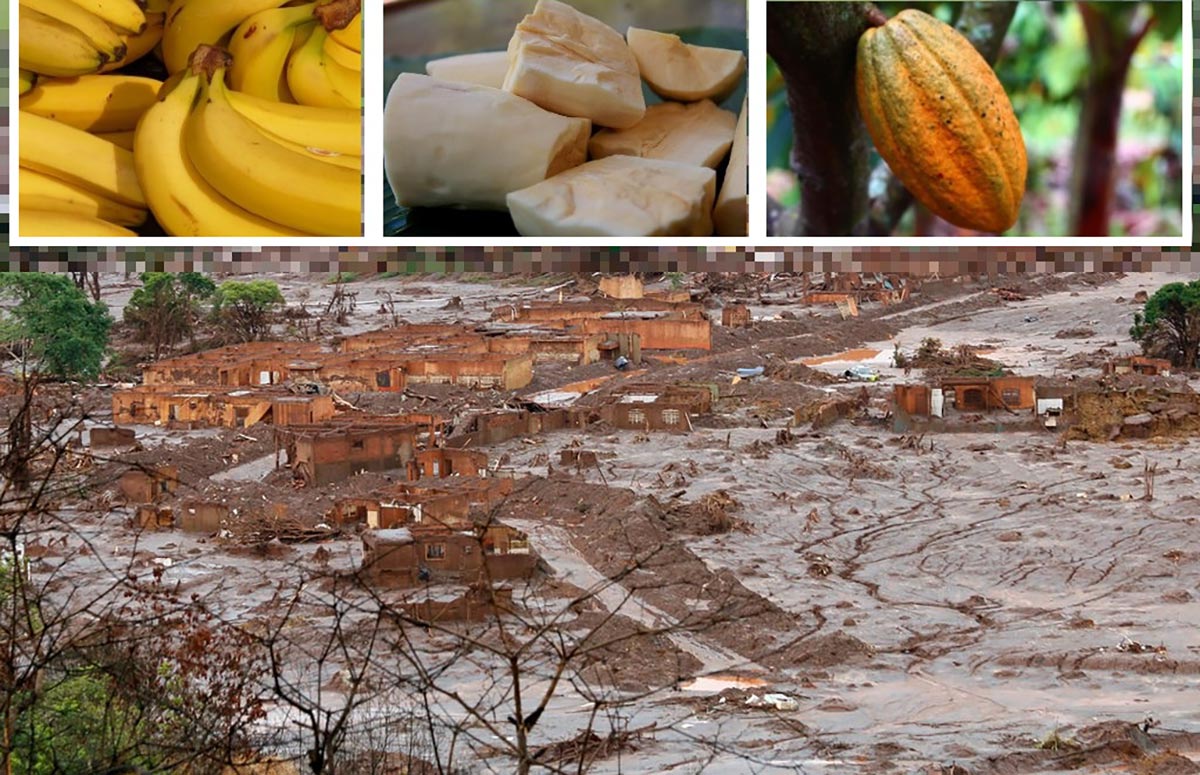
A team of researchers in soil geochemistry, environmental engineering, and health from the University of São Paulo (USP), the Federal University of Espírito Santo (UFES), and the University of Santiago de Compostela examined the potential health risks linked to eating bananas, cassava, and cocoa pulp grown in contaminated soils in the Doce River estuary in Linhares, in the Brazilian state of Espírito Santo.
These soils have been affected by iron mining waste that began accumulating in the region after the Fundão tailings dam collapsed in the neighboring state of Minas Gerais in November 2015.
The scientists found that the soils contain elevated levels of cadmium, chromium, copper, nickel, and lead, elements closely associated with iron oxides, which make up the bulk of the tailings material. Their analysis also showed that eating bananas grown in these impacted soils could pose a health risk for young children aged six years or younger.
From environmental disaster to food safety concern
“Our group has been studying the impacts of the dam collapse for years. We obtained the first samples seven days after the accident and immediately understood that there was an imminent risk of contamination of plants, soil, water, and fish. But the question remained: Does this contamination pose a risk to human health?” recalls Tiago Osório, an agronomist and professor in the Department of Soil Science at the Luiz de Queiroz College of Agriculture at the University of São Paulo (ESALQ-USP).
In a study published in Environmental Geochemistry and Health, the researchers describe how crops absorb potentially toxic elements (PTEs) linked to the tailings and store them in edible tissues, allowing contaminants to move through the food chain.
The publication is part of Amanda Duim’s doctoral research at ESALQ. Her thesis has already resulted in seven papers in international journals and earned two major awards in 2025, the USP Thesis Award in Sustainability and the Capes Thesis Award from the Brazilian Ministry of Education’s Coordination for the Improvement of Higher Education Personnel (CAPES). Duim carried out the research with support from FAPESP through a doctoral scholarship.
How metals move through soil and plants
According to Duim, the study’s lead author, the research stands out because it directly links potential risks to human health with how potentially toxic elements move from contaminated soil into plants. “The iron oxide content in the soil, which is the main constituent of the tailings, correlates with its content in the plant. We studied the passage of constituents from the tailings in the soil to the water, and then from the water to the plant, including its leaves and fruits.”
Osório adds that establishing this connection requires a detailed understanding of what contaminants are present and in what amounts. “First, we need to know which elements are there and in what quantities in order to understand the biochemical dynamics of their release,” he explains.
Duim began his doctoral studies in 2019, researching ways to use plants from flooded regions to clean up contaminated environments. “We evaluated cultivated and native species. In the case of the latter, we wanted to know how they affect the dissolution of iron oxide and, in this process, understand if and how the PTEs associated with this waste enter the plant, since different species accumulate PTEs differently,” explains the researcher.
“The idea was to find the best native species for cleaning up contaminated environments, and we found more than one species that can fulfill this function, with results already published. In the case of cultivated species, we wanted to know if PTEs would be transferred to the fruits and edible parts of the plants,” she explains.
“We collected the soil and the plant, washed the plant, weighed the fresh biomass, dried the plant, weighed the dry biomass, and ground the roots, stem, leaves, and peeled fruits separately. Only then did we analyze all the parts to find out what was in each one. We dissolved the ‘plant powder,’ transforming it into a solution using various acids, and determined the concentration in the solution. We converted the calculation of the concentration of material in the solution and compared it with the weight of the diluted material, thus obtaining the PTE concentration in milligrams per kilogram of dry biomass,” Duim describes.
Different crops, different exposure risks
In bananas and cassava, all PTEs (except chromium) accumulated more in underground parts, such as roots and tubers, than in aerial parts. Cocoa, on the other hand, showed high PTE accumulation in the above-ground parts (stems, leaves, and fruits). Additionally, the concentrations of copper and lead in the fruit pulp exceeded the limit values established by the Food and Agriculture Organization of the United Nations (FAO).
Upon discovering that the cultivated plants had PTE concentrations higher than the recommended levels, including in the edible parts, the team decided to conduct a risk analysis on the fruits and tubers.
Children face the greatest danger
The scientists estimated the risks of consuming bananas, cassava rhizomes, and cocoa pulp by calculating the risk quotient (RQ), risk index (RI), and total risk index (TRI) for children (under six years of age) and adults (over 18 years of age). The RQ is the ratio of the average daily intake of a chemical substance to its corresponding reference dose. The TRI is a fundamental metric for assessing potential non-carcinogenic health risks associated with exposure to PTEs. To indicate low risk, the TRI must be less than 1.
“These elements exist naturally in the environment. We’re exposed to them in lower concentrations. But in the case of a disaster like the one in Mariana, when exposure is expected to increase, we need to exercise extra caution,” says Tamires Cherubin, who has a Ph.D. in health sciences and is also an author of the study. The generally used methodology is to calculate the risk of the bioavailability of these elements given that exposure to certain concentrations can cause significant health problems such as kidney and heart problems, gastrointestinal discomfort, and lung damage from respiratory exposure. Other acute risks include skin problems and eye irritation.
The risk analysis calculation includes factors such as the consumption of locally grown plants by the population. The researchers estimated how much of the local population’s food came from outside the area and how much came from food grown there, based on data from the Brazilian Institute of Geography and Statistics (IBGE). Other factors include exposure duration (how many years a person consumes the product), consumption levels relative to adult and child body mass, and the time it takes for consumption to result in harmful effects.
“According to the reference daily intake doses for contaminants covered by the literature, we consider the limits of 0.05 mg/kg-1 for the presence of cadmium in fruits and 0.1 mg/kg-1 in tubers, 0.5–1.0 mg/kg-1 for the presence of chromium, 20.0 mg/kg-1 for copper, 0.5–1.0 mg/kg-1 for nickel, 0.8–2.3 mg/kg-1 for lead, and 50.0 mg/kg-1 for zinc,” Cherubin explains.
Although the TRIs for most of the elements analyzed were below the risk level (less than 1), indicating that consuming these foods grown in the Doce River estuary does not pose a significant threat to adults, the TRI for bananas in children exceeded 1, suggesting potential health impacts. The main risk factor was the higher concentration of lead in the fruit, which also had a higher cadmium content than the FAO recommends. According to the scientists, prolonged exposure to lead, even in low doses, is associated with irreversible damage to neurological development, including reduced IQ, attention deficits, and behavioral disorders.
Long-term exposure may raise cancer risk
The group warns that continued consumption of food grown in contaminated soil may pose cumulative risks in the long term.
“Over time, considering the life expectancy in Brazil of around 75 years, there may be a carcinogenic risk since there’s a possibility of direct and indirect DNA damage,” says Cherubin.
These mutations have the potential to result in a higher incidence of various types of cancer, including those affecting the central nervous system, gastrointestinal tract, and hematological system. “It all depends on the human body’s ability to absorb and metabolize these elements that are available in the environment,” says the researcher.
Reference: “From tailings to tables:risk assessment of potentially toxic elements in edible crops cultivated in mine tailing impacted soils” by Amanda Duim Ferreira, Heloisa Farineli Corveloni, Alexys Friol Boim, Hermano Melo Queiroz, Tamires Patrícia Souza, Xosé L. Otero, Ângelo Fraga Bernardino and Tiago Osorio Ferreira, 01 October 2025, Environmental Geochemistry and Health.
DOI: 10.1007/s10653-025-02770-9
This work received financial support from Fundação de Amparo à Pesquisa do Estado de São Paulo (FAPESP, Grant Numbers ADF: 19/14800-5; AGFB: 20/12823-5; HMQ: 21/00221-3; TOF: 23/01493-2; 22/12966-6; TPSC: 23/12124-8; and HFC: 24/08159-3); Fundação de Amparo do Espírito Santo (FAPES/CNPq/CAPES Rio Doce 77683544/2017); Coordenação de Aperfeiçoamento de Pessoal de Nível Superior CAPES—Finance Code 001 and Conselho Nacional de Desenvolvimento Científico e Tecnológico (Grant Numbers AFB: 301161/2017–8, and TOF: 305013/2022–0).
FAPESP’s support for the group’s work includes two postdoctoral fellowships (20/12823-5 and 21/00221-3), two research grants (23/01493-2 and 22/12966-6), one scholarship from the fixation of young doctors program and one scientific initiation scholarship.
Never miss a breakthrough: Join the SciTechDaily newsletter.
Follow us on Google and Google News.
9 Comments
“It all depends on the human body’s ability to absorb and metabolize these elements that are available in the environment,”
Bio-availability of potentially toxic minerals, which is usually a function of the solubility in water or dilute hydrochloric acid, is often overlooked in studies of natural toxicity. Similarly, the rate of natural excretion of heavy metals is often overlooked, as is the retention of potential toxins by cooking. The US guidelines on mercury consumption are based the mercury concentration of raw freshwater fish, which is invariably volatile methyl-mercury, and driven off by cooking. There is a little-known instance of a California fish and game warden who was fond of striped bass and worked in the Suisun Bay area of northern California. He ate striped bass, known to have high concentrations of methyl-mercury, nearly every day for most of his adult life. When his blood was tested for mercury, it came back as normal. Probably because it was cooked, not raw.
Methylmercury in fish is not volatile and will not vaporize when the fish is cooked… do you have documentation to proof your statement?
Cooking fish does not destroy or significantly reduce the total amount of methylmercury present in the flesh, as it is a stable element that binds to muscle proteins. While some studies suggest cooking methods like baking or frying might slightly reduce the bioaccessibility (how much is absorbed by the body) of mercury, the overall concentration remains largely unchanged, and cooking does not make high-mercury fish safe to consume in large quantities.
What is not messed up today? Read scripture, repent, rejoice as our redemption draws near!
The rate of demethylation, and thus absorbtion of organc methyl mercury is substantially altered by gut microbiota. The most active species appears to be Desulfovibrio species. This is a microrganism found extensively in shellfish. There may have been something going on with his skin commensals, gut biota, and the fish he ate, that altered the absorption of merury, even though it was present in the fish. It’s an interesting question.
Years ago, I had an extended conversation with a US Geological Survey geologist in the Sacramento (CA) office. His assignment at the time was to assess the environmental contamination by fugitive elemental mercury resulting from using mercury for amalgamation for gold mining in California’s Mother Lode. It is quite abundant there. I asked him if he had ever observed unusual behavior of any of the common animals. His answer was “No.”
I did a study on the southern Santa Clara Valley to determine if the deep (>500′) aquifers had been contaminated with the cinnabar (mercury sulfide) in the gravels, or by the man made percolation ponds on the surface created to help recharge the Recent stream sediments that are rich in both cinnabar and elemental mercury in the quicksilver mining districts in the coast range to the west. There was no detectable mercury found in the water in the deep aquifer. I speculated that the dissolved mercury was adsorbed onto clay particles in the sediment as the water moved downwards. However, what was then known as the “Department of Fish and Game” immediately closed the two nearby reservoirs to fishing. I think that the long-term conclusion was to only allow fishing for hatchery-raised trout because any that were not removed by fishing were unlikely to survive the warm Summers.
There is still a lot we don’t know about the pathological effects of elemental and methyl-mercury.
And, how would the consumer identify which products were grown in that region?
The CRC Handbook of Chemistry and Physics lists the boiling point of methyl-mercury as 100 deg C, the same as water. When I was doing the study on San Jose (CA) drinking water, the lab I found to analyze the water informed me that if I was going to bring in any fish for analysis, and I was not going to be able to get it to them within 24 hours (over a weekend), to freeze it to avoid loss of methyl-mercury.
Methyl-mercury is not an “element.” It is an organic molecule generally produced in an anaerobic environment. Cooking routinely alters proteins, which is one of the reasons we cook things.
There is an old saying, “Turn about is fair play.” How about you providing a reference for your claims that methyl-mercury is stable and unaffected by cooking?
I should note in passing that the disaster at Minamata Bay (Japan) was from very high concentrations resulting from mercury in the effluent of a polyvinyl chloride factory; it was also in a country that is in the habit of eating sashimi — uncooked seafood. It has been several years since I followed this topic closely, but during that period of time I was unable to identify a single well-documented incident of methyl-mercury poisoning in this country. As close as I came to an incident was where a man fed his pig seed-corn coated with the fungicide ethyl-mercury. When the pig died of acute poisoning, he ate the pig; he and his son similarly died of acute poisoning. Most Americans don’t eat raw freshwater fish out of concern for flat worms. Nor is it advisable to eat the meat from a well-fed farm animal that dies suddenly for an undiagnosed reason.
The above reply was for Erlan Sleur.
And I’m still waiting on Erlan to respond to my request for references to his claims.