
Close Menu
    Facebook X (Twitter) Instagram
    SciTechDaily
    • Biology
    • Chemistry
    • Earth
    • Health
    • Physics
    • Science
    • Space
    • Technology
    Facebook X (Twitter) Pinterest YouTube RSS
    SciTechDaily
    Home»Biology»How Bacteria Sense Death Around Them and Prepare for Battle
    Biology

    How Bacteria Sense Death Around Them and Prepare for Battle

    By University of BaselJanuary 20, 2025No Comments3 Mins Read
    Facebook Twitter Pinterest Telegram LinkedIn WhatsApp Email Reddit
    Share
    Facebook Twitter LinkedIn Pinterest Telegram Email Reddit
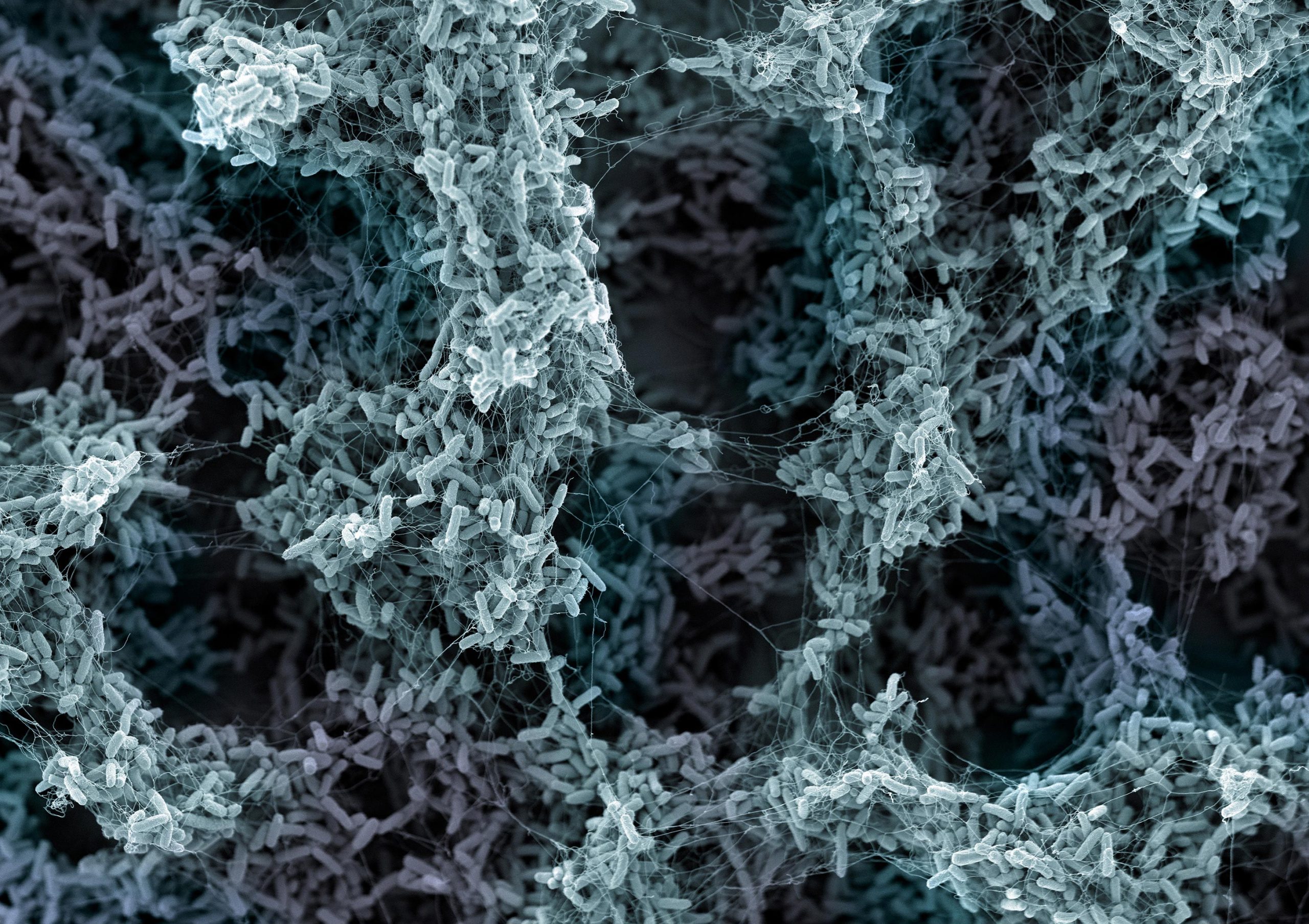
    Pseudomonas aeruginosa Biofilm
    The pathogen Pseudomonas aeruginosa forms a protective biofilm. Credit: Nano Imaging Lab SNI/Biozentrum, University of Basel

    Bacteria detect cell wall fragments as danger signals and form protective biofilms, a survival strategy seen across species and relevant for fighting infections.

    University of Basel researchers have discovered that bacteria can sense threats in advance through a general danger signal. Bacteria detect when nearby cells are dying and proactively form a protective biofilm. Understanding how bacteria communicate and respond to threats is crucial for combating infections.

    Bacteria are constantly engaged in a struggle for survival, facing threats from immune cells, antibiotics, or phages— viruses that only infect bacteria. Over the course of evolution, bacteria have developed numerous strategies to protect themselves from such dangers. But how do bacteria sense potential threats in their environment and initiate protective measures?

    Danger signal: Cell wall fragments

    In their recent study, researchers led by Prof. Knut Drescher at the Biozentrum, University of Basel, have discovered that fragments of the bacterial cell wall, so-called peptidoglycans, serve as an alarm signal indicating danger in the environment.

    “These molecules act as a general danger signal recognized not only by conspecifics but also by bacteria of different species,” says Drescher “Peptidoglycans are released when bacteria are killed by phages or antibiotics.”

    Protective mechanism: Biofilm formation

    Bacteria respond to this danger signal by producing a small signaling molecule known as c-di-GMP, which triggers biofilm formation. Biofilms are complex, three-dimensional structures of living bacteria embedded in a slimy matrix.

    “In Vibrio cholerae, the cholera-causing pathogen, even a brief exposure to cell wall fragments triggers biofilm formation,” explains Sanika Vaidya, first author of the study. Within the biofilm, bacteria are protected from attacks by phages, immune cells, and antibiotics.

    Survival strategy: Cross-species warning

    The researchers observed this behavior not only in the cholera pathogen but also in other dangerous, often multi-drug resistant pathogens such as Pseudomonas aeruginosa, Acinetobacter baumannii, Staphylococcus aureus, and Enterococcus faecalis.

    The fact that bacteria across species respond to the same danger signal suggests a universal survival strategy. “Interestingly, human immune cells also recognize peptidoglycan fragments as an infection signal,” emphasizes Drescher. “This highlights surprising parallels between bacterial and human defense mechanisms.”

    Clinical relevance: Preventing biofilms

    This universal survival strategy may explain why biofilms play such an important role in various environments — from natural ecosystems to human infections.

    However, the study raises new questions: Do the cell wall fragments activate additional protective mechanisms beyond biofilm formation? And how can these novel insights be applied to more effectively combat biofilm-forming pathogens?

    Reference: “Bacteria use exogenous peptidoglycan as a danger signal to trigger biofilm formation” by Sanika Vaidya, Dibya Saha, Daniel K. H. Rode, Gabriel Torrens, Mads F. Hansen, Praveen K. Singh, Eric Jelli, Kazuki Nosho, Hannah Jeckel, Stephan Göttig, Felipe Cava and Knut Drescher, 3 January 2025, Nature Microbiology.
    DOI: 10.1038/s41564-024-01886-5

    Never miss a breakthrough: Join the SciTechDaily newsletter.
    Follow us on Google and Google News.

    Bacteria Biofilm Microbiology University of Basel
    Share. Facebook Twitter Pinterest LinkedIn Email Reddit

    Related Articles

    Microscopic Warfare: These Bacteria Deploy Tiny Spearguns To Fight Back

    Sophisticated Microbial Metropolis: Revealing Bacterial Teamwork Across Generations

    Ancient Microbial “Dark Matter” – Thousands of Unknown Bacterial Species Discovered in Hawaiian Lava Caves

    Bacteria Communicate Using Chemical Signals Comparable to Radio Waves

    Plants Choose and Make Use of the Bacteria They Allow into Their Roots

    Superoxide Reacts With Manganese to Aid in Environmental Cleanup

    New Imaging Technique Reveals Possible Plan of Attack for Bacterial Diseases

    Widespread Presence of Antibiotic Resistant Bacteria in Agricultural Soils

    Researchers Use Bacteria From Space to Create New Biofilm

    Leave A Reply Cancel Reply

    • Facebook
    • Twitter
    • Pinterest
    • YouTube

    Don't Miss a Discovery

    Subscribe for the Latest in Science & Tech!

    Trending News

    289-Million-Year-Old Reptile Mummy Reveals Origin of Human Breathing System

    New Brain Discovery Challenges Long-Held Theory of Teenage Brain Development

    Scientists Discover Plants “Scream” – We Just Couldn’t Hear Them Until Now

    Scientists Discover a Surprising Reason Intermittent Fasting Extends Life

    This Simple Fruit Wash Could Make Produce Safer and Last Days Longer

    Scientists Say Adding This Unusual Seafood to Your Diet Could Reverse Signs of Aging

    Scientists Say a Hidden Structure May Exist Inside Earth’s Core

    Doctors Surprised by the Power of a Simple Drug Against Colon Cancer

    Follow SciTechDaily
    • Facebook
    • Twitter
    • YouTube
    • Pinterest
    • Newsletter
    • RSS
    SciTech News
    • Biology News
    • Chemistry News
    • Earth News
    • Health News
    • Physics News
    • Science News
    • Space News
    • Technology News
    Recent Posts
    • Scientists Propose Radical New Way To Detect Alien Life – Without Traditional Biosignatures
    • Scientists Just Discovered Light Can Actually Slow Plant Growth
    • Scientists Finally Solved One of Water’s Biggest Mysteries
    • 7,000-Year-Old DNA Rewrites the Story of the “Neolithic Revolution”
    • Missing Medieval Relic of Legendary English King Found After Being Missing for 40 Years
    Copyright © 1998 - 2026 SciTechDaily. All Rights Reserved.
    • Science News
    • About
    • Contact
    • Editorial Board
    • Privacy Policy
    • Terms of Use

    Type above and press Enter to search. Press Esc to cancel.