
Close Menu
    Facebook X (Twitter) Instagram
    SciTechDaily
    • Biology
    • Chemistry
    • Earth
    • Health
    • Physics
    • Science
    • Space
    • Technology
    Facebook X (Twitter) Pinterest YouTube RSS
    SciTechDaily
    Home»Earth»How Does the Ocean “Breathe”? Groundbreaking Project Could Transform Our Understanding
    Earth

    How Does the Ocean “Breathe”? Groundbreaking Project Could Transform Our Understanding

    By University of SouthamptonDecember 8, 2024No Comments3 Mins Read
    Facebook Twitter Pinterest Telegram LinkedIn WhatsApp Email Reddit
    Share
    Facebook Twitter LinkedIn Pinterest Telegram Email Reddit
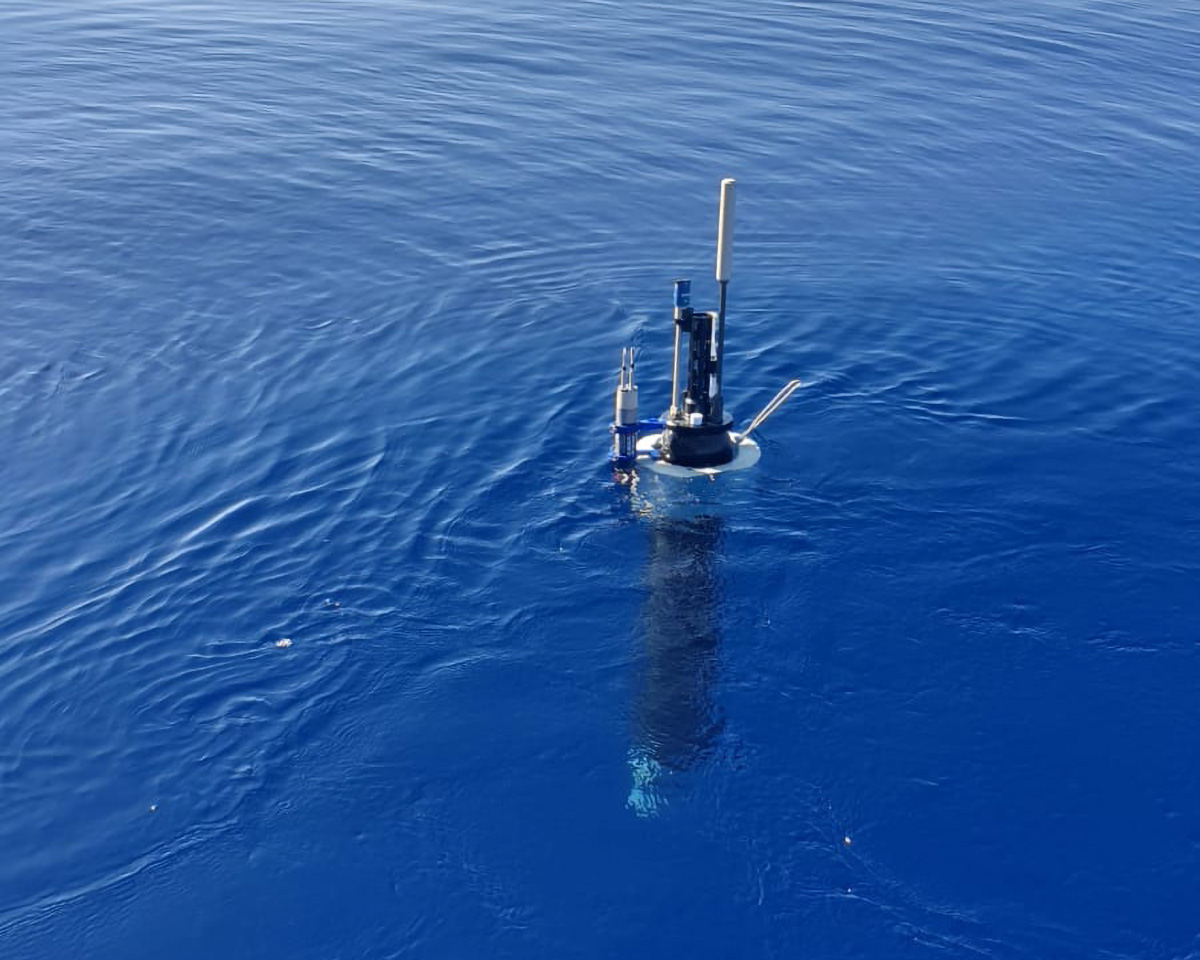
    Autonomous Profiling Float Deployed in the Ocean
    Autonomous profiling float deployed in the ocean. Credit: University of Southampton

    A £2.5 million project aims to deliver groundbreaking insights into ocean mixing, enhancing the accuracy of climate models.

    A new £2.5 million ($3.2 million) project, led by the University of Southampton and the National Oceanography Centre (NOC), aims to transform our understanding of how the ocean “breathes,” storing heat and greenhouse gases from the atmosphere.

    Ocean scientists will deploy sensors onboard high-tech floats to provide unprecedented detail on how the ocean breathes through mixing —tiny turbulent movements that pull water, heat, and chemicals from its surface down into the deep.

    This ventilation helps to regulate the Earth’s climate, buffering against the impacts of human-induced climate change.

    Mixing also plays a key role in regulating ocean current systems, such as the Atlantic meridional overturing circulation (AMOC).

    “Small-scale mixing plays a crucial role in how the ocean exchanges carbon and heat with the atmosphere and stores it below the surface,” says Dr. Bieito Fernandez Castro, a Lecturer in Physical Oceanography at the University of Southampton leading the project.

    “Yet, much about this crucial process remains a mystery, so there’s a higher degree of uncertainty in our estimates than we’d like. It happens on such small scales (ranging from centimeters to kilometers) that it has been hard to measure, meaning current ocean and climate models fail to capture the intricate dynamics at work.”

    Cutting-Edge Technology to Measure Ocean Mixing

    The REMIX-TUNE project has been awarded £2.5 million from the European Research Council to deploy a cutting-edge fleet of autonomous floats in key regions of deep-water formation where much of the heat and carbon sequestration takes place – namely the North Atlantic and Southern Ocean.

    Equipped with turbulence sensors and new highly efficient onboard computers, the floats will pass through the water column from the surface down to depths of up to two thousand meters and back up again over several years, capturing detailed local data on how water mixes at both the mesoscale (large eddies) and microscale (tiny, chaotic swirls).

    Dr. Fernandez Castro says: “These profiling floats have been used since the 2000s to measure the temperature and salinity of the ocean, as well as other properties, to help with forecasting and modeling.

    “But they were incapable of observing mixing until now, so it’s exciting to deploy them in significant numbers for this purpose.”

    The data captured will generate the first comprehensive, observation-based global database measuring mixing’s role in ocean ventilation.

    This detailed new understanding will feed into the next generation of ocean-climate models, improving their ability to simulate the ocean’s role in storing heat and greenhouse gases.

    Dr. Alex Megann at the National Oceanography Centre, a co-investigator on the project, says: “Combining the new data with existing hydrographic profiles from the global Argo program, we can reconstruct mixing over the past 25 years over the global ocean to provide much more accurate mixing estimates.

    “We’ll then use a model called NEMO, which is the ocean component of the UK’s contribution to the IPCC, to use our improved estimates of mixing to give a much clearer picture of how ocean ventilation regulates our climate.”

    Never miss a breakthrough: Join the SciTechDaily newsletter.
    Follow us on Google and Google News.

    Atmosphere Climate Change Oceanography University of Southampton
    Share. Facebook Twitter Pinterest LinkedIn Email Reddit

    Related Articles

    Antarctica Just Lost a Greenland’s Worth of Ice — And That’s Not the Scariest Part

    Earth’s Temperature Could Increase by 25 Degrees: Startling New Research Reveals That CO2 Has More Impact Than Previously Thought

    Ancient Ocean Slowdown Warns of Future Climate Chaos

    Changes in Ocean Salinity and the Water Cycle Could Affect Food Supplies

    The Role of Climate Change in Chemical Weathering of Rocks

    New Research Shows Southern Ocean as a Powerful Influence on Climate Change

    NASA’s Newest CERES Instrument Scans Earth

    Sea Cucumbers Counter Negative Effects of Ocean Acidification

    Criegee Biradicals May Cool Planet and Offset Global Warming

    Leave A Reply Cancel Reply

    • Facebook
    • Twitter
    • Pinterest
    • YouTube

    Don't Miss a Discovery

    Subscribe for the Latest in Science & Tech!

    Trending News

    Bone-Strengthening Discovery Could Reverse Osteoporosis

    Scientists Uncover Hidden Trigger Behind Stem Cell Aging

    Scientists Find Way to Reverse Fatty Liver Disease Without Changing Diet

    Could Humans Regrow Limbs? New Study Reveals Promising Genetic Pathway

    Scientists Reveal Eating Fruits and Vegetables May Increase Your Risk of Lung Cancer

    Scientists Reverse Brain Aging With Simple Nasal Spray

    Scientists Uncover Potential Brain Risks of Popular Fish Oil Supplements

    Scientists Discover a Surprising Way To Make Bread Healthier and More Nutritious

    Follow SciTechDaily
    • Facebook
    • Twitter
    • YouTube
    • Pinterest
    • Newsletter
    • RSS
    SciTech News
    • Biology News
    • Chemistry News
    • Earth News
    • Health News
    • Physics News
    • Science News
    • Space News
    • Technology News
    Recent Posts
    • Europe’s Most Active Volcano Just Got Stranger – Here’s Why Scientists Are Rethinking It
    • Why Are Giant Ants Letting Tiny Ants Crawl All Over Them?
    • Revolutionary Technique Sends Healthy Mitochondria Exactly Where They’re Needed
    • This Student Recreated the Universe in a Bottle. What She Discovered Could Help Reveal How Life Started on Earth
    • Alzheimer’s Symptoms May Start Outside the Brain, Study Finds
    Copyright © 1998 - 2026 SciTechDaily. All Rights Reserved.
    • Science News
    • About
    • Contact
    • Editorial Board
    • Privacy Policy
    • Terms of Use

    Type above and press Enter to search. Press Esc to cancel.