
Researchers discovered a unique form of speciation in moths, driven by differences in activity times and supported by genetic changes in their clock genes.
This study highlights the evolution of moths through temporal isolation, providing a concrete example of speciation at the molecular level.
How does one species become two? If you’re a biologist, that’s a loaded question. The consensus is that, in most cases, the process of speciation occurs when individuals from a single population become geographically isolated. If they remain separate long enough, they lose the ability to interbreed.
A new study published in the journal Proceedings of the Royal Society B: Biological Sciences demonstrates what happens when a less common form of speciation occurs. Rather than being separated by a physical barrier, such as a mountain range or an ocean, members of a species can become separated in time.
The Case Study of Moths
The researchers focused on two closely related moth species with overlapping ranges in the southeastern United States.
“These two are very similar,” said lead author Yash Sondhi, who conducted research for the study while working at Florida International University and later at the Florida Museum of Natural History. “They’ve differentiated along this one axis, which is when they fly.”
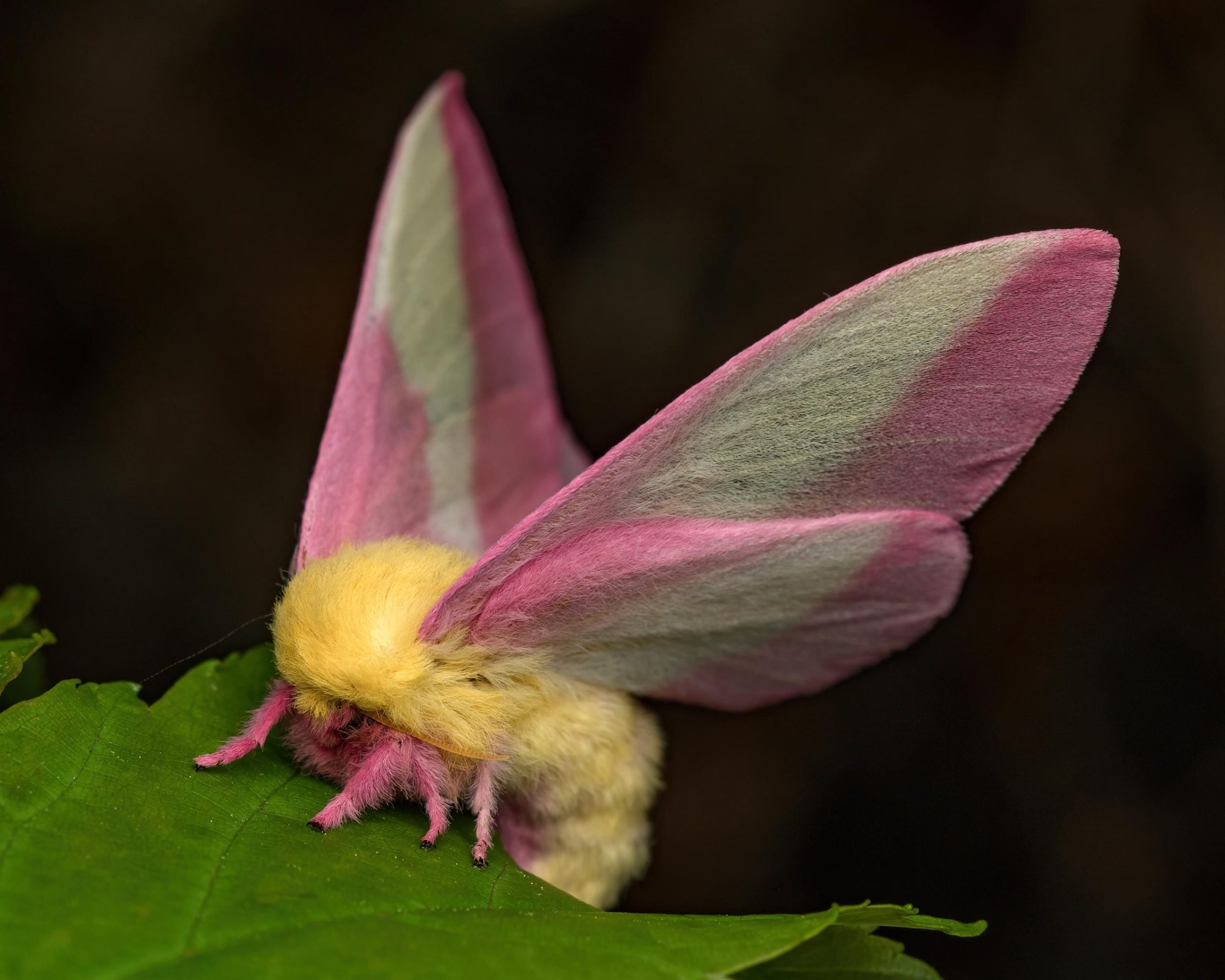
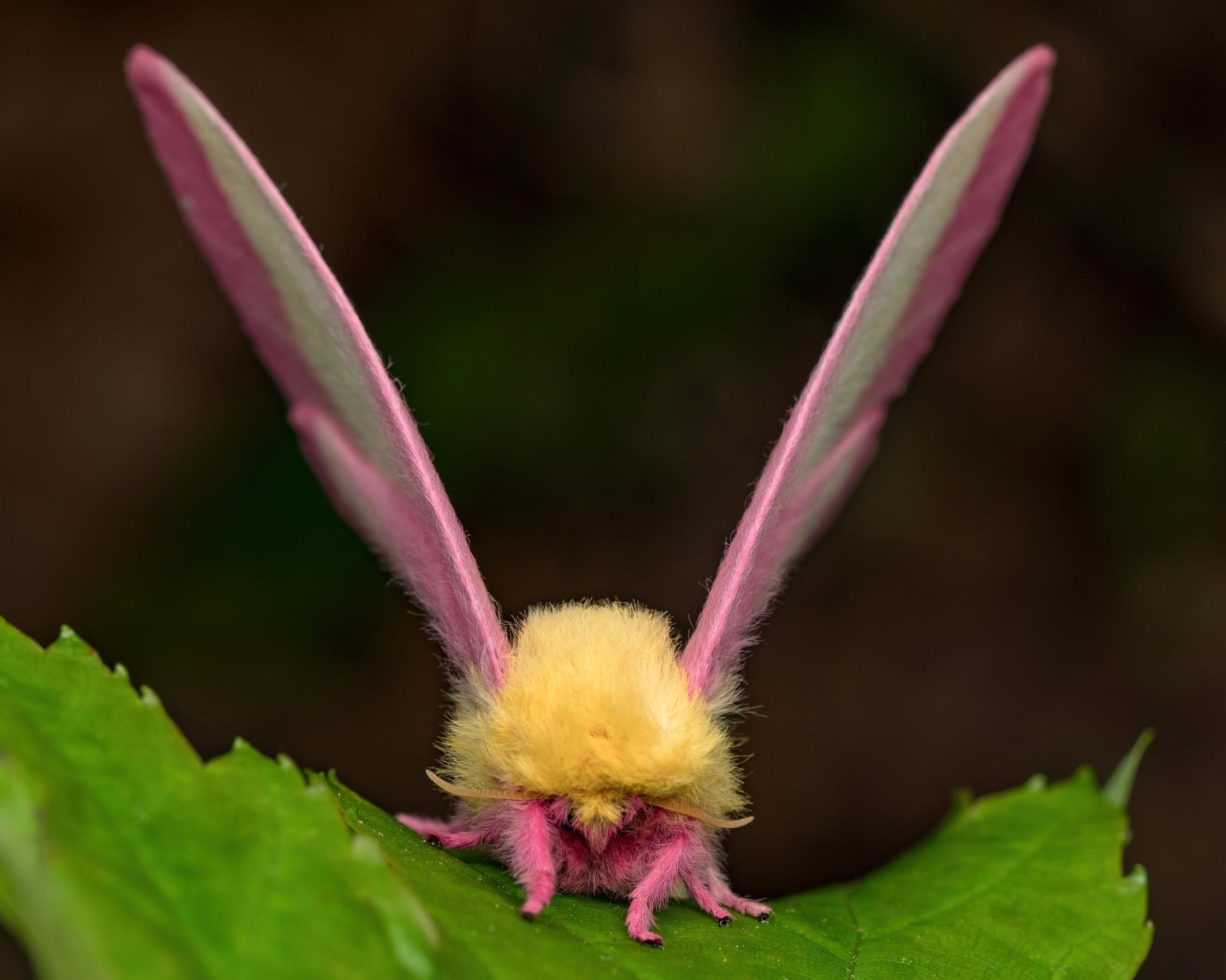
Rosy maple moths, in the genus Dryocampa, look like what you’d get if Roald Dahl painted something from a fever dream. They bear a thick lion’s mane above their head and abdomen, and their vibrant scales are the color of strawberry and banana taffy. Both male and female rosy moths fly exclusively at night.
Pink-striped oakworm moths, in the genus Anisota, are less flashy, with subtle grades of ochre, umber, and marl. While females of this species are active at dusk and early evening, the males prefer to fly during the day.
Sondhi knew from previous research that these two groups, Dryocampa and Anisota, originated from a single species approximately 3.8 million years ago, which is relatively recent on evolutionary time scales. There’s a handful of species in the genus Anisota, all of which are active during the day. The nocturnal rosy maple moths are the only species in the genus Dryocampa.
Genetic Insights from Moth Species
Sondhi specializes in the biology of insect vision and saw the moth pair as the perfect opportunity to explore how vision evolves when a species switches up its pattern of activity.
But things didn’t go as planned.
“I went in looking for differences in color vision. Instead, we found differences in their clock genes, which in hindsight makes sense,” Sondhi said.
Clock genes control the circadian rhythm of plants and animals. The ebb and flow of the proteins they create causes cells to become either active or dormant over a period of roughly 24 hours. They affect everything from metabolism and cell growth to blood pressure and body temperature.
For any organism reversing its pattern of activity, clock genes are virtually guaranteed to be involved. “It’s a system that’s been retained in everything from fruit flies to mammals and plants. They all have some kind of time-keeping mechanism,” he said.
Investigating Genetic Expressions
Sondhi compared the transcriptomes of the two moths. Unlike genomes, which contain the entirety of an organism’s DNA, transcriptomes contain only the subset of genetic material that is being actively used to make proteins. This makes them useful for exploring differences in protein levels throughout the day.
As expected, Sondhi found a number of genes that were expressed in different quantities in the two moth species. Nocturnal rosy maple moths invested more energy in their sense of smell, whereas the day-flying oakworm moth produced more genes associated with vision.
Discoveries in Gene Expression
There were, however, no differences in the genes that confer the ability to see color. That doesn’t necessarily mean that their color vision is identical, but if differences do exist, they are likely at the level of tuning and sensitivity and not in the structure of the genes themselves.
There was an additional gene that stood out. Disconnected, or disco, was expressed at different levels during the day and night in both species. In fruit flies, disco is known to indirectly influence circadian rhythms through the production of neurons that transmit clock enzymes from the brain to the body.
The disco gene Sondhi found in his moth samples was twice the size of its fruit fly counterpart, and it had additional zinc fingers — active portions of a gene that directly interacts with DNA, RNA and proteins. It seemed likely that changes in the disco gene were at least partially responsible for the switch to night-flying in rosy maple moths.
When he compared the disco gene of rosy maple moths with the one in oakworms, he found 23 mutations that made each distinct from the other. The mutations were also located in active portions of the gene, meaning they likely contribute to observable physical differences between the moths. Sondhi was looking at evolution in action.
“If this is functionally confirmed, this is a really concrete example of the mechanism behind how they speciated at the molecular level, which is rare to come by,” he said.
Implications for Evolutionary Biology
The study is also an important push for a better understanding of the various ways in which life sustains and propagates itself. When genetics first became a field of study, researchers focused most their efforts on a few representative species, such as fruit flies or lab mice. This was done primarily for the sake of expediency, but it limits how much we know about broad biological patterns. Just as a human is not a lab mouse, a moth is not a fruit fly.
“As species continue to decline due to climate change and other anthropogenic changes, we’ll need to genetically engineer a greater number of the ones that remain to enable drought tolerance, for example, or to be active in light polluted regimes. To do that consistently, having a broader pool of functionally characterized genes across organisms is crucial. We can’t just use Drosophila,” Sondhi said.
Reference: “Day–night gene expression reveals circadian gene disco as a candidate for diel-niche evolution in moths” by Yash Sondhi, Rebeccah L. Messcher, Anthony J. Bellantuono, Caroline G. Storer, Scott D. Cinel, R. Keating Godfrey, Andrew J. Mongue, Yi-Ming Weng, Deborah Glass, Ryan A. St Laurent, Chris A. Hamilton, Chandra Earl, Colin J. Brislawn, Ian J. Kitching, Seth M. Bybee, Jamie C. Theobald and Akito Y. Kawahara, 1 August 2024, Proceedings B.
DOI: 10.1098/rspb.2024.0591
Never miss a breakthrough: Join the SciTechDaily newsletter.
Follow us on Google and Google News.
2 Comments
What is with this “evolution” hypothesis stated as fact?
Has any one, ever, observed or replicated an “evolution” event?
What if this is wrong?
It is not a hypothesis, it is a theory; which, in the science world means it’s as proven as it can get. Evolution is not an event, it’s the ongoing process of genetic mutation in organisms. This is something we can clearly observe, even alter ourselves. For example, dog breeds are selectively bred, humans specifically chose dogs with mutations to breed with others of the same kind, so that the specific trait would increase.
This is not something of subjective opinion or hypothesis, this is fact. Evolution, in the sense that it is the idea that organisms change through mutation is uncontested. However, what isn’t proven is macroevolution, since it takes much greater amounts of time. So while we may not have lived to record whales starting out on land and gradually evolving to become fully aquatic, it is very safe to assume that across millions of years, enough mutations and environmental conditioning would allow this to happen.
Not to mention, we also have the fossil record for even greater evidence. We can see several extinct species that are related, and they start out on land, and gradually become more adapted to water further in time.