
Close Menu
    Facebook X (Twitter) Instagram
    SciTechDaily
    • Biology
    • Chemistry
    • Earth
    • Health
    • Physics
    • Science
    • Space
    • Technology
    Facebook X (Twitter) Pinterest YouTube RSS
    SciTechDaily
    Home»Chemistry»How Three Mutations Work Together To Spur New COVID-19 Variants
    Chemistry

    How Three Mutations Work Together To Spur New COVID-19 Variants

    By American Chemical SocietyMay 23, 2022No Comments3 Mins Read
    Facebook Twitter Pinterest Telegram LinkedIn WhatsApp Email Reddit
    Share
    Facebook Twitter LinkedIn Pinterest Telegram Email Reddit
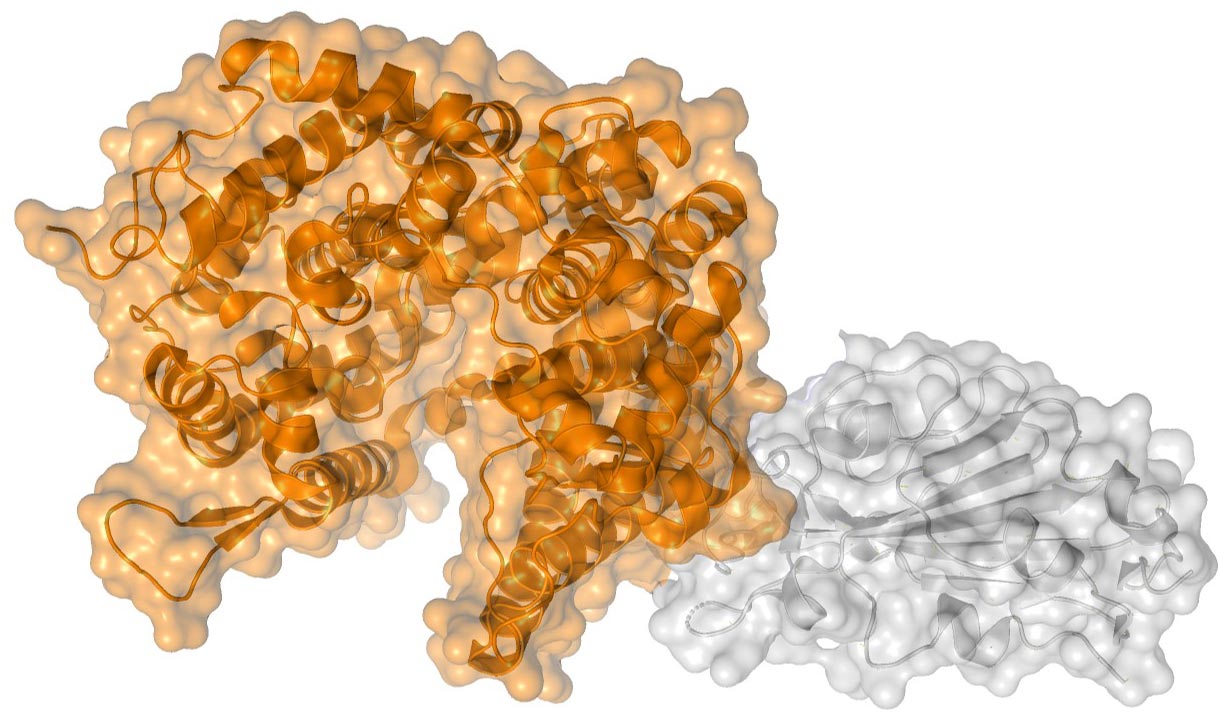
    Three Mutations Work Together To Spur New SARS-CoV-2 Variants
    The researchers tested how three mutations altered the interaction between a key part of the virus (gray) and the human protein to which it attaches (orange). Credit: Adapted from Biochemistry 2022, DOI: 10.1021/acs.biochem.2c00132

    Researchers studied three key mutations in SARS-CoV-2, finding that while each enhances traits like stability and antibody evasion, they also have drawbacks. Together, these mutations strengthen the virus’s ability to infect and evade immune responses, highlighting the role of mutation combinations in virus evolution.

    Like storm waves battering a ship, new versions of the SARS-CoV-2 virus, which causes COVID-19, have buffeted the world one after another. Recently, scientists keeping tabs on these variants noticed a trend: Many carry the same set of three mutations. In a new study published in the American Chemical Society’s Biochemistry journal, researchers examined how these mutations change the way a key piece of the virus functions. Their experiments show how this triad alters traits it needs to cause and sustain COVID-19 infection.

    The SARS-CoV-2 coronavirus has driven human cells to copy its genetic code countless times over the past couple of years, and, in the process, errors have emerged. These genetic errors, or mutations, are the raw material for new variants. Scientists have found that nearly half of the genetic sequences within variants contain three mutations at positions called K417, E484, and N501. All of these changes tweak the same part of the virus, known as the receptor binding domain, which enables SARS-CoV-2 to infect human cells by latching onto their ACE2 protein.

    Studying the Effects of Mutations K417, E484, and N501

    The widespread presence of this combination suggests that together, these mutations provide the virus with benefits not possible with a single change. Vaibhav Upadhyay, Krishna Mallela, and colleagues wanted to tease out the advantages — and drawbacks — of each of these three mutations individually and in combination.  

    As a first step, the researchers produced domains containing the mutations and studied their effects in cells grown in Petri dishes. The team looked at how well cells could produce the domain, as well as the domain’s stability, ability to bind to ACE2, and ability to evade antibodies.

    Trade-Offs and Synergy of the Mutations

    The results showed that each mutation enhances at least one of these characteristics, but at a cost. The K417 change, for example, increased the production and stability of the domain, while also improving its ability to escape one type of antibody. However, it also decreased the domain’s ability to attach to ACE2. The other two mutations had differing strengths and weaknesses. But, when put all together, the changes mitigated one another’s negative effects.

    Domains with all three mutations could bind ACE2 tightly and escape two types of antibodies, yet also were produced at similar levels as the original virus and were just as stable. By revealing the details of how natural selection can favor a combination of mutations, these results offer new insight into virus evolution, according to the researchers. 

    Reference: “Convergent Evolution of Multiple Mutations Improves the Viral Fitness of SARS-CoV-2 Variants by Balancing Positive and Negative Selection” by Vaibhav Upadhyay, Casey Patrick, Alexandra Lucas and Krishna M. G. Mallela, 5 May 2022, Biochemistry.
    DOI: 10.1021/acs.biochem.2c00132

    The authors acknowledge funding from the University of Colorado Skaggs School of Pharmacy and Pharmaceutical Sciences.

    Never miss a breakthrough: Join the SciTechDaily newsletter.
    Follow us on Google and Google News.

    American Chemical Society Biochemistry COVID-19 Genetics Immunology Popular Virology
    Share. Facebook Twitter Pinterest LinkedIn Email Reddit

    Related Articles

    New COVID-19 Research Provides Deep Insights Into Transmission and Mutation Properties of SARS-CoV-2

    Disinfected by the Sun: New Cotton Face Mask Kills Up to 99.9999% of Bacteria and Viruses in Daylight

    Ultrapotent COVID-19 Vaccine Designed via Computer: Innovative Nanoparticle Vaccine Spurs Extremely High Levels of Protective Antibodies

    Small Molecule Identified That Targets Genes of COVID-19 Virus for Destruction

    Ultrapotent Antibody Mix Blocks COVID-19 Virus From Entering Cells – Protects Against the Pandemic Coronavirus

    Scientists Discover Sugar Molecules in SARS-CoV-2 Coronavirus Spike Protein Play Active Role in Infection

    Diagnostic Biosensor Detects SARS-CoV-2 From Nasopharyngeal Swab in Less Than a Minute

    Does Soap Actually ‘Kill’ the Coronavirus? Here’s the Chemistry [Video]

    Pangolins, Not Snakes, May Be Missing Link in Coronavirus Jump From Bats to Humans

    Leave A Reply Cancel Reply

    • Facebook
    • Twitter
    • Pinterest
    • YouTube

    Don't Miss a Discovery

    Subscribe for the Latest in Science & Tech!

    Trending News

    Why Popular Diabetes Drugs Like Ozempic Don’t Work for Everyone: The “Genetic Glitch”

    Scientists Stunned After Finding Plant Thought Extinct for 60 Years

    Scientists Discover Tiny New Spider That Hunts Prey 6x Its Size

    Natural Component From Licorice Shows Promise for Treating Inflammatory Bowel Disease

    Scientists Warn: Popular Sweetener Linked to Dangerous Metabolic Effects

    Monster Storms on Jupiter Unleash Lightning Beyond Anything on Earth

    Scientists Create “Liquid Gears” That Spin Without Touching

    The Simple Habit That Could Help Prevent Cancer

    Follow SciTechDaily
    • Facebook
    • Twitter
    • YouTube
    • Pinterest
    • Newsletter
    • RSS
    SciTech News
    • Biology News
    • Chemistry News
    • Earth News
    • Health News
    • Physics News
    • Science News
    • Space News
    • Technology News
    Recent Posts
    • 5 Simple Ways To Remember More and Forget Less
    • This Common Habit Could Signal Serious Health Problems in Later Life
    • Common Food Preservative Linked to Rising Suicide Deaths Among Young People
    • Seeing the Invisible: Scientists Develop New Way To Track Particles in 3D
    • The Atomic Gap That Could Cost the Semiconductor Industry Billions
    Copyright © 1998 - 2026 SciTechDaily. All Rights Reserved.
    • Science News
    • About
    • Contact
    • Editorial Board
    • Privacy Policy
    • Terms of Use

    Type above and press Enter to search. Press Esc to cancel.