
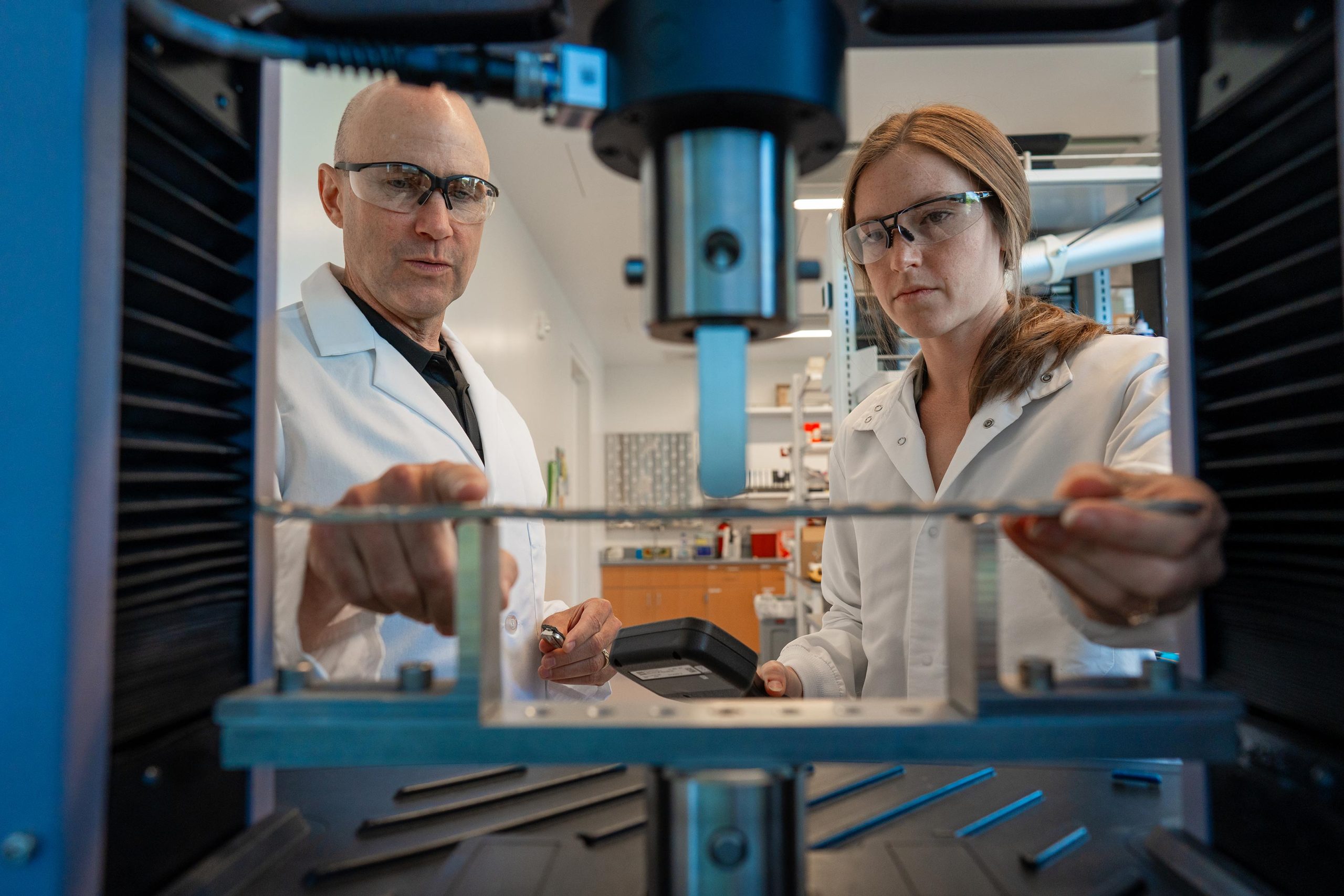
New research uses implantable sensors to show how data-enabled resistance training can enhance bone healing.
Researchers have created implantable sensors that monitor bone healing in real-time, showing significant improvements in rats’ femur recovery through an eight-week resistance-training program. This innovation holds potential for human clinical applications to customize and enhance rehabilitation.
Innovative Implantable Sensors for Bone Healing
Tiny implantable sensors are helping researchers at the University of Oregon improve how severe bone injuries heal.
Scientists at the UO’s Phil and Penny Knight Campus for Accelerating Scientific Impact have created miniature sensors that can be implanted at injury sites to send real-time data. In a recent study, they demonstrated that using these sensors with a resistance-training rehabilitation program significantly improved femur injuries in rats within just eight weeks.
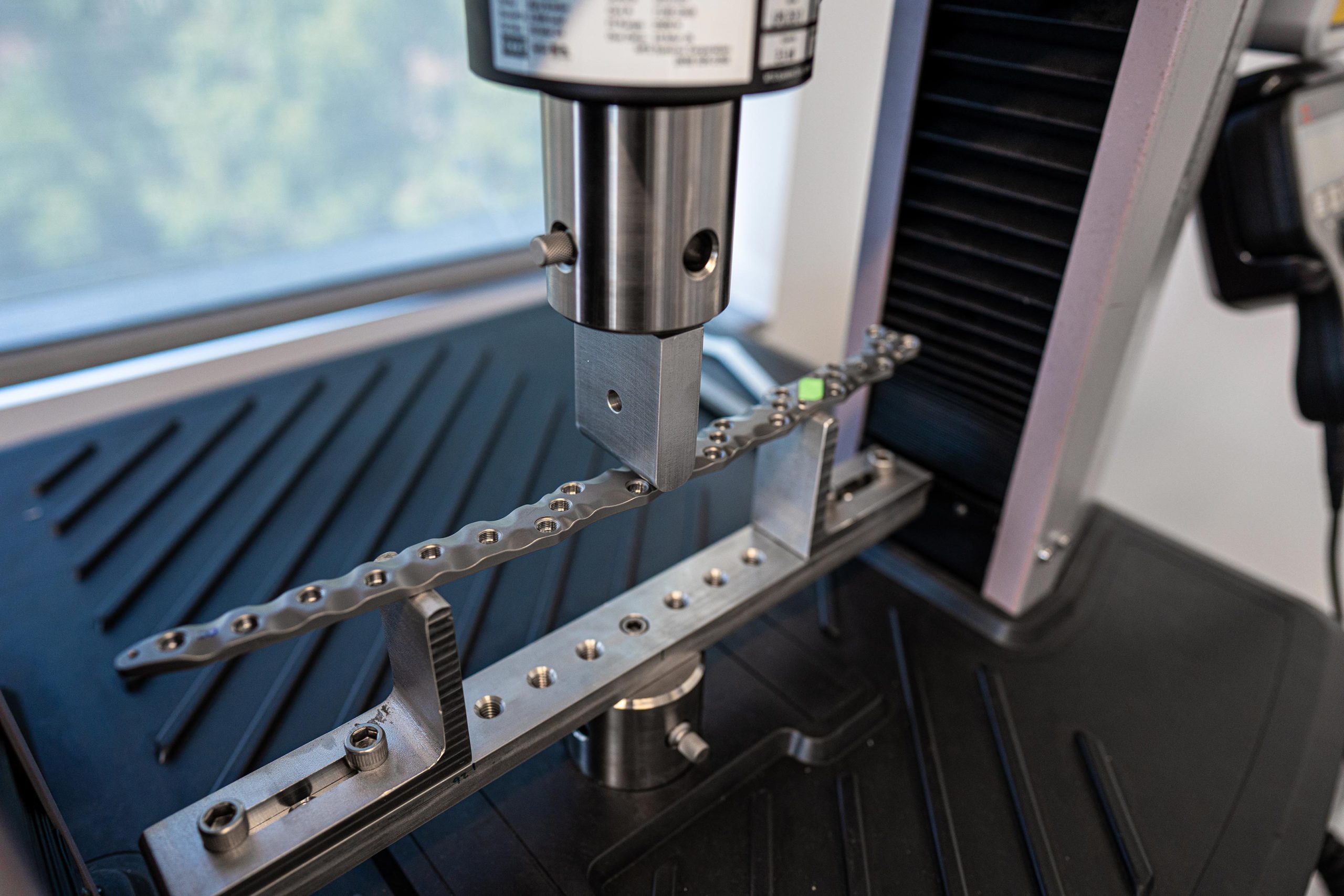
The sensors track the mechanical properties of the healing bone, providing continuous, detailed data about the recovery process. If applied to human patients in the future, this technology could help doctors create personalized rehabilitation programs by monitoring progress and adjusting exercises as needed.
Collaborative Research and Promising Findings
The work is a collaboration between the labs of Bob Guldberg, Nick Willett, and Keat Ghee Ong in the Knight Campus, and is funded in part by the Wu Tsai Human Performance Alliance. The researchers describe their findings on December 12 in the journal npj Regenerative Medicine.
“Our data support early resistance rehabilitation as a promising treatment to increase bone formation, bone healing strength, and promote full restoration of mechanical properties to pre-injury levels,” said Bob Guldberg, director of the Knight Campus and senior author on the paper.
Goldilocks Principle in Recovery Exercise
It’s long been understood that post-injury exercise follows a “Goldilocks” principle: Too little or too much can impede recovery, while just the right amount can enhance healing.
Pinpointing the exact type and intensity of exercise needed for the best recovery can be challenging, especially as it varies from patient to patient.
Specialized sensors developed at the Knight Campus could help change that by providing a window into what’s happening inside a healing bone throughout recovery. Originally developed in a collaboration between the Ong and Guldberg labs, these sensors were further improved by recent doctoral graduate Kylie Williams.
Testing Resistance Training for Bone Healing
With the sensors in hand, researchers aimed to test whether resistance running, which is a specific type of recovery exercise, could provide the right mechanical stimulation to improve bone recovery. To do this, they built custom brakes for rodent exercise wheels, which added resistance akin to increasing the incline on a treadmill.
Rats with femur injuries and implanted sensors then ran on either a regular exercise wheel or the modified resistance exercise wheel. The sensors transmitted strain data throughout the exercises, offering researchers a glimpse into the mechanical environment of bone cells during recovery.
Over the eight-week study, researchers monitored the healing process of the injured femurs and found that the resistance-trained rats displayed early signs of bone healing compared to those in sedentary or non-resistance conditions. By the end of the eight-week recovery period, all groups — sedentary, non-resistance, and resistance-trained — showed bone healing.
However, the resistance-trained animals had denser tissue, indicating that resistance rehabilitation enhanced bone formation. In fact, the injured bones of the resistance-trained rats exhibited mechanical properties, such as torque and stiffness, comparable to those of uninjured bones.
That indicates resistance training enhances recovery, even without any additional drugs or biological stimulants, Guldberg said.
Potential Clinical Applications of Resistance Rehabilitation
Biological agents like BMP, a molecule that promotes bone growth, are often used in regeneration studies. However, Guldberg’s team demonstrated complete functional recovery through resistance training alone, underscoring its potential for clinical application.
“One of the most impactful aspects of this work is that our resistance rehabilitation could regenerate the femur to normal strength within eight weeks without biological stimulants, and we’re really excited about that,” said Williams, the lead author of the study.
One limitation of the study is that all animals received a constant level of resistance throughout the experiment. However, researchers in the Guldberg lab are now investigating how increasing or decreasing levels of rehabilitation intensity across weeks of healing may affect bone regeneration.
Promising Results and Future Prospects
Although the research was conducted in rodents, the team hopes that data-enabled rehabilitation also can be used to improve healing in human patients who sustain musculoskeletal injuries. Toward that goal, Penderia Technologies, a Knight Campus start-up company, is working on further improvements to the implantable sensors, including a battery-free design and wearable monitors to aid use in human patients. After graduation in December, Williams will be joining Dr. Ong and the growing Penderia team to further explore the clinical translation of the preclinical strain sensors used in this study.
“We are hopeful this work can one day be translated to clinical settings, where these sensors can capture personalized measurements that account for injury type and severity to best inform rehabilitation decisions,” Guldberg said.
Reference: “Early resistance rehabilitation improves functional regeneration following segmental bone defect injury” by Kylie E. Williams, Julia Andraca Harrer, Steven A. LaBelle, Kelly Leguineche, Jarred Kaiser, Salil Karipott, Angela Lin, Alyssa Vongphachanh, Travis Fulton, J. Walker Rosenthal, Farhan Muhib, Keat Ghee Ong, Jeffrey A. Weiss, Nick J. Willett and Robert E. Guldberg, 12 December 2024, npj Regenerative Medicine.
DOI: 10.1038/s41536-024-00377-9
Never miss a breakthrough: Join the SciTechDaily newsletter.
Follow us on Google and Google News.