
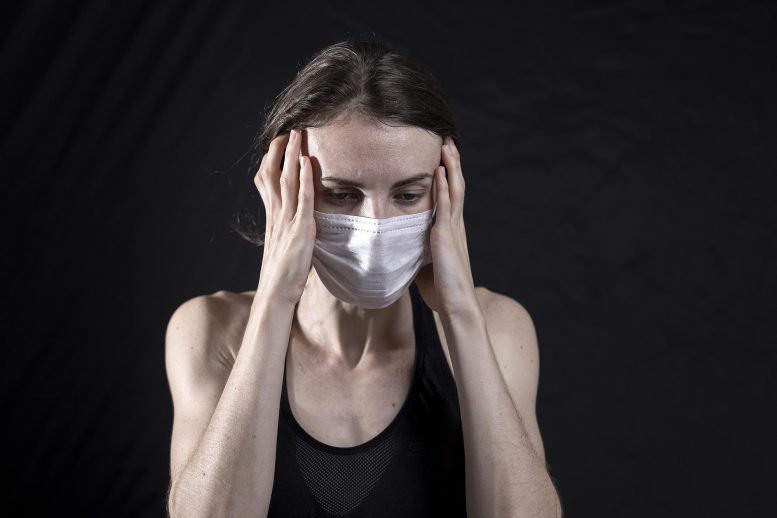
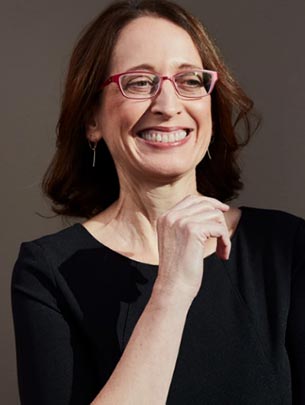
Chicago Booth’s Ayelet Fishbach offers advice for dealing with loneliness and COVID-19.
The COVID-19 pandemic has reshaped social life in the United States, forcing many to suspend activities that were once considered routine.
As cities move in and out of various stages of reopening and closure, people continue to navigate restrictions on when and where they can see their friends and family. And until there is a coronavirus vaccine, they must also grapple with the probability of recurring outbreaks.
For Prof. Ayelet Fishbach of the University of Chicago Booth School of Business, the pandemic only exacerbates the “modern disease” of loneliness. A leading social psychologist, she says there is a responsibility for policymakers to help guide the public through feelings of uncertainty—a responsibility that too many in the United States have failed to meet.
The following Q&A is edited from a transcript of a March 30 interview with Fishbach, the Jeffrey Breakenridge Keller Professor of Behavioral Science and Marketing.
How badly could the crisis exacerbate the problem of loneliness?
When we think about the effect of social distancing on people’s mental health, we are clearly concerned about those who are lonely. While some of us are at home with other people, others are stuck alone, or are not with the people who matter most to them. Loneliness is a modern disease that has concerned social scientists, governments, and health providers for a long time. We are particularly concerned about older people.
Digital connection is one thing that our modern life offers, which is great. If we’d had to socially distance ourselves prior to the internet, things would have been much harder. But online communication is not like physical connection. In our evolution as humans, we didn’t learn to connect over a single medium such as voice or text. We need to be with each other, touch each other, so that we feel connected.
In my own research, I’ve looked at the effects of having a meal with someone. My co-researchers and I find that people tend to have much better relationships, work better with each other, and feel less lonely if they eat with other people. People now have started to have meals with others over online meetings. It’s clearly better than nothing—not to mention that it’s super creative—but it’s a poor substitute. You can’t share your dish or smell theirs.
When we think about who is going to feel lonelier during these times, this might be older people, and those people who don’t have family with them. Unfortunately, those are also the people who are more at risk to begin with. In general, when we study loneliness, we are concerned about effects on people who live by themselves, on older people, and that’s tough, even if they master technology.
Chicago Booth’s Ayelet Fishbach discusses how long it might take for people to return to their normal habits after the pandemic. Credit: Video courtesy of Chicago Booth Review
How can policymakers help people cope with uncertainty?
Patience is hard, and being patient when you face a lot of uncertainty is even harder. Reminding people that this is temporary and will not last forever will help them to be patient.
My colleagues and I are running a few experiments to understand what makes people more patient and what makes them feel better about uncertainty, and exploring the way policymakers can communicate social-distancing policies in ways that reduce panic without reducing alertness. I believe this is the part we can play—doing research on how to get people to be more patient, helping people understand some ways by which we can all become more patient. It is the responsibility of policymakers to help people know what to expect, and how long to expect it. This is not something that we should expect medical providers to do. This is not on the professionals who are already in over their heads with trying to save people’s lives.
I would not give U.S. policymakers high grades for how this has been handled so far. We don’t see a clear message. We see a few who are reacting with clear instructions and messages that could make us feel more comfortable, but mostly we see lots of contradictory messages and nothing that addresses the concerns about loneliness, about the long-term economic impact, and so on.
Many people face an unresolved question: How long will I have to wait before I can see my family and my friends? The uncertainty people are experiencing might make them feel that it’s going to take forever. This is a scary thought. Policymakers should explain that there is a solution. They should say: We are working together, we are making progress, and we will resolve it. We are going to get our lives back.
I don’t hear enough of policymakers showing people that this is temporary, that we are fixing things. I also don’t hear enough reminders that we are strong, that we have the resources, and that this country is rich and educated. We can cope with a health crisis. I want to hear that from policymakers.
How soon will life go back to normal after the crisis?
My prediction, reading the research that we have in psychology, is that people are going to get back to hugging each other and spending time together and shopping in supermarkets much faster than they anticipate once the crisis is over. Our human nature is designed to bring us back together; we are just not good at being alone. We like to touch each other. We like to be with each other.
But this is certainly a traumatic event, and there will be negative consequences. We will have to look around us and help the people who are suffering more than us from this. People are going to lose their jobs. Some are going to lose people that are close to them, and obviously that is going to be hard.
“Our human nature is designed to bring us back together; we are just not good at being alone. We like to touch each other. We like to be with each other.” Prof. Ayelet Fishbach
On the mental health crisis that is unfolding, clearly some people are struggling with just surviving. There are some people with jobs they need to do now from home while taking care of their children, so they can barely add more stuff to their plate. But we do need to check in with the people around us. We do need to talk to older people, people who are alone.
It’s an interesting question to see what will happen with our consumption habits as a result of this crisis. We basically moved everything online. Are we going to go back to the movies, or is our movie watching just going to be online? Are we going to go to concerts again, or just listen to music on Spotify?
Anything that’s about social interaction—such as going to the movies, the theater, concerts, or the mall on a Saturday—my prediction is that we are going to go back to our old ways as soon as we’re allowed to.
Never miss a breakthrough: Join the SciTechDaily newsletter.
Follow us on Google and Google News.