
Close Menu
    Facebook X (Twitter) Instagram
    SciTechDaily
    • Biology
    • Chemistry
    • Earth
    • Health
    • Physics
    • Science
    • Space
    • Technology
    Facebook X (Twitter) Pinterest YouTube RSS
    SciTechDaily
    Home»Space»Hubble Discovers NGC 1073, A Barred Spiral Galaxy Similar to Milky Way
    Space

    Hubble Discovers NGC 1073, A Barred Spiral Galaxy Similar to Milky Way

    By SciTechDailyFebruary 3, 2012No Comments2 Mins Read
    Facebook Twitter Pinterest Telegram LinkedIn WhatsApp Email Reddit
    Share
    Facebook Twitter LinkedIn Pinterest Telegram Email Reddit
    ngc-1073-galaxy
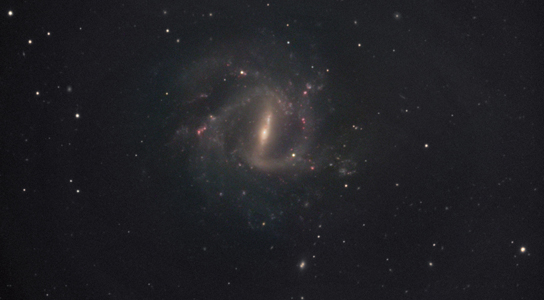
    NGC 1073, a barred spiral galaxy like the Milky Way, is located 55 million light-years away in the Cetus constellation.

    The Hubble Telescope unveiled an eerie twin galaxy to the Milky Way today. NGC 1073, a barred spiral galaxy like the Milky Way, is located 55 million light-years away in the Cetus constellation.

    Astronomers hope to better understand the Milky Way by observing NGC 1073. The aforementioned bars are made up of dense lines of stars at the center of the galaxies, which are thought to form as gravity causes density waves to push gas inward, supplying raw materials for birthing new stars. The inflow of gas also feeds the giant black holes that are thought to inhabit the center of most galaxies.
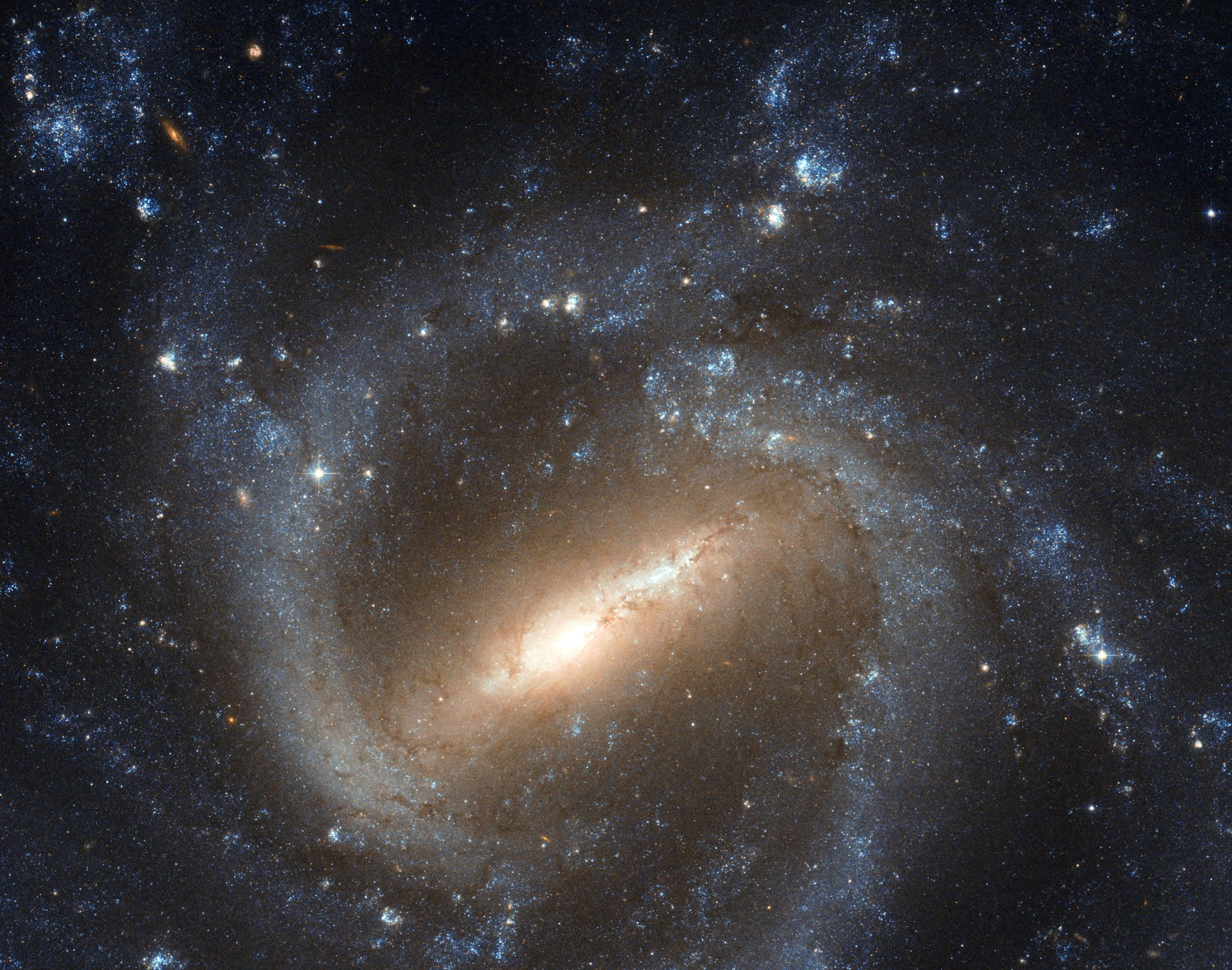
    Barred Spiral Galaxy NGC 1073
    The NASA/ESA Hubble Space Telescope has taken a picture of the barred spiral galaxy NGC 1073, which is found in the constellation of Cetus (The Sea Monster). Our own galaxy, the Milky Way, is thought to be a similar barred spiral, and the study of galaxies such as NGC 1073 can help astronomers learn more about our celestial home. Credit: NASA & ESA

    Scientists think that the bars form as spiral galaxies age, which is supported in part because extremely distant galaxies dating from the universe’s early days tend not to have them. Also, bars are linked to galaxies full of older, redder stars and less prevalent in galaxies with bluer, younger stars.
    ngc-1073-landscape

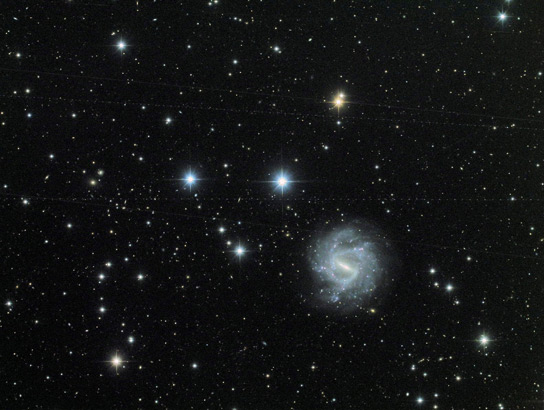
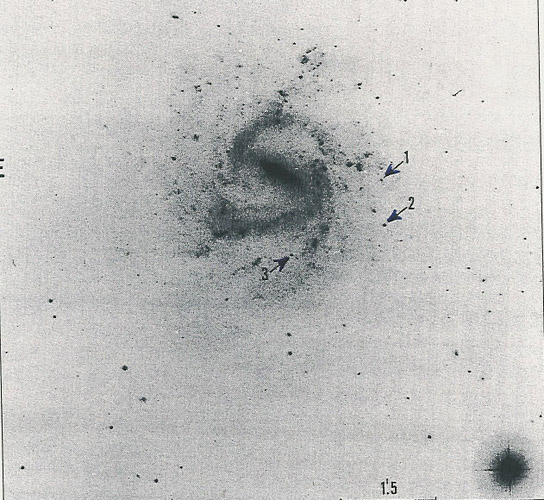
    The image also reveals an odd, rough ring-like structure around the galaxy, that is the result of recent star formation. A bright X-ray source inside the ring is most likely a binary system containing a star and a black hole, locked in orbit around each other.  There are also three quasars in the image, incredibly bright sources of light caused by matter heating up and falling into supermassive black holes in galaxies, literally billions of light-years from us, states a Hubble researcher.
    ngc-1073-three-quasar

    They are in fact some of the most distant objects observable in the universe.

    Never miss a breakthrough: Join the SciTechDaily newsletter.
    Follow us on Google and Google News.

    Astronomy Hubble Space Telescope Milky Way NASA
    Share. Facebook Twitter Pinterest LinkedIn Email Reddit

    Related Articles

    NASA’s Hubble Reveals How the LMC Defied Galactic Destruction

    Hubble Finds Phantom Imprint in Space Revealing Black Hole Roaming Our Milky Way Galaxy

    The Illusion of a Continuous Perseus Arm: Our Milky Way May Be More Fluffy, Less Wiry

    Hubble Shows Us the Future: A Galactic Collision

    Hubble Observes Spectacular Supernova Time-Lapse – “No Earthly Fireworks Display Can Compete”

    Survey of the Stars: Hubble Captures Great Barred Spiral Galaxy in a Fiery Furnace

    Mystery As Hubble Finds Milky Way Raids Intergalactic ‘Bank Accounts’

    Hubble Discovers Two Dwarf Galaxies Moving into the Milky Way

    Astronomers Find Bizarre Alignment of Planetary Nebulae in the Milky Way

    Leave A Reply Cancel Reply

    • Facebook
    • Twitter
    • Pinterest
    • YouTube

    Don't Miss a Discovery

    Subscribe for the Latest in Science & Tech!

    Trending News

    JWST Finds a “Star” 100 Billion Times Brighter Than Any Star Should Be

    Scientists Find a Hidden Biological Link Across Different Forms of Autism

    Astronomers Discover a Ghostly River of Stars That Could Reveal Dark Matter

    Why Is Colorectal Cancer Rising in People Under 50? New Clues Point to the Environment

    Quantum Fluctuations Break a Crystal’s Symmetry Rules

    Why Does an Irregular Heartbeat Strike 40 Years Early in Some People?

    Scientists Reveal How ADHD Could Fuel Creative Thinking

    Scientists Find Just 3 Minutes of Sprinting Can Transform Blood Chemistry

    Follow SciTechDaily
    • Facebook
    • Twitter
    • YouTube
    • Pinterest
    • Newsletter
    • RSS
    SciTech News
    • Biology News
    • Chemistry News
    • Earth News
    • Health News
    • Physics News
    • Science News
    • Space News
    • Technology News
    Recent Posts
    • A Vast Clean Energy Source May Be Hiding Beneath Australia’s Red Soil
    • Scientists Uncover Signs of an Ancient Climate “Tipping Point”
    • Cleaner Cars May Be Hiding a New Pollution Problem
    • Common Plant Chemical Linked to Widespread Organ Damage in Aquatic Animals
    • Scientists Discover a Hidden Baobab Species in Madagascar
    Copyright © 1998 - 2026 SciTechDaily. All Rights Reserved.
    • Science News
    • About
    • Contact
    • Editorial Board
    • Privacy Policy
    • Terms of Use

    Type above and press Enter to search. Press Esc to cancel.