
Close Menu
    Facebook X (Twitter) Instagram
    SciTechDaily
    • Biology
    • Chemistry
    • Earth
    • Health
    • Physics
    • Science
    • Space
    • Technology
    Facebook X (Twitter) Pinterest YouTube RSS
    SciTechDaily
    Home»Space»Hubble Image of the Week – Starbursts in Virgo (NGC 4536)
    Space

    Hubble Image of the Week – Starbursts in Virgo (NGC 4536)

    By SciTechDailyApril 10, 2017No Comments2 Mins Read
    Facebook Twitter Pinterest Telegram LinkedIn WhatsApp Email Reddit
    Share
    Facebook Twitter LinkedIn Pinterest Telegram Email Reddit
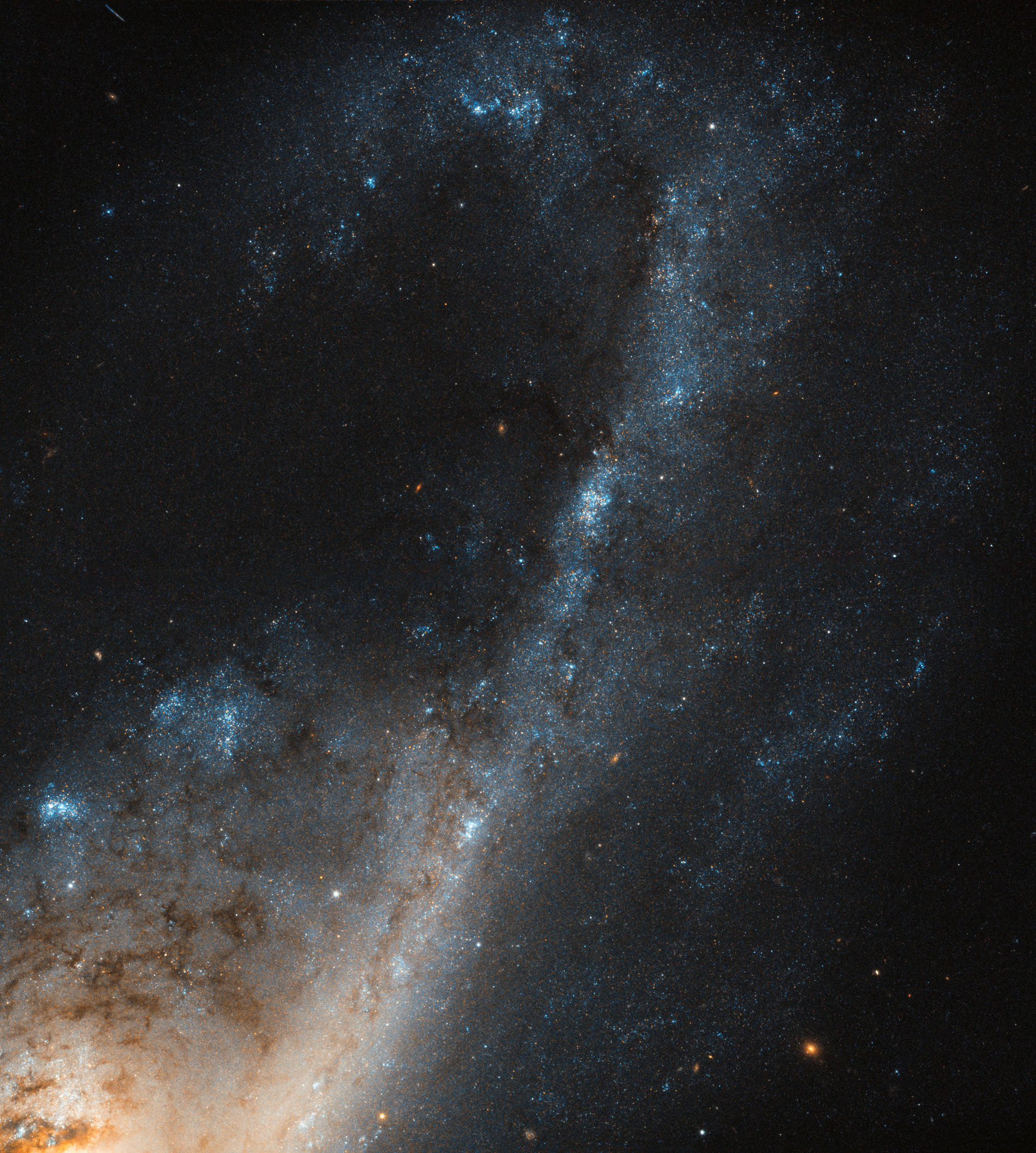
    Hubble Image of the Week Starbursts in NGC 4536
    NGC 4536 is located roughly 50 million light-years away in the constellation of Virgo and it is a hub of extreme star formation. Credit: ESA/Hubble & NASA

    This new Hubble image of the week gives us a closer look at the starburst region in NGC 4536.

    Galaxy formation and evolution are still far from being fully understood. Luckily, the conditions found within certain galaxies — like starburst galaxies — can tell us a lot about how they have evolved over time. Starburst galaxies contain regions where stars are forming at such a breakneck rate that the galaxy is eating up its gas supply faster than it can be replenished!

    NGC 4536 is just such a galaxy, captured here in beautiful detail by the Hubble’s Wide Field Camera 3 (WFC3) as the image of the week. NGC 4536 is located roughly 50 million light-years away in the constellation of Virgo and it is a hub of extreme star formation. There are several different factors that can lead to such an ideal environment in which stars can form at such a rapid rate. Importantly there has to be a sufficiently massive supply of gas, which might be acquired in a number of ways — for example by passing very close to another galaxy, in a full-blown galactic collision, or as a result of some event that forces lots of gas into a relatively small space.

    Star formation leaves a few tell-tale fingerprints, allowing astronomers to tell where stars have been born. We know that starburst regions are rich in gas. Young stars in these extreme environments often live fast and die young, burning extremely hot and exhausting their gas supplies fairly quickly. These stars also emit huge amounts of intense ultraviolet light, which blasts the electrons off any atoms of hydrogen lurking nearby (a process called ionization), leaving behind clouds of ionized hydrogen (known in astronomer-speak as HII regions).

    Never miss a breakthrough: Join the SciTechDaily newsletter.
    Follow us on Google and Google News.

    Astronomy Cosmology Galaxy Evolution Hubble Space Telescope Starbursts
    Share. Facebook Twitter Pinterest LinkedIn Email Reddit

    Related Articles

    Hubble Telescope Captures Spectacular Image of a Galactic Merger

    Astronomers See Evidence of Something Unexpected in the Universe

    Observations of Massive Galaxies in the Early Universe Reveal Rare Dark-Matter Haloes

    Astronomers Discover Dead Disk Galaxy, Challenges Theories of Galaxy Evolution

    Hubble Image of the Week: Starburst Galaxy Messier 94

    Hubble Image of the Week – Evolution in Slow Motion

    Hubble Reveals the Role of Dwarf Galaxies in the Star Formation History of the Universe

    Study Suggest Spiral Galaxies Are Larger Than Previously Thought

    Evidence That Local Starbursts Impact the Bulk of the Gas Around Their Host Galaxy

    Leave A Reply Cancel Reply

    • Facebook
    • Twitter
    • Pinterest
    • YouTube

    Don't Miss a Discovery

    Subscribe for the Latest in Science & Tech!

    Trending News

    Artificial Sweeteners May Harm Future Generations, Study Suggests

    Splashdown! NASA Artemis II Returns From Record-Breaking Moon Mission

    What If Consciousness Exists Beyond Your Brain

    Scientists Finally Crack the 100-Million-Year Evolutionary Mystery of Squid and Cuttlefish

    Beyond “Safe Levels”: Study Challenges What We Know About Pesticides and Cancer

    Researchers Have Found a Dietary Compound That Increases Longevity

    Scientists Baffled by Bizarre “Living Fossil” From 275 Million Years Ago

    Your IQ at 23 Could Predict Your Wealth at 27, Study Finds

    Follow SciTechDaily
    • Facebook
    • Twitter
    • YouTube
    • Pinterest
    • Newsletter
    • RSS
    SciTech News
    • Biology News
    • Chemistry News
    • Earth News
    • Health News
    • Physics News
    • Science News
    • Space News
    • Technology News
    Recent Posts
    • 34-Million-Year-Old Snake Found in Wyoming Rewrites Our Understanding of Evolution
    • Prehistoric “Vomit Fossil” Reveals Never-Before-Seen Flying Reptile
    • Scientists Discover Bizarre Crocodile Relative That Walked on Two Legs
    • How Quantum Mechanics Went From Baffling Theory to Revolutionizing Modern Technology
    • Scientists May Have Found the Key to Jupiter and Saturn’s Moon Mystery
    Copyright © 1998 - 2026 SciTechDaily. All Rights Reserved.
    • Science News
    • About
    • Contact
    • Editorial Board
    • Privacy Policy
    • Terms of Use

    Type above and press Enter to search. Press Esc to cancel.