
Close Menu
    Facebook X (Twitter) Instagram
    SciTechDaily
    • Biology
    • Chemistry
    • Earth
    • Health
    • Physics
    • Science
    • Space
    • Technology
    Facebook X (Twitter) Pinterest YouTube RSS
    SciTechDaily
    Home»Space»Hubble Space Telescope Captures a Vast Cosmic Wonderland
    Space

    Hubble Space Telescope Captures a Vast Cosmic Wonderland

    By ESA/HubbleNovember 30, 2020No Comments2 Mins Read
    Facebook Twitter Pinterest Telegram LinkedIn WhatsApp Email Reddit
    Share
    Facebook Twitter LinkedIn Pinterest Telegram Email Reddit
    Hubble Cosmic Wonderland
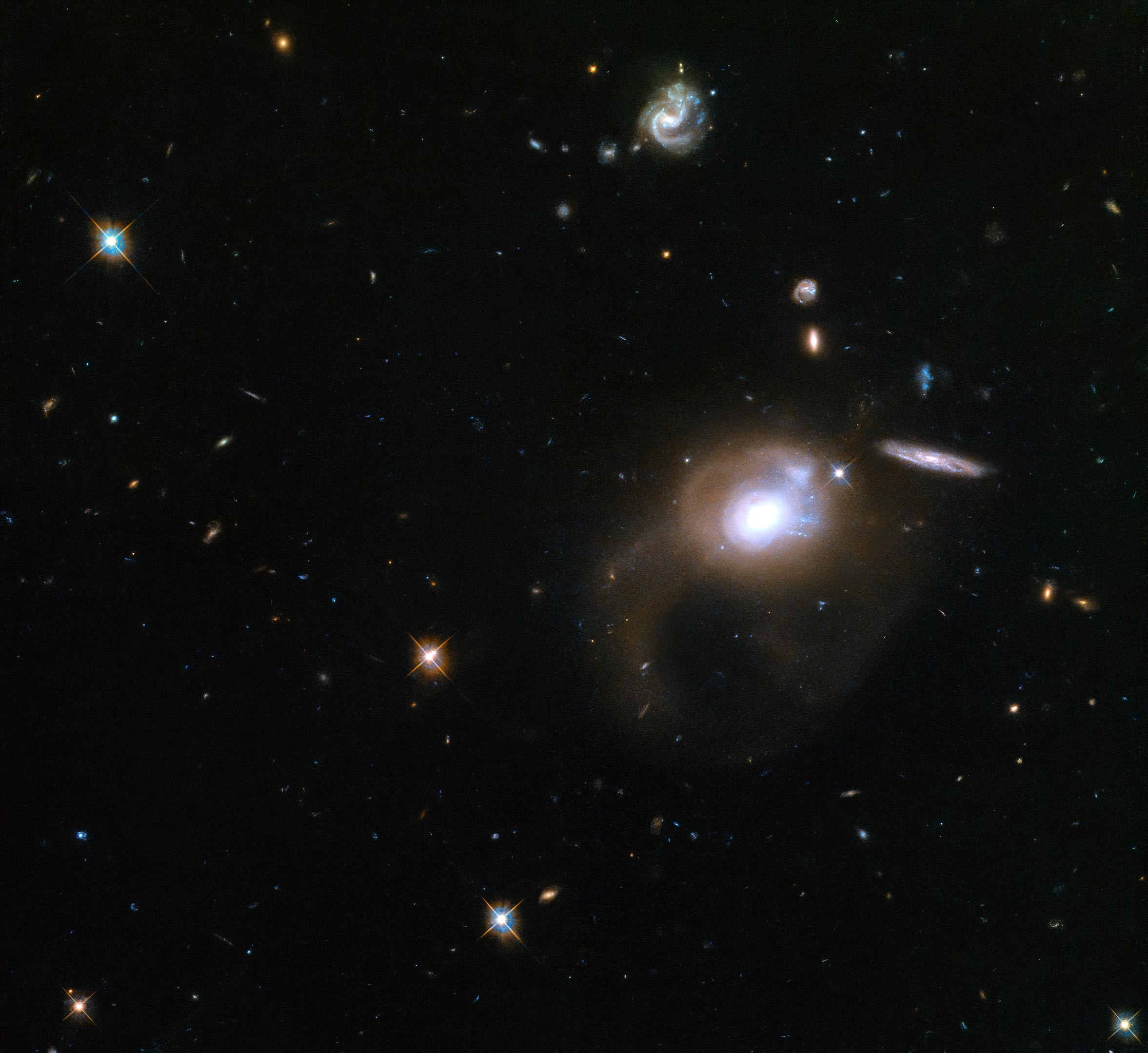
    Hubble Space Telescope image of a large expanse of space features the galaxy SDSSJ225506.80+005839.9. Credit: ESA/Hubble & NASA, A. Zabludoff

    This large expanse of space captured with the Hubble Space Telescope features the galaxy SDSSJ225506.80+005839.9. Unlike many other extravagant galaxies and stunning nebulae imaged by Hubble, this galaxy does not have a short popular name, and is only known by its long SDSS name, which refers to its coordinates in the sky. This galaxy — visible in the center right portion of the image — and its many wondrous neighboring galaxies lie in the constellation of Pisces (The Fish).

    This is a post-starburst galaxy, which is a product of galaxies that have merged within the past billion years. This merger event drove gas to the galaxy’s center and created an abundance of new stars, of which the brightest are visible in the remnant galaxy’s core. The visible shells and tails surrounding the galaxies are also a result of this merger event.

    Residing far beyond our own Milky Way, it is almost impossible to glimpse this galaxy without the assistance of Hubble, and, like thousands of similar faint and very distant galaxies, it was only discovered and cataloged in recent years. Many millions of galaxies still await our discovery as we build a wondrous picture of our night sky.

    Never miss a breakthrough: Join the SciTechDaily newsletter.
    Follow us on Google and Google News.

    Astronomy European Space Agency Hubble Space Telescope NASA
    Share. Facebook Twitter Pinterest LinkedIn Email Reddit

    Related Articles

    Hubble’s Newest Discovery Isn’t a Star, It’s a Window Into the Dark Universe

    This Nearby Galaxy Shows How Frozen Clouds Ignite Into Stars

    This Chaotic Spiral Galaxy Is Still Recovering From a Cosmic Collision

    This Strange Spiral Galaxy Is Hiding a Massive Black Hole

    Hubble Zooms In on a Galaxy That Maps the Universe’s Expansion

    Hubble Captures a Dazzling Spiral Galaxy Alive With Birth and Destruction

    Hubble Spots a Glowing “Ring of Fire” in a Distant Spiral Galaxy

    Dust, Light & Ancient Collisions: The Sombrero Galaxy Like You’ve Never Seen It

    Star Formation in Motion: Hubble Reveals Spiraling Stars and Sculpted Nebulae

    Leave A Reply Cancel Reply

    • Facebook
    • Twitter
    • Pinterest
    • YouTube

    Don't Miss a Discovery

    Subscribe for the Latest in Science & Tech!

    Trending News

    Black Hole Shredded a Massive Star in the Most Powerful Stellar Explosion Ever Seen

    Building the Brain Requires Millions of Dangerous DNA Breaks

    Endless Supply of Cancer-Fighting Immune Cells Unlocked by USC Scientists

    XRISM Reveals Galaxy-Shaping Winds Erupting From a Supermassive Black Hole

    New Molecule Restores the Brain’s Natural Defenses Against Alzheimer’s

    Could Creatine Boost More Than Muscles? It May Also Help Depression

    Scientists Discover a Natural Molecule That Could Help Prevent Vision Loss

    Scientists Thought Royal Jelly Made Queen Bees. They Were Wrong

    Follow SciTechDaily
    • Facebook
    • Twitter
    • YouTube
    • Pinterest
    • Newsletter
    • RSS
    SciTech News
    • Biology News
    • Chemistry News
    • Earth News
    • Health News
    • Physics News
    • Science News
    • Space News
    • Technology News
    Recent Posts
    • Quantum Mechanics May Not Need Imaginary Numbers After All
    • Scientists Have Found Evidence That Dark Matter May Not Be Playing by the Rules
    • Could Invisible Planet Flybys Have Triggered Earth’s Mass Extinctions?
    • Making the Invisible Visible: $100 Device Detects Cosmic Particles Passing Through You
    • Textbooks May Need Rewriting After Researchers Debunk a Core Chemistry Concept
    Copyright © 1998 - 2026 SciTechDaily. All Rights Reserved.
    • Science News
    • About
    • Contact
    • Editorial Board
    • Privacy Policy
    • Terms of Use

    Type above and press Enter to search. Press Esc to cancel.