
Close Menu
    Facebook X (Twitter) Instagram
    SciTechDaily
    • Biology
    • Chemistry
    • Earth
    • Health
    • Physics
    • Science
    • Space
    • Technology
    Facebook X (Twitter) Pinterest YouTube RSS
    SciTechDaily
    Home»Space»Hubble Views a Galaxy in a Transitional Phase
    Space

    Hubble Views a Galaxy in a Transitional Phase

    By NASAFebruary 4, 20131 Comment3 Mins Read
    Facebook Twitter Pinterest Telegram LinkedIn WhatsApp Email Reddit
    Share
    Facebook Twitter LinkedIn Pinterest Telegram Email Reddit
    young,-star-forming-galaxies-settle-to-become-massive,-red-and-dead-galaxies
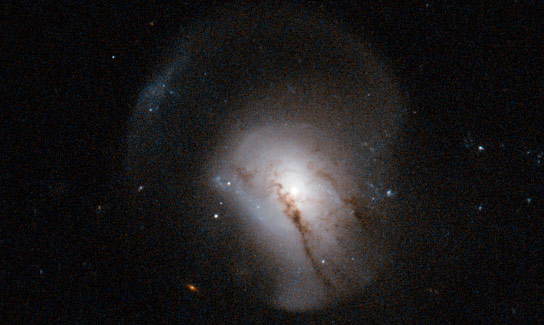
    Hubble Space Telescope image of a galaxy in a transitional phase. Credit: ESA/Hubble & NASA

    The Hubble Space Telescope captured an image of the transitional phase when young, star-forming galaxies settle to become massive, red, and dead galaxies.

    The further away you look, the further back in time you see. Astronomers use this fact to study the evolution of the Universe by looking at nearby and more distant galaxies and comparing their features. Hubble is particularly well suited for this type of work because of its extremely high resolution and its position above the blurring effects of the Earth’s atmosphere. This has allowed it to detect many of the most distant galaxies known, as well as make detailed images of faraway objects.

    Comparing galaxies in the distant past with those around us today, astronomers have noticed that the nearby galaxies are far quieter and calmer than their distant brethren, seen earlier in their lives. Nearby galaxies (although not the Milky Way) are often large, elliptical galaxies with little or no ongoing star formation, and their stars tend to be elderly and red in color. These galaxies, in astronomers’ language, are “red and dead.”

    This is not so for galaxies further away, which typically show more vigorous star birth.

    The reason for this appears to be that as the Universe has aged, galaxies have often collided and merged together, and these events disrupt gas clouds within them. A merger will usually be a trigger for such intense star formation that the supply of gas is used up, and no more star formation occurs afterward. The merged elliptical galaxy then creeps into old age, getting redder as its stars get older. This is expected to happen to the Milky Way when it merges with the nearby Andromeda Galaxy, some four billion years from now.

    The galaxy in this image, cataloged as 2MASX J09442693+0429569, marks a transitional phase in this process as young, star-forming galaxies settle to become massive, red, and dead galaxies.

    The galaxy has tail-like features extending from it, typical of a galaxy that has recently undergone a merger. Studying the properties of the light from this galaxy, astronomers see no sign of ongoing star formation; in other words, the merger triggered an event that has used up all the gas. However, the observations suggest that star formation was strong until the very recent past, and has ceased only within the last billion years. This image, therefore, shows a snapshot of the moment star formation stopped forever in a galaxy.

    A version of this image was entered into the Hidden Treasures image processing competition by contestant Nick Rose.

    Never miss a breakthrough: Join the SciTechDaily newsletter.
    Follow us on Google and Google News.

    Astronomy Hubble Space Telescope Stellar Evolution
    Share. Facebook Twitter Pinterest LinkedIn Email Reddit

    Related Articles

    Hubble Telescope Spots Strange, Massive Disk 40 Times the Size of Our Solar System

    Hubble Views a Stellar “Sneezing Fit”

    Hubble Views a Very Young Star Being Born

    Hubble Reveals Link Between Stars’ Ages and Their Orbits

    Evidence That Local Starbursts Impact the Bulk of the Gas Around Their Host Galaxy

    One of the Most Efficient Star Making Galaxies Ever Observed

    Hubble Views the Large Magellanic Cloud and Its Star Forming Regions

    Hubble Views Dwarf Galaxy NGC 5477

    Hubble Data Reveals That Globular Clusters Age at Different Rates

    1 Comment

    1. Toby on February 4, 2013 8:30 am

      This is a fantastic image. The Hubble is producing some real diversity now. Keep them coming please!

      Reply
    Leave A Reply Cancel Reply

    • Facebook
    • Twitter
    • Pinterest
    • YouTube

    Don't Miss a Discovery

    Subscribe for the Latest in Science & Tech!

    Trending News

    New Pill Lowers Stubborn Blood Pressure and Protects the Kidneys

    Humans May Have Hidden Regenerative Powers, New Study Suggests

    Scientists Just Solved the Mystery of Why Crabs Walk Sideways

    Doctors Are Surprised by What This Vaccine Is Doing to the Heart

    This Popular Supplement May Boost Your Brain, Not Just Your Muscles

    Scientists Say This Simple Supplement May Actually Reverse Heart Disease

    Warming Oceans Could Trigger a Dangerous Methane Surge

    This Simple Movement Could Be Secretly Cleaning Your Brain

    Follow SciTechDaily
    • Facebook
    • Twitter
    • YouTube
    • Pinterest
    • Newsletter
    • RSS
    SciTech News
    • Biology News
    • Chemistry News
    • Earth News
    • Health News
    • Physics News
    • Science News
    • Space News
    • Technology News
    Recent Posts
    • New MRI Breakthrough Captures Stunningly Clear Images of the Eye and Brain
    • Scientists Warn Sitting Too Much Can Harm Your Body in Surprising Ways
    • Your Blood Pressure Reading Could Be Wrong Because of One Simple Mistake
    • Scientists Discover Cheap Material That Kills Deadly Superbugs
    • This Magnetic Field Trick Creates Entirely New Forms of Matter
    Copyright © 1998 - 2026 SciTechDaily. All Rights Reserved.
    • Science News
    • About
    • Contact
    • Editorial Board
    • Privacy Policy
    • Terms of Use

    Type above and press Enter to search. Press Esc to cancel.