
Close Menu
    Facebook X (Twitter) Instagram
    SciTechDaily
    • Biology
    • Chemistry
    • Earth
    • Health
    • Physics
    • Science
    • Space
    • Technology
    Facebook X (Twitter) Pinterest YouTube RSS
    SciTechDaily
    Home»Science»Human Obsession With Orchids Goes As Far Back As Roman Times
    Science

    Human Obsession With Orchids Goes As Far Back As Roman Times

    By SciTechDailyOctober 23, 2012No Comments3 Mins Read
    Facebook Twitter Pinterest Telegram LinkedIn WhatsApp Email Reddit
    Share
    Facebook Twitter LinkedIn Pinterest Telegram Email Reddit
    orchid-roman-times
    The Ara Pacis, an altar erected in Rome by the emperor Augustus in 9 B.C.E., includes one of the earliest documented depictions of an orchid (inset) in Western art. Credit: Bernd Haynold/Wikimedia Commons

    A careful study of ancient artifacts in Italy has pushed back the earliest documented appearance of orchids from the Renaissance to Roman times. The orchid’s popularity in public art seemed to decrease with the advent of Christianity, perhaps because of its associations with sexuality.

    The scientists published their findings in the Journal of Cultural Heritage. The shapes and bright colors of orchids have always made the flower popular among fanciers and botanists, but it’s their symbolic value, which many cultures associate with a resemblance to both male and female sexual organs, that is also part of their allure. Even its name, Orchis, is derived from the Greek word for testicles.
    orchid-comparison
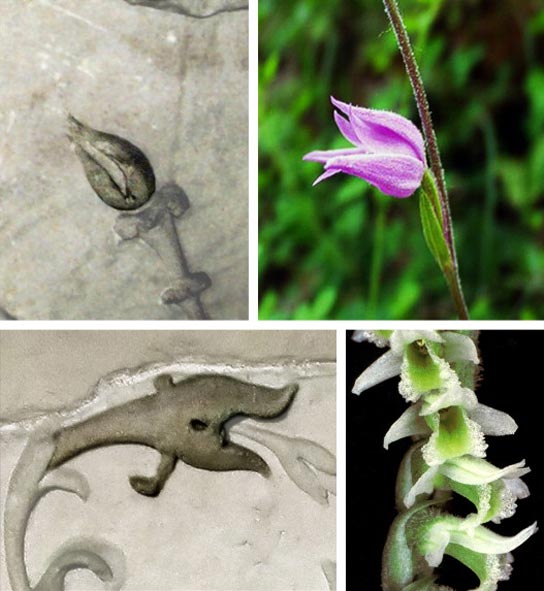
    Cephalanthera sp. on the frieze of Ara Pacis (upper left); the flower in the wild (upper right). Spiranthes spiralis (L.) Chevall on the frieze of Ara Pacis (bottom left); the plants in the wild (bottom right).

    While the flower’s biology and ecology has gotten plenty of attention, its phytoiconography, or how the flower has been used symbolically in art, has been less studied. Giulia Caneva, of the University of Rome, with several graduate students set out to change this. She began assembling a database of Italian artifacts, which included paintings, textiles, and stone carvings that included plants or vegetation. Then, they began to analyze the different plants that were represented.

    The depictions of Italian orchids showed up much earlier than expected. Previously they were spotted in paintings in the 1400s, but Caneva’s team discovered them as early as 46 B.C.E, when Julius Caesar erected the Temple of Venus Genetrix in Rome. There are at least three orchids appearing in dozens of other plants on the Ara Pacis, a massive stone pillar erected by the emperor Augustus in 9 B.C.E. Artists chose the flowers to emphasize a theme of civic rebirth, fertility and prosperity following a long period of conflict.

    As Christianity began to influence art in the 3rd and 4th centuries, orchids and other plants began to fade from public art. This was probably due to an effort to eliminate pagan symbols and those related to sexuality. With the arrival of the Renaissance, orchids arrive back in art, but now mostly as a symbol of beauty and elegance.
    orchid-della-porta-1588
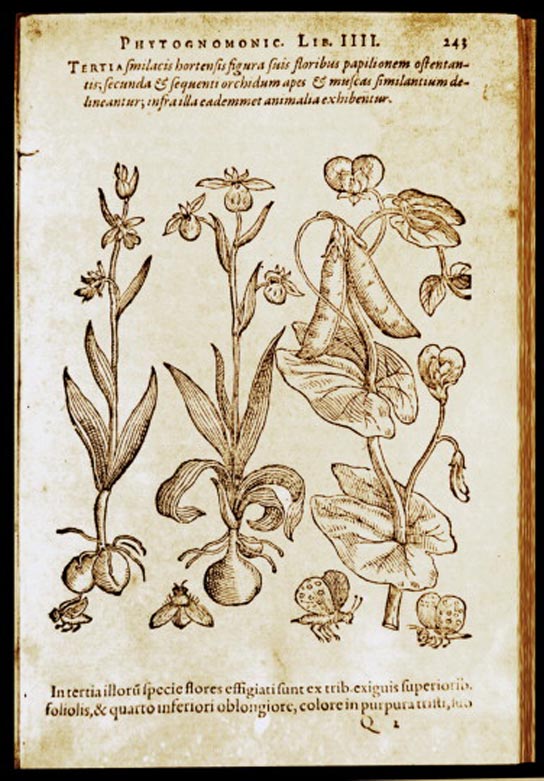
    Signatura rerum, the theory of signature: orchids images from G.B. Della Porta (1588).

    Reference: “Orchids in the Roman culture and iconography: Evidence for the first representations in antiquity” by Alma Kumbaric, Valentina Savo and Giulia Caneva, 12 October 2012, Journal of Cultural Heritage.
    DOI: 10.1016/j.culher.2012.09.002

    Never miss a breakthrough: Join the SciTechDaily newsletter.
    Follow us on Google and Google News.

    Art Behavioral Science Botany Flowers
    Share. Facebook Twitter Pinterest LinkedIn Email Reddit

    Related Articles

    Searching for a More Accurate Classification of the Dimensions of Psychopathology

    Protective Factors Are Important in Preventing Violence in Veterans

    Email Data Reveals Global Migration Trends

    Theoretical Model on the Evolution of Cooperation

    Genetic Clues to Van Gogh’s Teddy Bear Sunflower Florets Uncovered

    7 Million Year Old Footprints Reveal Elephant Social Structure from the Past

    Humans Implicated in Africa’s Deforestation 3,000 Years Ago

    The Less Birds Know, The Better

    Da Vinci’s Last Supper Threatened By Air Pollution

    Leave A Reply Cancel Reply

    • Facebook
    • Twitter
    • Pinterest
    • YouTube

    Don't Miss a Discovery

    Subscribe for the Latest in Science & Tech!

    Trending News

    Mezcal “Worm” in a Bottle Mystery: DNA Testing Reveals a Surprise

    New Research Reveals That Your Morning Coffee Activates an Ancient Longevity Switch

    This Is What Makes You Irresistible to Mosquitoes

    Shockingly Powerful Giant Octopuses Ruled the Seas 100 Million Years Ago

    Scientists Stunned by New Organic Molecules Found on Mars

    Rewriting Dinosaur Evolution: Scientists Unearth Remarkable 150-Million-Year-Old Stegosaur Skull

    Omega-3 Supplements Linked to Cognitive Decline in Surprising New Study

    First-of-Its-Kind Discovery: Homer’s Iliad Found Embedded in a 1,600-Year-Old Egyptian Mummy

    Follow SciTechDaily
    • Facebook
    • Twitter
    • YouTube
    • Pinterest
    • Newsletter
    • RSS
    SciTech News
    • Biology News
    • Chemistry News
    • Earth News
    • Health News
    • Physics News
    • Science News
    • Space News
    • Technology News
    Recent Posts
    • These Simple Daily Habits Can Quickly Improve Blood Pressure and Heart Risk Factors
    • A Common Nutrient May Play a Surprising Role in Anxiety
    • Doing This After 9 p.m. Could Double Your Risk of Gut Issues
    • New Research Challenges Long-Held Beliefs About How the Brain Makes Decisions
    • Breakthrough Technology Reveals New Treatment Targets for Cancer
    Copyright © 1998 - 2026 SciTechDaily. All Rights Reserved.
    • Science News
    • About
    • Contact
    • Editorial Board
    • Privacy Policy
    • Terms of Use

    Type above and press Enter to search. Press Esc to cancel.