
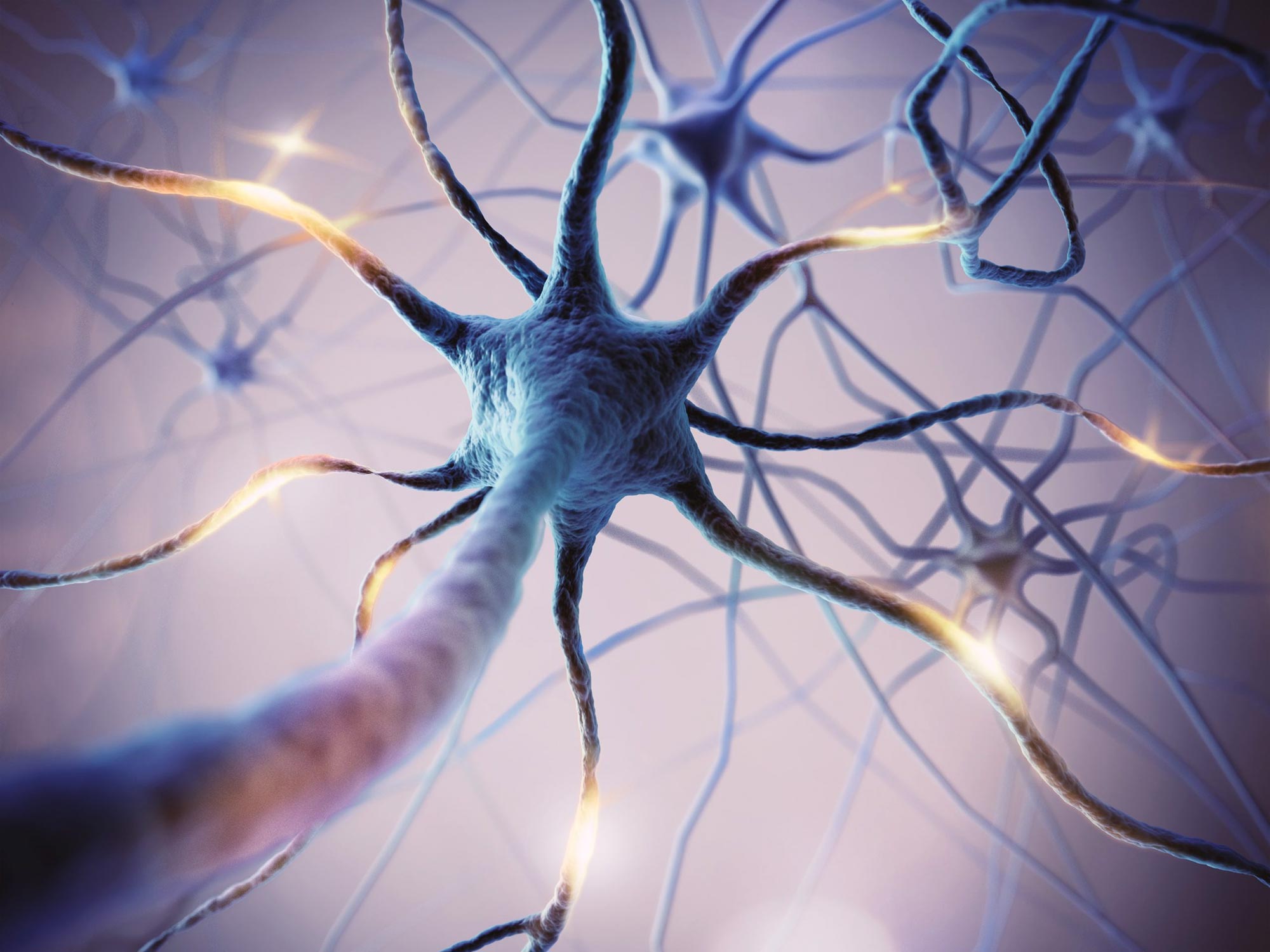
Scientists have discovered a new type of neuron, BNC2, that acts as an immediate counterbalance to hunger neurons, offering a fast-acting mechanism for satiety. This finding, which expands our understanding of appetite regulation, could lead to new treatments for obesity and metabolic disorders.
As you decide whether to eat another potato chip, a fierce battle unfolds in your brain. One group of neurons drives hunger, while another signals fullness. How quickly one side gains the upper hand determines whether you’ll put down the bag of chips.
Now, scientists have discovered a missing link in this neural circuit governing hunger and satiety—a previously unidentified type of neuron that serves as an immediate counterbalance to the urge to eat. The findings, published in Nature, expand the classic model of hunger and satiety regulation, and may provide new therapeutic targets for tackling obesity and metabolic disorders.
“This new type of neuron changes the conceptual framework for how feeding is regulated,” says Han Tan, a research associate in Rockefeller’s Laboratory of Molecular Genetics, headed by Jeffrey Friedman.
More or less
Traditionally, the brain’s so-called feeding circuit was thought to involve a simple feedback loop between two types of brain cells in the hypothalamus: neurons expressing a gene named AGRP drive hunger, and neurons expressing a gene named POMC promote satiety. Previously these two populations were thought to be the two main targets of leptin but recent studies suggested that this model was incomplete.
While activating AGRP neurons rapidly induces appetite, activating POMC neurons takes hours to suppress appetite. Researchers wondered whether they had missed something. “We suspected POMC couldn’t counterbalance the hunger neurons quickly enough to curb feeding,” Tan says. “So we wondered if there was a missing neuron that could promote rapid satiety, on a similar timescale to that of AGRP.”
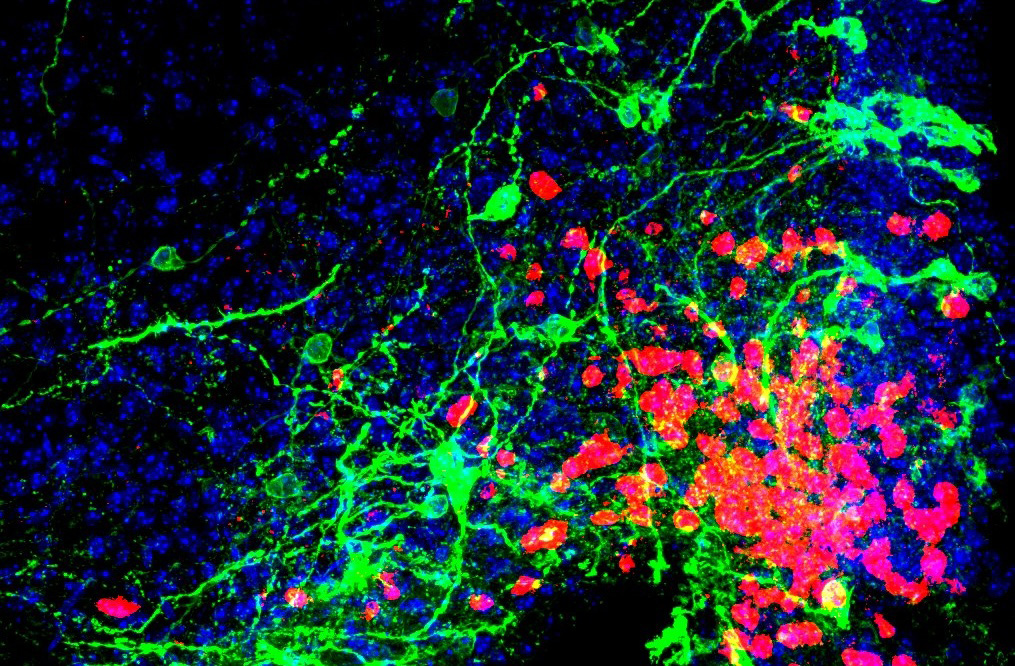
Through single-cell RNA sequencing of neurons in the brain’s arcuate nucleus, the team identified a new type of neuron that expresses a gene called BNC2 together with receptors for the hormone leptin, which has previously been shown to play a significant role in regulating body weight. This newly discovered BNC2 neuron rapidly responds to food cues and acts to rapidly inhibit hunger.
The findings reveal that BNC2 neurons, when activated by leptin and possibly other signals, not only suppress appetite but also alleviate the negative feelings associated with hunger. Remarkably, these neurons act by inhibiting the AGRP neurons and they can do so rapidly, serving as a complementary signal.
“This study has added an important new component to the neural circuit that regulates appetite and broadens our understanding of how leptin reduces appetite,” Friedman says. “It also solves a mystery about how feeding is regulated on different time scales by different neurons.”
Redefining hunger
The discovery of BNC2 neurons has broad implications for tackling obesity and metabolic disorders. “We are actively researching whether targeting these neurons could provide a new therapy for obesity or diabetes,” Tan says, pointing to genetic studies that link BNC2 to high body mass index and diabetes risk in patients. The team is also exploring how stimulating or inhibiting these neurons affects glucose and insulin levels, further underscoring the therapeutic potential of modulating their activity.
This discovery could also have broad implications for how we understand the brain’s control over instinctive behaviors. If BNC2 neurons can coordinate hunger regulation, could there be other similar circuits for behaviors like grooming or sleeping? Identifying similar circuits could deepen our understanding of how the brain choreographs complex actions across different instinctive behaviors, paving the way for further discoveries in behavioral neuroscience.
“We now believe BNC2 and AGRP to be the sort of yin and yang of feeding,” Tan says.
Reference: “Leptin-activated hypothalamic BNC2 neurons acutely suppress food intake” by Han L. Tan, Luping Yin, Yuqi Tan, Jessica Ivanov, Kaja Plucinska, Anoj Ilanges, Brian R. Herb, Putianqi Wang, Christin Kosse, Paul Cohen, Dayu Lin and Jeffrey M. Friedman, 30 October 2024, Nature.
DOI: 10.1038/s41586-024-08108-2
Never miss a breakthrough: Join the SciTechDaily newsletter.
Follow us on Google and Google News.