
Close Menu
    Facebook X (Twitter) Instagram
    SciTechDaily
    • Biology
    • Chemistry
    • Earth
    • Health
    • Physics
    • Science
    • Space
    • Technology
    Facebook X (Twitter) Pinterest YouTube RSS
    SciTechDaily
    Home»Biology»Impact of Deep-Sea Mining on Ocean Animals May Be “Even Bigger Than We Think”
    Biology

    Impact of Deep-Sea Mining on Ocean Animals May Be “Even Bigger Than We Think”

    By Cell PressJuly 26, 20231 Comment4 Mins Read
    Facebook Twitter Pinterest Telegram LinkedIn WhatsApp Email Reddit
    Share
    Facebook Twitter LinkedIn Pinterest Telegram Email Reddit
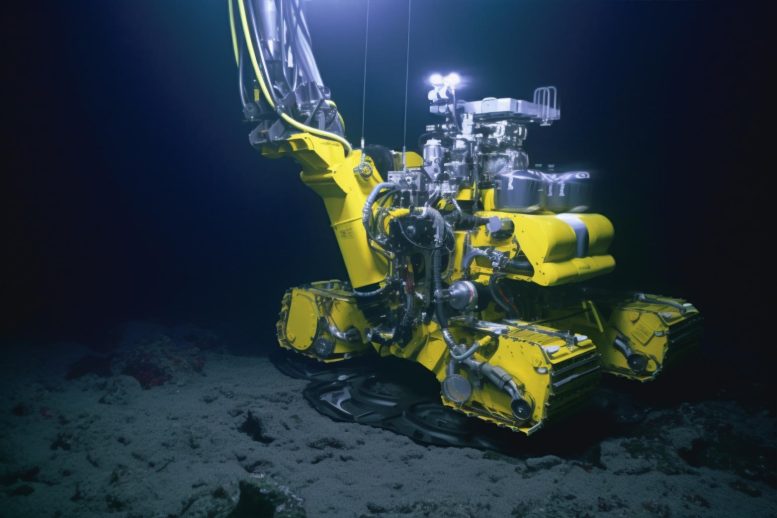
    Deep Sea Mining Equipment Art Concept
    A study analyzing Japan’s deep-sea cobalt mining test in 2020 showed a significant drop in ocean animal populations due to sediment pollution. Despite less impact on less mobile creatures, the research stresses the potential long-term impacts of deep-sea mining, indicating the need for broader and more thorough studies. (Artist concept.)

    Ocean animals withdraw from areas both around and outside deep-sea mining operations.

    In 2020, Japan performed the first successful test extracting cobalt crusts from the top of deep-sea mountains to mine cobalt—a mineral used in electric vehicle batteries. Not only do directly mined areas become less habitable for ocean animals, but mining also creates a plume of sediment that can spread through the surrounding water. An investigation on the environmental impact of this first test, published July 14th in the journal Current Biology, reports a decrease in ocean animals both in and around the mining zone.

    The International Seabed Authority (ISA), which has authority over seafloor resources outside a given country’s jurisdiction, has yet to finalize a set of deep-sea mining regulations. However, for companies looking to mine the ocean’s floor for minerals such as cobalt, copper, and manganese, the ISA is required to either adopt a set of exploitation regulations or consider mining exploitation under existing international laws starting July 9.

    “These data are really important to get out,” says first author Travis Washburn, a benthic ecologist who works closely with the Geological Survey of Japan. “A set of regulations is supposed to be finalized soon, so a lot of these decisions are happening now.”
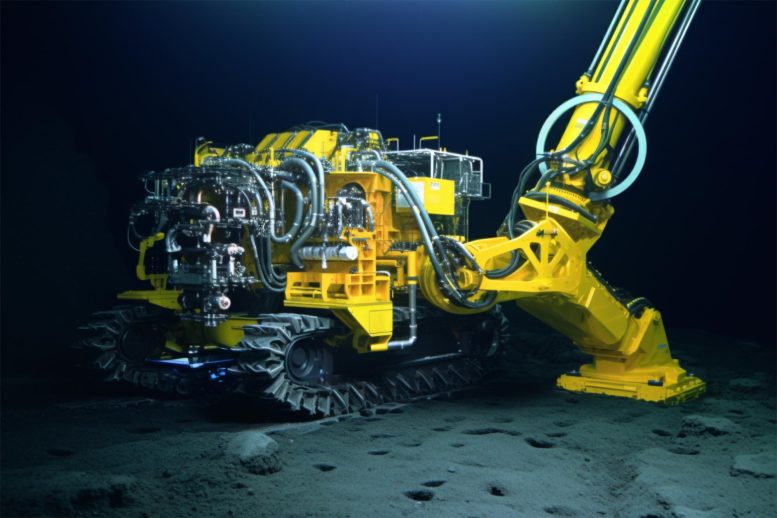
    Deep Sea Mining Equipment Concept
    In 2020, Japan tested cobalt mining from deep-sea mountains, and a recent study revealed the impact on ocean life. Mining created a sediment plume, decreasing the ocean animal population in and around the mining zone. (Artist’s concept.)

    Significant Drops in Fish and Shrimp Populations

    The team analyzed data from three of Japan’s visits to the Takuyo-Daigo seamount: one month before the mining test, one month after, and one year after. After taking a seven-day boat trip from port, a remotely operated vehicle went to the seafloor and collected video of the impacted areas. One year after the mining test, researchers observed a 43% drop in fish and shrimp density in the areas directly impacted by sediment pollution. However, they also noted a 56% drop in the fish and shrimp density of surrounding areas. While there are several possible explanations for this decrease in fish populations, the team thinks it may be due to the mining test contaminating fish food sources.  

    The study did not observe a major change in less mobile ocean animals, like coral and sponges. However, the researchers note that this was only after a two-hour test, and coral or sponges could still be impacted by long-term mining operations.

    “I had assumed we wouldn’t see any changes because the mining test was so small. They drove the machine for two hours, and the sediment plume only traveled a few hundred meters,” says Washburn. “But it was actually enough to shift things.”

    The Need for Long-Term Studies on Deep-Sea Mining

    The researchers note that they will need to repeat this study several times to gain a more accurate understanding of how deep-sea mining impacts the ocean floor. Ideally, multiple years of data should be collected before a mining test occurs to account for any natural variation in ocean animal communities.

    “We’re going to need more data regardless, but this study highlights one area that needs more focus,” says Washburn. “We’ll have to look at this issue on a wider scale, because these results suggest the impact of deep-sea mining could be even bigger than we think.”

    Reference: “Seamount mining test provides evidence of ecological impacts beyond deposition” by Travis W. Washburn, Erik Simon-Lledó, Giun Yee Soong and Atsushi Suzuki, 14 July 2023, Current Biology.
    DOI: 10.1016/j.cub.2023.06.032

    This work was supported by the Agency for Natural Resources and Energy of Japan, the Research Laboratory on Environmentally-Conscious Developments and Technologies, and the UK Natural Environment Research Council. The authors declare no conflicts of interest.

    Never miss a breakthrough: Join the SciTechDaily newsletter.
    Follow us on Google and Google News.

    Cell Press Marine Biology Mining Oceanography
    Share. Facebook Twitter Pinterest LinkedIn Email Reddit

    Related Articles

    “Total Surprise” As Massive Icefish Breeding Colony With 60 Million Active Nests Found in Antarctica

    Growth Rates of Deep-Sea Coral Communities Revealed for the First Time

    New Blood-Red Species of Octocoral Discovered in Panama

    Researchers Shed Light on the Mysterious Lives of Narwhals

    Biologists Explore the Effect of Coral Restoration on Caribbean Reef Fish Communities

    Three New Species of Zoantharians Discovered Across the Indo-Pacific

    “Coughing” Scallops Are Early Warning System for Worsening Water Quality

    Carnivorous Deep Sea Sponge Discovered Off Coast of California

    Jellyfish Bloom in Marine Ecologies As Ocean Health Declines

    1 Comment

    1. Haru Ki on February 17, 2024 10:27 am

      So what?

      Reply
    Leave A Reply Cancel Reply

    • Facebook
    • Twitter
    • Pinterest
    • YouTube

    Don't Miss a Discovery

    Subscribe for the Latest in Science & Tech!

    Trending News

    Breakthrough Bowel Cancer Trial Leaves Patients Cancer-Free for Nearly 3 Years

    Natural Compound Shows Powerful Potential Against Rheumatoid Arthritis

    100,000-Year-Old Neanderthal Fossils in Poland Reveal Unexpected Genetic Connections

    Simple “Gut Reset” May Prevent Weight Gain After Ozempic or Wegovy

    2.8 Days to Disaster: Scientists Warn Low Earth Orbit Could Suddenly Collapse

    Common Food Compound Shows Surprising Power Against Superbugs

    5 Simple Ways To Remember More and Forget Less

    The Atomic Gap That Could Cost the Semiconductor Industry Billions

    Follow SciTechDaily
    • Facebook
    • Twitter
    • YouTube
    • Pinterest
    • Newsletter
    • RSS
    SciTech News
    • Biology News
    • Chemistry News
    • Earth News
    • Health News
    • Physics News
    • Science News
    • Space News
    • Technology News
    Recent Posts
    • Alzheimer’s May Begin Decades Earlier Than You Think, New Mayo Clinic Study Finds
    • The Hidden Risk of Taking Breaks From Weight-Loss Drugs Like Ozempic
    • Total Solar Eclipse Made Cities Go Eerily Quiet Beneath the Surface
    • This Common Plant Could Be an Unexpected New Source of Protein
    • Birds in Cities Fear Women More Than Men and Scientists Don’t Know Why
    Copyright © 1998 - 2026 SciTechDaily. All Rights Reserved.
    • Science News
    • About
    • Contact
    • Editorial Board
    • Privacy Policy
    • Terms of Use

    Type above and press Enter to search. Press Esc to cancel.