
Close Menu
    Facebook X (Twitter) Instagram
    SciTechDaily
    • Biology
    • Chemistry
    • Earth
    • Health
    • Physics
    • Science
    • Space
    • Technology
    Facebook X (Twitter) Pinterest YouTube RSS
    SciTechDaily
    Home»Physics»Improving LIDAR and GPS: Breaking Through the Resolution Barrier With Quantum-Limited Precision
    Physics

    Improving LIDAR and GPS: Breaking Through the Resolution Barrier With Quantum-Limited Precision

    By Paderborn UniversityJanuary 17, 20211 Comment3 Mins Read
    Facebook Twitter Pinterest Telegram LinkedIn WhatsApp Email Reddit
    Share
    Facebook Twitter LinkedIn Pinterest Telegram Email Reddit
    Quantum Physics Resolution Limit
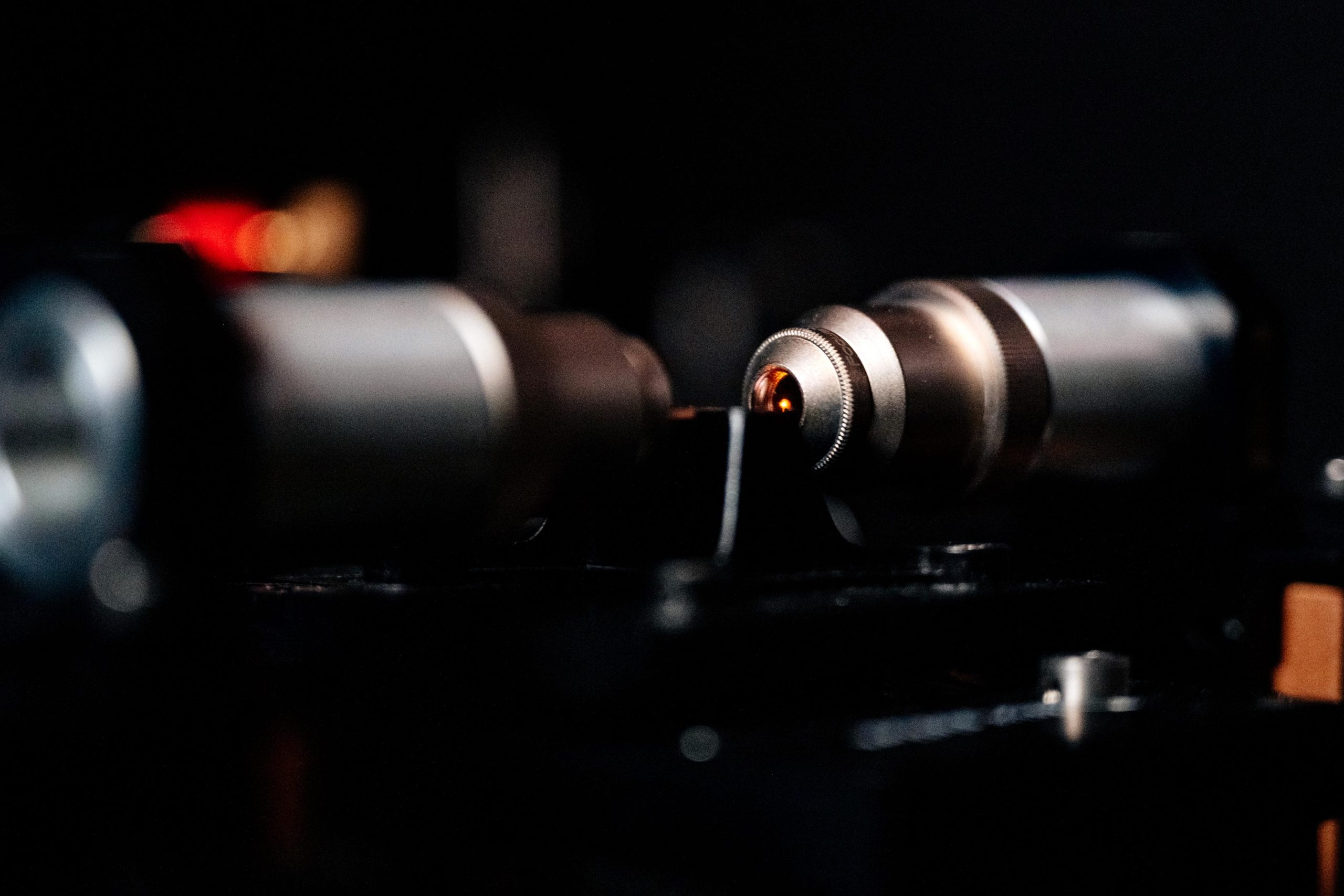
    Using quantum physics, researchers have surpassed the resolution limit in distance measurement, leading to highly precise results for systems like GPS. Credit: Paderborn University, Besim Mazhiqi

    Quantum Techniques Bypass the Resolution Limit, Enabling Ultra-Precise GPS and LIDAR Measurements

    Researchers at Paderborn University have developed a new method of distance measurement for systems such as GPS, which achieves more precise results than ever before. Using quantum physics, the team led by Leibniz Prize winner Professor Christine Silberhorn has successfully overcome the so-called resolution limit, which causes the “noise” we may see in photos, for example.

    Their findings have just been published in the academic journal Physical Review X Quantum (PRX Quantum). In Physics, the publisher’s online magazine, the paper has also been highlighted with an expert Viewpoint – an honor which is given to only certain selected publications.

    Physicist Dr. Benjamin Brecht explains the problem of the resolution limit: “In laser distance measurements a detector registers two light pulses of different intensities with a time difference. The more precise the time measurement is, the more accurately the distance can be determined. Providing the time separation between the pulses is greater than the length of the pulses, this works well.”

    Problems arise, however, as Brecht explains, if the pulses overlap: “Then you can no longer measure the time difference using conventional methods. This is known as the “resolution limit” and is a well-known effect in photos. Very small structures or textures can no longer be resolved. That’s the same problem – just with position rather than time.”

    Precision at the Quantum Limit

    A further challenge, according to Brecht, is to determine the different intensities of two light pulses, simultaneously with their time difference and the arrival time. But this is exactly what the researchers have managed to do – “with quantum-limited precision,” adds Brecht. Working with partners from the Czech Republic and Spain, the Paderborn physicists were even able to measure these values when the pulses overlapped by 90 percent.

    Brecht says: “This is far beyond the resolution limit. The precision of the measurement is 10,000 times better. Using methods from quantum information theory, we can find new forms of measurement which overcome the limitations of established methods.”

    Potential Breakthroughs for GPS and LIDAR

    These findings could allow significant improvements in the future to the precision of applications such as LIDAR, a method of optical distance and speed measurement, and GPS. It will take some time, however, before this is ready for the market, points out Brecht.

    Reference: “Achieving the Ultimate Quantum Timing Resolution” by Vahid Ansari, Benjamin Brecht, Jano Gil-Lopez, John M. Donohue, Jaroslav Řeháček, Zdeněk Hradil, Luis L. Sánchez-Soto and Christine Silberhorn, 4 January 2021, PRX Quantum.
    DOI: 10.1103/PRXQuantum.2.010301

    Never miss a breakthrough: Join the SciTechDaily newsletter.
    Follow us on Google and Google News.

    GPS Quantum Physics
    Share. Facebook Twitter Pinterest LinkedIn Email Reddit

    Related Articles

    Physicists in China Break Quantum Teleportation Record

    First Universal Quantum Network Prototype Operational

    Physicists Use Cheap Colliders to Probe for Heavy Photons

    Quantum Interference Shown Experimentally in Larger Molecules

    Proposed Thorium Neutron-Based Clock Would be Accurate for Billions of Years

    Simulating Quantum Walks in Two Dimensions

    Molecules as Antennas Transmit Signals of Single Photons

    Evidence of Elusive Majorana Fermions Raises Possibilities for Quantum Computing

    Higgs Boson Signals Gain Strength at Large Hadron Collider

    1 Comment

    1. Zakaria on January 18, 2021 9:16 am

      Very important article. But I have a side question: Why is vahid ansari not cited in your article as he is the first author of the article? Did you ask him to comment?

      Reply
    Leave A Reply Cancel Reply

    • Facebook
    • Twitter
    • Pinterest
    • YouTube

    Don't Miss a Discovery

    Subscribe for the Latest in Science & Tech!

    Trending News

    New Research Shows Vitamin B12 May Hold the Key to Healthy Aging

    These Simple Daily Habits Can Quickly Improve Blood Pressure and Heart Risk Factors

    A Common Nutrient May Play a Surprising Role in Anxiety

    Doing This After 9 p.m. Could Double Your Risk of Gut Issues

    Scientists Discover How Coffee Impacts Memory, Mood, and Gut Health

    Why Did the Neanderthals Disappear? Scientists Reveal Humans Had a Hidden Advantage

    Physicists Propose Strange Experiment Where Time Goes Quantum

    Magnesium Magic: New Drug Melts Fat Even on a High-Fat, High-Sugar Diet

    Follow SciTechDaily
    • Facebook
    • Twitter
    • YouTube
    • Pinterest
    • Newsletter
    • RSS
    SciTech News
    • Biology News
    • Chemistry News
    • Earth News
    • Health News
    • Physics News
    • Science News
    • Space News
    • Technology News
    Recent Posts
    • Scientists Discover a New Way To Control Metals at the Atomic Scale
    • Scientists Create “Quantum Sound” Device That Works Near Absolute Zero
    • Scientists Discover 42 “Ghost Pages” From Ancient New Testament Manuscript
    • New Pill Lowers Stubborn Blood Pressure and Protects the Kidneys
    • New AI Blood Test Detects Silent Liver Disease Before Symptoms Appear
    Copyright © 1998 - 2026 SciTechDaily. All Rights Reserved.
    • Science News
    • About
    • Contact
    • Editorial Board
    • Privacy Policy
    • Terms of Use

    Type above and press Enter to search. Press Esc to cancel.