
Reduced tourism during the COVID lockdown allowed fish populations at Molokini to recover, but activity resumed quickly displaced key predators. Sustainable management is needed to protect ecosystem health and ensure long-term resilience.
In August 2019, Hawaii’s Molokini island attracted over 40,000 tourists for snorkeling and diving. However, in March 2020, the global COVID lockdown brought that number down to nearly zero.
The sudden and prolonged decrease in visitors to one of the world’s most renowned snorkeling destinations presented scientists with a unique chance to examine the effect of underwater tourism on marine fish. The findings of their study, published in the journal PLOS ONE, will aid resource managers in improving the management of Molokini and other vulnerable marine habitats.
The study’s lead author, Dr. Kevin Weng of William & Mary’s Virginia Institute of Marine Science, says “The COVID-related tourism freeze provided a unique natural experiment to measure the effects of decreased tourism on fish behavior in a high-use, no-take marine protected area.” Joining Weng on the study were Dr. Alan Friedlander and Whitney Goodell of the National Geographic Society and Dr. Laura Gajdzik and Russell Sparks of the Hawaii Department of Land and Natural Resources. Friedlander and Goodell are also affiliated with the University of Hawaii at Mānoa.
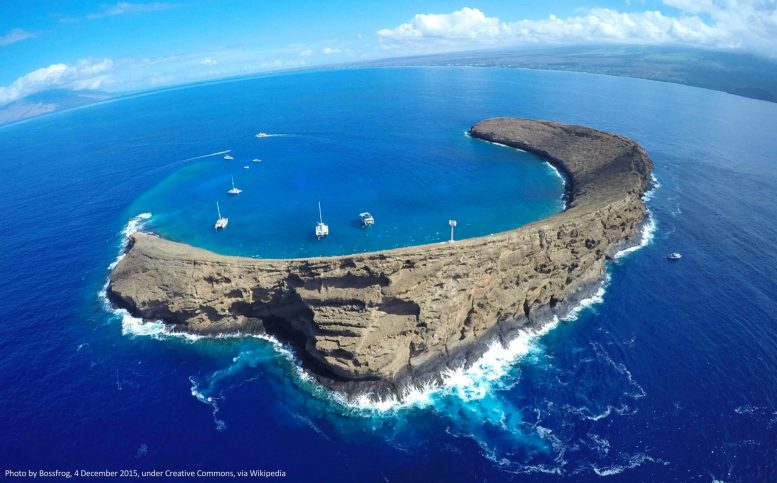
Molokini, which lies about 3 miles (5 kilometers) off the shore of Maui, was designated as a “no-take” marine protected area or MPA in 1977 based on tour operators’ concerns regarding the impacts of fishing and other “consumptive” uses. “Tour operators have always been interested in the conservation of Molokini, and have worked with the State on several measures,” says Sparks. As the volume of “non-consumptive” uses such as snorkeling and SCUBA diving increased, tour operators worked with the State to establish a limited-entry permit system for tour boats and to replace anchoring with permanent moorings to protect corals.
The current study focused on the impacts of these non-consumptive uses. “Our research demonstrates that human presence alone can alter the community structure and possibly the functioning of an ecosystem,” says Weng. “This means we can improve how tourism is configured in Hawaii and around the world to reduce the impacts of human presence.”
Fish Behavior During the COVID Lockdown
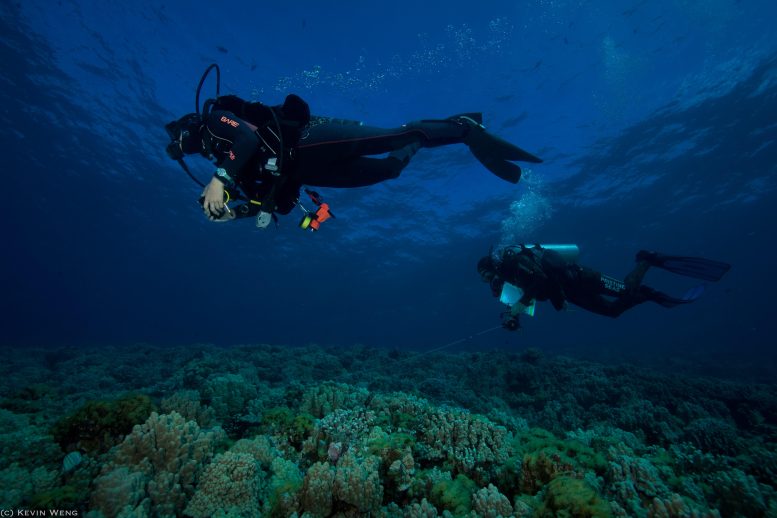
Community structure refers to the type and number of species present in an ecosystem. During Hawaii’s COVID lockdown—which began at full force in March of 2020 and was then slowly lifted until visitation returned to pre-pandemic levels in May of 2021—the researchers conducted SCUBA surveys on five separate occasions to record the species, abundance, size, and location of predatory and herbivorous fishes within Molokini’s submerged crater. They also tracked the movement of the predatory species using electronic tags. Comparing these observations with data from similar surveys conducted in the years before and after the lockdown allowed them to detect differences in fish community structure caused by human presence. The researchers gathered data on human presence using logbooks kept by the 40 charter boat companies permitted to bring tourists into Molokini’s waters.
Tourism’s Role in Altering Predator Habitats
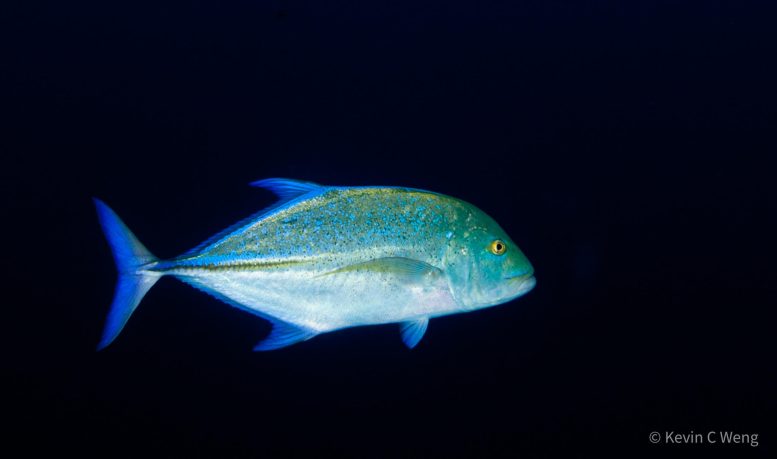
The results of this natural experiment were clear. “When tourism shut down due to COVID,” says Friedlander, “species that had been displaced from shallow habitats by high human presence moved back in on a timescale of months, increasing fish biomass as well as the proportion of larger predators.” The species that mainly drove the observed increase in lockdown biomass were fast-swimming predatory fishes known as jacks, which learn to fear humans as they are often targeted by anglers. When tourism resumed, the predators moved to deeper waters, reducing fish biomass and habitat use to pre-pandemic levels. Biomass is a combined measure of fish abundance and size.
The observed changes in predator biomass were also reflected in the fish’s behavior. Before the COVID lockdown, jacks were known to leave the inside of the crater during the morning peak in tourist visits. However, during the lockdown, they remained in the shallow, sheltered interior. These predators were quickly displaced from this shallow-water habitat when tourism resumed. Their displacement is particularly concerning because their summertime spawning season overlaps with the annual peak in marine tourism.
Ripple Effects on the Ecosystem
The human-induced displacement of predatory fishes from Molokini’s crater likely sends ripples throughout the local food web. Previous studies have shown that a drop in the abundance of predatory fishes affects not only the herbivorous fishes they count as prey, but the algae and other primary producers eaten by the herbivores. “Predators have diverse ecosystem roles,” says Friedlander, “and their loss can reduce the resistance and resilience of ecosystems to other stressors.”
Overall, the team’s findings suggest that “Molokini is being over-used, and that management is needed to improve not only ecosystem health but the visitor experience,” says Sparks. “Our findings indicate that the business-as-usual conditions of high tourism alter community structure by displacing predatory fishes to deeper environments,” adds Weng. Moreover, a 2011 study found that more than two-thirds of visitors to Molokini felt crowded during their trip and supported actions that would reduce visitor numbers.
“As Hawaii formulates marine management plans and undertakes the Sustainable Hawai`i Initiative,” says Gajdzik, “lessons from Molokini can help inform managers and help facilitate an effective response. As part of this process, we need to think strategically about the scale and configuration of tourism in Hawaii to optimize earnings and employment without damaging the environment.”
“Our study indicates that the intensity of non-consumptive uses, especially in heavily visited MPAs, should be considered for the long-term health and resilience of these ecosystems,” says Weng. “Management of tourism should be guided by biological research, and include clear and well-enforced rules, adaptive management, and broad stakeholder involvement.”
Reference: “Decreased tourism during the COVID-19 pandemic positively affects reef fish in a high use marine protected area” by Kevin C. Weng, Alan M. Friedlander, Laura Gajdzik, Whitney Goodell and Russell T. Sparks, 12 April 2023, PLOS ONE.
DOI: 10.1371/journal.pone.0283683
Never miss a breakthrough: Join the SciTechDaily newsletter.
Follow us on Google and Google News.
1 Comment
If “”Our research demonstrates that human presence alone can alter the community structure and possibly the functioning of an ecosystem…This means we can improve how tourism is configured in Hawaii and around the world to reduce the impacts of human presence” says Weng”, then what is Weng (et al.) and the Virginia Institute of Marine Science and the University of Gothenburg doing to remove themselves from the ecosystem? This means we can reconfigure them to eliminate their human presence. That is what they’re saying, is it not? Don’t be in places because they change. Stop being, you’re making Virginia and Sweden different.