

House-size data from ancient sites show that economic inequality is historically variable and shaped by human choices, not just population or complexity.
We are living in a time when the gap between the rich and the poor is striking and continues to grow. However, inequality is not a modern phenomenon. In a new study published in the journal PNAS, researchers analyzed the distribution of house sizes at more than 1,000 sites across the globe, spanning the past 10,000 years. They discovered that while inequality has been common throughout human history, it is not inevitable and does not appear uniformly across all places and times.
“This paper is part of a larger study in which over 50,000 houses have been analyzed to use differentials in house sizes as a metric for wealth inequality over time, on six continents,” says Gary Feinman, the MacArthur Curator of Mesoamerican, Central American, and East Asian Anthropology at the Field Museum in Chicago, and the lead author of the paper. “This is an unprecedented data set in archaeology, and it allows us to empirically and systematically look at patterns of inequality over time.”
The study Feinman led focuses on comparing levels of inequality in different archaeological sites to understand how they changed over time. “While there is not one unilinear sequence of change in wealth inequality over time, there are interpretable patterns and trends that cross-cut time and space. What we see is not just noise or chaos,” says Feinman.
Challenging historical assumptions about inequality
The variation that the researchers found challenges long-held views across history and the social sciences that we can use ancient Greece and Rome, or the medieval history of Europe as generalized representations of humanity’s past.
“There are a lot of things that have been presumed for centuries— for example, that inequality rises inevitably,” says Feinman. “The traditional thinking expects that once you get larger societies with formal leaders, or once you have farming, inequality is going to go way up. These ideas have been held for hundreds of years, and what we find is that it’s more complicated than that— high degrees of inequality are not inevitable in large societies. There are factors that may make it easier to happen or increase to high degrees, but these factors can be leveled off or modified by different human decisions and institutions.”
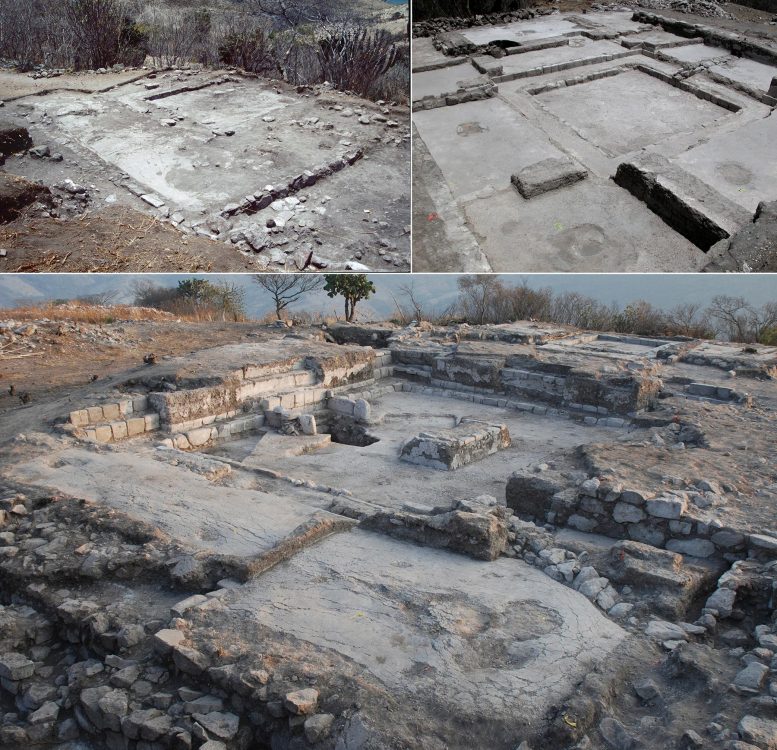
“Variability in the sizes of houses may not be the full extent of wealth differences, but it’s a consistent indicator of the degree of economic inequality that can be applied across time and space,” says Feinman. “I know from my own archaeological fieldwork in the Valley of Oaxaca, Mexico, that almost always, the larger the house, the more elaborate the house, with special features and thicker walls.”
Using gini coefficients to compare past societies
To quantify and compare economic inequality in different places, at different points in history, the researchers used the variable distributions of house sizes at more than 1000 settlements to calculate a Gini coefficient for each site conducted statistical analyses in which they examined the relationship between the amount of inequality in a society and the political complexity of that society. The Gini coefficient is a commonly employed metric to assess inequality that ranges between 0 (complete equality) and 1 (maximal inequality).
The coefficients for each locality were then compared across time and space to examine trends in inequality and assess how it varied in relation to population, political organization, and other potential causal factors.
The investigators then looked at these trends in the Gini values in the context of the size of the sites that were compared and how complex the hierarchical structure of governance was. They found that even while populations have risen over the years, inequality hasn’t always increased in a uniform way.
“The measure of inequality we found in these sites is quite variable, which suggests that there’s not one homogenized pattern,” says Feinman. In other words, contrary to traditional scholarly thinking, there’s no one-size-fits-all explanation for why societies become economically unequal.
“Human choice and governance and cooperation have played a role in damping down inequality at certain times and places, and that is what accounts for this variability in time and space,” says Feinman. “And if inequality isn’t inevitable when human aggregations get larger and governmental structures get more hierarchical, then there is a suite of implications for how we view the present and how we look at the past. Although history has shown us that elements of technology and population growth can raise the potential for inequality at certain times and places, that potential is not always realized, as people have implemented leveling mechanisms and systems of governance that mute that potential. The often-expressed views that certain economic, demographic, or technological conditions or factors make great wealth disparities inevitable simply are not borne out by our global past.”
Reference: “Assessing grand narratives of economic inequality across time” by Gary M. Feinman, Gabriela Cervantes Quequezana, Adam Green, Dan Lawrence, Jessica Munson, Scott Ortman, Cameron Petrie, Amy Thompson and Linda M. Nicholas, 14 April 2025, Proceedings of the National Academy of Sciences.
DOI: 10.1073/pnas.2400698121
Never miss a breakthrough: Join the SciTechDaily newsletter.
Follow us on Google and Google News.
1 Comment
This is actually not news. The book “The Dawn Of Everything” by Graeber and Wengrow, published in 2021, explored just this subject, synthesizing archaeology, anthropology and sociology to expose the great variability of human societies over time and how people have exercised choice over how their society is organized. In fact it has been known for a long time that some advanced polities, such as the Harappans, seemed to display no hierarchies.