

Close Menu
    Facebook X (Twitter) Instagram
    SciTechDaily
    • Biology
    • Chemistry
    • Earth
    • Health
    • Physics
    • Science
    • Space
    • Technology
    Facebook X (Twitter) Pinterest YouTube RSS
    SciTechDaily
    Home»Health»Intrauterine Contraceptive Devices (IUDs) Appear To Have Systemic Effects on the Body
    Health

    Intrauterine Contraceptive Devices (IUDs) Appear To Have Systemic Effects on the Body

    By Radiological Society of North AmericaNovember 22, 2021No Comments4 Mins Read
    Facebook Twitter Pinterest Telegram LinkedIn WhatsApp Email Reddit
    Share
    Facebook Twitter LinkedIn Pinterest Telegram Email Reddit
    Doctor Mammologist Radiologist
    Breast MRI studies suggest that intrauterine contraceptive devices (IUDs) have systemic effects on the body similar to hormone replacement therapy.

    Breast MRI Shows IUDs Have Systemic Effects

    Intrauterine contraceptive devices (IUDs) appear to have systemic effects on the body like those of hormone replacement therapy, according to a breast MRI study being presented next week at the annual meeting of the Radiological Society of North America (RSNA).

    “It has been claimed that IUDs have a purely local effect on the uterus,” said Luisa Huck, M.D., radiology resident in the Department of Diagnostic and Interventional Radiology at RWTH Aachen University in Aachen, Germany. “Our study results suggest that this is not true.”

    Levonorgestrel-releasing IUDs (LNG-IUDs) are used by tens of millions of women worldwide. They work by releasing a small amount of hormone into the uterus. Because the hormone is released directly into the uterus, the amount in the bloodstream is lower than with other hormonal methods. In theory, this limited area of release means that any side effects would be confined to the region around the IUD. However, emerging evidence suggests that LNG-IUDs can be associated with systemic side effects similar to those of systemic hormonal medication.
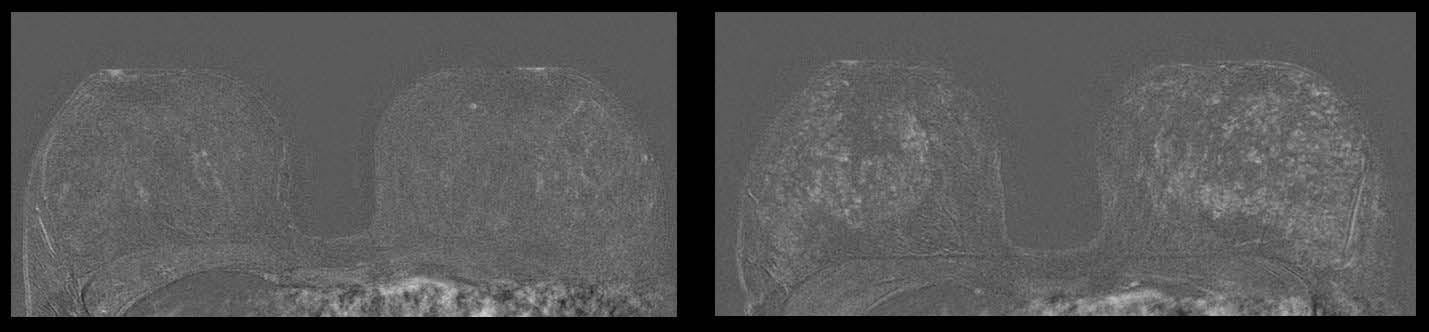
    Breast MRI IUD
    The left image shows breast MRI in a 41-year-old patient without IUD. The right image shows increased parenchymal enhancement in the same patient 27 months after IUD placement. Credit: RSNA and researcher

    Christiane Kuhl, M.D., a leading breast cancer researcher and chief of the Department of Radiology at RWTH Aachen University noticed that women with a hormonal IUD in place often show higher background parenchymal enhancement on contrast-enhanced breast MRI. Background parenchymal enhancement —the initial enhancement of normal breast tissue—is a sensitive marker of hormone levels.

    The observation prompted Dr. Huck to investigate the association between LNG-IUD use and background parenchymal enhancement in breast MRI and explore possible systemic effects of LNG-IUDs.

    Using the hospital database, Dr. Huck and colleagues identified premenopausal women without a personal history of breast cancer or hormone or antihormone intake, who had undergone standardized dynamic contrast-enhanced breast MRI for screening at least twice.

    “By comparing the level of contrast enhancement in the same women with and without the IUD in place, a change in systemic hormone levels due to the IUD could be traced,” Dr. Huck said.
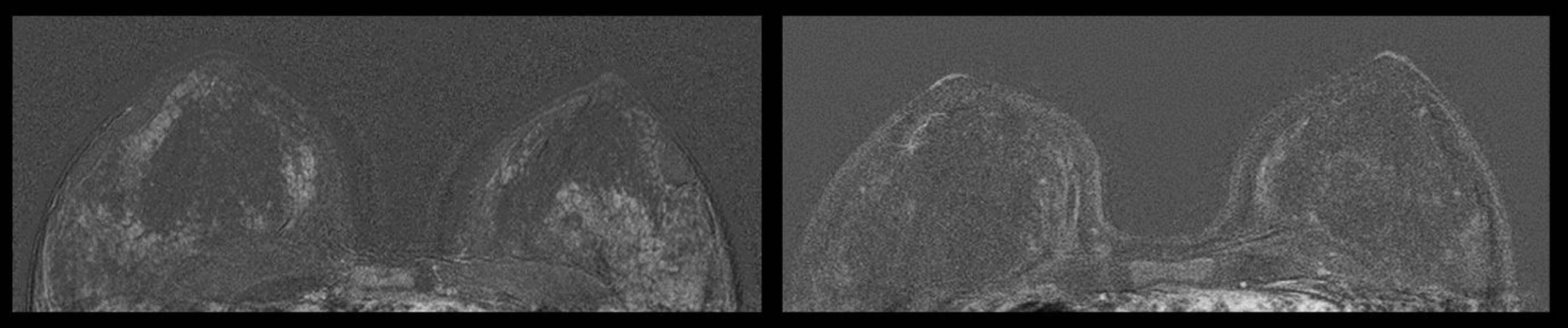
    Breast MRI IUD Patient
    The left image shows a 45-year-old patient with IUD in place. The right image shows a breast MRI of the same patient 32 months after IUD removal. Credit: RSNA and researcher, Luisa Huck, M.D.

    Half of the women in the study underwent the first breast MRI exam before IUD placement and the second with the IUD in place. The other half had their first MRI with IUD placement and the second MRI after IUD removal. This enabled the researchers to avoid age-related effects on background parenchymal enhancement that might affect the interpretation of the results.

    Hormonal Effects Beyond the Uterus

    Analysis showed that IUD use led to a significant increase in enhancement in 23 of 48 patients, indicating that there are hormonal effects caused by IUD use that occur well beyond the uterus.

    “The results suggest that IUDs do not have a purely local effect on the uterus – but affect the entire body,” Dr. Huck said.

    She added that is plausible that IUDs can have side effects similar to that of other hormonal treatments.

    “Use of an IUD leads to hormonal stimulation of the breast that is detectable by MRI,” Dr. Huck said. “The increased enhancement also has implications for the diagnostic accuracy of breast MRI in women using hormonal IUDs.”

    While the results point to a systemic hormonal effect for women with IUDs in place, it does not mean that the contraceptives are unsafe to use, Dr. Huck emphasized.

    “IUDs appear to be a very safe means of contraception and are generally well tolerated,” she said. “However, if women with an IUD in place experience unexplainable side effects, they should talk to their doctor and consider using other types of contraception.”

    Co-authors are Daniel Truhn, M.D., Caroline Wilpert, M.D., Eloisa Zanderigo, M.D., Vanessa Raaff, M.D., Ebba Dethlefsen, M.D., and Maike Bode, M.D.

    Never miss a breakthrough: Join the SciTechDaily newsletter.
    Follow us on Google and Google News.

    Breast Cancer Contraception Radiological Society of North America
    Share. Facebook Twitter Pinterest LinkedIn Email Reddit

    Related Articles

    A Surprising Number of Younger Women Are Getting Breast Cancer

    Scientists Uncover Shocking Rise in Metastatic Breast Cancer Across All U.S. Demographics

    Fewer False Positives: AI Transforms Breast Cancer Screenings With Sharper Accuracy

    AI’s Breast Cancer Blind Spots Exposed by New Study

    AI Demonstrates Superior Performance in Predicting Breast Cancer

    Artificial Intelligence Can Quickly and Accurately Rule Out Cancer in Dense Breasts

    Deep Learning Artificial Intelligence Predicts Breast Cancer Risk Better

    Reducing False-Positives in MRI Breast Cancer Screening

    New Artificial Intelligence Tool Improves Breast Cancer Detection on Mammography

    Leave A Reply Cancel Reply

    • Facebook
    • Twitter
    • Pinterest
    • YouTube

    Don't Miss a Discovery

    Subscribe for the Latest in Science & Tech!

    Trending News

    AI Could Detect Early Signs of Alzheimer’s in Under a Minute – Far Before Traditional Tests

    What if Dark Matter Has Two Forms? Bold New Hypothesis Could Explain a Cosmic Mystery

    This Metal Melts in Your Hand – and Scientists Just Discovered Something Strange

    Beef vs. Chicken: Surprising Results From New Prediabetes Study

    Alzheimer’s Breakthrough: Scientists Discover Key Protein May Prevent Toxic Protein Clumps in the Brain

    Quantum Reality Gets Stranger: Physicists Put a Lump of Metal in Two Places at Once

    Scientists May Have Found the Key to Jupiter and Saturn’s Moon Mystery

    Scientists Uncover Brain Changes That Link Pain to Depression

    Follow SciTechDaily
    • Facebook
    • Twitter
    • YouTube
    • Pinterest
    • Newsletter
    • RSS
    SciTech News
    • Biology News
    • Chemistry News
    • Earth News
    • Health News
    • Physics News
    • Science News
    • Space News
    • Technology News
    Recent Posts
    • What if Your Memories Never Happened? Physicists Take a New Look at the Boltzmann Brain Paradox
    • Students Found an Ancient Star That Shouldn’t Be in the Milky Way
    • Astronomers Solve 50-Year Mystery and Reveal Hidden Culprit Behind Strange X-Ray Emissions
    • One of the Universe’s Largest Stars May Be Getting Ready To Explode
    • Scientists Discover Enzyme That Could Supercharge Ozempic-Like Weight Loss Drugs
    Copyright © 1998 - 2026 SciTechDaily. All Rights Reserved.
    • Science News
    • About
    • Contact
    • Editorial Board
    • Privacy Policy
    • Terms of Use

    Type above and press Enter to search. Press Esc to cancel.