
Close Menu
    Facebook X (Twitter) Instagram
    SciTechDaily
    • Biology
    • Chemistry
    • Earth
    • Health
    • Physics
    • Science
    • Space
    • Technology
    Facebook X (Twitter) Pinterest YouTube RSS
    SciTechDaily
    Home»Health»Is Bedtime Media Use Bad for Sleep? Here’s the Latest Research
    Health

    Is Bedtime Media Use Bad for Sleep? Here’s the Latest Research

    By WileyFebruary 8, 2022No Comments2 Mins Read
    Facebook Twitter Pinterest Telegram LinkedIn WhatsApp Email Reddit
    Share
    Facebook Twitter LinkedIn Pinterest Telegram Email Reddit
    Smartphone Media Bed Sleep
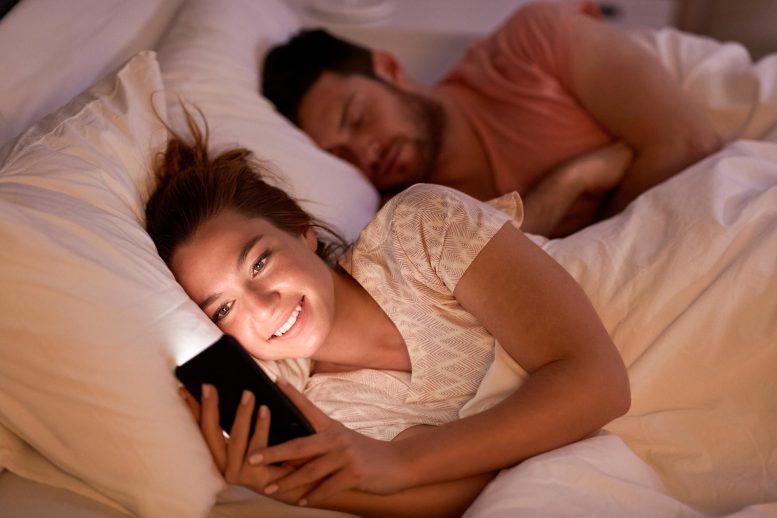
    Research indicates that a short, focused session of media use before bed, such as watching TV or listening to music, is unlikely to have negative effects on your sleep that night.

    A study finds that short, focused media use before bed may lead to earlier bedtimes and more sleep, while longer use delays bedtime and reduces sleep duration, without affecting sleep quality.

    New research published in the Journal of Sleep Research has examined how sleep might be impacted by media use—such as watching movies, television, or YouTube videos, browsing the Internet, or listening to music—before bed.

    In the study, 58 adults kept a diary that recorded information related to time spent with media before bed, location of use, and multitasking. Electroencephalography—tests that detect electrical activity of the brain using small metal discs attached to the scalp—captured parameters such as bedtime, total sleep time, and sleep quality.

    Media use in the hour before sleep was associated with an earlier bedtime. If the before-bed use did not involve multitasking and was conducted in bed, it was also associated with more total sleep time. A long use of media was associated with later bedtime and less total sleep time. Sleep quality was unaffected by media use before bed.

    “If you are going to use media, like watching TV or listening to music, before bed, keep it a short, focused session and you are unlikely to experience any negative outcomes in your sleep that night,” said lead author Morgan Ellithorpe, PhD, of the University of Delaware.

    Reference: “The complicated impact of media use before bed on sleep: Results from a combination of objective EEG sleep measurement and media diaries” by Morgan E. Ellithorpe, Ezgi Ulusoy, Allison Eden, Lindsay Hahn, Chia-Lun Yang and Robin M. Tucker, 9 February 2022, Journal of Sleep Research.
    DOI: 10.1111/jsr.13551

    Never miss a breakthrough: Join the SciTechDaily newsletter.
    Follow us on Google and Google News.

    Sleep Science Wiley
    Share. Facebook Twitter Pinterest LinkedIn Email Reddit

    Related Articles

    Unwind and Thrive: How Evening “Recovery” Impacts Your Workday Mood

    Promoting Wellbeing During COVID-19 Restrictions: Spending Time Outside and Getting Quality Sleep

    How Has the COVID-19 Pandemic Affected Our Sleep and Our Dreams?

    Eating Mushrooms May Help Prevent Prostate Cancer

    Mayo Clinic: CBD Products & Hemp Oil May Be Helpful but More Research Is Needed

    Light from Phones or Tablets Suppresses Melatonin Production in Young Teens

    MIT Scientists Use Optogenetics to Trigger REM Sleep

    Lack of Sleep Leads to Eating and Weight Gain

    Disrupted Sleep Patterns Linked to Alzheimer’s

    Leave A Reply Cancel Reply

    • Facebook
    • Twitter
    • Pinterest
    • YouTube

    Don't Miss a Discovery

    Subscribe for the Latest in Science & Tech!

    Trending News

    Scientists Uncover Potential Brain Risks of Popular Fish Oil Supplements

    Scientists Discover a Surprising Way To Make Bread Healthier and More Nutritious

    After 60 Years, Scientists Uncover Unexpected Brain Effects of Popular Diabetes Drug Metformin

    New Research Uncovers Hidden Side Effects of Popular Weight-Loss Drugs

    Scientists Rethink Extreme Warming After Surprising Ocean Discovery

    Landmark Study Links Never Marrying to Significantly Higher Cancer Risk

    Researchers Discover Unknown Beetle Species Just Steps From Their Lab

    Largest-Ever Study Finds Medicinal Cannabis Ineffective for Anxiety, Depression, PTSD

    Follow SciTechDaily
    • Facebook
    • Twitter
    • YouTube
    • Pinterest
    • Newsletter
    • RSS
    SciTech News
    • Biology News
    • Chemistry News
    • Earth News
    • Health News
    • Physics News
    • Science News
    • Space News
    • Technology News
    Recent Posts
    • Scientists Discover Caffeine Can Repair Key Memory Circuits After Sleep Loss
    • Strange 65-Foot Dinosaur Discovered in Argentina
    • Researchers Uncover Source of Strange Deformation in Earth’s Largest Continental Rift
    • Scientists Solve Mystery of Where the Colorado River Vanished Millions of Years Ago
    • Not Just Alzheimer’s: Scientists Uncover Clues to a Second, Overlooked Disorder
    Copyright © 1998 - 2026 SciTechDaily. All Rights Reserved.
    • Science News
    • About
    • Contact
    • Editorial Board
    • Privacy Policy
    • Terms of Use

    Type above and press Enter to search. Press Esc to cancel.