
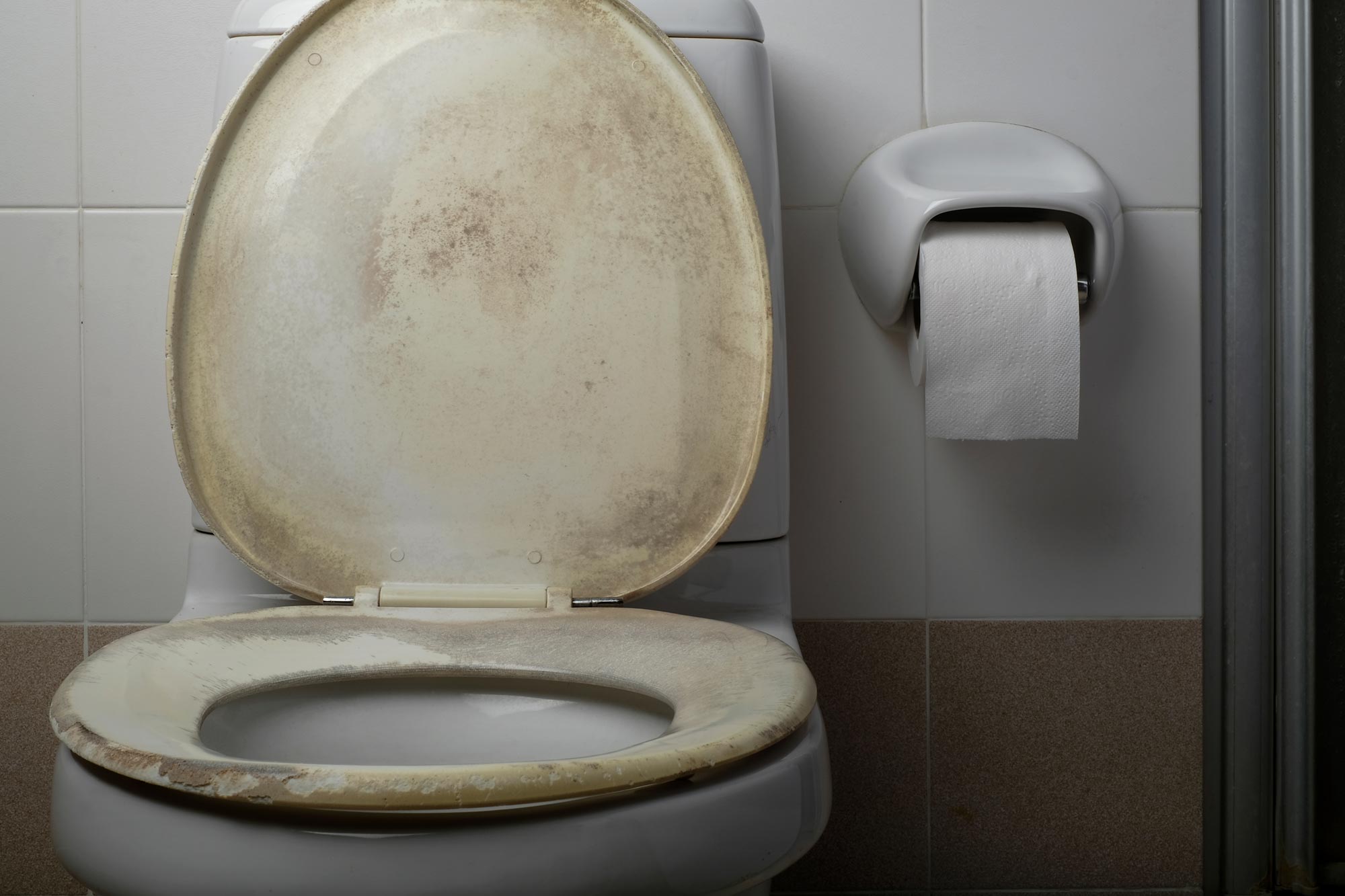
Most germs in public toilets spread through hands and air rather than toilet seats, making hygiene far more important than avoiding sitting.
If you are a parent or live with a chronic condition that requires frequent or urgent bathroom trips, chances are you already know where the most usable public toilets are nearby.
Still, situations arise when there is no alternative and the only option is a restroom that looks like it has not been cleaned for a while. In that moment, you may hesitate. Do you take the risk and sit down anyway?
Even when a toilet appears reasonably clean, the question remains. Could sitting on the seat expose you to germs that might make you sick?
What’s in a public toilet?
Healthy adults typically pass more than a liter of urine and over 100 grams of feces each day. In the process, everyone releases bacteria and viruses in both feces (poo) and urine, and some of these microorganisms end up in the toilet environment.
People who have diarrhea can release much higher amounts of potentially harmful microbes when they use the bathroom.
Public toilets can be a “microbial soup”, especially when many people use them and cleaning isn’t frequent as it should be.
What germs are found on toilet seats?
Many types of microbes have been found on toilet seats and surrounding areas. These include:
- Microbes from the gut, including bacteria such as E. coli, Klebsiella, and Enterococcus, along with viruses like norovirus and rotavirus. These organisms can trigger gastroenteritis, leading to symptoms such as vomiting and diarrhea.
- Bacteria from the skin, including Staphylococcus aureus, as well as multidrug-resistant S. aureus and other species such as Pseudomonas and Acinetobacter. These bacteria are known to cause a range of infections.
- Parasites and single-celled organisms, including eggs from worms carried in poo and microscopic organisms such as protozoa. Exposure to these can result in abdominal pain.
There’s also something called biofilm, a mix of germs that builds up under toilet rims and on surfaces.
Are toilet seats the dirtiest part?
No. A recent study showed public toilet seats often have fewer microbes than other locations in public toilets, such as door handles, faucet knobs, and toilet flush levers. These parts are touched a lot and often with unwashed hands.
Public toilets in busy places are used hundreds or even thousands of times each week. Some are cleaned often, but others (such as those in parks or bus stops) may only be cleaned once a day or much less, so germs can build up quickly. The red flags that a toilet hasn’t been cleaned are the smell of urine, soiled floors, and what is obvious to your eyes.
However, the biggest problem isn’t just sitting: it’s what happens when toilets are flushed. When you flush without a lid, a “toilet plume” shoots tiny droplets into the air. These droplets can contain bacteria and viruses from the toilet bowl and travel up to 2 meters.
Hand dryers blowing air can also spread germs if people don’t wash properly. As well as drying your hands, you might be blowing germs all over yourself, others and the bathroom.
How can germs spread?
You can pick up germs from public toilets in several ways:
- skin contact. Sitting on a dirty seat or touching handles spreads bacteria. Healthy skin is a good barrier, but cuts or scrapes can allow germs to enter
- touching your face. After using the toilet, if you touch your eyes, mouth, or food before washing your hands, germs can get inside your body
- breathing them in. In small or crowded bathrooms, you can breathe in tiny particles from toilet plumes or hand dryers
- toilet water splash. Germs can stay in the water even after several flushes.
What can you do to stay safe?
Here are some easy ways to protect yourself:
- Use toilet seat covers or place toilet paper on the seat before sitting
- If the toilet has a lid, wipe it before use with an alcohol wipe and close it before flushing to limit toilet plume exposure. (But note, this doesn’t fully stop the spread)
- Wash your hands properly for at least 20 seconds using soap and water
- Carry hand sanitizer or antibacterial wipes to clean your hands afterwards if there isn’t any soap
- Avoid hand dryers, if you can, as they can spread germs. Use paper towels instead
- Sanitize your phone regularly and don’t use it in toilet. Phones often pick up and carry bacteria, especially if you use them in the bathroom
- Clean baby changing areas before and after use, and always wash or sanitise your hands.
So is it safe to sit on public toilet seats?
For most healthy people, yes – sitting on a public toilet seat is low-risk. But you can wipe it with an alcohol wipe, or use a toilet seat cover, for peace of mind.
Most infections don’t come from the seat itself, but from dirty hands, door handles, toilet plumes, and phones used in bathrooms.
Instead of worrying about sitting, focus on good hygiene. That means washing your hands, opting for paper towels rather than dryers, cleaning the seat if needed, and keeping your phone clean.
And please, don’t hover over the toilet. This tenses the pelvic floor, making it difficult to completely empty the bladder. And you might accidentally spray your bodily fluids.
Adapted from an article originally published in The Conversation.
Disclosure: Lotti Tajouri is affiliated with Murdoch University and Dubai Police Scientist Council.
Never miss a breakthrough: Join the SciTechDaily newsletter.
Follow us on Google and Google News.
4 Comments
“Poo”? Scitechdaily wants articles to be on that level? Wow.
Well, the author did use the term “feces” first, then followed with “poo” in parenthesis. The original article was likely intended for a general audience.
General audiences should know what feces are, and if not, should look it up. Easy to do. Let’s elevate people’s knowledge rather than lower the discussion to child’s talk.
Interesting !!!