
Close Menu
    Facebook X (Twitter) Instagram
    SciTechDaily
    • Biology
    • Chemistry
    • Earth
    • Health
    • Physics
    • Science
    • Space
    • Technology
    Facebook X (Twitter) Pinterest YouTube RSS
    SciTechDaily
    Home»Space»ISS Astronauts Delve Into Robotics, Physics, and Space Biology While Awaiting Cargo
    Space

    ISS Astronauts Delve Into Robotics, Physics, and Space Biology While Awaiting Cargo

    By NASADecember 1, 2023No Comments3 Mins Read
    Facebook Twitter Pinterest Telegram LinkedIn WhatsApp Email Reddit
    Share
    Facebook Twitter LinkedIn Pinterest Telegram Email Reddit
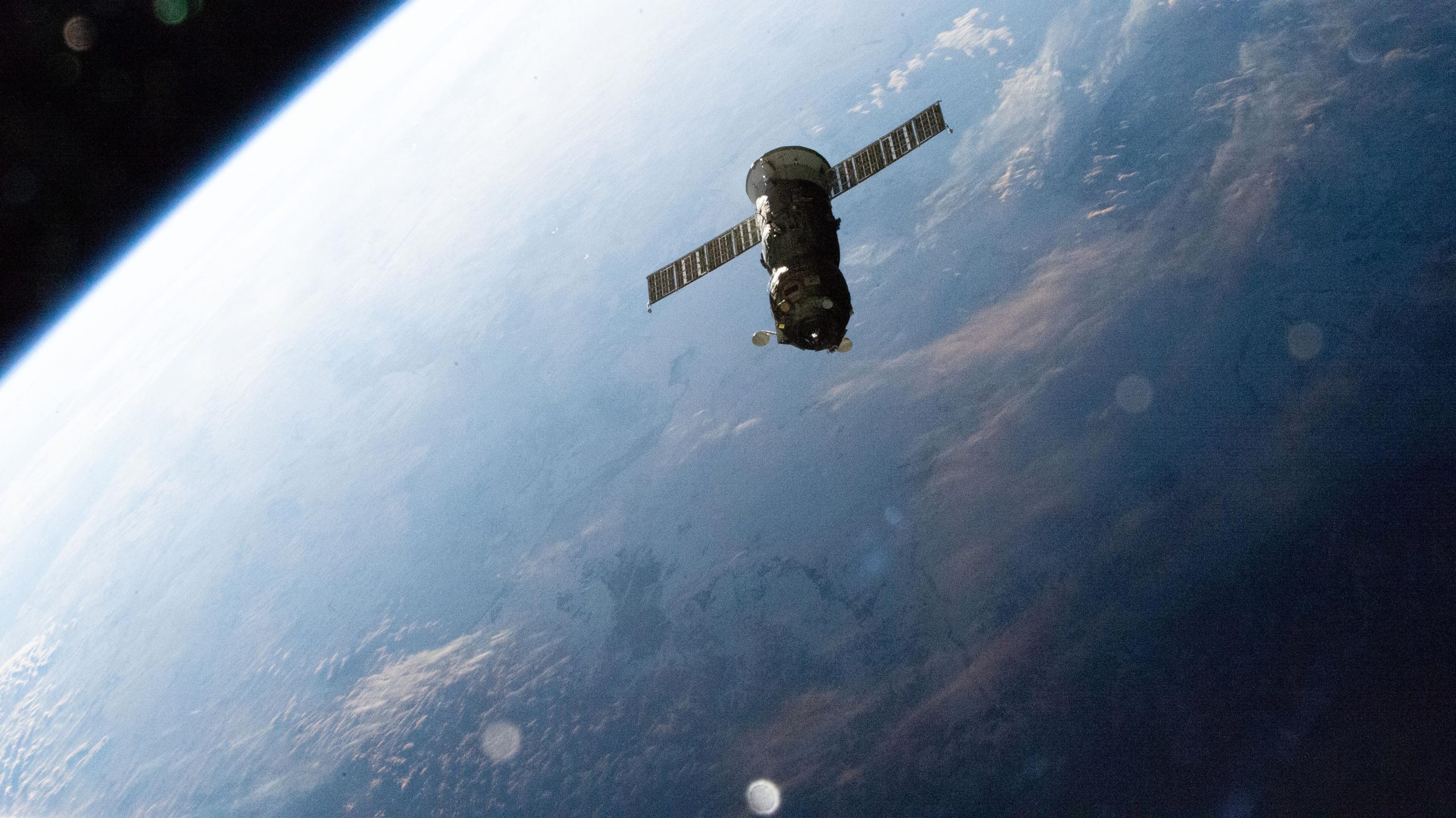
    ISS Progress 84 Undocks From Space Station
    The Progress 84 cargo craft is pictured shortly after undocking from the International Space Station’s Poisk Module at 2:55 a.m. EST on November 29. Credit: NASA

    The Expedition 70 crew members turned their attention toward robotics and physics research on Thursday, November 30, while continuing ongoing space biology studies. The orbital septet also will soon welcome a cargo craft due to launch to the International Space Station early Friday.

    NASA Flight Engineer Jasmin Moghbeli turned on the Astrobee robotic free-flyers Thursday morning for a technology demonstration inside the Kibo laboratory module. In the afternoon, she installed components called CLINGERS on the Astrobees and monitored the cube-shaped robotic devices as they conducted docking maneuvers. The experiment seeks to prove new technology that may enable future satellites to rendezvous, dock, and undock autonomously.
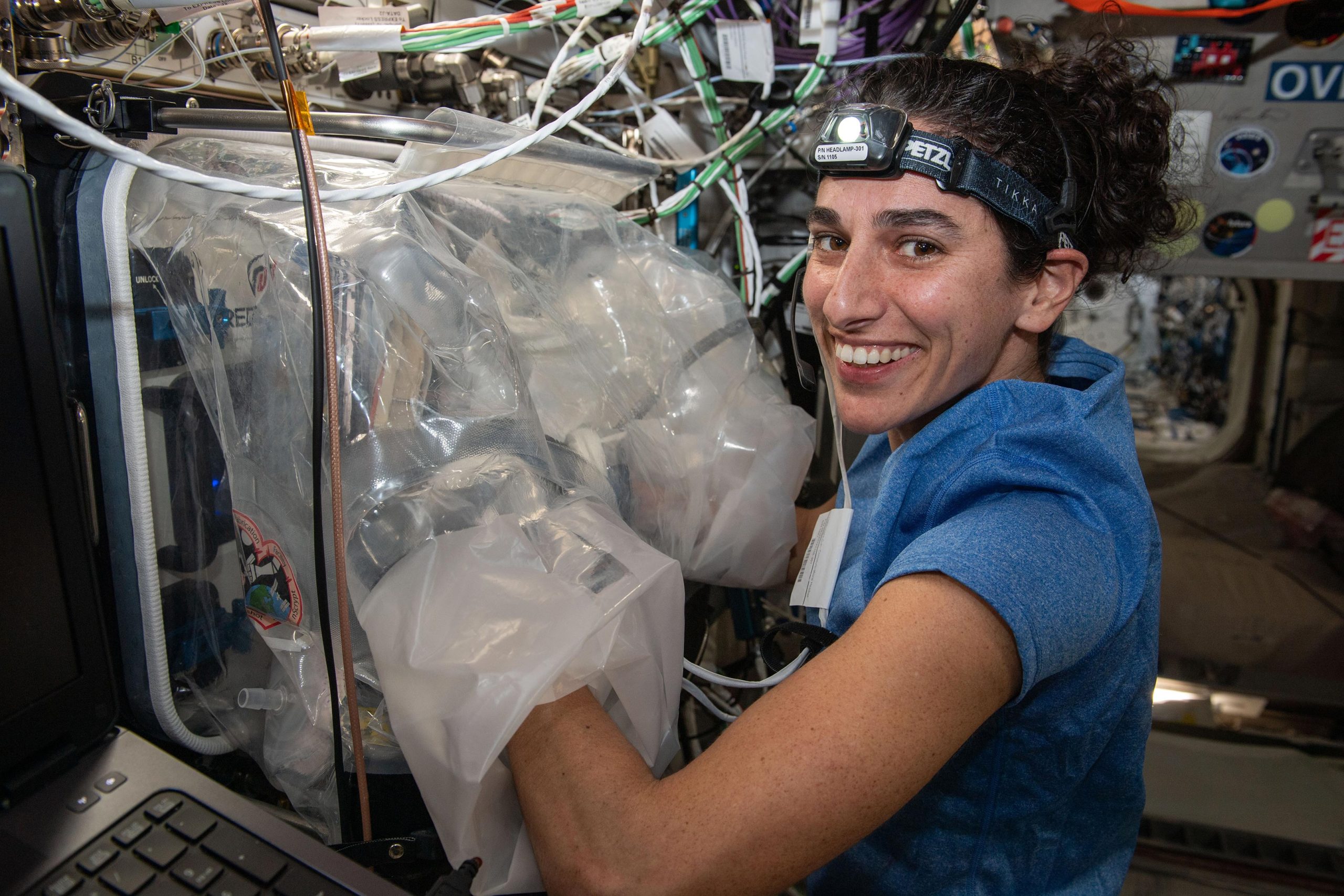
    NASA Astronaut Jasmin Moghbeli Works on the BioFabrication Facility
    NASA astronaut and Expedition 70 Flight Engineer Jasmin Moghbeli uses a portable glovebag to swap components inside the BioFabrication Facility (BFF) located in the International Space Station’s Columbus laboratory module. The BFF is a biological printer that is testing the printing of organ-like tissues in microgravity. Credit: NASA

    Astronaut Satoshi Furukawa also worked in the Kibo lab swapping samples inside the Electrostatic Levitation Furnace. The high-temperature research facility allows safe observations of thermophysical properties such as density surface tension, and viscosity of materials difficult to achieve on Earth. Furukawa from JAXA (Japan Aerospace Exploration Agency) then worked in the afternoon setting up the new uTitan investigation in Kibo’s Life Science Glovebox to explore a method for extracting DNA samples in microgravity.

    A variety of space biology investigations were also underway aboard the station seeking to improve life on Earth and in space. NASA Flight Engineer Loral O’Hara kicked off her day configuring the Advanced Plant Habitat for an upcoming botany study to explore how the plant immune system is affected by spaceflight conditions. Commander Andreas Mogensen peered at brain cell-like samples in a microscope for the Cerebral Aging study seeking a deeper understanding of ageing processes and neurodegenerative conditions.  Afterward, Mogensen from ESA (European Space Agency) printed cardiac cells using the BioFabrication Facility which is demonstrating printing organ-like tissues in microgravity.
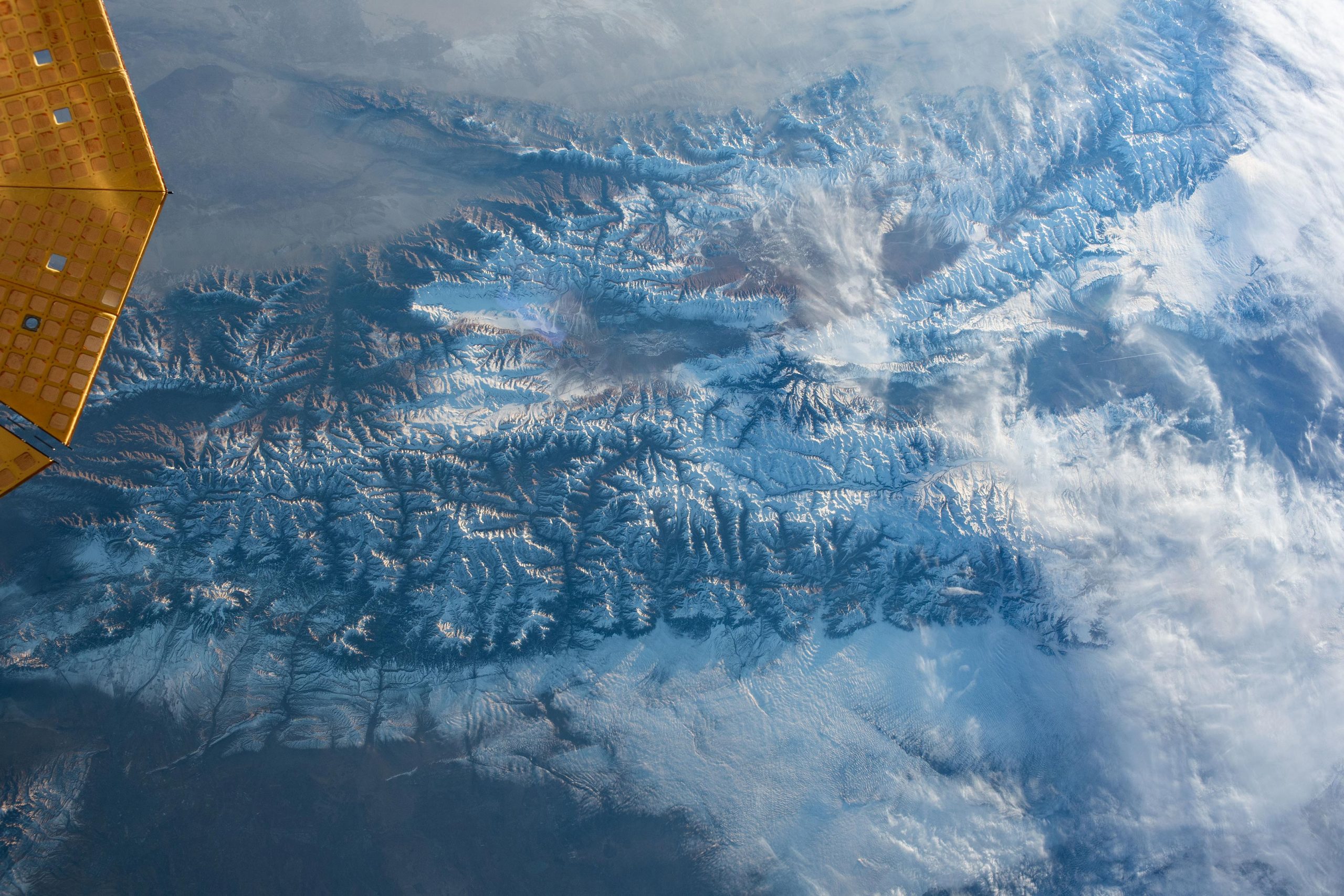
    Clouds Blend With the Snow-Capped Tian Shan Mountain Range From ISS
    A layer of clouds blends in with snow covering the Tian Shan mountain range in Central Asia as the International Space Station orbited 261 miles above. In the top left corner of the image, the cymbal-shaped solar array of Northrop Grumman’s Cygnus spacecraft peeks through. Credit: NASA

    Back on Earth at the Baikonur Cosmodrome in Kazakhstan, the Roscosmos Progress 86 resupply ship stands ready to launch to the orbital outpost at 4:25 a.m. on Friday. The Progress 86 will orbit Earth for two days before docking to the station’s Poisk module at 6:14 a.m. on Sunday. Cosmonauts Oleg Kononenko and Nikolai Chub will be on duty monitoring the resupply ship’s arrival and ready to unpack the nearly 5,600 pounds of cargo a few hours later.

    Kononenko remained focused on research Thursday activating a 3D printer to learn how to print tools and supplies promoting self-sufficient crews in space. Chub studied how microgravity affects fluid systems and then tested futuristic spacecraft and robotic piloting techniques on a computer. Cosmonaut Konstantin Borisov serviced ventilation systems in the Zvezda service module, loaded software on computer tablets, and then wrapped up his shift deactivating Earth observation hardware.

    Never miss a breakthrough: Join the SciTechDaily newsletter.
    Follow us on Google and Google News.

    Astronaut International Space Station NASA
    Share. Facebook Twitter Pinterest LinkedIn Email Reddit

    Related Articles

    NASA’s Crew-9 Returns After 286-Day Mission With a Spectacular Splashdown in the Gulf of America

    NASA’s SpaceX Crew-9 Splashes Down Off Coast of Florida

    SpaceX Dragon Undocks With NASA Crew-9 Members for Return to Earth

    Liftoff! NASA’s SpaceX Crew-10 Blasts Off From Kennedy Space Center [Video]

    Rocket Ready: NASA’s SpaceX Crew-10 Set for Liftoff

    NASA’s SpaceX Crew-10 Was Moments From Liftoff – Then a Last-Minute Malfunction Shut It Down

    NASA’s SpaceX Crew-10: Four Astronauts, a 17,500 MPH Rocket, and 200+ Experiments

    No Treadmill, No Problem – NASA’s Space Workout Experiment Could Change Fitness Forever

    NASA and SpaceX’s Unexpected Spacecraft Swap Sends Crew-10 to Space Sooner

    Leave A Reply Cancel Reply

    • Facebook
    • Twitter
    • Pinterest
    • YouTube

    Don't Miss a Discovery

    Subscribe for the Latest in Science & Tech!

    Trending News

    Scientists Discover 132-Million-Year-Old Dinosaur Tracks on South Africa’s Coast

    Scientists Uncover the Secret Ingredient Behind the Spark That May Have Started Life on Earth

    Physicists Observe Matter in Two Places at Once in Mind-Bending Quantum Experiment

    Stanford Scientists Discover Hidden Brain Circuit That Fuels Chronic Pain

    New Study Reveals Why Ozempic Works Better for Some People Than Others

    Climate Change Is Altering a Key Greenhouse Gas in a Way Scientists Didn’t Expect

    New Study Suggests Gravitational Waves May Have Created Dark Matter

    Scientists Discover Why the Brain Gets Stuck in Schizophrenia

    Follow SciTechDaily
    • Facebook
    • Twitter
    • YouTube
    • Pinterest
    • Newsletter
    • RSS
    SciTech News
    • Biology News
    • Chemistry News
    • Earth News
    • Health News
    • Physics News
    • Science News
    • Space News
    • Technology News
    Recent Posts
    • 320 Light-Years Away, a Planet Confirms a Fundamental Cosmic Assumption
    • Astronomers Solve Decades-Long Mystery About Saturn’s Spin – “Something Strange Was Happening”
    • Scientists Uncover Strange New State of Matter Inside Uranus and Neptune
    • The Crown Jewel of Dentistry? Breakthrough Tech Could Transform Tooth Repair
    • The Surprising Non-Medical Factor That Determines Cancer Survival
    Copyright © 1998 - 2026 SciTechDaily. All Rights Reserved.
    • Science News
    • About
    • Contact
    • Editorial Board
    • Privacy Policy
    • Terms of Use

    Type above and press Enter to search. Press Esc to cancel.